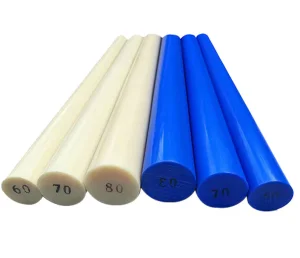
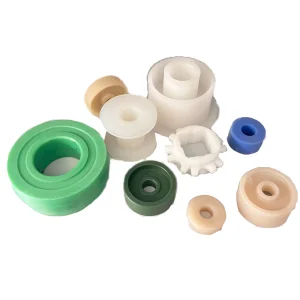
Certified Engineering Polymers & Semi-Finished Shapes
Precision extruded and cast thermoplastic sheet, rod, and pipe stock engineered to exacting dimensional tolerances and mechanical load profiles.
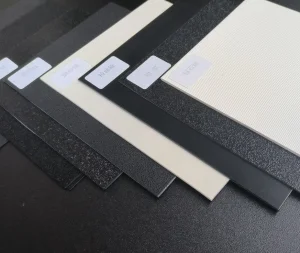
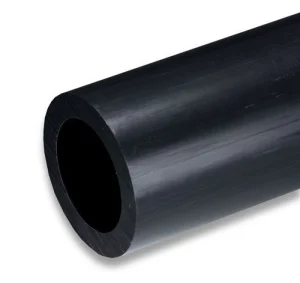
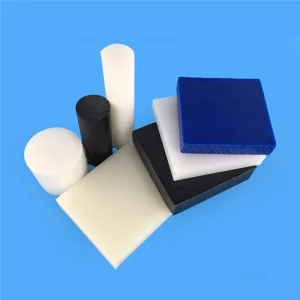
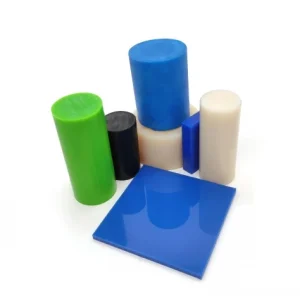
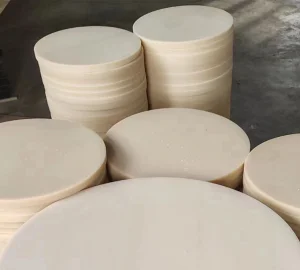
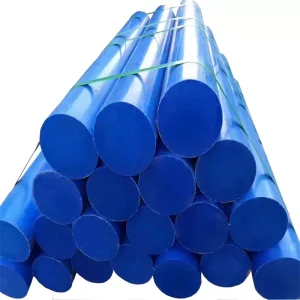
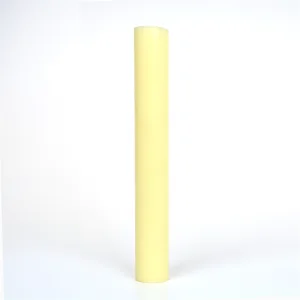
UHMWPE Industry Transformation & Molecular Dynamics
Ultra-High Molecular Weight Polyethylene (UHMWPE) represents the pinnacle of tribological engineering in linear polyolefins. Discover the engineering mechanisms that define modern wear mitigation.
Entangled Macromolecular Chains
Standard high-density polyethylene (HDPE) comprises polymer chains with roughly 10,000 to 100,000 monomer units. In contrast, UHMWPE sheet synthesis involves polymerization chains extending up to several hundred thousand repeating ethylene units. This astronomical molecular mass results in an extremely dense entanglement of polymer backbones, dissipating kinetic energy from aggressive abrasive media and virtually eliminating brittle crack propagation under ballistic impact.
Compression Sintering vs. Ram Extrusion
Because of UHMWPE's vanishingly low Melt Flow Index (MFI ≈ 0 g/10 min at standard conditions), standard injection molding is physically impossible without resin degradation. Tier-1 manufacturers deploy ultra-high-pressure hydraulic sinter pressing (up to 10 MPa at controlled heating zones of 200°C), fusing virgin micropowders without thermally shearing the macro-chains, yielding isotropic stress-free sheets that resist warping during secondary CNC machining.
Nanocomposite & Ceramic Doping
The state of the art in UHMWPE sheet technology incorporates micro-glass beads, MoS2, boron carbide, ceramic spheres, and conductive carbon nanotubes. Doped formulations deliver antistatic (ATEX/IECEx compliant) surfaces for explosive dust silos, boron-loaded shielding panels for nuclear neutron absorption, and self-lubricating dry-running conveyor tracks that reduce motor drive draw by up to 35% across high-speed packaging corridors.
Mechanical, Thermal & Tribological Benchmarks
Standardized comparative physical metrics for international project directors, design consultants, and EPC contractor qualification committees.
| Physical / Tribological Property | Testing Protocol | Virgin UHMWPE (PE-1000) | Regenerated / Recycled Blend | Ceramic / Borated Modified |
|---|---|---|---|---|
| Molecular Weight Range | Intrinsic Viscosity (ISO 1628-3) | 4.5 – 9.2 Million g/mol | 1.5 – 3.0 Million g/mol | 5.0 – 7.5 Million g/mol |
| Sand Slurry Wear Index (Steel = 100) | ISO 15527 Annex B | 15 – 22 (Lower is superior) | 35 – 45 | 8 – 12 (Maximum wear life) |
| Shore D Hardness | ISO 868 / ASTM D2240 | 63 – 67 Shore D | 60 – 64 Shore D | 68 – 72 Shore D |
| Tensile Strength at Yield | ISO 527-2 / ASTM D638 | 21 – 25 MPa | 17 – 20 MPa | 24 – 28 MPa |
| Charpy Notched Impact Resistance | ISO 11542-2 (Double 14° Notch) | No Break (> 130 kJ/m²) | 60 – 85 kJ/m² | 90 – 110 kJ/m² |
| Static / Dynamic Friction Coeff. | ASTM D1894 (on dry polished steel) | 0.15 / 0.10 | 0.22 / 0.16 | 0.12 / 0.08 |
| Continuous Temperature Range | Thermal Stability Testing | -250°C to +80°C | -100°C to +75°C | -200°C to +95°C |
| Compliance Approvals | Global Regulatory Frameworks | FDA 21 CFR 177.1520, EU 10/2011 | Industrial Non-Food General | ATEX Antistatic / Nuclear Shielding |
Total Cost of Ownership (TCO) Audit
While hardened abrasion-resistant steel (Hardox 450/500) incurs initial raw metal parity, its sheer volumetric density (7.85 g/cm³ vs. UHMWPE's 0.93 g/cm³) dramatically increases structural deadweight, crane rental overhead during liner replacement, and workplace injuries. Over an 8-year operational horizon in mineral handling, UHMWPE reduces total maintenance cost by up to 58% due to zero-corrosion immunity and self-releasing anti-arching characteristics.
Dimensional Tolerance Control
Precision sheet processing requires strict adherence to DIN ISO 2768-m or equivalent thermal stabilization protocols. Because UHMWPE features a thermal expansion coefficient around 2.0 × 10⁻⁴ K−1, qualified manufacturers implement precision multi-axis CNC fly-cutting and controlled temperature conditioning chambers prior to final panel dimensioning, preventing unexpected clearance issues on field assembly lines.
Cross-Contamination & Virgin Validation
A persistent pain point for procurement inspectors is the unauthorized blending of low-grade off-spec recycled wax into sheets sold as prime virgin polymer. Rigorous suppliers provide Gel Permeation Chromatography (GPC) molecular weight distribution curves, OIT (Oxidative Induction Time) testing, and density titration verification ensuring complete compliance with client specifications.
China Industry 4.0: Scaled Sintering & Agile Supply Lines
Discover how intelligent sintering automation, Hebei polymer cluster concentration, and digital quality monitoring create unrivaled capacity and speed for global OEMs.
Automated Multi-Cavity Sinter Presses
Modern Industry 4.0 facilities in northern China deploy computer-controlled 3,000 to 8,000-ton hydraulic multi-daylight presses. Continuous closed-loop PID thermal control regulates cooling rates, eliminating interior residual stress gradients and guaranteeing plate flatness across oversized 6000 × 2000 mm sheet formats.
Upstream Feedstock Integration
Proximity to national petrochemical leaders (such as Sinopec and PetroChina) and specialized resin suppliers ensures continuous, priority allocation of certified virgin polymerization powders. Direct raw-polymer logistics avoid intermediate reseller markups and insulate international export contracts from unexpected spot price surges.
Subtractive 5-Axis CNC Integration
To fulfill drawing-to-part specifications without intermediate handling, factories operate high-speed 5-axis CNC routing beds equipped with vacuum table hold-downs. Counterbore chamfers, interlocking tongue-and-groove joints, and complex perimeter curves are machined directly from blank sheets within ±0.1 mm tolerances.
Export Packing & Port Access
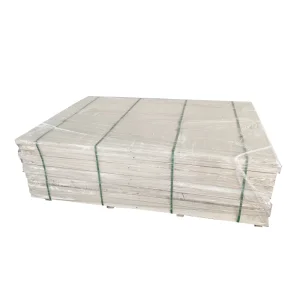
Industrial operations within the Xingtai/Hebei production corridor benefit from multi-lane freight access directly to Tianjin Port (Xingang), the maritime gateway of northern China. Heavy consolidated containers are packed with custom fumigated hardwood pallets, moisture-barrier wrapping, and corner edge-guards for international transport.
Demanding Engineering Field Implementations
From Pilbara open-pit iron ore mines to Arctic deep-water LNG berthing facilities, examine how UHMWPE solves critical mechanical degradation.
Bulk Chutes & Hoppers (Australia / Chile)
High-moisture bauxite, sticky sub-bituminous coal, and abrasive copper slurry frequently bridge and rathole in steel transfer chutes, causing severe plant downtime. Welded UHMWPE liner panels with counter-sunk weld-washer retention present an ultra-low surface energy face that prevents material hang-ups and eliminates mechanical sledgehammer damage by operators.
Marine Port Fenders (Rotterdam / Singapore)
Commercial vessel hulls generate massive kinetic shear forces upon berth contact. Frontal fender facers fabricated from UV-stabilized UHMWPE sheet absorb berthing momentum while protecting vessel coatings. Impermeable to saltwater infestation and non-corroding, these plates outlast treated timber or polyurethane facings by three-to-one.
Heavy Dump Body Liners (North America)
Off-highway dump trucks carrying wet clay, sticky overburden, or frozen gravel suffer from dangerous tip-over hazards when sticky cargo freezes or refuses to discharge during elevation. UHMWPE truck bed liners enable clean dumping at lower hydraulic tilt angles, lowering cylinder wear and increasing round-trip haul cycles per 12-hour shift.
High-Speed Bottling Lines (Germany / Japan)
Conveyor change parts, neck guides, starwheels, and curved corner tracks in beverage packaging require whisper-quiet operation and zero lubrication to prevent container contamination. Custom-machined virgin UHMWPE parts run completely unlubricated while meeting stringent FDA 21 CFR and EU food contact cleanliness guidelines.
Cryogenic Liquid Tank Insulation (LNG Carriers)
At liquid methane boiling temperatures (-162°C), conventional structural polymers suffer severe embrittlement and catastrophic cracking. UHMWPE maintains remarkable impact ductility and flexural compliance down to -260°C, functioning as structural load-bearing pads and sliding cryogenic pipeline supports across marine LNG bunkering terminals.
Frequently Asked Engineering & Sourcing Questions
Direct, transparent answers regarding polymer characterization, manufacturing limits, export paperwork, and field installation practices.
What is the practical engineering difference between PE-500 (HMWPE) and PE-1000 (UHMWPE)?
How does UHMWPE compare to PTFE (Teflon) and Cast Nylon (PA6C) for sliding components?
Can UHMWPE sheets be thermal-welded, glued, or mechanically fastened?
What sheet dimensions, thicknesses, and color formulations can be supplied?
What quality assurance documentation accompanies export shipments?
Expanded Engineering Plastics & Precision Components
Discover our broad selection of industrial thermoplastics, cast stock shapes, and high-precision CNC finished parts ready for dispatch.