
Featured Semi-Finished Engineering Plastics
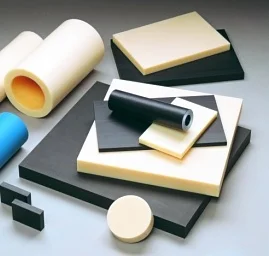
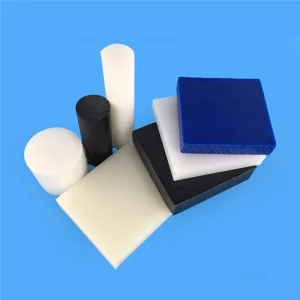
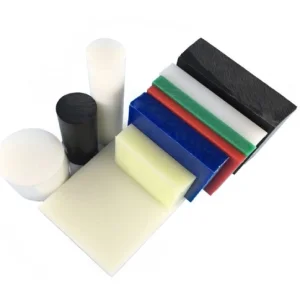
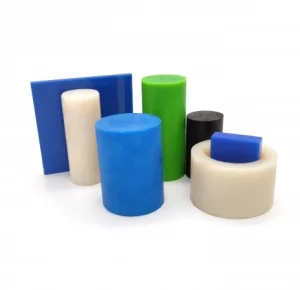
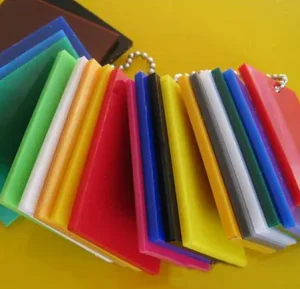
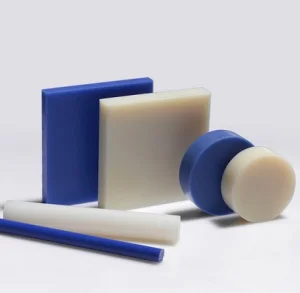
Explore our export-ready ABS, Nylon PA6/PA66, POM Acetal, UHMWPE, PTFE, and HDPE semi-finished sheets, solid rods, and CNC fabricated profiles.

Engineering Architecture of Modern Acrylonitrile Butadiene Styrene
A rigorous examination of polymer morphology, stress-relieved extrusion thermodynamics, and precision machining dynamics.
Polymer Terpolymer Synergy
The exceptional performance profile of engineering-grade ABS sheet originates directly from its tri-monomer chemical synthesis. Acrylonitrile contributes robust chemical resistance against inorganic salts, diluted acids, and aliphatic hydrocarbons, along with substantial thermal endurance up to heat deflection thresholds of 98°C. Butadiene forms microscopic elastomeric rubber phases uniformly dispersed across the continuous matrix, delivering superior Charpy notched impact strengths even down to cryogenic operating regimes of -40°C.
Meanwhile, the Styrene component imparts matrix hardness, lustrous surface gloss, and rigid mechanical modulus, enabling the material to be machined cleanly with carbide tooling without elastic wall deflection or plastic gouging. Understanding this terpolymer stoichiometry allows SHUNDA to formulate custom grades—from flame-retardant UL94-V0 alloys to weatherable acrylic-capped PMMA/ABS composites—optimized precisely for OEM assembly lines.
Stress Relief & Dimensional Calibrations
One of the primary failure modes in thick-gauge plastic sheet fabrication is anisotropic warpage caused by unrelaxed frozen-in orientation stresses induced during chill-roll take-off. Unlike conventional commercial extruders, SHUNDA integrates an in-line, continuous infra-red annealing protocol combined with offline thermal conditioning chambers. Each batch of extruded ABS sheet undergoes an engineered soak cycle held at 5°C below the glass transition temperature (Tg ≈ 105°C), followed by programmable linear cooling.
This stress-relieving protocol minimizes residual internal delta-stresses to negligible levels (< 1.5 MPa), guaranteeing that when large panels are hogged out on CNC router beds or drawn in high-draw-ratio vacuum tools, the finished components hold dimensional tolerances conforming to DIN ISO 2768-m. Our raw polymer formulations utilize 100% virgin prime-grade granules with zero uncontrolled regrind, ensuring consistent melt flow indices (MFI: 1.8 to 2.4 g/10min at 220°C/10kg).
Strategic Manufacturing Advantages of Sourcing ABS Sheets from China
How SHUNDA leverages Hebei's advanced polymer cluster to deliver unparalleled cost efficiency, raw material purity, and end-to-end quality control.
Upstream Chemical Integration
Located in Xingtai City, Hebei Province, SHUNDA benefits from direct upstream pipeline access to world-scale petrochemical cracking facilities. This enables rapid procurement of consistent, certified virgin ABS base resins (LG Chem, Chi Mei, and PetroChina partnerships) at low bulk economics, insulating our international clients from regional commodity price volatility.
Advanced Extrusion Architecture
Our workshop houses high-torque, multi-vented twin-screw extrusion lines capable of continuous sheet gauges from 0.5 mm up to 30.0 mm, in widths exceeding 2,500 mm. Integrated gravimetric dosers ensure micro-dosing precision for masterbatches, nucleating agents, and UV stabilizers with less than 0.1% formulation drift.
Vertical Integration: Sheet to Part
Unlike raw sheet distributors, SHUNDA provides complete turnkey conversion. Buyers can procure unmachined solid ABS stock or upload CAD/STEP files for custom 3-axis and 5-axis CNC routing, vacuum forming, edge beveling, solvent bonding, and robotic sonic welding under one roof, slashing lead times and middleman markups.
Emerging Trends & Next-Generation ABS Polymer Formulations
Addressing the shifting landscape of environmental compliance, high-heat automotive applications, and static-dissipative cleanroom demands.
PMMA/ABS Multi-Layer Co-Extrusion
Unmodified ABS degrades under prolonged solar ultraviolet radiation, causing chalking and micro-fissures. Our co-extruded PMMA/ABS sheets bond a resilient 0.2–0.5 mm pure acrylic capping layer directly over an impact-modified ABS core, achieving high-gloss or matte aesthetics, class-A automotive UV protection, and pencil hardness up to 3H without secondary painting.
Eco-Friendly Flame-Retardant (UL94 V-0)
In response to stringent European RoHS and REACH environmental directives, SHUNDA has eliminated toxic decabromodiphenyl ether (deca-BDE) additives. Our halogen-free, phosphorus-nitrogen synergized flame-retardant ABS sheets achieve a self-extinguishing UL94 V-0 rating at 1.5 mm thickness while drastically lowering smoke toxicity and acid corrosion gas emissions.
Static-Dissipative & Conductive ESD Grades
For semiconductor carrier trays, explosion-proof chemical handling housings, and sensitive robotic pick-and-place lines, standard ABS suffers from electrostatic accumulation. We compound permanent conductive carbon nanotubes or polymeric antistatic agents, achieving tailored surface resistivities of 106 to 109 Ω/sq without particulate shedding.
Comprehensive Application Engineering Across Mission-Critical Sectors
Engineered specifically for demanding mechanical environments where dimensional retention, ductile elasticity, and finish are non-negotiable.
Automotive & Transit Systems
Extensively deployed in thermoformed interior door panels, pillar cladding, instrument dashboard consoles, agricultural tractor cowlings, and exterior luggage pods, offering deep-draw drawability and high impact resistance.
Medical Device Enclosures
High-rigidity ABS panels machined or pressure-formed into MRI housings, dialysis console shells, diagnostic equipment bezels, and hospital cart covers resisting aggressive chemical disinfectants and isopropyl alcohol wiping.
Cold-Chain & Refrigeration
Custom-formulated corona-treated ABS sheets engineered specifically for refrigerator inner door liners and cold-storage display cases, featuring chemical resistance against cyclopentane blowing agents and zero low-temperature brittleness.
Industrial Tooling & Prototyping
Replaces costly tooling resins for rapid engineering prototypes, assembly fixtures, sand-casting pattern models, and CNC validation blanks due to its predictable machining behavior, bondability, and electroplatability.
Engineering Plastics Technical Comparison: ABS vs. Alternative Polymers
Consult this empirical reference guide compiled by SHUNDA application engineers to match mechanical, thermal, and tribological criteria to your operating environment.
| Polymer Family | Specific Density (g/cm³) | Tensile Strength (MPa) | Izod Impact (kJ/m²) | Heat Deflection Temp (°C @ 1.8 MPa) | Primary Mechanical Advantage | Key Industrial Usage |
|---|---|---|---|---|---|---|
| ABS (Acrylonitrile Butadiene) | 1.04 – 1.07 | 42 – 50 | 18 – 30 | 85 – 98 | High Rigidity & Impact | Housings, dash panels, thermoformed covers, rapid prototypes |
| Nylon (PA6 / MC Cast) | 1.14 – 1.16 | 75 – 88 | 6 – 12 | 70 – 105 | Abrasion & Load Bearing | Heavy crane sheaves, gears, wear shoes, outrigger support pads |
| POM (Acetal / Delrin) | 1.41 – 1.43 | 65 – 72 | 6 – 9 | 110 – 125 | Dimensional Stability | Precision metric gears, fuel components, close-tolerance bushings |
| HDPE (High-Density Polyethylene) | 0.95 – 0.97 | 23 – 30 | 12 – 20 | 45 – 55 | Chemical Purity & Weldability | Acid processing tanks, food-grade cutting surfaces, marine fender pads |
| UHMWPE (Ultra-High MW Polyethylene) | 0.93 – 0.95 | 20 – 28 | 80 – 140 | 40 – 50 | Extreme Abrasion Resistance | Bulk hopper flow liners, conveyor wear rails, chute cladding |
| PTFE (Fluoropolymer) | 2.15 – 2.20 | 20 – 35 | 14 – 18 | 55 – 65 | Near-Zero Friction & Chemical Inertness | High-temperature valve packings, semiconductor wafer seals |
Note: Empirical test figures reflect typical standardized specimen testing under ASTM D638, ASTM D256, and ISO 75 conditions. Custom modifiers (glass fiber reinforcement, rubber impact-modifiers, mineral fillers) will adjust these nominal thresholds.
Global Enterprise Sourcing, Tolerance Protocol & Quality Architecture
How SHUNDA protects international importers and procurement managers from defective consignments, logistics damage, and unexpected regulatory barriers.
Automated Optical & Physical Quality Checks
Every single metric ton of extruded ABS sheet produced at our Xinhe facility is monitored by automated in-line laser thickness gauges that verify transversal sheet profiles every 10 milliseconds. This eliminates gauge banding, "tiger striping," and crown variances across the entire sheet cross-section, guaranteeing consistent ±0.05 mm thickness uniformity.
Finished sheets are inspected under high-intensity surface scanning lamps to detect any embedded carbon specks, surface scratches, or cooling orange-peel imperfections. For custom machined parts, our metrology laboratory employs Coordinate Measuring Machines (CMM) and digital profile projectors calibrated to ensure total conformity to your engineering tolerances (ISO 2768-mk). Certified mill test certificates (EN 10204 3.1) accompanying all shipments document melt flow indices, tensile strength, and density verification.
Export Protective Packing & Ocean Logistics
Engineering plastics are susceptible to abrasive surface scratching and micro-moisture absorption during 30 to 45-day transoceanic voyages. To eliminate these transit risks, SHUNDA wraps both faces of every ABS sheet in co-extruded peelable polyethylene protective film (available in easy-peel transparent or heavy-duty UV-resistant blue film).
Full-size sheets are secured onto fumigated heat-treated solid timber pallets (compliant with ISPM-15 standards) with edge-protecting corner boards, heavy plastic stretch wrapping, and steel or composite banding. Silica-gel moisture desiccant bags are sealed inside all pallet packs, preventing moisture ingress and mold growth during tropical transits. We handle FOB, CIF, CFR, and turnkey DDP shipping to the Americas, Europe, Southeast Asia, and the Middle East.
Frequently Asked Questions by Global Buyers & Engineers
Direct technical and operational answers to common inquiries from mechanical engineers, tooling technicians, and enterprise buyers.
What are the maximum sheet dimensions, thicknesses, and color formulations available?
Why is predrying mandatory prior to thermoforming ABS sheets?
Can SHUNDA manufacture ABS sheets with textured, embossed, or matte surfaces?
How does ABS sheet compare against High-Impact Polystyrene (HIPS) and Polycarbonate (PC)?
What tooling, spindle speeds, and feed rates are recommended for CNC routing ABS sheets?
What is your minimum order quantity (MOQ) and production turnaround?
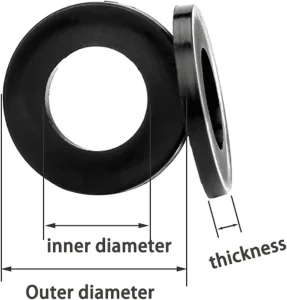
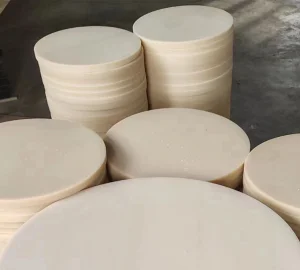
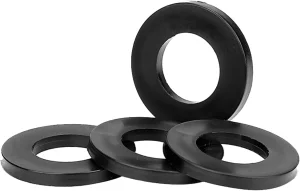
Impact Bushings, Cast Nylon Stock & Machined Assemblies
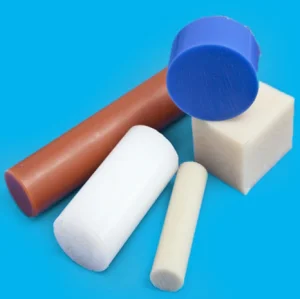
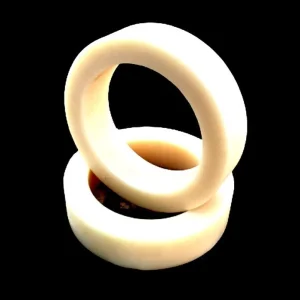
Review additional engineering polymer products from our ISO-certified Hebei facility, including piling machine cushions, cast nylon tubes, and heavy-duty wear blocks.
Request Engineering Consultation & Mill Test Reports
Send your CAD/STEP drawings or bill-of-materials to our Xinhe factory engineering desk.