
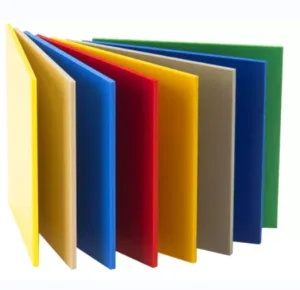
Precision Machined & Semi-Finished Polymers (Batch 01)
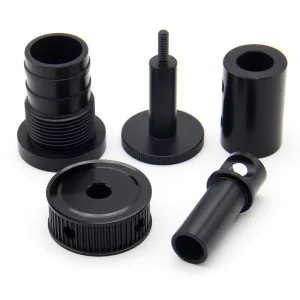
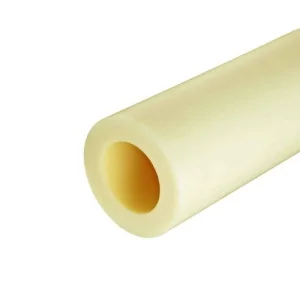
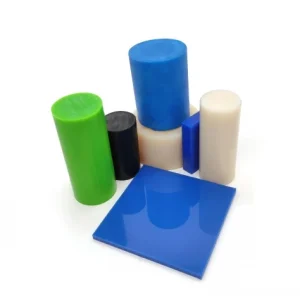
Factory-direct wear plates, cast nylon tubes, heavy-duty stock, and precision-turned components produced under continuous dimensional monitoring.
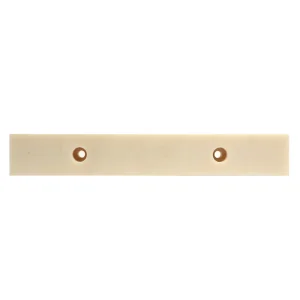
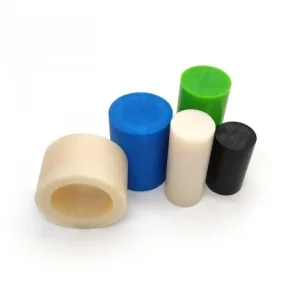
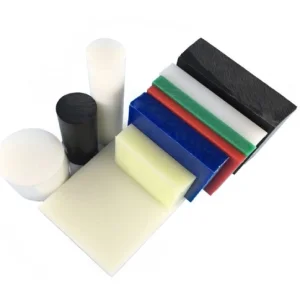
Architectural Advantages: Why Source Machined Plastics From China?
Analyzing the strategic convergence of raw polymer synthesis, secondary stress-relief annealing, multi-axis subtractive tooling, and cost optimization at scale.
Upstream Chemical Integration
Unlike Western contract machine shops that buy stock shapes at high merchant markups, SHUNDA integrates monomer casting (MC Nylon), extrusion (POM, HDPE, PP), and sintering (UHMWPE) on-premise. Controlling polymer purity directly reduces internal voids and eliminates batch-to-batch molecular weight fluctuations.
Secondary Stress-Relief Cycle
Thermoplastics exhibit viscoelastic memory and residual stress from extrusion or cooling. Our facility utilizes custom-programmed convective annealing ovens to normalize internal shear fields before final finishing passes, achieving tolerances up to ±0.015mm on complex geometries without post-installation warpage.
Rapid Turnaround & Tooling Agility
With thousands of active carbide and diamond (PCD) cutting tools specifically ground with zero-to-negative rakes and ultra-polished flutes for plastic chip evacuation, we cut development cycles from weeks to days. Prototypes move from CAD verification to CMM-inspected physical parts within 48 to 72 hours.
High-Mix, Low-to-High Volume Flexibility
Whether providing short-run pilot runs for medical instrumentation assemblies or running 100,000-piece continuous schedules for logistics conveyor components, our multi-pallet CNC cells and automated tool monitoring reduce unit costs by 30% to 50% relative to North American or European machine shops.
Complete Quality Traceability & Testing
Every batch comes supported with material test reports (MTR), resin virginity certifications, Shore hardness profiling, and 3D coordinate measuring machine (CMM) reports. We run comprehensive optical surface profilometry to ensure your hydrodynamic seal grooves meet strict Ra microinch limits.
20+
Years Engineering Experience
±0.015mm
Precision Micro-Tolerance
100%
Virgin Polymer Feedstock
<12h
Engineering Drawing Review
Global Industry Evolution: The Paradigm Shift to Subtractive Polymer Engineering
How lightweighting imperatives, metal-to-plastic conversions, and additive limitations are driving high-precision CNC polymer manufacturing.
The global precision machined components landscape is experiencing an accelerated migration from phosphor bronze, brass, stainless steel, and cast aluminum to high-performance fluoropolymers, polyamides, and polyaryletherketones. While additive manufacturing (3D printing) has captured market attention, subtractive CNC machining remains irreplaceable for load-bearing, low-friction, and high-tolerance parts due to its superior isotropic molecular density, eliminating inter-layer shear failure risks entirely.
Metal-to-Plastic Conversion Trends
Industrial machinery builders are actively replacing bronze sleeve bearings and carbon steel sprockets with oil-impregnated MC Cast Nylon and self-lubricating POM. Benefits include up to a 75% reduction in reciprocating mass, total corrosion immunity, zero reliance on external grease points, and substantial acoustic noise dampening.
Thermal & Cryogenic Performance
Modern applications require polymers that retain dimensional stability at extreme temperature brackets. From cryogenic liquefied natural gas (LNG) valve seats utilizing modified PTFE to aerospace brackets and semiconductor etching chamber rings machined from unfilled and carbon-filled PEEK, polymer machining technology has broadened its operating range between -200°C to +260°C.
High-Speed Five-Axis Subtractive Tooling
The convergence of CAM algorithms with customized cutter geometries allows single-setup multi-axis turning and milling of highly convoluted plastic components. High surface speeds coupled with high feed rates prevent localized polymer melting, providing mirror-like microinch finishes directly off the machine spindle.
Engineering Polymer Machining & Tribological Comparison Matrix
A reference dataset developed by our senior manufacturing engineers to assist procurement teams in matching raw materials to chemical, thermal, and dynamic friction requirements.
| Polymer Grade | Tensile Strength (MPa) | Continuous Temp (°C) | Dynamic Coeff. of Friction | Machinability Rating | Recommended Applications |
|---|---|---|---|---|---|
| MC Cast Nylon (PA6) | 75 - 85 | -40 to +110 | 0.25 - 0.35 | Excellent (Requires Sharp Rake) | Large crane sheaves, pile driver hammer cushions, heavy wear pads, rope pulleys |
| POM / Acetal (Delrin) | 65 - 72 | -50 to +105 | 0.20 - 0.28 | Superior (Crisp Chip Breaking) | Precision metric gears, fuel system valves, metric bushings, electrical switch components |
| UHMWPE (1000 Grade) | 25 - 35 | -150 to +80 | 0.10 - 0.15 | Fair (High Toughness, Needs Speed) | High-abrasion hopper liners, conveyor guide rails, outrigger stabilizing pads, chute covers |
| PTFE (Teflon) | 20 - 30 | -200 to +260 | 0.04 - 0.10 | Good (Soft, Susceptible to Creep) | Cryogenic gaskets, chemical valve seats, non-stick sanitary seals, high-voltage insulators |
| PEEK (Polyetheretherketone) | 95 - 110 | -60 to +250 | 0.30 - 0.38 | Moderate (Demands Carbide/PCD) | Downhole petroleum connectors, aerospace valve plates, spinal surgical cages, semiconductor pins |
| HDPE / PP Polyolefins | 28 - 38 | -40 to +90 | 0.22 - 0.30 | Good (Low Melt Temp Warning) | Chemical pickling tanks, electroplating barrel components, fluid containment manifold caps |
Macro-Industrial Solutions: Where Precision Machined Plastics Perform
From deep-sea subsea umbilicals to automated food packaging plants, discover our custom-machined plastic performance footprints.
Heavy Construction & Piling
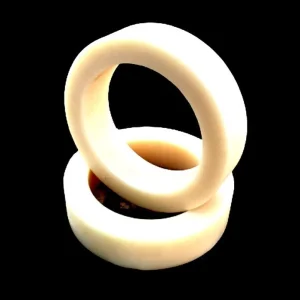
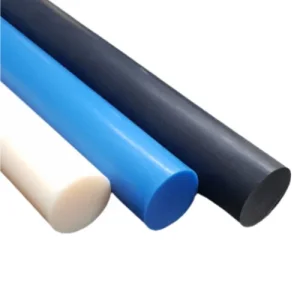
Black cast nylon ring cushions absorb enormous kinetic loads in hydraulic impact hammers, protecting steel anvil components while dampening structural vibration. UHMWPE crane foot support pads ensure distributed bearing pressures on unstable ground.
Automated Food & Beverage
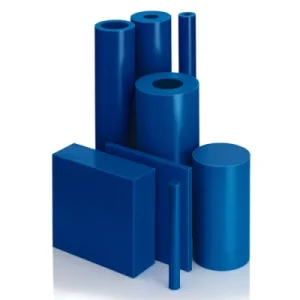
Machined blue POM and UHMWPE star wheels, bottle timing screws, chain wear strips, and conveyor track guides operate reliably without lubricant wash-out, complying with stringent FDA clean-in-place (CIP) regimens.
Aggressive Chemical Processing
Pure virgin PTFE diaphragm valves, PVDF piping manifolds, and welded polypropylene plating barrels resist concentrated sulfuric, hydrochloric, and hydrofluoric acid streams across broad thermal spectrums where superalloys fail.
Semiconductor & Electronics
Antistatic (ESD) Delrin, natural PEEK, and virgin PTFE components machined under climate-controlled conditions ensure zero particulate shedding, micro-plasma resistance, and excellent dielectric insulation in wafer processing chambers.
Global Procurement Demands: Risk Mitigation & Quality Engineering
Key checkpoints international engineering and sourcing directors must verify before onboarding an offshore plastic machining partner.
Thermal Expansion Compensation
Polymers carry linear thermal expansion coefficients (CLTE) up to 10 times higher than metals. Procurement specifications must indicate baseline ambient temperature reference points (typically 20°C / 68°F) to ensure dimensional checks on coordinate measuring machines remain valid globally.
Moisture Absorption Swell Allowances
Polyamides (Nylon PA6 and PA66) absorb moisture up to 7-8% of total mass at equilibrium, resulting in volumetric expansion. Global buyers require engineers who design compensatory shaft tolerances or specify hydrophobic POM/PET-P whenever operating in high-humidity or submerged settings.
Post-Machining Stress Management
Aggressive pocketing or unbalanced wall-thickness designs release internal casting stresses, leading to post-machining curvature. Ensure your contract manufacturer performs intermediate annealing cycles between roughing passes and finishing passes.
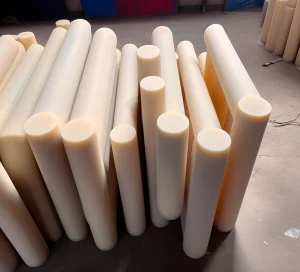
Precision Machined & Semi-Finished Polymers (Batch 02)
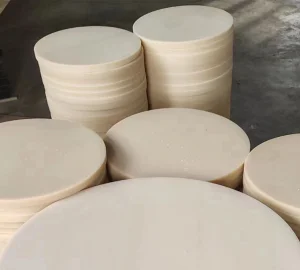
Complete custom CNC turned parts, heavy-duty outrigger pads, specialized hammer cushions, and industrial cast stock for global export.
Frequently Asked Questions (Engineering & Procurement FAQ)
Direct technical answers addressing geometric tolerances, material selection, MOQ, export documentation, and tooling feasibility.
What is the standard tolerance capability for custom plastic machined parts?
Under climate-controlled turning and milling environments (∼20°C), our standard CNC tolerance is ±0.05mm. For critical engineering features in dimensionally stable polymers like POM (Acetal) or PEEK, we routinely achieve precision up to ±0.015mm. Highly flexible or hydroscopic materials such as unfilled PA6 or virgin PTFE typically hold between ±0.08mm to ±0.12mm due to inherent elastic recovery.
How does SHUNDA prevent part deformation during high-speed CNC milling?
We employ a three-tier deformation control protocol: (1) Pre-machining convective oven annealing to relieve extrusion/casting shear stress; (2) Vacuum clamping fixtures and soft jaws to prevent mechanical point-load distortion; and (3) Specialized high-positive rake, polished-flute cutters with mist/air jet blast cooling to stop localized thermal softening.
Why choose MC Cast Nylon over Extruded PA66 for large diameter parts?
Monomer Cast (MC) Nylon is formed by atmospheric liquid polymerization in molds, resulting in substantially higher molecular weight, superior crystallinity, and virtually zero internal stress compared to extruded PA66. This process prevents inner shrinkage cavities, boosts abrasive wear life by 20-30%, and enables the cost-effective creation of solid rods and pipes exceeding 500mm diameter.
Can you provide comprehensive testing and chemical compliance certificates?
Yes. Every export shipment can be paired with an EN 10204 3.1 type Material Test Report (MTR), full resin traceability logs, RoHS 3 and REACH compliance statements, and 100% full-feature CMM inspection sheets upon request.
What formats do you support for CAD engineering reviews?
We accept industry-standard 3D formats including STEP (.stp), IGES (.igs), Parasolid (.x_t), and SolidWorks files (.sldprt), as well as native 2D drafting prints (.dwg, .dxf, and dimensioned .pdf) with highlighted GD&T (Geometric Dimensioning and Tolerancing) standards.
How does your factory protect machined parts during transoceanic shipping?
Finished plastic parts are individually cleaned, packed in scratch-resistant polyethylene bubble sleeves, sealed with desiccant pouches to prevent atmospheric moisture pickup, and enclosed inside heavy-duty, fumigated wooden shipping crates reinforced with steel exterior bands.