Engineered Nylon Tubes & CNC Core Profiles
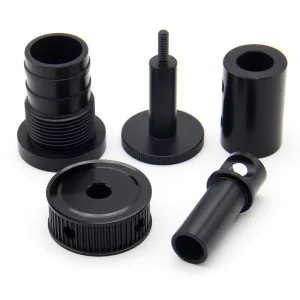
Direct factory extrusion, vertical centrifugal monomer casting, and precision multi-axis milling for international original equipment manufacturers.
Evolutionary Shifts in Nylon Tube Manufacturing
How the rapid shift toward vehicle electrification, extreme industrial automation, and lightweight engineering is reshaping global PA tubing demand.
Lightweighting vs. Bronze & Steel
Industrial OEMs are rapidly superseding phosphor bronze and alloy steel bush sleeves with Cast MC Nylon (PA6G) hollow tubes. With a specific gravity of 1.15 to 1.16 g/cm³—roughly one-seventh the weight of bronze—cast polyamide pipes drastically lower structural rotational inertia while eliminating dry stick-slip issues.
Thermal & Chemical Endurance
Next-generation hydraulic circuits require robust heat stabilization. Advanced PA6 and PA12 formulations endure continuous service temperatures up to +110°C (with heat stabilizers) and intermittent spikes of +160°C, holding exceptional non-cracking resistance to aggressive hydrocarbons, aromatic esters, and synthetic lubricants.
Centrifugal Cast Densification
Vertical centrifugal casting technology is transforming large outer-diameter nylon tubes (up to 1200 mm OD). By applying up to 25G rotational force during caprolactam monomer polymerization, microporosity is virtually eradicated, achieving crystalline structures exceeding 50% for vastly superior compressive creep fatigue life.
Enterprise Sourcing Demands for Polyamide Tubing
Understanding the multi-tier engineering requirements evaluated by VP-level procurement and quality assurance teams across North America, Europe, and Asia-Pacific.
Burst Pressure & Hoop Stress
For pneumatic brake lines and hydraulic conduits, purchasing teams require audited burst pressure margins up to 4:1 operating ratios under DIN 73378 and SAE J844 standards, demanding exact wall concentricity without thin-spot risk.
Moisture Absorption Control
Polyamides are hygroscopic. Global buyers require calibrated post-extrusion atmospheric conditioning or modified low-absorption polymers (such as PA12 or oil-filled MC nylon) to prevent dimensional swelling beyond 0.3% in humid operation.
Traceable Batch Verification
High-tier applications demand full raw polymer batch tracking with EN 10204 3.1 inspection certificates, guaranteeing zero unapproved regrind, documented melt mass-flow rates, and uniform Charpy unnotched impact toughness.
Zero-Residual-Stress Annealing
Machining hollow tubes into precision bushings frequently causes warping if internal stresses remain. Procurement mandates continuous thermostatic thermal oil or hot air annealing to guarantee dimensional roundness post-boring.
Nylon Tubing Grade Comparison & Engineering Properties
Comprehensive technical benchmarks developed by our in-house materials laboratory to assist engineering teams during CAD material specification.
| Polymer Classification | Tensile Strength (MPa) | Shore Hardness | Water Absorption (Sat. %) | Operating Temp Range | Distinct Engineering Benefit |
|---|---|---|---|---|---|
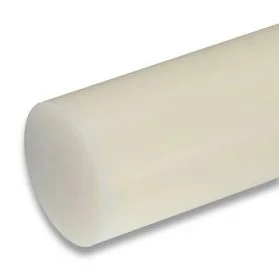
| Natural MC Cast Nylon (PA6G) | 80 - 90 | 82 - 85 Shore D | 6.0 - 7.0% | -40°C to +110°C | Highest modulus, exceptional compressive load handling for heavy crane sheaves. |
| Extruded Polyamide 6 (PA6) | 75 - 85 | 80 - 82 Shore D | 8.0 - 9.5% | -40°C to +105°C | High mechanical damping, superior surface impact energy dissipation. |
| Extruded Polyamide 66 (PA66) | 85 - 95 | 84 - 86 Shore D | 7.0 - 8.5% | -30°C to +120°C | Elevated melting point (+260°C), superior resistance to creep under load. |
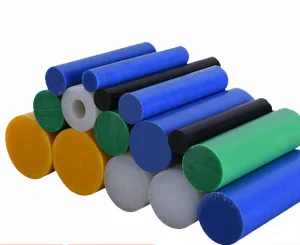
| MoS₂ Filled Cast Nylon (Grey/Black) | 82 - 88 | 83 - 86 Shore D | 5.5 - 6.5% | -40°C to +115°C | Solid molybdenum disulfide additive lowers dry friction and enhances crystalline rigidity. |
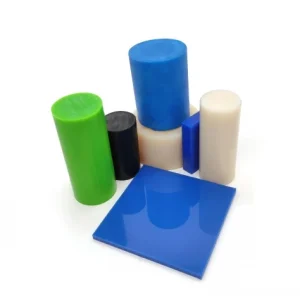
| Oil-Impregnated Nylon (Green) | 70 - 78 | 76 - 80 Shore D | 4.5 - 5.5% | -40°C to +105°C | Internal liquid lubricant yields friction coefficient down to 0.12; maintenance-free. |
| Flexible Polyamide 12 (PA12) | 45 - 55 | 68 - 72 Shore D | 1.2 - 1.5% | -50°C to +100°C | Minimal moisture uptake; optimal for automotive air brakes and diesel transfer lines. |
Engineered Tubing Implementations Across Critical Sectors
From deep offshore lifting to industrial hydraulic articulation, how SHUNDA nylon hollow products solve abrasive, high-pressure, and high-impact challenges.
Heavy Lifting & Mobile Cranes
Heavy-duty wire rope sheaves, boom slide bushings, and telescopic outrigger wear collars produced from our thick-wall cast nylon tubes prevent metal-on-metal gauling, damp shock vibrations, and extend steel wire rope service lifespan by up to 300%.
Pneumatic & Fluid Handling Conveyance
Engineered thin-wall extruded polyamide tubing serves as the backbone for high-speed automated bottling and conveyor transfer. Its ultra-smooth internal surface (Ra < 0.4 µm) minimizes pressure drops and prevents particle adhesion across continuous duty cycles.
Mining, Slurry & Offshore Liners
Corrosion-immune cast PA6 pipes deployed as internal sleeves for bulk aggregate transport withstand relentless scouring friction from quartz sand and slurries. When compared with polyurethane or UHMWPE, cast nylon delivers superior structural hoop stiffness under backpressure.
Global Logistics, Compliance & Localized Support
A rigorous supply framework built for zero downtime, strict border customs clearance, and verifiable regulatory compliance.
Global Standards & Environmental Compliance
Every hollow nylon tube and machined subcomponent fully complies with EU RoHS Directive 2011/65/EU and REACH (EC No 1907/2006) for Substances of Very High Concern (SVHC). Food-grade variants are available compliant with FDA 21 CFR 177.1500 for direct food processing contact.
Export-Grade Protective Packaging
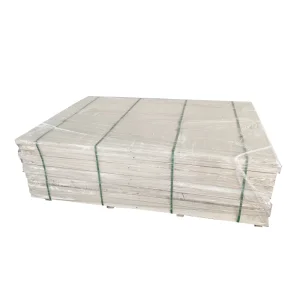
Cross-continental ocean freight demands moisture and impact protection. Our tubing shipments utilize individual PE sleeving, anti-crush heavy-wall corrugated carton tubes, desiccants, and heat-treated fumigated ISPM-15 wooden crates to prevent bending, ovality warping, or moisture changes.
Engineering Support & Quick Dispatch
Our bilingual polymer engineering desk provides comprehensive technical recommendations within 12 business hours. Rapid prototyping for custom turned nylon sleeves ships via DHL/FedEx Express in as little as 3 to 5 business days from final drawing approval.
Technological Roadmap: The Future of Polyamide Systems
Pioneering continuous polymerization casting, nano-composite reinforcement, and closed-loop recyclability initiatives.
Phase 1: Graphene & Nano-Reinforced Matrices
Integration of surface-treated graphene nanoplatelets within the monomer mix prior to centrifugal casting. Early empirical results display a 42% boost in compressive strength alongside a 28% reduction in coefficient of friction for subsea mooring bearings.
Phase 2: In-Line Ultrasound Laser Wall Verification
Installation of high-frequency ultrasonic wall-thickness scanning rigs on all automated horizontal casting units, ensuring continuous 360-degree roundness and inner-wall concentricity logs across 100% of manufactured tubes.
Phase 3: Bio-Derived & Circular Polyamides
Expanding the adoption of castor-oil derived Polyamide 11 and chemical depolymerization recycling pathways to achieve an audited 35% reduction in product carbon footprint (PCF) for European ESG-regulated supply chains.
Frequently Asked Questions by Industrial Buyers
In-depth responses covering tolerances, post-machining behavior, temperature ratings, and custom tooling.
What is the primary operational difference between Cast Nylon (PA6G) and Extruded Nylon (PA66) tubes?
Cast nylon (PA6G) is synthesized directly via chemical monomer casting at lower temperatures and atmospheric pressure, creating higher molecular weight, superior crystallinity, higher hardness, and significantly lower internal stress. This makes cast tubing preferable for large diameters (OD > 100 mm) and heavy-duty structural bushings. Extruded PA66 features slightly higher continuous thermal resistance and higher elasticity, making it ideal for small-to-medium hydraulic lines and high-velocity continuous extrusion.
How does moisture absorption affect precision tolerances of nylon tubes?
Unfilled Polyamide 6 can absorb between 2.5% to 3.0% moisture at ambient equilibrium (50% RH) and up to 7% to 9% when completely submerged in water. This absorption triggers volumetric expansion (approx. 0.2% to 0.3% dimensional growth per 1% absorbed water). For tight-tolerance applications operating in wet environments, we recommend pre-conditioning parts, adjusting inner diameter clearances during CNC turning, or transitioning to low-absorption polymers such as POM (acetal) or oil-filled nylon.
Can you provide custom non-standard outer/inner diameter tooling for cast nylon tubes?
Yes. In addition to our inventory of over 180 standard mold combinations, our in-house tooling workshop manufactures custom vertical casting molds and centrifugal dies for non-standard diameters up to 1,200 mm OD. Custom tooling lead times range from 7 to 12 working days, significantly reducing stock wastage when machining complex non-standard tubular designs.
What cutting speeds and feed rates are recommended when turning nylon tubes?
When turning cast or extruded nylon, use sharp high-speed steel (HSS) or polished carbide tooling with wide chip flutes and high positive rake angles (15° to 30°) to prevent material melt and heat buildup. Recommended surface cutting speeds range between 250 to 500 m/min with feed rates of 0.15 to 0.40 mm/rev. Compressed air or water-soluble emulsions should be utilized as coolants during deep internal boring operations.
Engineering Plastics: Cast Plates, Custom Bushings & Specialized Stock
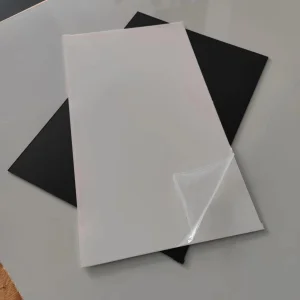
Complete your procurement package with our complementary range of certified polyacetal, UHMWPE, and customized monomer casting formulations.