
Engineered Stock Shapes & Semi-Finished Semi-Crystalline Bars
Explore our premium grade stock polymers engineered for high-speed CNC turning, low dielectric dissipation, and aggressive mechanical wear regimes.
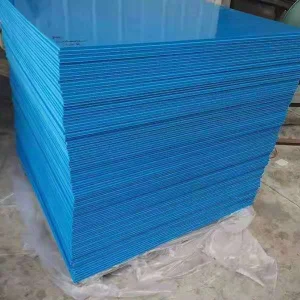
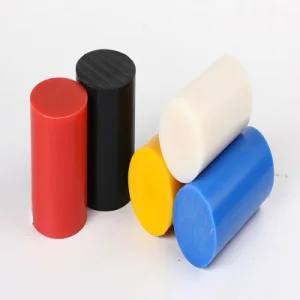
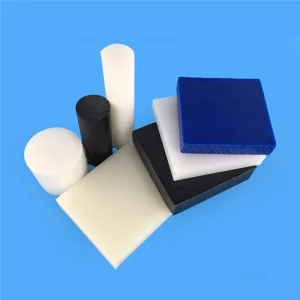
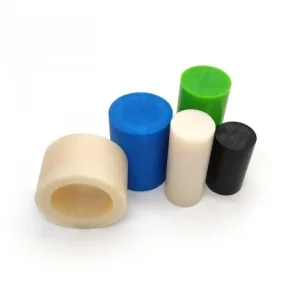
Polyoxymethylene (POM) Engineering Fundamentals: Homopolymer vs. Copolymer
A rigorous examination of molecular morphology, mechanical crystallization kinetics, and high-performance machinability benchmarks.
In modern industrial polymer synthesis, Polyoxymethylene (POM), universally categorized under the trade and chemical monikers Acetal, Polyacetal, and Polyformaldehyde, represents one of the premier semi-crystalline engineering thermoplastics. Designed with an alternating backbone of methylene and oxygen atoms (-(CH2-O)n-), POM possesses an exceptionally ordered macromolecular arrangement. This structure yields high modulus, superior yield strength, near-zero moisture sensitivity, and predictable frictional coefficients that rival standard non-ferrous metals like brass, zinc, and aluminum.
When selecting POM rod stock from global manufacturers, design engineers and technical procurement specialists encounter two distinct chemical formulations: POM-H (Homopolymer), historically commercialized as Delrin®, and POM-C (Copolymer). Understanding the microstructural variance between these two matrices is crucial for optimizing precision CNC lathe turning, milling, and field endurance in harsh chemical environments.
POM-H features an identical, unbranched polymer chain terminating in end-capped hemiacetal groups. While this grants POM-H an approximate 10-15% increase in tensile tensile strength (70–78 MPa) and surface hardness over POM-C, homopolymer grades suffer from severe volumetric shrinkage (up to 2.5%) during extrusion cooling. This differential contraction creates a notorious internal defect known as centerline porosity. Conversely, modern Chinese extrusion factories utilize copolymer POM-C containing random comonomers (such as ethylene oxide or 1,3-dioxolane), which disrupt the crystallite uniformity just enough to eliminate void formation along the neutral central axis while resisting strong alkaline hydrolysis and thermal stress oxidation up to 105°C continuous service.
| Mechanical / Thermal Property | Test Standard | POM-C (Acetal Copolymer) | POM-H (Acetal Homopolymer) | Polyamide (Cast PA6) | PEEK (Polyetheretherketone) |
|---|---|---|---|---|---|
| Specific Density (g/cm³) | ISO 1183 | 1.41 - 1.42 | 1.42 - 1.43 | 1.14 - 1.16 | 1.30 - 1.32 |
| Tensile Yield Strength (MPa) | ISO 527 | 65 - 70 | 75 - 82 | 75 - 85 (dry) / 45 (wet) | 95 - 110 |
| Modulus of Elasticity (GPa) | ISO 527 | 2.8 - 3.1 | 3.1 - 3.6 | 3.2 (dry) / 1.4 (wet) | 3.8 - 4.2 |
| Moisture Absorption (23°C, 50% RH) | ISO 62 | 0.20% | 0.22% | 2.2% - 3.0% | 0.10% |
| Dynamic Coeff. of Friction (Dry vs. Steel) | ASTM D1894 | 0.25 - 0.32 | 0.22 - 0.28 | 0.35 - 0.42 | 0.38 - 0.45 |
| Continuous Service Temperature (°C) | UL 746B | -50 to +105 | -50 to +90 | -40 to +105 | -60 to +250 |
| Centerline Porosity Vulnerability | Ultrasonic Inspection | Virtually Zero / Homogeneous | High Vulnerability (>50mm OD) | Minimal (Casting Route) | Extremely Low |
Extrusion Dynamics & Controlled Stress-Relief Annealing Profiles
How cutting-edge Chinese facilities manage crystallization dynamics to guarantee round bars that do not warp during intense CNC cutting operations.
1. Vacuum Dehydration & Twin-Screw Plastification
Polyoxymethylene raw virgin pellets undergo closed-loop desiccant air drying below 0.05% moisture content prior to dosing. Utilizing 32:1 to 36:1 L/D ratio extrusion barrels with vacuum degassing sections prevents formaldehyde gas venting, ensuring uniform resin density with zero internal pinholes.
2. Multi-Zone Calibrated Die Cooling
Molten POM emerges from precision-machined chrome-carbide dies into prolonged multi-stage temperature calibrators. Controlled gradient jacket cooling prevents premature skin solidifying, balancing the cooling differential between outer perimeters and the molten central core to suppress parabolic frozen stresses.
3. 48-Hour Thermal Annealing Soaking Cycles
Raw extruded rods enter automated liquid nitrogen and forced-convection hot oil or circulating air annealing kilns. Heated slowly to 145°C - 150°C (just below melting threshold) and held for 1 hour per 10mm of diameter before decelerated cooling, this critical cycle relaxes molecular strains to residual levels below 2.5 MPa.
The difference between tier-1 factory stock and cut-rate commoditized POM rods emerges during high-speed CNC turning and multi-axis machining center pocketing. Unannealed or hastily cooled rods store massive tangential and radial tension. The moment a tool cuts past the peripheral 25% boundary, the rod violently bends, shrinks out of tolerance, or binds the cutter head. SHUNDA’s strictly regulated extrusion calibration yields POM rods that maintain exceptional dimensional straightness (better than 1.0 mm per meter) and tight outside diameter tolerances conforming to DIN 16980 and ISO h9/h10 standards.
China Factory Ecosystem: Strategic Supply Chain Advantages
How vertical integration, raw chemical upstream proximity, and scale economies empower overseas OEMs and wholesale distributors.
Upstream Resin Proximity
China is home to the world's largest coal-to-chemical, methanol, and formaldehyde synthesis centers. Direct pipeline links to national POM synthesis leaders reduce feedstock shipping volatility and guarantee steady supply even during macro energy crises.
Cost-Efficiency Curves
By producing semi-finished rod and sheet stock alongside integrated in-house CNC turning and milling cells, Chinese factories eliminate double handling, shipping fees, and intermediary distributor margins, achieving 25%–40% TCO savings.
Agile Tooling & Mold Dies
In-house tool shops can fabricate non-standard extrusion calibrator bushings and customized round rod dies (from 5mm micro-rods up to 350mm massive solid cylindrical billets) in days rather than the months typical of Western processors.
Intermodal Port Access
Industrial corridors in Hebei, Jiangsu, and Shandong maintain direct arterial freight lines to major logistics gateways like Tianjin, Qingdao, and Shanghai, facilitating prompt LCL, FCL, and consolidated mixed-material shipments worldwide.
In today's resilient procurement frameworks, global multinational companies can no longer rely on single-source, highly priced regional distributors. Forward-thinking procurement officers partner directly with auditable, ISO 9001-certified primary manufacturers capable of providing lot-numbered certificates of analysis (COA), computerized ultrasonic flaw detection, and fully customized batch compounding—such as incorporating PTFE micro-powders, glass beads, or conductive carbon black.
Regulatory Compliance, International Food Contact & Traceability
Meeting rigorous international mandates: Ensuring zero regulatory barriers for North American, European, and Asia-Pacific importers.
FDA 21 CFR 177.2470 & EU 10/2011
For applications in milk processing, slaughterhouses, and pharmaceutical packaging, virgin white POM rods are formulated strictly with food-grade stabilizing compounds. Our stock shapes undergo rigorous migration testing and meet global food contact criteria, guaranteeing zero harmful trioxane and formaldehyde extraction.
RoHS 3 (EU 2015/863) & REACH SVHC
Our complete engineering plastic range complies with the European Chemicals Agency (ECHA) candidate list of Substances of Very High Concern (SVHC). Products are certified free from heavy metals, lead, mercury, cadmium, hexavalent chromium, and brominated flame retardants (PBB/PBDE), protecting green-tier electronics assembly lines.
Full Mill Test Reports (MTR)
Every extrusion run is registered with a discrete heat and batch identifier. Raw virgin polymer melt flow rates (MFR), charpy impact strengths, heat deflection temperatures (HDT), and density profiles are certified and archived for 10 years, ensuring complete dual-track traceability back to original resin reactor lots.
Reliable global partnerships depend on robust international logistics. Beyond material chemistry, SHUNDA uses multi-ply polyethylene stretch film wrapping, moisture-absorbing desiccant sacks, edge-cushion foam, and ISPM-15 compliant fumigated solid timber crates. This export-ready packaging ensures POM round bars arrive straight, dry, and protected from deep maritime humidity, salty sea mist, and port container jostling.
High-Demanding Localized Industrial Application Scenarios
Where mechanical properties meet real-world operating environments: How POM rods excel across mission-critical industries.
Automotive Dynamics
Used to machine precision helical pinion gears for power window modules, wiper linkages, fuel sender unit housings, sliding door guide rollers, and seatbelt release mechanisms requiring high cyclical fatigue resistance and low squeak noise (NVH reduction).
Beverage & Food Filling
Machined into custom star wheels, timing screws, can-capping chucks, filler pistons, and scraper blades. POM’s low water absorption (<0.2%) ensures it won't swell in high-pressure clean-in-place (CIP) steam and chemical washdown routines.
Semiconductor Fixturing
Carbon-filled and permanently anti-static (ESD) POM copolymer grades (surface resistivity 106 to 109 ohms/sq) are precision-milled into wafer carrier handling cassettes, vacuum suction pens, and test socket nests where triboelectric discharge must be prevented.
Fluid Hydraulics & Pneumatics
Precision-turned valve seats, metering spool valves, pneumatic manifold pistons, back-up rings, and quick-disconnect fittings. Acetal maintains dimensional stability against diesel fuel, mineral oils, solvents, and non-oxidizing salts up to 80°C.
Across these varied operational fields, POM's self-lubricating characteristics help equipment designers eliminate liquid hydrocarbon greases that can attract dirt, foul pharmaceuticals, or cause fires in pure oxygen environments. POM rods yield clean, manageable ribbons during lathe turning and leave sharp, burr-free edges under high-shear carbide tooling.
Emerging Industry Trends: Decarbonization & Smart Polymeric Extrusion
The technological developments driving next-generation polyoxymethylene supply, quality, and environmental stewardship.
ISCC PLUS Bio-Based Mass Balance Resins
Global demand for sustainable procurement is driving the adoption of bio-attributed POM synthesized from bio-methanol and circular bio-waste feedstocks. These resins deliver identical mechanical strength, chemical resistance, and melt flow properties with up to an 80% lower cradle-to-gate carbon footprint.
Ultra-Low VOC & Low-Emission Formulations
Driven by strict automotive interior air quality standards (such as VDA 275 requirements below 2.0 mg/kg formaldehyde emissions), modern resin stabilization systems prevent thermal degradation during extrusion, keeping workshop air clean and ensuring finished parts are virtually odorless.
Automated Inline Laser & Ultrasonic NDT Inspection
Modern extrusion lines employ dual-axis dynamic laser micrometers paired with in-line water-bath ultrasonic transducers. This real-time non-destructive testing scans the solidifying rod 360 degrees, automatically flagging micro-voids, bubbles, or eccentricities down to 0.05 mm.
As smart manufacturing evolves, predictive AI systems correlate cooling bath temperature spikes, screw torque variations, and resin lot moisture metrics to continuously optimize the extrusion line. The result is unprecedented mechanical consistency across both high-volume standard stock and custom-formulated rods.
Frequently Asked Questions: POM Rod Engineering & Global Procurement
In-depth technical answers addressing common procurement questions, machining best practices, and polymer property comparisons.
How can buyers visually or physically detect centerline porosity in POM-H rods?
Centerline porosity in thick POM-H (Delrin®) rods usually shows up as an opaque, spongy, or slightly discolored core when cross-sectioned. A simple dye-penetrant test on a faced slice will reveal micro-voids immediately. In critical applications, immersion ultrasonic testing reliably detects core density drops without damaging the stock shape.
What are the recommended feeds, speeds, and tooling for high-precision POM CNC turning?
Use sharp, polished high-speed steel (HSS) or fine-grain tungsten carbide tools with generous positive rake angles (15° to 30°) and ground relief angles. Maintain surface cutting speeds of 250–450 m/min with feeds between 0.1 and 0.3 mm/rev. Use flood coolant or high-pressure air blasts to evacuate continuous chips and prevent frictional heat build-up that could melt the cut surface.
Why is POM copolymer (POM-C) superior to Nylon (PA6/PA66) in wet or submerged applications?
Nylon has polar amide linkages that absorb 2.5% to 8% atmospheric or liquid water, causing noticeable swelling (up to 1.5% size variation) and an over 50% drop in tensile stiffness. POM-C absorbs less than 0.20% water at complete saturation, preserving tight dimensional tolerances, gear backlash, and electrical insulation properties in submerged environments.
How does thermal annealing prevent warping in heavily machined asymmetrical parts?
Solid-state thermal annealing holds the semi-finished polymer stock slightly below its crystalline melting point, allowing frozen, stretched polymer chains to relax naturally. Without this step, machining away material releases unbalanced stresses, causing parts to twist and cup over the following hours and days.
What chemical environments cause catastrophic failure or degradation in POM rods?
POM shows excellent resistance to aliphatic and aromatic hydrocarbons, fuels, neutral oils, alcohols, and ester solvents. However, it is vulnerable to strong mineral acids (nitric, sulfuric, and hydrochloric acids below pH 4), strong halogens, and aggressive oxidizing agents, which degrade its polyacetal linkages. POM-H is also attacked by strong alkalis (pH > 9), whereas POM-C handles caustic alkaline washes without issue.
Can POM rods be adhesive-bonded, laser-marked, or surface-coated?
Due to its high chemical inertness and non-stick surface, raw POM cannot be permanently bonded with basic cyanoacrylate or epoxy adhesives. Reliable bonding requires surface functionalization via corona discharge, plasma treatment, or flame etching, often paired with specialized silane primers. For permanent traceability, fiber laser marking using UV wavelengths produces crisp, dark contrasts without charring the surrounding plastic.
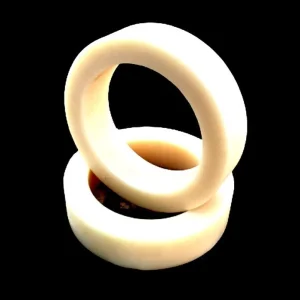
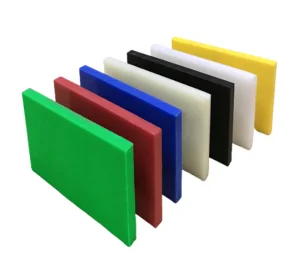
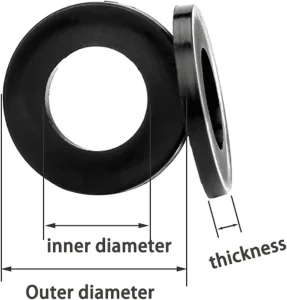
Specialty Engineered Tubes, Precision Profiles & Custom Fabrications
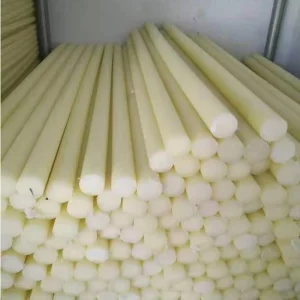
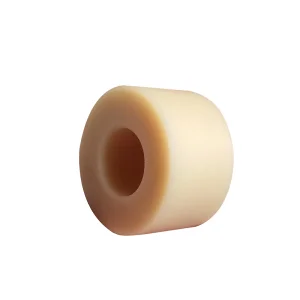
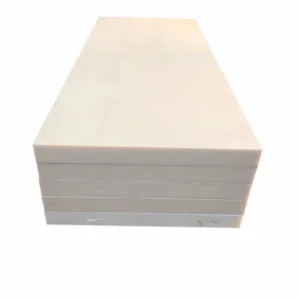
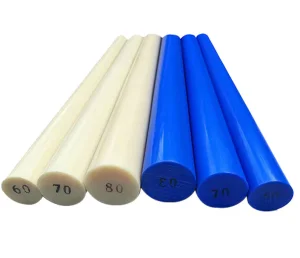
Discover our complementary selection of engineering polymers, high-impact bushings, extruded tubes, and custom-machined wear parts ready for global distribution.
Factory Audit & Technical Verification Checklist for Global Importers
Ensure your supplier meets technical criteria: Critical questions to ask before issuing your purchase order.
1. Verify Thermal Annealing Documentation
Always request the furnace temperature-time strip chart for your specific batch. Confirm the material reached the 145°C–150°C soaking window and maintained the proper slow-cooling gradient. Without documented stress relief, high-speed CNC turning will likely lead to dimensional drift and warping.
2. Specify Virgin vs. Regrind Percentages
Low-cost suppliers may blend internal edge trims or post-industrial scrap into their feedstock. Demand certified 100% virgin POM resin (e.g., Ticona, Celanese, DuPont, or premium Sinopec grades) to avoid degraded thermal endurance, internal micro-voids, and compromised fatigue life.
3. Confirm Export Crating & Moisture Control
Ensure your supplier uses fumigated wooden crates with internal desiccant bags and secure tie-downs. Long ocean transits through fluctuating equatorial conditions can degrade unsecured rods, causing surface abrasion and salt contamination before they reach your shop floor.
Partner with a Proven Direct Engineering Plastics Manufacturer
Whether your application requires standard white/black POM-C rods, custom self-lubricating PTFE/PE composites, or finished precision CNC machined components, our engineering and export teams provide full technical support, CAD drawing reviews, and guaranteed dimensional compliance.