Discount ODM OEM Engineering Plastic Cast PA6 Polyamide Nylon Oil Filled Nylon Rod Glass Filled Nylon Rod Plastic Tube Rod And Bar Customized Color With Size Manufacturers, Company
View Specifications
Verified semi-finished stock with calibrated diametric tolerances, uniform internal density, and annealing to eliminate residual inner stress.
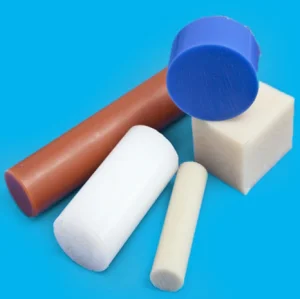
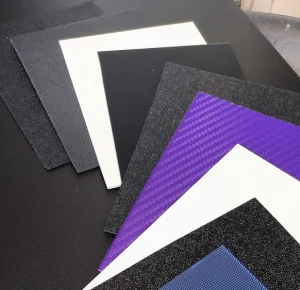
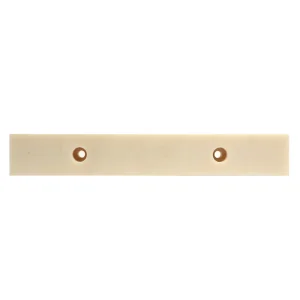
The transition from structural metals to high-performance thermoplastic rounds is transforming modern mechanical design across robotics, fluid systems, and maritime installations.
Global aerospace, automotive, and automation manufacturers increasingly replace bronze, stainless steel, and cast iron with semi-finished plastic stock like MC Nylon and POM-C. Polymers provide a mass reduction of 60% to 85%, significantly reducing rotational inertia, dynamic friction, and drive motor power requirements in high-cycle operations.
OEMs are moving away from evaluating raw material cost per kilogram, focusing instead on component lifecycle wear. Self-lubricating MoS2-filled and oil-filled polyamide rods offer dry run-dry friction coefficients down to 0.12, virtually removing downtime caused by lubricant breakdown, dust contamination, or seizure in harsh environments.
Tightening global regulations (EU REACH, RoHS 3, and FDA/EC 1935/2004) require complete traceability of engineering plastic raw materials. Qualified factories must eliminate unrefined plastic regrinds, ensuring that every extruded round delivers consistent tensile strength, stable dielectric permittivity, and clean chemical resistance.
How SHUNDA utilizes proprietary casting chemistry, continuous ultrasonic extrusion monitoring, and in-line thermal annealing to produce machining-grade solid polymer stock.
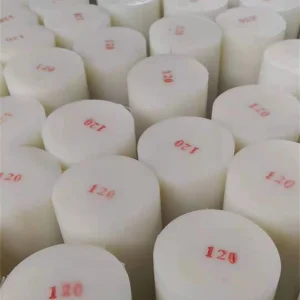
Unlike standard melt extrusions that suffer from shearing stress, our Caprolactam liquid casting system utilizes chemical ring-opening polymerization directly inside precision vertical molds. This produces molecular weights up to 1,000,000 g/mol, generating high crystallinity, superior compressive strength, and void-free solid rods up to Φ800mm.
Residual stresses in extruded semi-finished rods often cause deformation, banana bow bends, or center cracking during high-speed CNC lathing. Every meter of our extruded POM, HDPE, and PA66 rod undergoes multi-stage oil or air annealing at controlled temperatures for up to 48 hours, equalizing crystal morphology.
Located in the heart of Hebei's advanced industrial cluster, our manufacturing base integrates monomer processing, pigment dispersion, custom fiber filling, rod casting, continuous tube extrusion, and full 5-axis CNC machining, ensuring reliable material availability and cost control.
A reference guide to help mechanical designers and procurement engineers align mechanical properties, moisture behavior, and machinability with field application conditions.
| Polymer Variant | Tensile Strength (MPa) | Continuous Temp (°C) | Water Absorption (24hr %) | Dynamic Friction (µ) | CNC Machining Strategy |
|---|---|---|---|---|---|
| Cast Nylon PA6 (Natural/Blue) High-Load Caprolactam Base | 78 – 85 | -40 to +105 | 1.8% – 2.2% (Moderate) | 0.28 – 0.35 | Sharp carbide tools; air blast cooling preferred over emulsion to minimize moisture expansion. |
| POM-C (Polyacetal Copolymer) Zero-Center Void Solid Rod | 65 – 70 | -50 to +100 | 0.2% (Negligible) | 0.20 – 0.25 | Optimal chip breaking; exceptional stability for micrometric gears and hydraulic valves. |
| UHMWPE (Ultra High Mol. Weight) PE-1000 Class Polymer | 28 – 35 | -150 to +80 | <0.01% (Zero) | 0.10 – 0.15 | Requires razor-sharp positive rake inserts, fast feed rates, and rigid vibration dampers. |
| PTFE (Polytetrafluoroethylene) High Chemical Resistance | 22 – 32 | -200 to +260 | <0.01% (Zero) | 0.04 – 0.08 | Soft material prone to creep. Maintain uniform clamping pressure to avoid ovality in turning. |
| Oil-Filled Nylon (Self-Lubricating) Internally Lubricated Cast PA | 70 – 75 | -30 to +105 | 1.2% – 1.6% | 0.12 – 0.18 | Continuous slow turning generates clean finishes without surface gumming or friction heat. |
| HDPE (High Density Polyethylene) Rigid Extruded Polyolefin | 25 – 30 | -50 to +80 | <0.01% | 0.22 – 0.28 | High thermal expansion coefficient; maintain temperature balance when assessing final tolerances. |
Real-world integration scenarios where engineering plastic rods reduce maintenance requirements and eliminate premature mechanical failure.
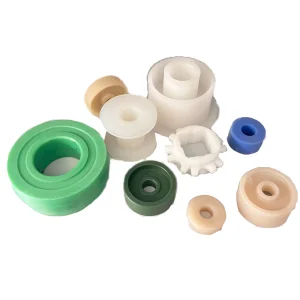
Large-diameter MC Cast Nylon rods turned into wire rope sheaves, hoist pulleys, and pivot pin bushings. Nylon reduces the contact stress between steel cable and the sheave root, tripling wire rope service life while resisting marine saltwater corrosion.
POM and UHMWPE round rods lathed into star wheels, timing screws, feed guides, and conveyor belt rollers. Their non-stick, low-noise properties protect glass containers and food cartons during packaging transitions up to 1,200 CPM.
Resilient shock-absorbing impact cushions lathed from high-molecular cast nylon solid rounds. Placed between the hydraulic drop hammer and the steel pile head, they absorb rebound spikes and protect hammer assemblies from destructive cracking.
Clear, direct technical answers regarding diameter tolerances, internal stress management, and global logistic standards.
We use vertical atmospheric casting for MC nylon rods with controlled, directional solidification from bottom to top, allowing volatile gases to vent. For extruded POM-C and HDPE rounds, we employ vacuum calibration and low-shear screws to prevent centerline pinholes.
Extruded PA66 has higher crystalline stiffness and superior heat deflection under load, making it suitable for small, thin-walled parts. Cast PA6 provides higher tensile elongation, greater impact toughness, and allows manufacturing of large billets without thermal degradation.
Long polymer bars are prone to thermal creep if supported unevenly. We package our rods in structural honeycomb-reinforced timber crates with internal multi-point support blocks, desiccants, and vacuum shrink film to protect against humidity.
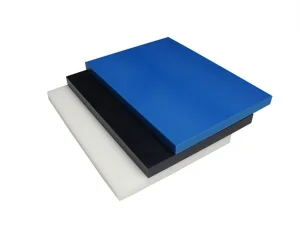
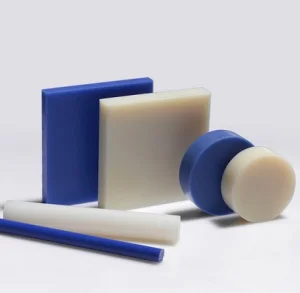
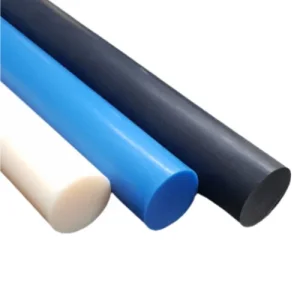
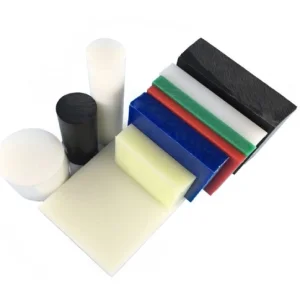
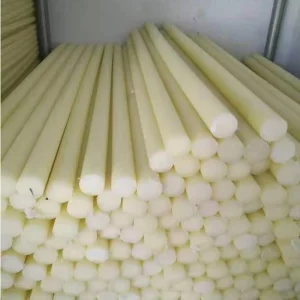
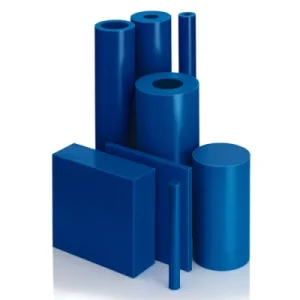
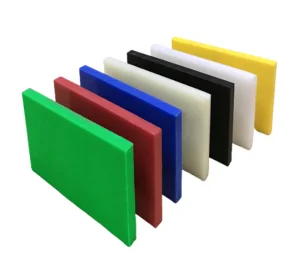
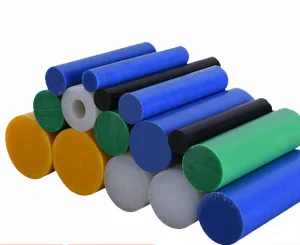
Yes. We compound certified liquid color masterbatches in-house. Standard options include industrial MC Natural (ivory), Engineering Blue, MoS2 Dark Gray, and High-Visibility Yellow, alongside custom color runs matching client-provided Pantone or RAL codes.
Complementary solid bar stock, fluoropolymer rounds, impact blocks, and precision CNC components for heavy mechanical assemblies.