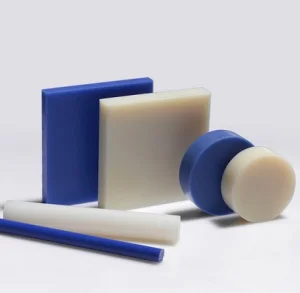
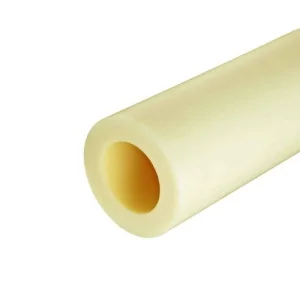
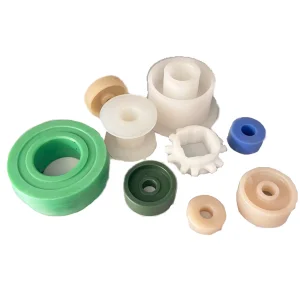
Industrial Grade Engineering Semi-Finished & Machined Stock
Premium factory-extruded stocks engineered for chemical plant installations, fluid handling, mining wear strips, and low-friction wear bushes.
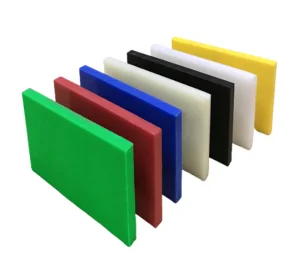
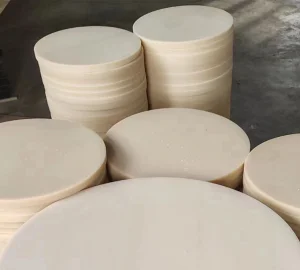
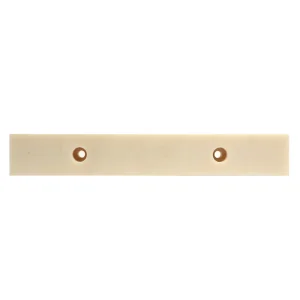
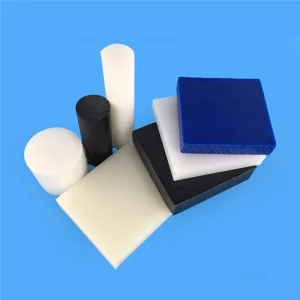
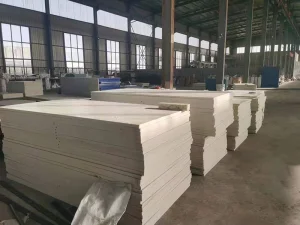

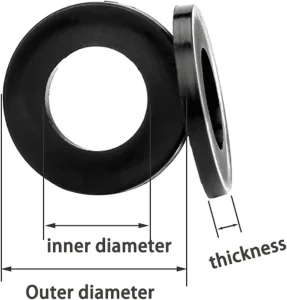
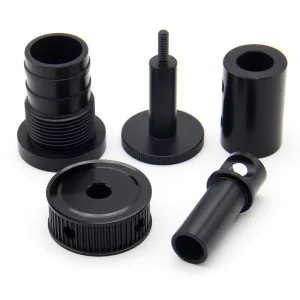
Polymer Engineering: The Science of High-Density Polyethylene Rods
An authoritative evaluation of High-Density Polyethylene (HDPE 300 / PE-HD) solid rod round bars for global mechanical, chemical, and maritime infrastructure.
Thermodynamic Stability & Annealing
A common risk when machining large-diameter plastic round bar is internal residual stress relief causing warped cross-sections. Our solid HDPE rods undergo a proprietary multi-stage post-extrusion heat-soak annealing process.
By normalizing crystalline boundary orientations, circular runout and diameter ovality remain locked within rigorous ISO 2768-m tolerances throughout fast automated turning and deep hole gun-drilling operations.
Universal Hydrophobic Inertness
Unlike hygroscopic polymers such as PA6 or PA66 which swell and suffer dimensional drift in marine or humid environments, HDPE displays near-zero water absorption (<0.01%).
It withstands sustained exposure to corrosive mineral acids, concentrated alkaline washes, brine, deionized water, and aliphatic hydrocarbons, serving as an ideal polymer in offshore subsea manifolds and chemical processing valves.
Material Specification Matrix
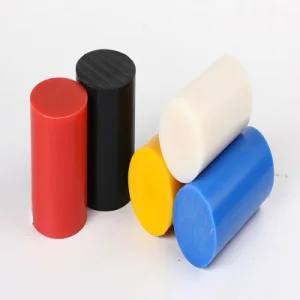
We supply high-grade virgin HDPE 300, PE-100 high-density pipe grade, and UV-stabilized black compounds with carbon black dispersions exceeding 2.5% to resist UV photolytic chain degradation outdoors.
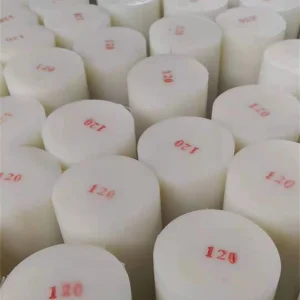
Standard production covers solid diameters from Ø 10 mm up to Ø 400 mm, extruded through hardened nitrided toolings to ensure void-free core density and clean surfaces.
| Property Evaluation Metric | Test Standard | HDPE (High Density PE) | UHMWPE (Ultra High MW) | Polyamide (PA6 Cast) | Polyoxymethylene (POM) |
|---|---|---|---|---|---|
| Bulk Density (g/cm³) | ISO 1183 | 0.955 | 0.935 | 1.15 | 1.41 |
| Moisture Saturation (23°C, 50% RH) | ISO 62 | < 0.01% | < 0.01% | 2.2% - 2.8% | 0.20% |
| Yield Tensile Strength (MPa) | ISO 527 | 24 - 32 | 21 - 25 | 75 - 85 | 65 - 70 |
| Impact Resistance (Notched Charpy kJ/m²) | ISO 179 | 12 - 16 (No Break) | > 100 (Dual Notch) | 4.5 - 9.0 | 6.0 |
| Dynamic Friction Coefficient (vs Steel Dry) | ASTM D1894 | 0.25 - 0.28 | 0.10 - 0.15 | 0.35 - 0.42 | 0.25 - 0.32 |
| Dielectric Strength (kV/mm) | IEC 60243 | > 45 | > 50 | 25 | 35 |
Localized Engineering Applications Worldwide
From freezing polar docks to Middle Eastern petrochemical refineries, our HDPE rods provide robust structural support and reliable chemical containment.
Marine, Port & Offshore Infrastructure
North American & Scandinavian Harbors: Marine pilings and docks require materials that resist saline rot, biological marine growth, and freeze-thaw thermal cracking. CNC-turned HDPE pins, roller fenders, and quay bumper blocks absorb repetitive wave energy without absorbing water.
Unlike timber or bronze, HDPE requires zero toxic antifouling paints, providing decades of zero-maintenance operation in seawater.
Acid Pickling & Galvanizing Lines
European & East Asian Metal Plants: Acid pickling tanks use sulfuric, nitric, and hydrochloric acids at high temperatures, which attack conventional stainless steels. Solid HDPE round bars are machined into acid-resistant tank rollers, hold-down spools, and suspension hooks.
The non-conductive, chemically resistant polymer prevents galvanic corrosion and eliminates electrical leakage during electroplating.
Food Processing, Beverage & Pharma
Global Automated Bottling & Packaging: Compliance with FDA CFR 21 177.1520 and EU 10/2011 is mandatory in food contact lines. Clean natural-white HDPE rods are milled into star wheels, change parts, conveyor guide bushings, and sanitary valve plugs.
The smooth surface withstands caustic CIP (Clean-In-Place) chemical sanitization without cracking, softening, or retaining foodborne bacterial pathogens.
Chinese Factory Supply Chain Resilience & Export Advantage
Combining Hebei's primary raw resin clusters with smart, automated CNC processing allows us to guarantee rapid production, volume scalability, and low landed costs.
Upstream Polymer Resin Aggregation
Located in Xingtai, Hebei Province, our facilities link directly with domestic and international resin producers (Sinopec, PetroChina, Borealis, LyondellBasell). Direct pipeline and bulk container deliveries ensure unblended prime virgin pellets free of unverified post-consumer regrinds.
This controlled sourcing provides batch-to-batch consistency in melt flow index (MFI), density, and crystal structure, protecting overseas buyers from brittle stress failures.
Scalable Extrusion & In-House Tooling
Operating 19 high-throughput automated single-screw extrusion production lines equipped with dynamic ultrasonic wall thickness and diameter monitors, our plant runs continuous 24/7 extrusion shifts. We maintain over 300 calibrated sizing dies.
Custom diameter requirements (such as imperial fraction sizes for North American machinery) can be retooled in-house within 72 hours, drastically reducing prototype lead times.
Tianjin Port Maritime Logistics Corridor
Our manufacturing plant sits 320 kilometers south of Tianjin Port, northern China's premier international container hub. Dedicated inland transit routes bypass transshipment delays, permitting factory-stuffed containers to clear customs rapidly.
Every batch is export-packed on fumigated solid timber pallets, waterproof poly-wrapped, and strapped with edge guards to prevent bending during intermodal transport.
Industrial Market Trends & Lifecycle Economics
Assessing the shift from heavy, corrosion-prone metallic alloys toward lightweight, high-performance polyolefin bars across world industries.
Total Cost of Ownership
Replacing bronze, brass, or stainless steel bushes with machined HDPE reduces direct raw material expenses by up to 65%. Its self-lubricating surface lowers kinetic friction coefficients, decreasing electric motor loads across industrial assembly conveyors.
Predictable Maintenance
Corrosion-induced shutdowns in wastewater treatment plants cost operators significant unplanned downtime. Non-corroding polyolefin stocks do not rust, scale, pit, or seize up under continuous immersion, providing predictable maintenance cycles.
Machining Efficiency
HDPE cuts easily under standard high-speed steel (HSS) and carbide tooling. Feed rates can be run 300% faster than mild steel with minimal tool wear, reducing cycle times and tooling overhead for precision machine shops.
Sustainability & Recyclability
HDPE (Resin Identification Code 2) is 100% mechanically recyclable. Swarf, chips, and trimmings produced during CNC operations can be reclaimed into agricultural drainage components, supporting ESG and corporate zero-landfill mandates.
Technological Roadmap & Next-Generation Polymers
Developing modern polymer blends to meet increasing performance demands across specialized commercial and industrial sectors.
Permanently Anti-Static (ESD) Formulations
Standard polyolefins naturally accumulate electrostatic charges via surface friction. In coal mines, grain elevators, and electronics manufacturing facilities, static sparks carry significant explosion risks.
We compound permanent conductive carbon black and intrinsically conductive network polymers into HDPE, holding surface resistivity between 10⁴ and 10⁹ Ω/sq without leaching or humidity dependence.
Cross-Linked PEX & Borated Shielding
By introducing organic peroxide and silane functional groups into high-density polyethylene extrusions, we enhance continuous thermal deflection temperatures above 115°C.
Additionally, our factory produces customized borated polyethylene rods containing 5% to 10% pure elemental Boron, designed specifically for thermal neutron attenuation in medical cyclotron shielding and nuclear power facilities.
Bio-Circular & ISCC+ Certified Resins
In support of global carbon emission reductions, we are validating bio-based ethylene feedstocks derived from second-generation renewable waste oils. Our factory is establishing traceability to supply mass-balanced ISCC+ certified PE stock rods.
This provides original equipment manufacturers with equivalent physical strength and full food-contact compliance while meeting corporate scope 3 emissions targets.
International Compliance & Engineering Assurance
Rigorous factory testing, full raw material traceability, and accredited global compliance documentation for risk-free international procurement.
Full Material Test Reports (MTR)
Every batch of HDPE solid rod ships with comprehensive EN 10204 Type 3.1 inspection certificates. Our quality laboratory tests and records tensile modulus, yield strength, Izod impact, density, and Shore D hardness.
Complete raw material batch numbers are laser-marked or labeled directly on each rod, guaranteeing complete transparency from resin silo to the customer's receiving bay.
RoHS, REACH & FDA Certification
Our semi-finished polymers are tested annually by independent laboratories (SGS and TÜV Rheinland) against EU RoHS Directive 2011/65/EU and the latest REACH SVHC candidate lists. No heavy metals, phthalate plasticizers, or fluorinated PFAS/PTFE surfactants are introduced during extrusion.
Our natural virgin HDPE rods comply with FDA 21 CFR 177.1520 regulations for continuous aqueous and fatty food contact.
Global Technical Sales Engineering
Communication breakdowns cause expensive machining errors. Our technical export team consists of polymer materials engineers and CNC specialists who evaluate your CAD drawings (STEP, DWG, DXF, PDF) for tolerance feasibility and thermal expansion allowances.
Inquiries receive detailed technical proposals, formal quotations, and material recommendations within 12 business hours.
Frequently Asked Technical Questions (FAQ)
Answers to common technical, machining, and logistics questions asked by mechanical engineers, supply chain managers, and polymer importers.
What are the critical machining differences between HDPE and POM (Delrin)?
While polyacetal (POM) is stiffer and produces clean, chip-breaking turnings with tighter dimensional hold, HDPE exhibits higher ductility and a lower melting temperature (130°C vs 175°C). When CNC turning HDPE rods, operators should use sharp polished cutting tools with high positive rake angles (15° to 30°), generous chip clearance, and continuous pressurized air or mist cooling to prevent chip gumming, tool re-welding, and thermal workpiece distortion.
Can extruded solid HDPE rods be welded or bonded with structural adhesives?
HDPE is a low-surface-energy polyolefin (approx. 31 dynes/cm), making conventional solvent adhesives, epoxies, and cyanoacrylates ineffective without aggressive corona, flame, or chemical etching pretreatments. However, HDPE possesses excellent weldability. It can be joined with high weld-joint factors (>0.8) using hot-gas extrusion welding rods, butt-fusion welding, or electrofusion techniques, creating homogeneous, leak-tight joints in fluid containment manifolds.
How do you avoid internal voids and porous cores in large diameter rods?
Solid plastic rods with diameters exceeding 100 mm run the risk of center-line vacuum voids (sink marks) caused by volumetric contraction as the molten core cools from the outside in. We address this using specialized low-speed high-pressure crosshead extrusion combined with multi-zone progressive liquid calibrators and extended thermal annealing cycles. This process delivers dense, void-free cores suitable for deep center-drilling and fluid ports.
What are your standard export lengths, diameters, and packaging modes?
Our standard extruded solid bar length is 1000 mm, 2000 mm, or 3000 mm, with cut-to-length billets available on request. Diameters range from Ø 10 mm to Ø 400 mm. For export shipping, rods are bundled in multi-wall protective polymer films, packed in export-grade fumigated wooden crates, or banded to heavy pallets with protective honeycomb corner-boards to prevent surface scratching and bending during ocean transit.
Specialty Engineering Shapes, Pulleys & Fabrications
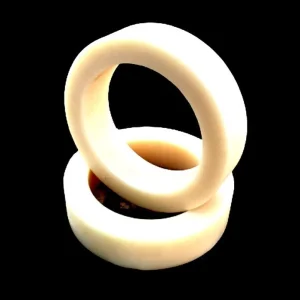
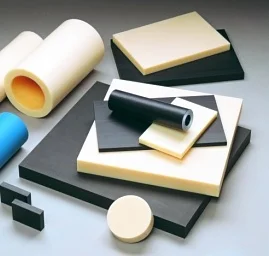
Explore our full line of stock bars, engineered tubes, cast nylon ring cushions, and finished CNC machined plastic parts.