
Precision Engineering Portfolio
Core Industrial Polymer Solutions
Precision-manufactured polymer rods, sheets, and dynamic wear cushions tailored for critical manufacturing environments across San José, Alajuela, and Cartago industrial corridors.

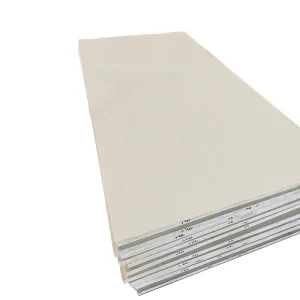
Cast Monomer (MC) Polyamide Sheet Stock for High Impact Liners
Explore Specification & Supply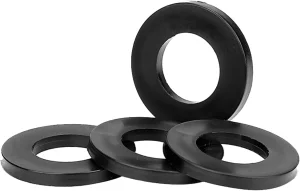
Industrial Dynamic Damping Nylon Rings & Mechanical Bushings
Explore Specification & Supply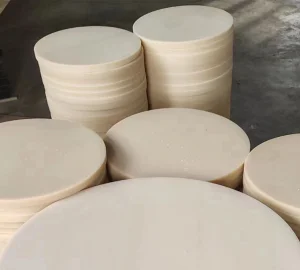
Shock Absorption Dampener Blocks for Infrastructure & Heavy Plants
Explore Specification & Supply
Market Intelligence & Industrial Dynamics
Costa Rica’s Engineering Plastics Ecosystem: Demand Vectors & POM Rod Utilization
A deep dive into how Central America's premier life sciences and manufacturing powerhouse relies on polyoxymethylene (Acetal / Delrin) bar stock to maintain precision tolerances under tropical conditions.
Costa Rica has firmly established itself as Latin America's primary hub for advanced manufacturing, high-tech engineering, and medical technology (MedTech) export clusters. Driven by favorable investment frameworks under the Free Trade Zone regime (Régimen de Zona Franca), regions including the Coyol Free Zone in Alajuela, Global Park in Heredia, and Cartago have evolved from traditional processing centers into sophisticated hubs producing cardiovascular devices, orthopedic instruments, high-speed automated packaging, and sustainable beverage processing equipment. In this stringent technological landscape, standard commodity plastics fall short of operational demands. Consequently, the demand for Polyoxymethylene (POM / Acetal) rods has surged exponentially.
POM, commercially designated as Delrin, Hostaform, or Ultraform, is an engineering thermoplastic characterized by high stiffness, ultra-low coefficient of friction, high creep resistance, and, most crucially, near-zero moisture absorption (0.2% equilibrium at 23°C/50% RH). In Costa Rica's tropical ambient environment, characterized by fluctuating relative humidity exceeding 85% in coastal regions and wet seasons, hydro-sensitive materials like standard Polyamide (Nylon 6) can undergo significant dimensional swelling, leading to mechanical seizure in precision assemblies. POM rods provide local CNC machining facilities (Talleres de Maquinado CNC y Matricería) with rock-solid dimensional predictability, tight tolerance capabilities (up to ±0.01 mm), and exceptional chip breakability during multi-axis swiss-machining operations.
0.2%
Ultra-Low Water Absorption (24h immersion)
70 MPa
Tensile Yield Strength at Ambient Temp
±0.02mm
Standard Tolerances for Precision Calibrated Rods
100%
Virgin Resin Purity (FDA & RoHS Compliant)
Beyond medical fabrication fixtures, the Costa Rican agricultural processing sectors—dominated by high-throughput pineapple packing lines, banana processing conveyors, coffee de-pulping plants, and sugar mills (ingenios azucareros)—demand materials that withstand acidic organic fluids, continuous water jet washdowns, and harsh sanitized cleaning chemical regimens. POM rods machined into star wheels, conveyor track guides, helical gears, valve discs, and scraper blades guarantee superior fatigue resistance and slip-stick-free movement, drastically mitigating unscheduled line shutdowns.
Key Engineering Finding for Costa Rican Machine Shops: Specifying POM-C (Polyacetal Copolymer) over POM-H (Homopolymer) effectively eliminates centerline porosity issues when machining large-diameter solid bars (≥50mm), preventing internal cavitation failure in hydraulic fluid manifolds and sterilization fixtures.
Industrial Implementation Matrices
Localized Application Scenarios Across Costa Rican Industries
Tailoring POM rod configurations to solve specific mechanical, thermal, and chemical challenges in Costa Rica's strategic industrial sectors.
Cleanroom Assembly & MedTech Jigs
Within Alajuela’s Free Trade Zones, POM-C rods are transformed into nest fixtures, positioning blocks, ultrasonic welding anvils, and surgical assembly jigs. The copolymer matrix withstands regular ethanol/IPA wipe-downs without surface cracking or crazing.
Agro-Industrial Food Automation
Applied extensively throughout Limón, Puntarenas, and the Central Valley for food-grade conveyer sprockets, sorting cams, and rotary filler valves. Compliance with FDA 21 CFR §177.2470 and EU 10/2011 ensures zero toxic leaching into perishable edibles.
Electronics & Semiconductor Fixtures
Costa Rica's growing microelectronics testing clusters require low-friction, non-conductive insulators and high-rigidity probe holders. Extruded POM rods feature volume resistivities exceeding 1014 Ω·cm and minimal dielectric dissipation factors.
Hydraulic & Fluid Manifolds
Centrally positioned within chemical dosing and beverage dispensing apparatus, replacing brass and stainless steel. Resists scale accumulation, eliminates electrolytic galvanic corrosion, and maintains rupture integrity up to 80°C continuous service.
Corrosive Marine Hardware (Port Caldera & Moín)
Naval port machinery, offshore fuel transfer swivels, and yacht hardware utilize black UV-stabilized POM rods for sheaves, cable fairleads, and seawater pump impellers unaffected by hypersaline marine atmospheres.
High-Cycle Kinematic Components
Spur gears, rack-and-pinion actuators, and helical transmissions engineered from POM deliver quiet acoustic damping, self-lubricating dry-running capabilities, and remarkable tooth deflection resilience without lubrication maintenance.
Polymer Engineering Matrix
Technical Parameter Comparison: POM Rod vs. Competitive Polymers
Empirical baseline data assisting manufacturing engineers and procurement officers in selecting the correct polymer shape for tropical operations.
| Physical / Mechanical Property | POM-C (Polyacetal Copolymer) | PA6 (Extruded Polyamide) | UHMWPE | PTFE (Virgin) |
|---|---|---|---|---|
| Density (g/cm³) | 1.41 - 1.42 | 1.14 | 0.93 - 0.95 | 2.15 - 2.20 |
| Tensile Strength at Yield (MPa) | 65 - 70 | 75 (Dry) / 45 (Wet) | 25 - 30 | 20 - 30 |
| Tensile Modulus of Elasticity (MPa) | 2,800 - 3,100 | 3,200 (Dry) / 1,400 (Wet) | 700 | 750 |
| Water Absorption (Equilibrium, 50% RH) | 0.20% | 2.5% - 3.2% | <0.01% | <0.01% |
| Coefficient of Sliding Friction (Dry) | 0.25 - 0.32 | 0.35 - 0.42 | 0.12 - 0.20 | 0.08 - 0.10 |
| Continuous Service Temp Range (°C) | -50 to +105 | -40 to +90 | -150 to +80 | -200 to +260 |
| CNC Machinability Index | Superior (Short chips, crisp edge) | Moderate (Stringy chips, burrs) | Fair (Tends to deflect) | Soft (Thermal expansion sensitive) |
Engineering Analysis: While Polyamide (PA6) offers impressive tensile properties in dry testing conditions, its hygroscopic matrix causes it to absorb moisture up to 7-8% at full saturation, drastically degrading structural rigidity and expanding part dimensions by as much as 1.5%. For high-precision automated systems operating in Costa Rica’s climate, POM-C remains the premier engineering choice, maintaining its mechanical properties and dimensional tolerances regardless of atmospheric water vapor content.
Direct Sourcing Competitiveness
Strategic Sourcing: The Direct Advantage of Partnering with SHUNDA China
Bypassing multiple intermediary tiers to achieve superior raw material integrity, customized engineering configurations, and streamlined freight economics to Puerto Limón and Puerto Caldera.
Proprietary Inline Annealing Cycles
Uncontrolled internal stresses in extruded POM rods cause catastrophic warping during machining. SHUNDA applies double-stage liquid-bath and heated-air tempering ovens over extended 48-hour cycles, ensuring totally stress-relieved billets that remain flat and straight.
100% Virgin Resins (No Regrind Contamination)
Every POM rod extruded in our Hebei facility utilizes certified prime-grade polyoxymethylene resin. Zero incorporation of recycled waste guarantees consistent molecular weight distribution, void-free core centers, and zero embrittlement under cyclic loading.
Comprehensive Diameter Spectrum (10mm - 400mm)
We maintain continuous high-capacity extrusion lines capable of delivering miniature rod diameters for micro-turnery up to ultra-thick 400mm solid billets, available in standard lengths of 1000mm and 2000mm or custom cut-to-length billets to minimize customer off-cut scrap.
For Costa Rican purchasing directors and procurement heads at multinational OEM subcontractors, relying solely on local distributors often presents challenges such as limited on-hand stock sizes, high markups (frequently exceeding 40-60%), and inconsistent material certifications. Direct supply container agreements (FCL/LCL) with SHUNDA bridge this operational gap. Through direct maritime routes from Tianjin/Qingdao ports to Central American terminals, our clients secure factory-gate pricing, full batch traceability with complete Material Test Reports (MTR / EN 10204 3.1), and tailored export packaging designed to counter marine transit humidity.
Comprehensive Polymer Catalog
Expanded Polymer Extrusion & CNC Machined Portfolio
Full-spectrum industrial polymer stock shapes and precision CNC turned/milled parts available for Costa Rica export and global infrastructure operations.
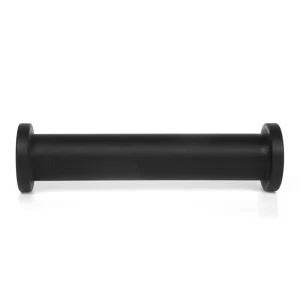
Polymer Bar & Tube Stock: High Precision ABS, PP, PTFE & Polyamide
Explore Specification & Supply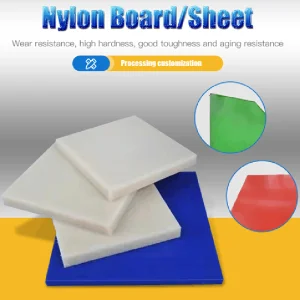
Industrial Elastomeric SBR & Nitrile Matting with Reinforced Fabric
Explore Specification & Supply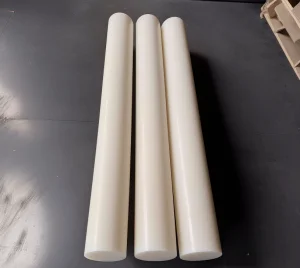
Custom Cast PA6 Polyamide Hollow Tubular Bars & Round Rods
Explore Specification & Supply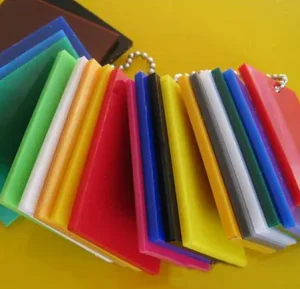
Engineered High-Capacity Crane Foot Pads & Bigfoot Stabilizers
Explore Specification & Supply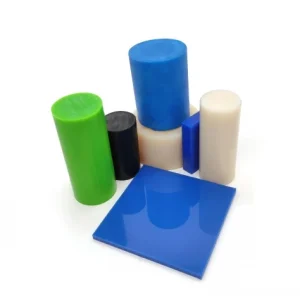
Heavy-Duty PA6/PA66 Engineering Sheets & High-Wear Round Rods
Explore Specification & Supply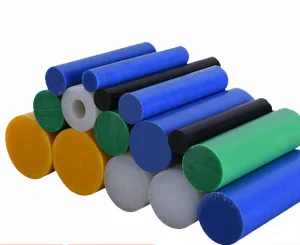
Monomer Cast MC Polyamide Heavy Cylindrical Tubes & Sleeves
Explore Specification & Supply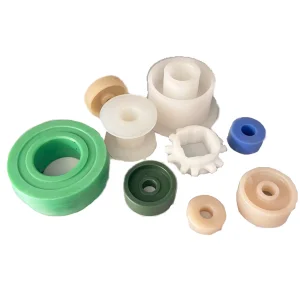
Multi-Axis CNC Turn-Milled POM, PEEK, Delrin & PTFE Components
Explore Specification & Supply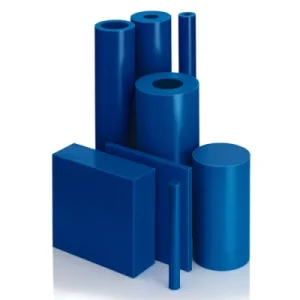
Ultra-High Molecular Weight PE Jacking Support Ground Pads
Explore Specification & Supply
Production Engineering White Paper
Optimizing CNC Machining Parameters for POM Rods in Tropical Climates
Actionable processing knowledge to prevent heat buildup, tool deflection, and post-machining dimensional creep in high-speed manufacturing environments.
Polyoxymethylene features a relatively low thermal conductivity (0.31 W/m·K) compared to non-ferrous metals like aluminum (205 W/m·K). Consequently, frictional heat generated at the cutting edge does not dissipate quickly through the plastic body; instead, it concentrates directly at the tool-workpiece interface. If excessive cutting temperatures exceed 160°C, localized melting, surface smear, internal stress re-activation, and dimension loss occur. Machine operators across Costa Rican workshops are advised to implement the following empirical guidelines:
Tool Geometry & Edge Preparation
Utilize polished, un-coated carbide (K10/K20) or PCD cutting tools with razor-sharp positive rake angles (15° to 30°) and generous clearance angles (10° to 15°). Avoid tools previously used on steel or filled glass fibers, as dull edges cause rubbing and heat buildup.
Feeds & Speeds Optimization
Maintain high turning surface cutting speeds (250 – 500 m/min) combined with continuous, positive feed rates (0.15 – 0.40 mm/rev). Fast feeds ensure that generated heat is carried away in the chips rather than transferring into the central POM rod substrate.
Coolant Delivery Strategies
For medical-grade components where oil residues are forbidden, utilize clean compressed air cooling (vortex cold-air guns). For industrial-grade mechanical components, flood water-soluble emulsions provide optimal boundary lubrication and chip evacuation.
Frequently Asked Questions
Costa Rica Procurement & Engineering FAQ
Comprehensive responses addressing import regulations, material compliance, logistics transit times, and engineering specifications for POM rod applications.
What are the key differences between POM-C (Copolymer) and POM-H (Homopolymer) rods for Costa Rican machine shops?
POM-H (commonly known as Delrin) delivers roughly 10-15% higher tensile strength and stiffness. However, POM-H is prone to centerline porosity (micro-cavitations along the central extrusion axis) in thicker diameters. In contrast, POM-C (Polyacetal Copolymer) features superior thermal stability, higher resistance to chemical hydrolysis, exceptional tolerance to strong alkaline cleaners, and complete freedom from centerline porosity, making it the preferred choice for fluid-handling components and medical jigs produced in Costa Rica.
What documentation and certifications are supplied with direct shipments of POM rods to Costa Rica?
Every shipment exported by SHUNDA includes complete inspection documentation: Factory Material Test Reports (EN 10204 3.1) confirming raw material lot numbers, density, hardness, tensile strength, RoHS 3 & REACH declarations, and FDA 21 CFR §177.2470 compliance certificates required by Free Zone manufacturing audits.
How does maritime shipping work from China to Costa Rica ports (Puerto Limón & Puerto Caldera)?
We provide full logistics support under FOB, CIF, or DDP terms. Ocean freight routed via Pacific shipping lanes reaches Puerto Caldera within approximately 24 to 32 days, while shipments transiting the Panama Canal to Puerto Limón generally arrive within 28 to 35 days. Standard packaging consists of moisture-barrier shrink wrapping, protective corner edging, and heavy heat-treated fumigated wooden crates (ISPM 15 compliant).
Can SHUNDA manufacture POM rods in custom colors, diameters, or cut lengths for specific OEM orders?
Yes. Beyond standard Natural White and Deep Black, we formulate custom color masterbatches (including Medical Blue, Safety Yellow, and Cleanroom Ivory) that maintain full FDA food contact compliance. Diameters can be extruded from 10mm up to 400mm, with precision centerless grinding available to achieve h9/h8 diameter tolerances.
Why choose direct factory procurement over sourcing from regional distributors in Central America?
Sourcing directly from our production base in China provides substantial cost savings (typically 30-50% lower than third-party distributor pricing), guarantees single-source resin traceability, eliminates mixed-batch quality inconsistencies, and offers custom extrusion runs that minimize expensive machining scrap for large-scale production.
Does SHUNDA provide finished CNC machined POM parts in addition to semi-finished rod stock?
Yes. Our internal multi-axis CNC turn-mill machining facility manufactures high-precision components directly from customer CAD drawings (STEP, DWG, DXF, or PDF), delivering ready-to-install custom bushings, gears, manifolds, star-wheels, and wear rings with CMM dimensional inspection reports.
Accelerate Your Engineering Polymer Supply Chain Today
Whether you require standard calibrated POM-C bar stock for your CNC machining facility in Alajuela or finished custom components delivered directly to your plant in Cartago, SHUNDA provides factory-direct pricing, certified quality, and dedicated export engineering support.