
Featured Plastic Enclosure & Structural Solutions for Japan
Our primary polymer lines provide high mechanical integrity, anti-static safety, and automated warehouse resilience for Japanese electronics and manufacturing hubs.
Plastic Container & Transit Packaging Dynamics in Japan
Understanding the convergence of Japanese Monozukuri precision, strict JIS standards, the 2024 logistics labor crisis, and cleanroom semiconductor supply chains.
JIS Pallet Modularity & The "2024 Problem" in Logistics
The Japanese industrial storage and transport sector is anchored by rigid dimensional discipline, notably the JIS Z 0602 standard specifying the ubiquitous 1100 mm × 1100 mm (T11 type) pallet footprint. Every plastic folding crate (Oricon - 折りたたみコンテナ), nesting box, and conductive PCB carrier deployed across the Tokaido industrial corridor must interlock seamlessly within this footprint without edge overhang.
With Japan's implementation of strict overtime caps for commercial truck drivers (widely known as the "2024 Logistics Cliff"), warehouse throughput velocity has shifted from manual operations to fully automated storage and retrieval systems (AS/RS). This transition has catalyzed surging demand for plastic boxes with dimensional stability tolerances tighter than ±0.35 mm, preventing robotic sensor misreads and gripper jams at high conveying speeds exceeding 2.5 m/s.
Kyushu "Silicon Island" & ESD-Safe Cleanroom Demands
The aggressive revitalization of semiconductor manufacturing in Kumamoto and Hokkaido has stimulated immediate requirements for specialized carbon-nanotube conductive polypropylene (PP) and high-density polyethylene (HDPE) containers. Japanese wafer-fab cleanrooms require surface resistivity consistently maintained between 104 and 109 Ω/sq to avoid electrostatic discharge failure on sub-nanometer microelectronic nodes.
Furthermore, Japanese chemical compliance mandates absolute compliance with the Chemical Substances Control Law (CSCL), eliminating off-gassing phthalates, chlorinated paraffins, and heavy metal colorants that could contaminate ultra-clean lithography bays. Standard commercial storage bins are entirely unsuitable for this tier of Japanese high-tech manufacturing.
Why Japanese Enterprises Partner with Our Manufacturing Plants
Bridging high-tonnage precision injection molding infrastructure with rigorous Japanese quality assurance philosophies (Kaizen & Poka-Yoke).
Large-Tonnage Precision Tooling
Our Hebei industrial facility operates 28 high-pressure Haitian servo injection presses ranging from 180T to 3,200T. We produce complex ribbed base designs, collapsible joints, and integrated RFID tag pockets with sub-millimeter repeatable precision.
Polymer Formulation Versatility
We blend virgin polypropylene copolymer (PP-C), high-density polyethylene (HDPE), and modified polyamides directly in-house. We engineer cold-impact additives operating reliably at -30°C for Hokkaido fisheries and food logistics.
Rapid DFM & Mold Velocity
While domestic Japanese tooling schedules often exceed 60 to 90 days, our integrated CAD/CAM mold engineering hub provides Moldflow DFM reviews within 24 hours and delivers initial T1 injection samples in under 22 business days.
Chinese polymer manufacturing offers a vital economic hedge for Japanese procurement directors contending with rising domestic electricity costs and resin input inflation. By integrating factory-direct supply chains from China with local logistics hubs in Osaka, Yokohama, and Kobe, Japanese trading companies (Sogo Shosha) and OEMs achieve a 30% to 45% total-cost-of-ownership (TCO) advantage while maintaining uncompromising visual and dimensional yield metrics.
Material Performance Matrix for Japanese Industrial Containers
Comparative physical, thermal, and electrical metrics benchmarking our high-performance container formulations against standard Japanese industrial use cases.
| Polymer Formulation Grade | Melt Flow Rate (MFR) | Flexural Modulus (ISO 178) | Izod Impact @ -20°C (ISO 180) | Surface Resistivity (Ω/sq) | Key Japanese Industry Application |
|---|---|---|---|---|---|
| PP Impact Copolymer (Virgin) SHUNDA-PP-J500 |
12 – 15 g/10 min | 1,450 MPa | 6.8 kJ/m² | > 1013 (Insulative) | Automotive tier-1 parts storage, JIS T11 nesting boxes |
| Conductive Carbon Black PP SHUNDA-ESD-C01 |
8 – 11 g/10 min | 1,650 MPa | 5.2 kJ/m² | 104 – 106 Ω | Kyushu semiconductor wafer cassette transit, SMT reel totes |
| Permanent Anti-Static PP SHUNDA-ESD-P02 |
14 – 18 g/10 min | 1,380 MPa | 7.0 kJ/m² | 108 – 1010 Ω | Automated optical inspection (AOI) lines, display panel trays |
| Ultra-High Density PE (HDPE) SHUNDA-HD-5502 |
0.35 g/10 min | 1,100 MPa | 14.5 kJ/m² (No break) | > 1012 (Insulative) | Hokkaido cold chain seafood, sub-zero pharmaceutical shipping |
| Flame Retardant PP (UL94 V-0) SHUNDA-FR-V0 |
10 – 13 g/10 min | 1,800 MPa | 4.5 kJ/m² | 1011 – 1013 Ω | EV battery module transit boxes, hazardous electrical assembly |
Note on Testing Protocols: All polymer resin batches undergo standardized laboratory verification in accordance with JIS K 7110 (Izod Impact) and JIS K 6911 (Testing methods for thermosetting plastics / resistivity). Full raw material certificates (COA) and material safety data sheets (SDS) are provided with every oceanic container dispatch.
Localized Application Scenarios Across Japanese Industry
Customized engineering configurations addressing specific supply-chain, cleanroom, and cold-storage operations within Japan.
1. Automotive Returnable Transit Packaging (Toyota City / Gunma)
Japanese automotive supply ecosystems rely on returnable collapsible boxes (Oricon) engineered for multi-trip reverse logistics. Our high-impact PP container boxes feature 5:1 folding volume reductions, saving vital backhaul cargo space on trucks returning from assembly plants.
Reinforced double-ribbed base geometries ensure deflection is contained within 1.2 mm under static stacking pressures up to 350 kg, protecting machined engine valves, wire harnesses, and brake calipers during trans-prefecture transit.
2. Cleanroom Electronics & SMT Assembly (Kanagawa / Kumamoto)
Surface-mount technology (SMT) lines require rigid PCB magazine bins and component storage boxes with zero carbon powder shedding. Our conductive carbon-matrix compound prevents particle sloughing while maintaining surface resistance indefinitely, unaffected by Japanese seasonal humidity swings.
3. Automated Cold-Chain Distribution (Hokkaido / Shizuoka)
Sub-zero refrigeration environments cause standard commercial polypropylene containers to become brittle, leading to side-wall fractures during automated crane clamping. We synthesize cold-tough HDPE resins that retain ductility down to -30°C.
Equipped with specialized draining grids and hermetic snap-lock lids, these containers serve the Hokkaido seafood preservation sector and pharmaceutical plasma distribution channels across Tokyo General Hospitals.
4. Smart Warehousing & RFID-Integrated AS/RS (Osaka / Kobe)
As modern Japanese 3PL logistics facilities embrace autonomous mobile robots (AMRs), our container walls are molded with recessed cavities dedicated to UHF RFID tags and 2D datamatrix barcodes, protecting track-and-trace tags from conveyor rail abrasion.
Engineering Plastics & Specialized Components Serving Japan
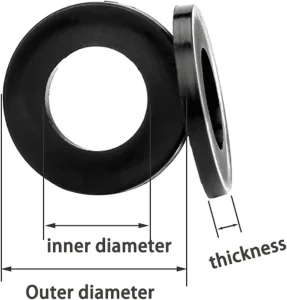
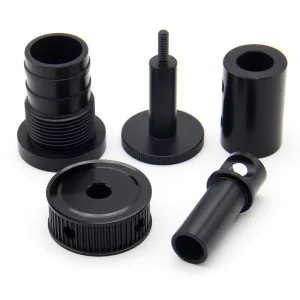
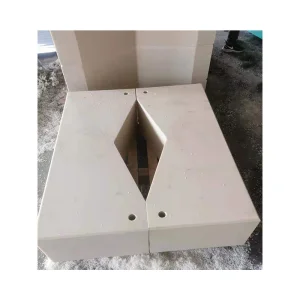
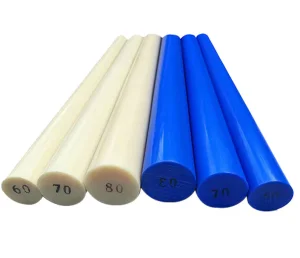
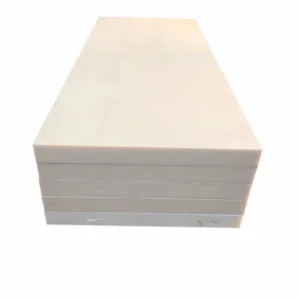
Explore our complete portfolio of high-grade engineering polymers, machined components, and impact-resistant materials engineered for Japanese B2B procurement programs.
B2B Procurement Governance & Japanese Audit Compliance
Meeting the zero-defect expectations of Japanese trading houses and global engineering buyers through exhaustive multi-stage inspection regimes.
Comprehensive Physical Testing & JIS Validation
Japanese procurement teams enforce stringent receiving dock standards. Every production batch of plastic boxes undergoes exhaustive mechanical qualification before container loading:
- Dynamic Drop Impact Testing (JIS Z 0202): Loaded containers dropped from 1.2 m at 0°C and -20°C across 6 impact orientations to verify corner weld toughness.
- Static Stacking Compression (JIS Z 0212): Hydraulic deadweight load maintained continuously for 72 hours at 40°C to prevent bottom-pan buckling in Japanese summer warehousing.
- Handle Pull-Strength Stress: Ergonomic hand-holds tested to 150% rated load capacity over 10,000 cyclic lifts to verify operator safety.
Regulatory Compliance, Packaging & Shipping to Japan
We provide full documentation transparency to satisfy both Japanese Customs and municipal environmental compliance directives:
- Chemical Traceability: Annual ICP testing confirms complete absence of RoHS 3 substances, halogen flame retardants, and REACH SVHC candidate compounds.
- Fumigation-Free Fumigated Pallet Packing: All export goods are secured onto certified plastic pallets or heat-treated solid timber pallets conforming strictly with ISPM 15 regulations.
- Direct Port Routing: Direct shipping routes from Tianjin/Qingdao ports to Tokyo, Yokohama, Nagoya, and Osaka/Kobe within 3 to 5 sailing days, enabling lean inventory buffering.
Frequently Asked Questions by Japanese Procurement Teams
Direct engineering and commercial answers regarding lead times, mold rights, JIS compatibility, and payment terms for our B2B customers serving Japan.
Are your plastic boxes and folding containers compatible with Japanese JIS T11 standard pallets?
Yes. Our entire industrial container product line is engineered from the ground up to interlock with the JIS Z 0602 standard 1100 mm × 1100 mm pallet footprint. Standard modular dimensions include 550 × 366 mm (6 boxes per tier), 650 × 440 mm, and 366 × 275 mm (12 boxes per tier). This standard modularity ensures zero pallet overhang, preventing transit damage inside 10-ton Japanese wing-body trucks and sea freight containers.
How do you guarantee that conductive ESD boxes will not lose anti-static properties over time?
Unlike temporary anti-static boxes that utilize surface surfactant sprays which wash off or degrade in low humidity, our ESD containers incorporate an intrinsically compounded conductive carbon black matrix or permanent non-migratory conductive polymer networks. The conductive pathways are homogeneously dispersed throughout the entire plastic wall thickness, ensuring consistent surface resistivity (104 to 106 Ω/sq) for the entire lifetime of the container, even after repeated industrial aqueous washdowns.
What is the typical tooling and sampling lead time for custom Japanese OEM plastic container designs?
Upon receipt of your 3D CAD data (STEP / IGES format), our tooling engineering team provides a full Moldflow analysis and Design for Manufacturability (DFM) assessment within 24 to 48 hours. Steel injection mold fabrication typically requires 22 to 30 calendar days. Initial T1 samples are dispatched to your facilities in Japan via express courier (DHL / FedEx) within 3 business days for dimensional qualification before series production commences.
Can you supply plastic containers containing Post-Consumer Recycled (PCR) resin compliant with Japanese Green Purchasing laws?
Yes. To assist Japanese partners in achieving carbon-neutrality targets and complying with Japan's Act on Promoting Green Procurement, we offer customized compounding ratios incorporating between 20% and 70% certified high-grade Post-Consumer Recycled (PCR) PP or HDPE. We utilize virgin resin capping technology and chain-extending impact modifiers to ensure recycled formulations retain over 90% of virgin mechanical impact and compression performance.
What are the shipping transit schedules and minimum order quantities (MOQ) for deliveries to Japan?
For standard stocked models (e.g., standard industrial Oricon collapsible containers and solid storage bins), our minimum order quantity is 500 units. Custom molded colors (customized to your corporate brand color code) or custom silk-screened logos have an MOQ of 1,000 units. Shipments depart weekly from Tianjin or Qingdao ports, achieving sea-freight transit times of only 3 days to Hakata/Moji, 4 days to Osaka/Kobe, and 5 days to Yokohama/Tokyo.
Request Factory-Direct Quotation & DFM Review
Partner with an authoritative polymer injection specialist with 20+ years of manufacturing experience. Send your container specifications, expected annual volumes, or custom CAD drawings today for an official proposal within 12 business hours.