
Engineered Plastic Tank Components Serving Argentine Projects
Immediate availability for high-stress tank foundations, high-pressure liquid transfer conduits, and rotating agitation machinery across Buenos Aires, Santa Fe, and Córdoba industrial clusters.
1. Industrial Water Management Landscape in the Argentine Republic
Argentina represents one of Latin America's most dynamic yet ecologically demanding environments for industrial water storage and fluid containment. Spanning over 2.78 million square kilometers, the country exhibits profound geographical diversity: from the humid, hyper-productive agricultural plains of the Pampa Húmeda to the hyper-arid, high-altitude Andean salt flats of the Puna in Salta and Jujuy, and the unforgiving, wind-battered plateaus of the Patagonian basins (Neuquén and Golfo San Jorge). Each macro-region exposes liquid storage assets to distinct environmental degradation mechanisms, making standard off-the-shelf storage solutions inadequate.
In the agricultural core (Buenos Aires, Santa Fe, Córdoba), the massive expansion of intensive fertigation, precision livestock farming, and grain processing requires chemical-inert, non-corroding containment vessels capable of storing liquid nitrogen fertilizers (UAN), agrochemical suspensions, and potable livestock buffers. Traditional carbon steel and unlined concrete tanks suffer catastrophic galvanic corrosion and stress micro-cracking caused by aggressive nitrate ions and seasonal thermal expansion cycles ranging from -5°C during southern winters to +42°C in peak summer.
Simultaneously, the strategic emergence of the Vaca Muerta formation in the Neuquén Basin—the world's second-largest shale gas and fourth-largest shale oil reserve—has triggered an unprecedented surge in demand for large-scale, modular, and field-relocatable fracturing water containment. Shale operations demand water containment systems capable of withstanding heavy hydrocarbon residues, produced water with total dissolved solids (TDS) exceeding 80,000 ppm, and abrasive proppant slurries. Moving northwest to the Lithium Triangle (Salar del Hombre Muerto, Salar de Olaroz, Salar de Rincon), mining extraction units require ultra-high chemical purity tanks resistant to brine evaporation, highly concentrated sulfuric acid reagents, and intense UV solar irradiation exceeding UV index 14 at elevations greater than 3,800 meters above sea level.
Critical Argentine Engineering Challenge
The combination of remote installation access (Puna Altiplano and Patagonian Steppe), active seismic risk zones (CIRSOC 103 Zone 3 & 4 in Mendoza, San Juan, and northwestern provinces), and stringent national food safety oversight (SENASA and IRAM standards) requires a fundamental shift from legacy carbon steel tanks toward advanced, modular, fiber-reinforced polymers (FRP/GRP) and seamless heavy-wall polyolefin systems.
2. Macro Industrial Solutions: Thermoplastic & Composite Matrix Engineering
As an international OEM exporter specializing in high-performance polymers, our manufacturing frameworks deploy two primary technological archetypes to resolve Argentina's fluid containment dilemmas: Sectional Modular GRP/SMC Bolted Panel Tanks and Seamless Heavy-Wall Extruded/Rotomolded Polyethylene (HDPE-100 & Cross-Linked XLPE) Systems.
2.1 Sheet Molding Compound (SMC) & Glass-Reinforced Polymer (GRP) Modular Architecture
For municipal water distribution, fire suppression water reserves (under NFPA standards widely adopted by Argentine industrial architects), and major winery wash-water buffers in Mendoza, modular SMC/GRP panel tanks represent the pinnacle of structural efficiency. Manufactured via high-pressure matched-die hydraulic hot pressing (1,500 tons at 150°C), each 1×1 meter or 1×0.5 meter panel integrates an advanced composite matrix: unsaturated polyester or vinyl ester resin reinforced with high-density E-glass woven fibers and filled with calcium carbonate and UV-blocking titanates.
- Isophthalic Potable Water Liners: Certified food-contact barrier layer eliminating styrenic monomer leaching, compliant with FDA 21 CFR 177.2420 and IRAM food safety guidelines.
- Structural Rigidity via Convex Deformation Geometry: The hydrostatic load is distributed outward across engineered spherical panel bosses, minimizing deflection under wind shear and seismic shock loads.
- Sealing Integrity in Deserts: Utilizing non-toxic, aging-resistant EPDM and silicone gasket ribbons that retain viscoelastic rebound properties across extreme diurnal temperature fluctuations (ΔT of 30°C within 12 hours common in Salta).
2.2 High-Density Polyethylene (HDPE-100) & PP Homopolymer Vessel Technology
For chemical blending, agro-fertilizer stockpiling, and aggressive mining leachate, continuous spiral-wound or rotomolded High-Density Polyethylene provides unmatched chemical inertness. Unlike standard commercial tanks fabricated with regrind plastics, our export-grade tanks utilize 100% virgin polymer resin (PE-100 classification, minimum required strength MRS 10 MPa) with carbon black nano-dispersion (2.0–2.5% mass concentration) ensuring complete opacity to inhibit internal algal and bacterial proliferation.
| Performance Parameter | OEM Virgin HDPE-100 | High-Grade SMC / GRP Composite | Coated Carbon Steel (Epoxy) | Austenitic 304 Stainless Steel |
|---|---|---|---|---|
| Chemical Resistance (pH Range) | 1.0 – 14.0 (Except strong oxidizers) | 2.0 – 12.0 (Vinyl ester: 1–13) | 6.0 – 9.0 (Subject to pinholes) | 4.5 – 9.5 (Prone to pitting/chlorides) |
| Tensile Strength (MPa) | 26 – 32 MPa | 70 – 120 MPa | 370 – 450 MPa | 515 – 620 MPa |
| UV Degradation Resistance | Class A+ (2.5% Carbon Black Matrix) | Class A (Gelcoat + UV Inhibitors) | Coating Degradation (Chalking) | Immune to UV (High Thermal Gain) |
| Corrosion Rate in Saline Water | 0.00 mm/year (Completely inert) | 0.00 mm/year (Zero osmotic blister) | 0.15 – 0.45 mm/year | Chloride Pitting Stress Corrosion |
| Logistics Footprint to Inland Argentina | Nested / Skid-Mounted Assemblies | Flat-Packed High-Cube Panels (1:8 Vol) | Heavy Flatbed Specialized Haulage | Rigid Oversized Welded Shells |
3. Global Industrial Context: Decarbonization & Circular Polymers
Across North America, the European Union, and Australasia, industrial asset owners are standardizing life-cycle greenhouse gas emission metrics (LCA) when specifying bulk storage tanks. A recent cradle-to-grave study reveals that the embodied energy of an assembled modular composite GRP tank is roughly 42% lower than that of equivalent galvanized bolted steel tanks and 68% lower than site-poured reinforced concrete. The lower thermal conductivity of engineering polymers (HDPE: ~0.4 W/m·K; GRP: ~0.2 W/m·K vs. Carbon Steel: ~50 W/m·K) provides inherent passive thermal insulation, preventing water freezing in sub-zero Andean conditions without requiring continuous auxiliary electric heating jackets.
Global manufacturing trends also highlight a shift toward closed-loop circular economy polyolefins. By compounding high-tenacity carbon nanotube additives and virgin polyolefin matrices, OEM manufacturers can achieve 20% reduction in wall thicknesses while maintaining identical hydrostatic hoop stress thresholds (ISO 9080 creep rupture life calculations spanning 50 continuous years at 20°C).
4. Field-Engineered Application Profiles Across Argentina
Understanding Argentine geography is essential for selecting the appropriate polymer formulation, wall thickness profile, and mounting hardware.
4.1 Pampa Húmeda Agrochemical and Grain Hubs
In locations such as Rosario, Pergamino, and Venado Tuerto, agricultural cooperatives store thousands of metric tons of Liquid Urea Ammonium Nitrate (UAN 32%) and glyphosate blends. These fluids exhibit high specific gravities (SG 1.32 to 1.45). Our OEM tanks destined for this region are engineered with hoop-stress calculation multipliers of 1.5× to 1.9× specific gravity, reinforced by external heavy-gauge structural steel corsets hot-dip galvanized to ASTM A123 standards to resist the corrosive humid pampa microclimate.
4.2 Vaca Muerta (Añelo & Neuquén Basin) Fracturing Water Infrastructure
Hydro-fracturing stages require rapid deployment of multi-megaliter water containment pools and temporary tank batteries. Our modular GRP panel tanks and high-rigidity PE manifolds can be transported via unimproved desert roads in standard 40-foot shipping containers, erected on compacted gravel pads within 72 hours, and disassembled for relocation to successive exploration blocks—drastically reducing drilling mobilization capital expenditure.
4.3 Mining Corridors in the Puna Region (Jujuy, Salta, Catamarca)
At an altitude of over 4,000 meters, atmospheric pressure drops, wind loads can reach hurricane force gusts (>140 km/h), and solar ultraviolet radiation severely degrades standard polyolefins. We supply composite SMC panel tanks formulated with Hindered Amine Light Stabilizers (HALS) and phenolic antioxidants, integrated with internal tie-rod matrices made of Duplex 2205 stainless steel or titanium fasteners to resist concentrated, heated lithium chloride brines.
4.4 Wine and Agro-Processing in Cuyo (Mendoza & San Juan)
Cuyo's wine industry requires massive water volume reserves for cellar wash-down, CIP (Clean-In-Place) caustic cycles, and vineyard frost-protection sprayers. In these areas, seismic compliance (CIRSOC 103 seismic zoning) is mandatory. Our modular panel tanks incorporate engineered anchor brackets and flexible polyolefin bellows designed to absorb seismic shear waves without rupture.
5. Compliance Framework, IRAM Alignment & Argentine Trade Logistics
Executing industrial imports into the Argentine market requires comprehensive adherence to domestic regulatory frameworks, testing certifications, and dynamic customs clearance systems (SIRA / SEDI protocols).
- Food and Potable Water Contact (SENASA & INAL): Materials entering the food processing and potable water sectors must comply with Argentine National Food Code (Código Alimentario Argentino - CAA) Article 186. Our tanks use certified FDA 21 CFR 177.1520 and EU Regulation 10/2011 virgin polyolefins, accompanied by full migration testing documentation (overall and specific migration limits).
- Structural Testing Alignment (INTI & IRAM): Design engineering calculations adhere to IRAM 13410 standards for rotomolded and extruded polyethylene storage vessels, and IRAM 2568 for fiber-reinforced composites. Hydrostatic proof-testing reports, ultrasonic non-destructive wall-thickness maps, and Barcol hardness test logs are supplied with every bill of lading.
- Seismic Engineering Standards: Structural calculations for tank supports and anchor points are cross-validated against INPRES-CIRSOC 103 guidelines (Part II: Industrial Structures and Reservoirs) to satisfy local municipal safety audits.
- Export Packaging & Ocean Freight Security: Cargo sailing from our manufacturing port to the Port of Buenos Aires (Terminal 4 / TRP) or Port of Zárate is secured in open-top or high-cube maritime containers. Panels are crated in heat-treated ISPM-15 wooden pallets, shrink-wrapped with moisture-absorbing desiccant sachets to prevent condensation corrosion on galvanized structural parts during the 35–45 day oceanic transit through tropical latitudes.
6. Technology Roadmap & Forward-Looking Innovations (2025–2030)
To future-proof fluid infrastructure investments across Argentina, our R&D engineering divisions have instituted a proactive technology roadmap focusing on intelligent monitoring, advanced nanotechnologies, and automated installation frameworks:
Integrated IoT Telemetry
Pre-molded sensor bosses accommodating ultrasonic level sensors, temperature transducers, and liquid-conductivity probes powered by compact solar panels, integrated with satellite transceivers for remote Puna and Patagonian assets without cellular coverage.
Graphene-Doped Polymers
Compounding functionalized graphene nanoplatelets into inner liner resins to eliminate static electrical build-up during rapid hydrocarbon fuel or solvent transfer, simultaneously reducing micro-porosity and achieving near-zero chemical permeation rates.
Self-Healing Sealants
Formulation of micro-encapsulated polymeric gasket materials capable of autonomous vulcanization upon contact with atmospheric oxygen, ensuring lifetime seal integrity at panel joints subjected to continuous heavy cyclic vibration.
7. Frequently Asked Questions (FAQ) for Argentine Buyers
How do modular SMC/GRP tanks withstand high-altitude UV radiation in northern Argentine salt flats (Puna)?
Can your plastic water tanks safely handle high-density liquid fertilizers (UAN 32%) in Santa Fe and Córdoba?
What documentation and certification is provided to support INTI and SENASA regulatory inspections?
How are the products transported to remote Argentine sites such as Añelo or San Juan?
What seismic design provisions are incorporated for installations in Mendoza and San Juan (CIRSOC Zones 3 & 4)?
What is the typical production and delivery lead time for custom OEM water tanks exported to Argentina?
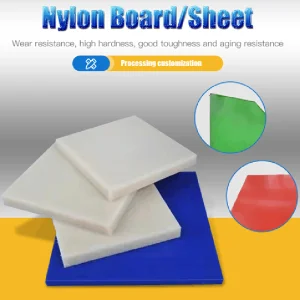
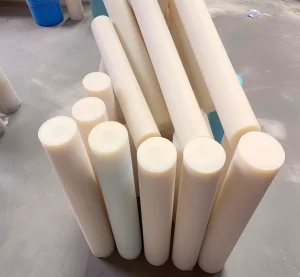
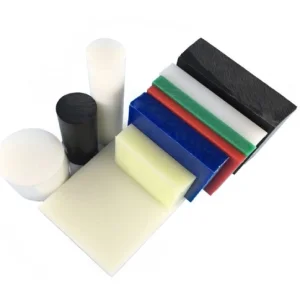
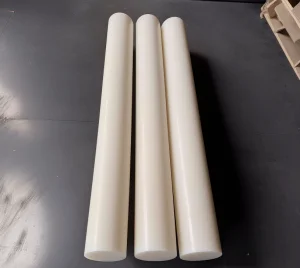
Industrial Polymer Stock & Semi-Finished Components for Argentina
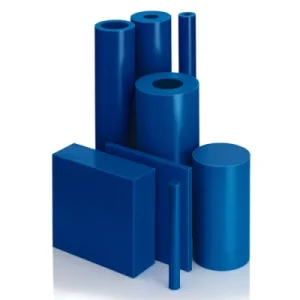
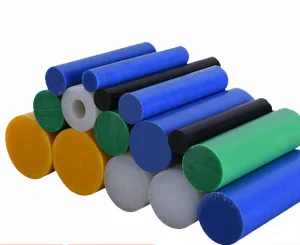
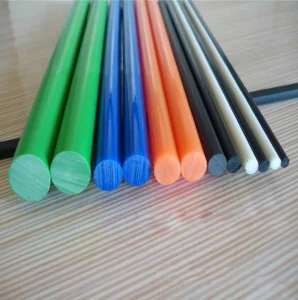
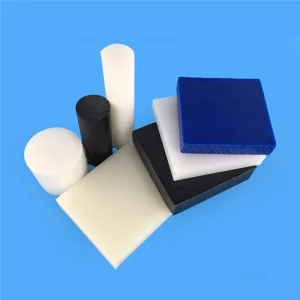
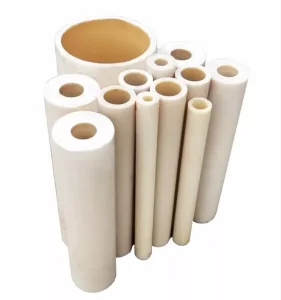
Direct factory supply of virgin polymer sheets, extruded bars, precision profiles, and custom vibration-damping mats engineered for Argentine chemical vessels, agro-dams, and water containment infrastructure.

Engineer Your Industrial Water Storage Project for Argentina Today
Direct factory technical consultations, comprehensive material test certificates, customized dimensional drawings, and optimized ocean freight delivery to Buenos Aires and Zárate. Our bilingual engineering specialists typically respond within 12 hours.
Send Inquiry Now