
Primary Chilean Export Profile Series (Batch I)
Direct factory-extruded rods, tubes, and cast profiles stocked for standard Chilean port deliveries (Valparaíso and San Antonio).
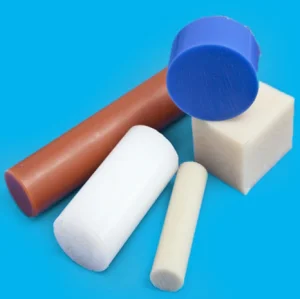
PA6 / PA66 / Nylon / PP / UHMWPE / PTFE / HDPE / ABS Rod and Bar
Request Chile Specification
Industrial High-Quality PP & Polymer Extruded Rod (White / Grey / Green)
Request Chile Specification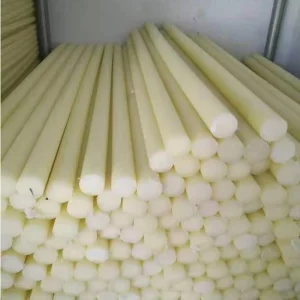
Cast PA6 Polyamide Nylon / ABS / PP / PTFE Custom Sized Rod & Bar
Request Chile Specification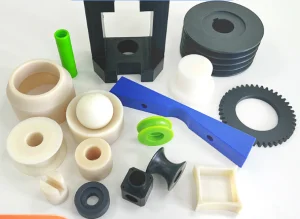
High-Durability MC Cast Nylon Pad for Mining Machinery Assemblies
Request Chile SpecificationEngineering ABS Tubes for Chile’s High-Altitude & Marine Operations
The industrial geography of Chile demands polymer profiles that resist extreme environmental stressors. In the northern regions of Antofagasta, Tarapacá, and Atacama, copper and lithium processing plants operate at elevations exceeding 3,000 meters. These installations endure intense solar UV irradiation (>3,000 kWh/m²), extreme diurnal thermal swings of up to 35°C within a single 12-hour window, and highly abrasive, acidic slurries during solvent extraction and electrowinning (SX-EW).
Conventional rigid PVC systems crack under subterranean seismic micro-vibrations and sub-zero Andean nights. In contrast, our virgin-grade Acrylonitrile Butadiene Styrene (ABS) tubes deliver exceptional low-temperature Izod impact strength (retaining over 180 J/m notched impact at -40°C), ductile yield mechanisms that prevent cataclysmic pipe bursts, and broad chemical resistance to dilute sulfuric acid and process electrolytes.
- Sub-Zero Impact Ductility: Polybutadiene rubber matrix prevents brittle fracture during severe Andean freezes.
- Anti-Scaling Smooth Internal Bore: Hazen-Williams C-factor = 150 minimizes copper hydrometallurgy salt crystallization.
- Aquaculture Non-Toxicity: Leaching-free compound compliant with pristine fjord biosecurity in Los Lagos and Aysén.
Chile-China FTA (TLC) Operational Edge
Under the China-Chile Free Trade Agreement (Tratado de Libre Comercio), our OEM ABS extrusions and engineering polymers qualify for zero-tariff treatment using the Certificate of Origin FORM F, enabling Chilean industrial procurers to eliminate the baseline 6% import tariff on plastic tubular goods.
ABS Technical Datasheet vs Alternative Industrial Polymers
Quantified mechanical parameters validated under ASTM and ISO standards for mechanical stability under continuous operational stresses.
| Physical / Mechanical Property | Testing Standard | SHUNDA OEM Industrial ABS Tube | Standard Rigid PVC (Schedule 80) | HDPE (PE100 Pipeline Grade) |
|---|---|---|---|---|
| Specific Density (g/cm³) | ASTM D792 | 1.04 – 1.06 | 1.40 – 1.45 | 0.95 – 0.96 |
| Tensile Strength at Yield (MPa) | ASTM D638 | 42 – 48 MPa | 48 – 55 MPa | 23 – 26 MPa |
| Flexural Modulus (GPa) | ASTM D790 | 2.1 – 2.4 GPa | 2.8 – 3.0 GPa | 1.0 – 1.2 GPa |
| Izod Impact Strength (Notched @ 23°C) | ASTM D256 | 220 – 290 J/m | 40 – 60 J/m | 180 – 220 J/m |
| Izod Impact Strength (Notched @ -40°C) | ASTM D256 | 110 – 150 J/m (High Ductility) | < 20 J/m (Extremely Brittle) | 90 – 120 J/m |
| Heat Deflection Temp (HDT @ 1.82 MPa) | ASTM D648 | 86°C – 95°C (Annealed: 102°C) | 65°C – 70°C | 45°C – 50°C |
| Thermal Expansion Coeff. (10⁻⁵ / °C) | ASTM D696 | 7.0 – 9.0 | 5.5 – 7.0 | 15.0 – 20.0 |
| Chemical Resistance (Dilute H₂SO₄) | ISO 175 | Excellent (< 60°C) | Good | Excellent |
| Solvent Weldability / Jointing | ASTM D2235 | Rapid Soluble Co-fusion (Cold Weld) | Requires primer + solvent | Thermal butt-fusion only |
Primary Deployment Scenarios Across Chilean Industries
Targeted engineering configurations solving complex fluid transport, pneumatic conveyance, and structural casing challenges.
Northern Mining & Leaching (Atacama / Antofagasta)
Utilized as reagent dosing conduits, SX-EW plant acid-mist scrubbing conduits, and lithium brine deep-well sampling casing pipes. The dimensional stability of ABS ensures zero ovalization under elevated ambient vacuum pressures.
Salmon Aquaculture Systems (Puerto Montt / Chiloé)
Pneumatic pellet feed delivery tubes connecting central barges to circular sea cages. The low-friction, satin-smooth internal bore prevents lipid smear and pellet disintegration while resisting high-salinity wave-motion fatigue.
Viticulture & Food Processing (Maule / O’Higgins)
Chilled glycol cooling loops for stainless fermentation vats. Superior thermal insulation (k = 0.17 W/m·K) sharply mitigates condensation and thermal line losses without requiring thick external elastomeric insulation cladding.
Instrumentation & Cable Protection (Santiago Metro)
Flame-retardant (UL94 V-0 compounded) conduits for subterranean communications, railway signaling, and industrial control cabinets. Delivers electromagnetic transparency combined with high impact crush-resistance.
Slurry Tailings Telemetry Casing
Perforated, slotted, and threaded piezometer and inclinometer casing pipes embedded across copper tailings dams. High resilience to hydrostatic ground subsidence eliminates casing sheer failures during seismicity.
Pneumatic Material Conveyance OEM
Custom calibrated-ID tubing for industrial automation, blow-feed systems, and component transport chutes where static dissipation and zero wall abrasion are essential operational criteria.
Extrusion Technology & Strict Quality Assurance
Our production infrastructure operates computer-controlled, multi-zone single and twin-screw extruders integrated with continuous ultrasonic gravimetric wall-thickness gauging (accuracy to ±0.02 mm). Raw materials consist strictly of prime, 100% virgin ABS resins sourced from LG Chem, Chi Mei, and Sinopec, eliminating recycled regrind contamination that triggers embrittlement.
- Hydrostatic Testing: Sustained internal pressure validation at 20°C and 60°C compliant with ASTM D1598 standards.
- Annealing Ovens: Controlled post-extrusion heat soaking to fully dissipate residual extrusion wall stresses.
- Full Traceability: Batch-specific EN 10204 3.1 Mill Test Certificates (MTC) detailing physical melt flow index (MFI) and tensile yield.
Tailor-Made Configurations for Engineering Teams
We do not merely supply commodity diameters; we engineer customized polymer tube geometry, resin formulation, and finishing per drawing specifications:
Frequently Asked Questions: ABS Tubing for Chile
In-depth answers addressing procurement criteria, customs clearance, jointing techniques, and extreme environment resistance.
While HDPE offers outstanding chemical resistance, its flexural modulus (around 1.0 GPa) allows significant line sag under elevated temperatures, requiring closely spaced continuous pipe hangers. ABS exhibits more than double the structural rigidity (flexural modulus >2.2 GPa), maintaining straight alignments across overhead racks with lower thermal creep and allowing easy cold-solvent cement jointing instead of slow electrofusion butt-welds.
We provide the authorized Certificate of Origin FORM F issued by the China Council for the Promotion of International Trade (CCPIT) or China Customs. This certifies that the goods meet regional value-content rules under the TLC Chile-China, permitting your customs agent in San Antonio or Valparaíso to clear the cargo with an exemption from the 6% general ad valorem import tariff.
For surface-mounted applications in Antofagasta or Calama, we incorporate high-dispersion carbon black (2.0% - 2.5% concentration) or advanced hindered amine light stabilizers (HALS). This prevents photo-oxidative degradation of the polymer backbone, avoiding embrittlement and maintaining impact performance over prolonged UV exposure.
Extrusion lead time for standard FCL (Full Container Load) volumes is typically 15–20 days from drawing freeze. Goods are bundled with protective PE wrapping, nested by diameter to maximize cubic container utilization, and secured in fumigated steel-strapped wooden crates to prevent scratching or out-of-round deformation during transpacific ocean transit.
ABS tubes utilize solvent cement jointing per ASTM D2235, producing a rapid molecular co-fusion that cures into a monolithic, pressure-tight joint without open flames or electrofusion power generators. For mechanical disassembly, we machine precision NPT/BSP threads or incorporate welded ABS flanges matching ANSI/ASME B16.5 and DIN EN 1092-1 dimensions.
Engineering Polymer Profiles & Plates (Batch II)
Extruded and cast semi-finished plastic stock manufactured for Chilean industrial maintenance, overhaul, and OEM fabrication.
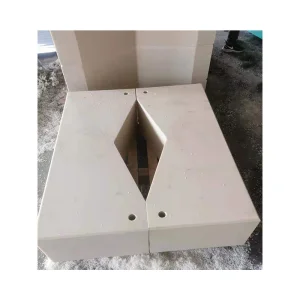
MC Casting Nylon Sheet PA6 Engineering Plastic Hard Board
Request Chile Specification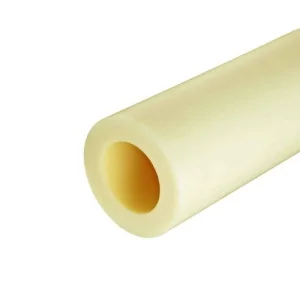
Precision Nylon Tube, PP Tube & Industrial ABS Extruded Tube
Request Chile Specification
Heavy Impact Round Blue MC Nylon Cushion for Piling Equipment
Request Chile Specification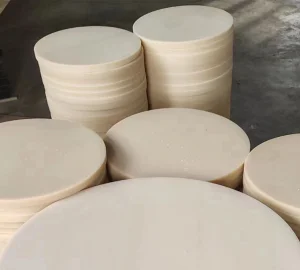
Industrial Impact Cushion Pad Block for Heavy Foundation Hammers
Request Chile Specification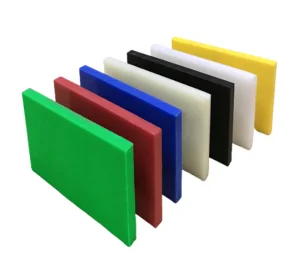
Industrial Polyamide PA6 / PA66 / UHMWPE / PTFE / ABS Plastic Sheet
Request Chile Specification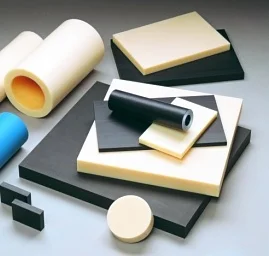
Casting Backing Board & Tube: Nylon / PP / ABS / PTFE / UHMWPE
Request Chile Specification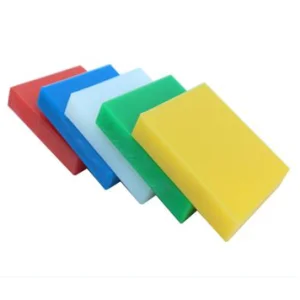
High-Spec PA6 / PA66 / Nylon / PP / PTFE / HDPE / ABS Sheet, Rod & Bar
Request Chile Specification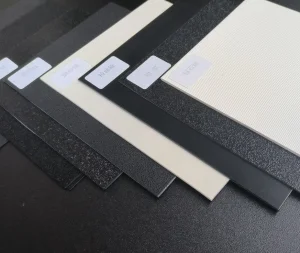
Smooth Texture Food-Safe ABS Plastic Sheet for Refrigeration Enclosures
Request Chile SpecificationAccelerate Your Engineering Plastic Supply Chain for Chile
Whether you require standard schedule extruded ABS pipes for hydrometallurgy sampling or bespoke CNC-machined polymers with FORM F customs documentation, our engineering team provides comprehensive quotes and technical datasheets within 12 hours.