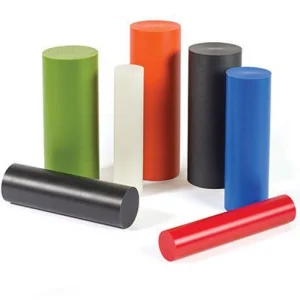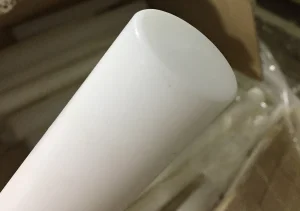
Immediate Supply Ready
Precision Nylon Plates & Core Stock for European Importers
Engineered to withstand heavy dynamic shock loads, minimize sliding friction, and optimize continuous mechanical performance across Polish industrial plants.
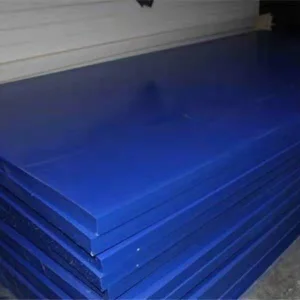
High-Quality MC Cast PA6 & UHMWPE Sheets for Polish Industry
View Product Details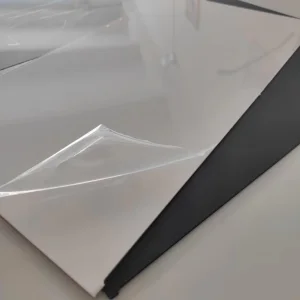
Custom Smooth ABS Engineering Sheets for Poland Appliance OEMs
View Product Details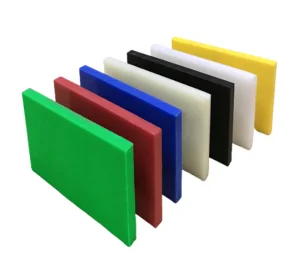
Green Self-Lubricating Cast MC Nylon Sheets for Silesian Coal & Bulk Handling
View Product Details
Engineering Whitepaper
The Strategic Landscape of Polyamide Engineering Sheets in Poland
A rigorous examination of Poland's re-industrialization, regional manufacturing hubs, and the transition toward high-modulus, self-lubricating structural polymers.
As the industrial powerhouse of Central and Eastern Europe (CEE), the Republic of Poland represents a highly dynamic ecosystem for modern manufacturing, automation, automotive fabrication, and mineral extraction. Within this intensive production framework, engineering thermoplastics—specifically polyamide semi-finished shapes such as cast nylon sheets (PA6G) and extruded polyamide plates (PA6 & PA66)—have transitioned from supplementary materials to critical structural components. The national emphasis on lightweighting, energy-efficient transmission machinery, and compliance with European Union decarbonization directives has accelerated the displacement of conventional bronzes, cast irons, and phosphor alloys in favor of wear-resistant polyamides.
Silesian Heavy Industry & Mining
In the Upper Silesian Industrial Region (Katowice, Gliwice, Dąbrowa Górnicza), our heavy-gauge cast MC nylon sheets serve deep mining conveyors, coking plants, and bulk crushing equipment. Replaced metal wear shoes, chute liners, and chain guides eliminate metal-to-metal galling, survive severe slurry abrasion, and suppress dangerous acoustic noise across shaft operations.
Automotive Production Corridor
Spanning Lower Silesia (Wrocław), Tychy, and Poznań, automotive manufacturing clusters demand stress-relieved polyamide plates for assembly-line fixtures, robotic end-effector brackets, stamping tooling pads, and high-speed overhead conveyor trolleys where non-marking surfaces and high impact damping prevent paint and cosmetic damage.
Baltic Maritime & Logistics Infrastructure
In the coastal logistics centers of Gdańsk, Gdynia, and Szczecin, crane builders and port authorities utilize oil-filled and MoS2-modified nylon plates for quay crane outrigger pads, heavy telescoping boom slide bearings, mooring winch sheaves, and shipboard hatch cover wear strips that operate reliably in saltwater environments without galling.
Material Science Matrix
Engineering PA6G vs. Traditional Metallic Bushing Alloys
A comparative structural evaluation illustrating why Polish maintenance directors and equipment designers are shifting from bronze to monomer-cast polyamide plates.
| Performance Parameter | Cast MC Nylon (PA6G) | Phosphor Bronze (CuSn8) | Structural Steel (S355) | Operational Impact for Polish Plants |
|---|---|---|---|---|
| Density (g/cm³) | 1.15 – 1.16 | 8.80 | 7.85 | 85% mass reduction; lower inertia & energy demand |
| Dry Friction Coefficient (vs Steel) | 0.15 – 0.25 (unlubricated) | 0.35 – 0.45 (unlubricated) | 0.60 – 0.80 | Prevents catastrophic seizure under lube starvation |
| Abrasive Slurry Wear Index | Superior (elastic absorption) | Moderate (prone to scoring) | Poor (work hardens & tears) | Triple component lifespan in Silesian sand/coal lines |
| Vibration & Acoustic Damping | High (> 12 dB noise drop) | Minimal metallic resonance | Negligible damping | Meets strict EU workplace noise directive limits |
| Machining Feed Rates | Up to 500 m/min | 120 m/min | 90 m/min | 4x faster CNC cycle times in Polish job shops |
| Corrosion & Salt Resistance | Completely Immune | Prone to galvanic attack | Rapid oxidation (rusting) | Essential for Baltic ports and agricultural machinery |
Future Roadmap 2025-2035
The Evolution of Cast Polyamide Engineering in Poland
Addressing the shifting requirements of Industry 4.0, circular economy directives, and high-frequency digital machining.
Phase 01: 2025–2027
Zero-Stress Annealing Cycles
Eliminating internal casting stresses through computer-controlled oil quenching, ensuring that Polish CNC milling operators experience zero warping even during deep pockets or asymmetrical channel cuts.
Phase 02: 2027–2029
Advanced Solid Lubricants
Integration of sub-micron MoS2, fluoropolymers, and food-grade fluid lubricants directly inside the caprolactam polymerization matrix, catering to Wielkopolska's meat and dairy automation packaging machinery.
Phase 03: 2029–2032
Circular Polyamide Loops
Establishing monomer-level depolymerization protocols enabling clean CNC swarf and machining scrap from Polish factories to be repolymerized into virgin-grade semi-finished shapes under EU Green Deal frameworks.
Phase 04: 2032–2035
Hybrid Nano-Reinforced Matrices
Graphene and ceramic platelet infusion to elevate continuous thermal operating boundaries from 105°C to 160°C, closing the gap between engineering polyamides and expensive fluoropolymers like PEEK.
Need Custom Sized Nylon Sheets Delivered to Poland?
Factory-direct mill certificates, EN 10204 3.1 compliance, cut-to-size precision, and consolidated sea/air freight forwarding to Warsaw, Katowice, Gdańsk, and Poznań.
Knowledge Base & FAQ
Frequently Asked Questions: Sourcing Nylon Sheets in Poland
In-depth responses covering resin grades, CNC machining recommendations, EU regulatory compliance, and logistics to Polish industrial regions.
What are the key technical differences between Cast MC Nylon (PA6G) and Extruded Nylon (PA6) for Polish manufacturers?
Cast nylon (Monomer Cast, PA6G) is synthesized through direct alkaline polymerization of caprolactam within atmospheric pressure molds. This allows for virtually unlimited sheet thicknesses (from 10 mm up to 200 mm+) with remarkably high crystallinity, superior hardness, enhanced wear resistance, and minimal internal stress. In contrast, extruded nylon (PA6) relies on thermal melt extrusion, resulting in slightly higher moisture absorption, lower tensile modulus, and greater internal stress, but greater yield ductility. For heavy-duty mechanical engineering, outrigger plates, and large wear gears across Poland, Cast MC Nylon is universally the preferred material.
How does ambient humidity in Polish industrial plants affect the dimensional stability of PA6 sheets?
Polyamides are hygroscopic materials that absorb atmospheric moisture until reaching equilibrium (typically 2.5% to 3.0% at 23°C and 50% relative humidity, and up to 6-7% at total water saturation). This absorption increases impact toughness and elongation at break while slightly lowering tensile strength and causing linear dimensional swelling (approximately 0.2% to 0.3% per 1% of absorbed water). For high-precision parts in variable environments, our engineers recommend either pre-conditioning the stock, allowing adequate dimensional clearances on inner-diameter bushings, or selecting alternative materials like POM or oil-filled cast nylon grades.
Do your nylon sheets comply with EU chemical safety directives (REACH & RoHS)?
Yes, 100%. All engineering polymer stock exported to Poland and the broader European Union is manufactured using virgin polymer resins and certified pigments that comply strictly with Regulation (EC) No 1907/2006 (REACH) concerning SVHC (Substances of Very High Concern) and the Directive 2011/65/EU (RoHS). Material Safety Data Sheets (MSDS) and declarations of conformity are provided with each consignment.
What tooling and cutting speeds are recommended for CNC machining thick nylon sheets?
Because polyamides have low thermal conductivity (approx. 0.23 W/m·K) and a relatively low softening point, excessive heat accumulation must be avoided during milling and drilling. We recommend single- or double-flute high-speed steel (HSS) or polished carbide tooling with wide chip flutes, high rake angles (15° to 30°), and razor-sharp clearance angles. Surface cutting speeds should range between 250 and 500 m/min with aggressive feed rates (0.1 to 0.5 mm/rev) to ensure that the tool removes heat within the chip rather than transferring it to the workpiece. Clean compressed air or water-soluble emulsions should be applied when drilling deep boreholes.
What are the lead times and shipping routes for consignments bound for Polish ports or logistics terminals?
Standard production turnaround for standard container orders is typically 15 to 20 business days. For shipments to Poland, ocean freight routes run directly to the Port of Gdańsk or Gdynia (approx. 28-35 days transit). Alternatively, rail-freight connections via the New Silk Road (Chengdu/Xi'an to Małaszewicze terminal) provide expedited transit of roughly 14 to 18 days directly into Eastern Poland, where goods clear customs and dispatch via domestic road freight across Warsaw, Kraków, and Katowice.
Extended Factory Catalog
High-Spec Engineering Plastics Ready for Polish Industrial Supply
Comprehensive semi-finished stock, precision wear bars, high-modulus rods, and custom polymer sheets manufactured to exact mechanical specifications.
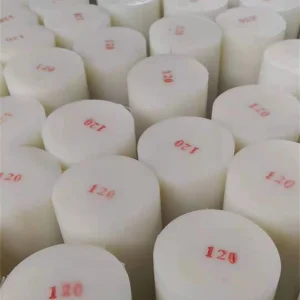
Oil-Filled & Glass-Filled Cast PA6 Polyamide Rods for Poland Industrial OEMs
View Product Details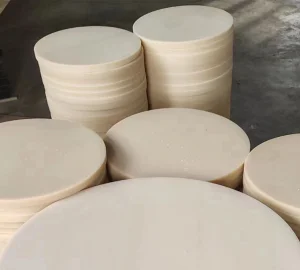
High-Impact Nylon Cushion Blocks for Heavy Piling Machines in Poland Infrastructure
View Product Details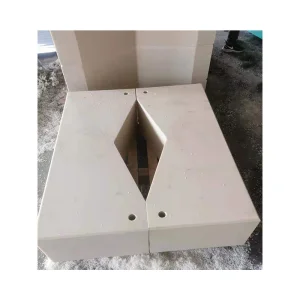
MC Cast PA6 Nylon Hard Board & Machine-Grade Sheets for Poland Fabricators
View Product Details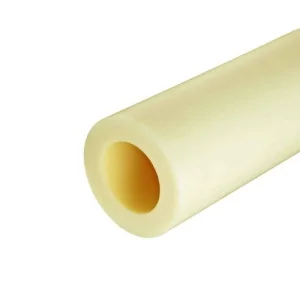
Engineering Plastic Round Rods & Thick-Wall Sleeves for Polish Hydraulic Bushings
View Product Details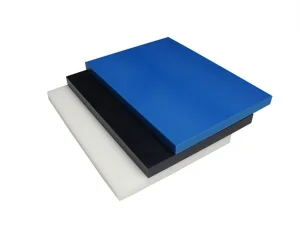
Natural, Black & MoS2 Blue Nylon Plates for High-Wear Conveyors in Poland
View Product Details
Heavy-Duty HDPE Wear Resistant Sheets for Chemical Lining in Poland
View Product Details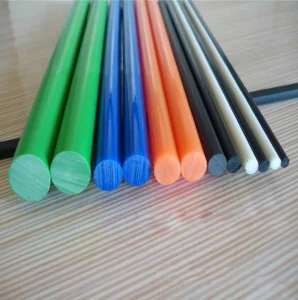
Solid Cast MC Nylon Rectangular Bars for Polish Precision Guide Rails
View Product Details