Direct OEM / Precision Extrusion & Monomer Casting

Nylon Rod Manufacturer & Company serving the Canada market

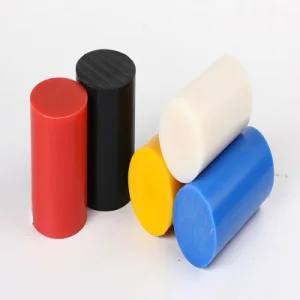
Delivering high-tensile Cast PA6, Extruded PA66, and MoS2-filled polyamide round bars engineered for sub-zero impact resistance across Ontario, Alberta, British Columbia, and Quebec heavy manufacturing corridors.

20+ Years
Global Polymer Polymerization
Ø 15-500 mm
Custom Extruded & Cast Diameters
-45°C Rated
Canadian Cold-Impact Stability
ISO 9001:2015
Annealed Zero-Stress Billets

Engineered Polyamide Round Bars for Canadian Industrial Applications

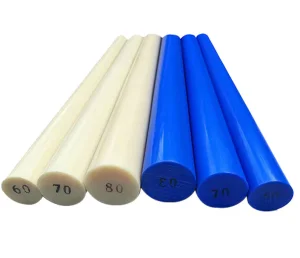
Precision-cast and extruded nylon stock designed for zero internal stress, delivering superior machining characteristics, high PV ratings, and wear resistance in extreme environmental operating envelopes.
Industrial Analysis: Polyamide Stock Billets in the Canadian Market

Assessing mechanical integrity, cryogenic durability, thermal cycling resilience, and supply chain rationalization across Canadian manufacturing operations.

1. Canadian Industrial Operating Climate & Polymer Demand

Canada's industrial landscape presents one of the most mechanically demanding environments in the global market. Spanning the oil sands processing complexes of Fort McMurray, Alberta, the deep hard-rock gold and nickel mining shafts of Sudbury, Ontario, and the coastal bulk maritime ports of Metro Vancouver, heavy machinery components operate under extreme conditions. Traditional bronze, cast iron, and standard non-ferrous bushings frequently experience galling, lubrication failure, and rapid catastrophic wear during severe Canadian winters where ambient operating temperatures routinely drop below -40°C.

SHUNDA addresses these localized environmental stresses by formulating specialized Monomer Cast (MC) Nylon rods (PA6G) and Extruded PA66 billets characterized by high notch impact strength at sub-zero temperatures. Unlike traditional engineering plastics that become brittle under severe thermal contractions, our proprietary caprolactam polymerization and slow-annealing schedule minimize residual crystalline stresses. The resulting rods deliver exceptional fracture toughness, damping properties that eliminate metal-on-metal noise pollution, and self-lubricating dry sliding characteristics essential for aggregate handling, pulp conveyors, and high-load hydraulic assemblies.

Physical / Mechanical Property Test Standard (ASTM/ISO) SHUNDA Cast PA6 (Natural/Blue) MoS2 Lubricated Cast Nylon Traditional Phosphor Bronze (SAE 660)
Specific Density ISO 1183 / ASTM D792 1.15 g/cm³ 1.16 - 1.18 g/cm³ 8.90 g/cm³ (7.7x Heavier)
Tensile Strength at Break (23°C) ISO 527 / ASTM D638 82 - 88 MPa 78 - 85 MPa 240 MPa
Charpy Notched Impact (-30°C) ISO 179 / ASTM D256 > 4.5 kJ/m² (No Brittle Rupture) > 4.0 kJ/m² High (Ductile)
Dynamic Coefficient of Friction (Dry) Pin-on-Disk vs Steel 0.25 - 0.32 0.18 - 0.22 (Low Slip-Stick) 0.35 - 0.45 (Prone to Galling)
Maximum PV Limit (Continuous) Internal / Empirical 1.2 MPa · m/s 1.8 MPa · m/s 1.7 MPa · m/s (Requires Oil Feed)

Through density reduction alone, switching heavy crane sheaves and wear rings to SHUNDA cast polyamide round stock reduces revolving mass by over 80%. This provides dramatic operational energy reductions for Canadian hoist and crane installations while prolonging the working lifespan of expensive steel wire ropes by preventing abrasive localized work hardening.

2. Global Polymer Trends: Weight Optimization & Self-Lubricating Formulations

Across North America and Western Europe, mechanical engineering directives are governed by circular economy standards, lower total lifecycle costs (TCO), and strict carbon mitigation targets. In industrial equipment design, this manifests as widespread replacement of metal alloy bearings with high-crystalline engineering polymers that do not require external grease lines. External grease in heavy conveyor and mining equipment poses substantial eco-toxicity hazards when migrating into groundwater and soil.

The global demand for semi-finished nylon rods is steadily tilting toward modified engineering grades. By introducing evenly dispersed liquid lubricants, molybdenum disulfide (MoS2), and carbon fiber reinforcers directly into the caprolactam monomer matrix during liquid casting, SHUNDA provides Canadian machine shops with raw stock billets capable of maintenance-free continuous operation. This eliminates hydrodynamic bearing failures caused by neglected lubrication maintenance during peak round-the-clock plant runs.

3. Localized Applications Across Canadian Industrial Corridors

SHUNDA's direct supply pipeline accommodates precision manufacturing across primary regional sectors:

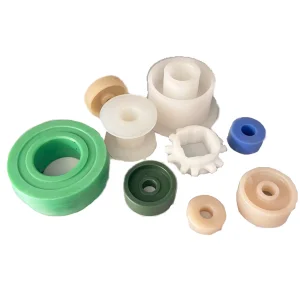
  • Ontario & Quebec Automotive and Automation Machinery: Production of low-backlash helical gears, starwheels, cam rollers, and precision drive bushings that minimize assembly line friction without dimensional creep.
  • Alberta Petroleum, Oil Sands & Pipeline Valving: Machining of valve seat rings, anti-friction backup rings, and pipeline pigging discs capable of resisting crude hydrocarbons and sour gas exposure.
  • British Columbia Forestry, Timber & Pulp Mills: High-impact log haul guide bearings, debarker head bushings, and overhead transfer conveyor sprockets subject to continuous moisture, abrasive bark particulate, and dynamic shock.
  • Saskatchewan Potash & Mining Extraction: Slurry pump impellers, trunnion rollers, and underground personnel carrier wear pads impervious to salt corrosion and abrasive slurry degradation.

Systematic Quality Assurance for Demanding Machining Tolerances

Eliminate machining distortion, internal voids, and centerline porosity by sourcing stock stabilized through computer-regulated annealing protocols.

Monomer Anionic Polymerization

Direct liquid caprolactam conversion delivers polymer chains of ultra-high molecular weight (>100,000 g/mol), enhancing load-bearing stiffness and resistance to deformation under load compared to conventional extrusion.

Multi-Stage Thermal Annealing

Every nylon rod undergoes an oil-bath or air-circulation stress relief cycle spanning up to 48 hours. This guarantees dimensional retention during high-speed CNC turning and milling without warping or bowing.

Ultrasonic Void Inspection

Centerline porosity is the primary cause of split parts during tap-and-drill CNC processes. SHUNDA validates 100% of large-diameter billets (over Ø80mm) with non-destructive ultrasonic flaw detection to ensure continuous solid density.

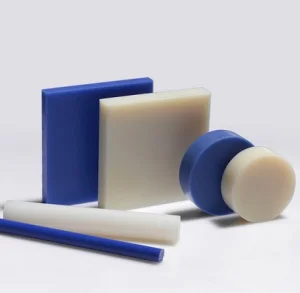
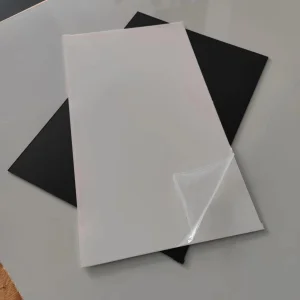
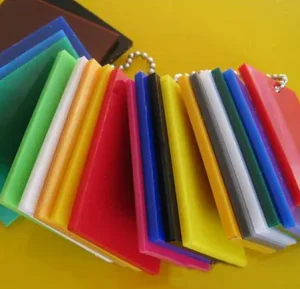
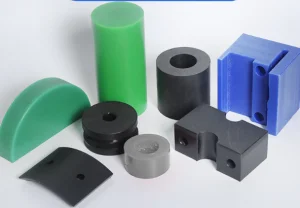
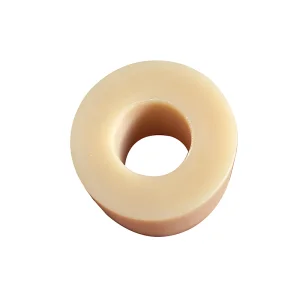
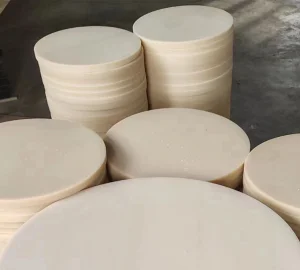
Specialized Semifinished Billets, Heavy Sheets & Fabricated Parts

Direct supply from Hebei production base to Canadian commercial ports (Vancouver, Montreal, Prince Rupert, Halifax) with complete mill test certifications.

Technical & Procurement FAQ for Canadian Engineers

Direct technical answers regarding moisture equilibrium, cryogenic performance, customs classification, and CNC machining guidelines.

How does atmospheric moisture affect nylon rod dimensions in Canadian regional climates?
Polyamides (specifically PA6 and PA66) are hydroscopic, absorbing atmospheric humidity up to an equilibrium of 2.0% to 3.0% under standard ambient conditions (approx. 0.2% growth per 1% moisture intake). In high-precision CNC manufacturing in dry winter Canadian interiors versus humid coastal regions, this dimensional variance must be calculated. For tight-tolerance applications (±0.02 mm) requiring total dimensional lock, SHUNDA provides MoS2-filled cast polyamide or POM-C (Polyacetal), which exhibits minimal moisture absorption (0.2% saturation).
What makes Cast Nylon (PA6G) structurally superior to Extruded PA6 for large diameter bars?
Extrusion processes for rods over Ø100mm suffer from significant radial cooling gradients, leading to vacuum voids and concentrated residual tensile stresses along the billet core. Cast nylon is formed by direct chemical reaction casting at low temperatures without mechanical extrusion shear. This results in substantially higher molecular weight, superior crystallinity, elevated heat deflection temperatures (HDT), and complete elimination of centerline porosity.
What tool geometries and feeds are recommended for CNC turning SHUNDA nylon round stock?
Nylon requires sharp cutting edges with positive rake angles (15° to 30°) and clearance angles of 5° to 10° to prevent heat buildup. High cutting speeds (250 - 500 m/min) combined with steady, positive feed rates (0.15 - 0.40 mm/rev) allow continuous chips to evacuate without localized surface melting. Polished carbide or PCD tooling minimizes material smearing during parting-off and boring operations.
How does SHUNDA handle freight logistics, tariff documentation, and CBSA clearance for Canada?
We maintain full export compliance for North American sea and air logistics under HS Code 3916.90 (Monofilament & Profile Shapes of Plastics). All ocean shipments to Port of Vancouver, Port of Montreal, or Prince Rupert include fumigated ISPM-15 wooden crating, detailed packing lists, commercial invoices, and Mill Certificates of Conformance according to EN 10204 3.1. DDP and CIF incoterms are readily available through our bonded freight forwarding partners.

Request Mill-Direct Pricing & Sample Billets for Canadian Operations

Send your drawings, diameter ranges, and resin specifications. Our engineering team responds within 12 hours with complete CAD/CAM review and CIF/DDP quotes.

Send Inquiry Now