
High-Performance Engineering Polymers for Brazilian Industry
Pre-inspected engineering polymers packaged for long-distance maritime transit to Santos, Paranaguá, and Rio Grande ports.
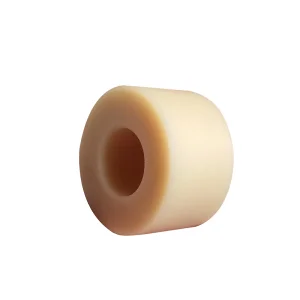
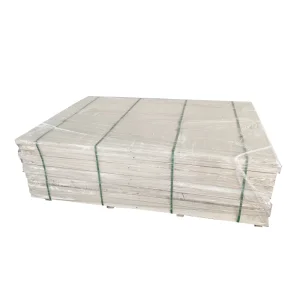
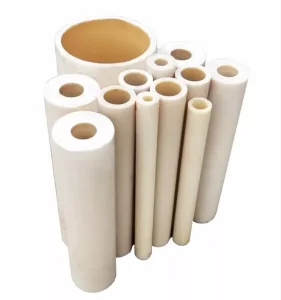
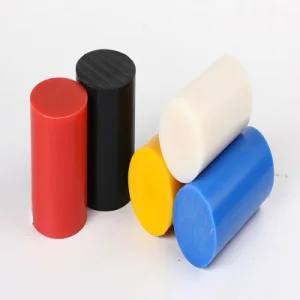
Engineering the Demanding Realities of Brazilian Heavy Industry
Why conventional abrasion-resistant steel and polyurethane fail under the extreme humidity, tropical heat, and hyper-abrasive iron and grain transfers across South America.
Brazil stands as a macroeconomic powerhouse driven by mineral extraction, immense agro-industrial grain logistics, deepwater oil exploration, and sugar-ethanol processing. From the open-pit iron ore mines of Vale in the Carajás Complex (Pará) and the Quadrilátero Ferrífero (Minas Gerais), to the enormous soybean and corn transit corridors flowing from Mato Grosso into the Port of Santos, Paranaguá, and the Arco Norte terminals (Barcarena, Itaqui), industrial handling equipment operates under punishing operational stress.
Traditional structural steel, hardened manganese alloys (such as Hardox 400/500), and standard HDPE consistently encounter premature fatigue in these environments. The primary metallurgical culprit is a destructive dual mechanism: mechanical gouging abrasion compounded by high tropical ambient humidity. In Minas Gerais iron mining, hematite slurries and fine, wet tailings adhere stubbornly to metallic chute surfaces. This initiates cohesive arching ("bridging" and "ratholing"), resulting in catastrophic conveyor bottlenecks, structural impact damage, and emergency plant downtime costing upwards of $15,000 per hour.
Similarly, Brazilian agribusiness processing facilities across Paraná and São Paulo face relentless wear during seasonal harvest surges. Unprocessed sugar bagasse, humid soybean meal, and high-velocity corn kernels cause rapid polymer degradation, chemical corrosion from organic acids, and electrostatic discharge risks. Modern plant superintendents and reliability engineers throughout Brazil are aggressively replacing metallic surfaces with Ultra-High Molecular Weight Polyethylene (UHMW-PE / Polietileno de Ultra Alto Peso Molecular - PE 1000).
Hematite & Bauxite Slurry Wear
Brazilian iron and bauxite extraction produces micro-particulate slurries that destroy carbon steel via abrasive scouring. Sintered UHMWPE offers an abrasion resistance index 4 to 6 times higher than mild steel, preventing slide bed erosion.
Zero Moisture Retention
Unlike Nylon PA6 which absorbs up to 7% atmospheric moisture in tropical humid zones like Santos or Belém causing swelling, UHMWPE exhibits <0.01% water absorption, guaranteeing permanent dimensional tolerance.
Elimination of Material Sticking
Possessing an exceptionally slick, self-lubricating surface with a dynamic friction coefficient of 0.08, UHMWPE completely prevents sticky Brazilian red clay, wet coal, and wet grain residues from caking inside bins and hoppers.
Comparative Metallurgy & Tribological Performance Matrix
Validated engineering data under ISO 15527, DIN 16972, and ASTM D4020 for project specification in Brazil.
| Property Parameter | Test Standard | UHMWPE (Virgin PE-1000) | UHMWPE (Ceramic / Glass Filled) | Hardox 400 Steel | Cast Polyamide (MC Nylon) |
|---|---|---|---|---|---|
| Molecular Weight (g/mol) | ISO 1628-3 | 5.0 × 10⁶ – 9.2 × 10⁶ | 4.5 × 10⁶ – 7.0 × 10⁶ | N/A (C-Mn-Cr Alloy) | ~3.5 × 10⁴ |
| Density (g/cm³) | ISO 1183 | 0.930 – 0.945 | 0.970 – 1.05 | 7.85 | 1.15 – 1.16 |
| Relative Abrasion (Sand-Slurry Method) | ISO 15527 (Steel = 100) | 15 – 20 (Lower is Better) | 10 – 14 | 100 | 35 – 45 |
| Dynamic Friction Coeff. (Dry on Steel) | ASTM D1894 | 0.08 – 0.12 | 0.12 – 0.15 | 0.50 – 0.65 | 0.25 – 0.35 |
| Double-Notched Charpy Impact (kJ/m²) | ISO 11542-2 | >100 (No Break) | >70 | 35 – 45 | 60 – 80 |
| Moisture Absorption Equilibrium (%) | ASTM D570 | <0.01% | <0.01% | 0.00% (Prone to Rust) | 6.0% – 7.0% (High Swell) |
| Operating Temperature Range (°C) | Continuous | -200 to +80 °C | -150 to +90 °C | Up to +250 °C | -40 to +110 °C |
The Physics of Molecular Weight Superiority: The critical distinction between commodity high-density polyethylene (HDPE, ~300,000 g/mol) and true engineering-grade UHMWPE (~5,000,000 to 9,200,000 g/mol) resides in the sheer length of the polymerized ethylene chains. Under high-impact loading—such as run-of-mine ore dropping from an overhead vibratory feeder—the ultra-long molecular chains deform elastically without polymer crosslink fracture. This absorbs kinetic energy, dissipating destructive shocks that would fracture brittle basalt ceramics or deform structural carbon steel plates.
Request Direct Factory Pricing for Brazil Supply
We supply full container loads (FCL) of virgin, anti-static (ATEX/NR-10), and boron-loaded UHMWPE sheets with tailored Brazilian import documentation.
Mission-Critical Brazilian Industrial Applications
From deep-sea port terminals to interior agro-industrial grain silos, how SHUNDA's UHMWPE formulations deliver lower total cost of ownership across Brazil.
Port & Maritime Fender Systems
Deployment: Port of Santos, Terminal de Tubarão, Port of Paranaguá.
Fender face pads engineered from UV-stabilized, marine-grade UHMWPE sheets protect berthing bulk carriers and container ships. Resists high shear, saltwater corrosion, bio-fouling, and tropical UV radiation without cracking.
Grain Silo & Chute Liners
Deployment: Agribusiness cooperatives (Rondonópolis, Sorriso, Cascavel).
Lining grain discharge boots, transfer spouts, and hopper cones with FDA/ANVISA compliant UHMWPE prevents soybean hull build-up, reduces mechanical grain breakage by 35%, and eliminates dust-explosion friction hotspots.
Mining Truck Beds & Rail Cars
Deployment: Iron ore rail transit (EFC - Estrada de Ferro Carajás & EFVM).
Heavy-gauge (15mm to 50mm) drop-in UHMWPE truck bed and hopper wagon liners prevent dense, wet iron ore from freezing or packing into corners. Enables instantaneous dumping cycles without material holdback.
Sugar Cane Milling & Distilleries
Deployment: Ethanol mills across Ribeirão Preto & Piracicaba.
Handling acidic, fibrous sugarcane bagasse requires exceptional anti-abrasion and resistance to organic acids. Sintered UHMWPE wear plates are installed on chain conveyor troughs, scrapers, and intermediate conveyor slides.
Pulp & Paper Dewatering Elements
Deployment: Suzano, Klabin, and Cenibra processing plants.
Suction box covers, hydrofoils, and forming board blades crafted from ultra-pure sintered PE-9000 ensure extremely low friction coefficients against fourdrinier wires, boosting wire lifespan and reducing machine electrical draw.
Concrete & Asphalt Batching Liners
Deployment: Major infrastructure projects across São Paulo, Minas Gerais, and Bahia.
Ready-mix concrete trucks, pugmill mixers, and dry asphalt aggregate hoppers utilize UHMWPE sheets to maintain clean wall transitions, preventing aggregate crust build-up and slashing daily water washout times.
China Direct Manufacturing Advantage & Seamless Brazilian Clearance
Eliminate intermediate trading margins while ensuring complete compliance with Receita Federal, Siscomex, and Brazilian NCM tariff classifications.
Procuring heavy engineering plastics for Brazilian operations historically involved costly European or domestic compounding intermediaries. As a direct China manufacturer with massive sinter-compression hydraulic press lines, SHUNDA provides Brazilian procurement officers with direct-from-source price benefits, rigorous batch-to-batch polymer testing, and pre-customized fabrication.
100% Virgin GUR Resin
Zero recycled material contamination. We strictly formulate using high-purity polymer feedstocks (Ticona/Celanese GUR equivalents) ensuring unbroken polymer chains and full ASTM D4020 compliance with zero void porosity.
Precision CNC Machining
Our multi-axis CNC routing equipment handles pre-drilled countersunk holes, edge beveling, sliding slots, and complex interlocking tongue-and-groove profiles directly from your AutoCAD / SolidWorks engineering files.
Brazil Import Assistance
Complete documentation for seamless Siscomex processing: precise Commercial Invoices, Packing Lists matching NCM Code 3920.10.99, fumigation certificates (ISPM 15 compliant), and Bill of Lading consignments.
Technical Support & Local Fastener Guidance
A frequent error in Brazilian chute lining projects is thermal expansion failure. UHMWPE exhibits a linear thermal expansion coefficient roughly 15 to 20 times greater than structural carbon steel (~2.0 × 10⁻⁴ m/m/°C). When subjected to the temperature swings between cool Minas Gerais nights and blistering 40°C afternoon operating temperatures, rigidly fixed sheets will buckle.
Our application engineering team provides comprehensive installation blue-prints for Brazilian site mechanics, including:
- Ovalized slotted counterbores: Allowing lateral thermal movement while maintaining surface flushness to prevent material catch.
- Weld-stud and countersunk stainless-steel bolt arrays: Sizing fastener spacings based on material thickness (e.g., 200mm centers for 12mm sheets; 300mm centers for 25mm sheets).
- Overlapping shingle arrangements: Ensuring down-slope material flows smoothly across leading edge transitions without tearing sheet corners.
Next-Generation UHMWPE Formulations for Strategic Sectors
Meeting evolving safety and performance mandates across Brazil's energy transition, aerospace, and processing industries.
ATEX / NR-10 Anti-Static (ESD)
Compounded with specialized conductive carbon black, achieving surface resistivity of 103 to 106 Ohms. Essential for explosive soybean and wheat dust environments across Brazilian interior silo facilities to prevent electrostatic sparks.
Borated UHMWPE Shielding
Compounded with 5% to 10% Elemental Boron for secondary neutron absorption. Deployed in Brazilian oncology radiotherapy centers, nuclear medical reactors, and specialized defense installations as lightweight, non-lead radiation shielding.
Ceramic-Reinforced Formulations
Micro-glass sphere and ceramic particle matrices engineered specifically for extreme quartz sand and sharp mineral abrasive handling in Carajás iron facilities, offering up to 35% higher abrasive life over standard PE-1000.
Frequently Asked Questions by Brazilian Engineers & Buyers
In-depth technical answers addressing import logistics, customs tariffs, thermal properties, and factory certifications.
What is the exact NCM code for importing UHMWPE sheets into Brazil, and what are the typical duties?
Under the Brazilian Nomenclatura Comum do Mercosul (NCM), UHMWPE sheets and plates are classified under NCM 3920.10.99 (Placas, folhas, películas, tiras e lâminas de polímeros de etileno, não alveolares, não reforçadas). Import duties (II - Imposto de Importação) generally range between 11.2% and 12.6%, alongside applicable IPI, PIS, and COFINS. We provide precision commercial invoices and packing lists matching your RADAR-licensed despachante aduaneiro specifications to prevent clearance delays at Santos or Paranaguá customs.
How do you verify the true molecular weight of your UHMWPE sheets before export?
We test our raw polymers and finished sintered sheets according to ISO 1628-3 and ASTM D4020 via intrinsic viscosity [η] measurements in decahydronaphthalene (decalin) solvent at 135°C. Using the Margolies equation, the average molecular weight (Mv) is definitively verified. Every order dispatched to Brazil is accompanied by a certified Mill Test Certificate (MTC) detailing density, double-notched impact strength, and verified molecular weight from 3.5 to 9.2 million g/mol.
Can SHUNDA furnish CNC machined UHMWPE liner sheets ready for direct field installation?
Yes. Our CNC milling workshops can produce fully machined sheets up to 2000mm × 4000mm. We fabricate custom countersunk holes (compatible with standard M10/M12 elevator bolts or Nelson studs), slotted expansion bolt patterns, interlocking tongue-and-groove side seams, and 45-degree chamfered edges according to client CAD (.DWG/.DXF) or STEP 3D models. This eliminates hazardous field cutting on-site at Brazilian mining pits or silo towers.
How does UHMWPE compare to Hardox or AR400 steel for iron ore transfer chutes?
While Hardox steel has superior resistance to massive rock gouging from heavy drop heights (>3 meters), UHMWPE is vastly superior for sliding abrasion, fine slurry transport, and sticky moist ore handling. UHMWPE weighs roughly one-eighth of steel (0.94 g/cm³ vs 7.85 g/cm³), dramatically simplifying installation and maintenance safety (NR-12 ergonomics). In sand-slurry abrasion tests, UHMWPE wears at only 15% to 20% the rate of mild carbon steel.
What standard sheet dimensions and thicknesses are readily available for South America?
Our standard sintered compression-molded dimensions include: 2000 × 1000 mm, 3000 × 1500 mm, 3000 × 2000 mm, 4000 × 2000 mm, and 6000 × 2000 mm. Thickness ranges from 3mm up to 200mm. Custom colors (Natural White, Anti-Static Black, Signal Green, Marine Blue, High-Vis Yellow) are routinely produced to match Brazilian corporate OEM equipment specifications.
Are SHUNDA UHMWPE sheets compliant with Brazilian food sanitary standards (ANVISA / FDA)?
Our virgin natural white UHMWPE complies fully with FDA 21 CFR 177.1520 and European Regulation (EU) No 10/2011 for plastics in direct contact with foodstuffs, qualifying them for deployment across Brazil under Agência Nacional de Vigilância Sanitária (ANVISA) regulations for meat packing, grain conveyance, sugar refining, and dairy packaging lines.
What are the lead times and shipping routes to Brazilian container ports?
Standard production time for 20-foot or 40-foot full container loads (FCL) is 15 to 20 working days. Ocean transit from Tianjin or Qingdao direct to the Port of Santos or Paranaguá averages 32 to 38 days; transit to Northern Arc ports (Itaqui, Barcarena) averages 36 to 42 days. Goods are packed in fumigated plywood cases with heavy-gauge waterproof moisture wraps to endure tropical maritime conditions.
Can UHMWPE sheets be thermoformed or welded in Brazilian mechanical workshops?
Due to its ultra-high molecular weight and zero melt flow index (MFI), UHMWPE does not melt like standard plastics; it reaches a rubbery gel state at approximately 135°C–140°C. It can be hot-bent using strip heaters or thermoformed over positive dies under continuous hydraulic clamping. Welding is achieved using specialized hot-air or extrusion welders with specialized high-molecular PE welding rods. Mechanical fastening remains the most reliable installation technique for heavy wear applications.
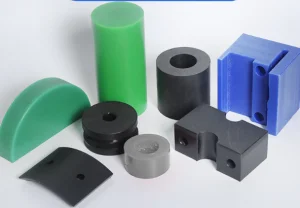
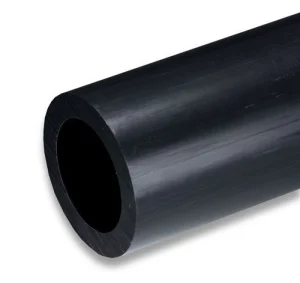
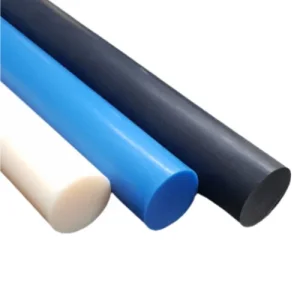
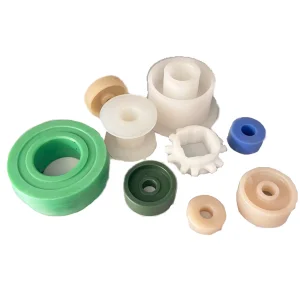
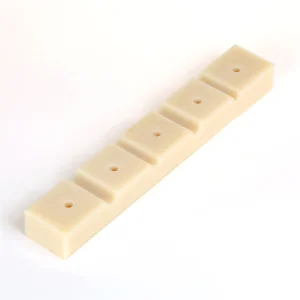
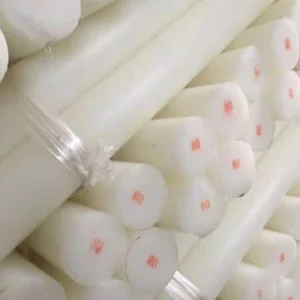
Precision Turned, Extruded & Machined Plastic Components
Explore our complete inventory of industrial engineering stock available for Brazilian bulk importers and OEMs.
Partner with China's Premier UHMWPE Manufacturer for Your Brazilian Operations
From single container trials to full project bills of quantities for mining chutes, port fender installations, or agro-logistics revamps, get certified test reports, CAD drawing reviews, and transparent CIF Santos freight pricing.