
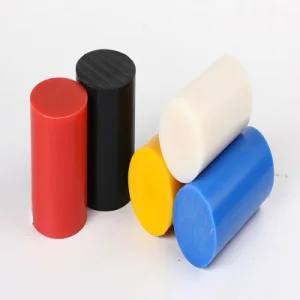
Primary Material Solutions
High-Performance Engineering Semi-Finished Stock for Iraq
Direct supply from Hebei production workshops to Iraq's primary industrial hubs—including Basra, Baghdad, Kirkuk, and Erbil. Available in virgin grades, custom diameters, and calibrated wall thicknesses.
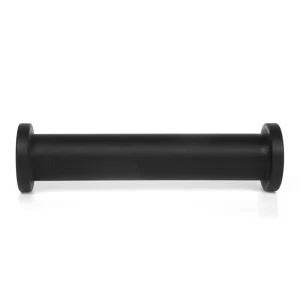
Polymer Extrusion POM, PTFE & Nylon Tubes for Iraqi Refineries
View Product Details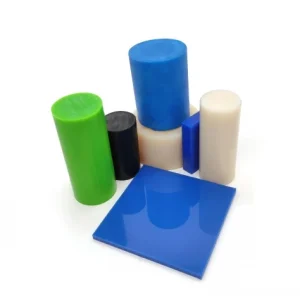
Customized Engineering Plastic PA6/POM Tubes & Plates
View Product Details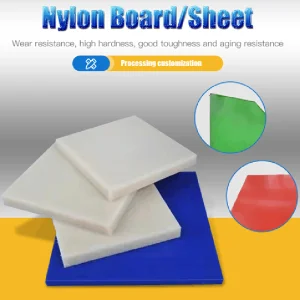
Reinforced Industrial Nitrile & Polymer Matting for Iraq Sites
View Product Details60-70%
Cost Advantage vs. European Stock
0.2%
Moisture Absorption Saturation
18-24 Days
Transit Time to Umm Qasr Port
100%
COSQC & ISO 9001:2015 Compliant
1. Iraqi Industrial Landscape & The Demand for Polyoxymethylene (POM) Hollow Billets
The Republic of Iraq is experiencing a multifaceted industrial resurgence. Beyond the historical reliance on crude extraction in the southern governorates such as Basra and Maysan, extensive capital injection is flowing into petrochemical modernization, municipal water reclamation, gas flaring reduction facilities, cement production across the central regions, and agricultural irrigation infrastructure along the Tigris and Euphrates basins. Within these heavy mechanical assemblies, engineering plastics are replacing bronze, brass, cast iron, and standard carbon steel at an accelerating pace.
Among engineering polymers, Polyoxymethylene (POM)—commonly designated as Acetal, Polyacetal, or Delrin—occupies a unique operational threshold. POM hollow tubes and thick-walled pipes provide mechanical rigidity, an ultra-low coefficient of dynamic friction (µ = 0.25 to 0.35 against steel), exceptional dimensional stability under wide temperature fluctuations, and superior resistance to chemical hydrocarbons. Unlike nylon (polyamide), which absorbs up to 8% to 9% ambient moisture at equilibrium and loses dimensional tolerances, POM demonstrates a negligible water absorption rate of less than 0.2% to 0.25% under total water immersion.
For Iraq’s mechanical engineers, industrial procurement agencies, and state-owned enterprises (such as the Ministry of Oil, Ministry of Industry and Minerals, and the Ministry of Water Resources), procuring extruded POM hollow bars significantly cuts fabrication costs. Using solid POM rods to turn hollow bushings, sleeve bearings, and internal valve rings wastes up to 60% of expensive resin in swarf and chips, increases cycle times on CNC lathes, and creates unneeded thermal stresses during deep drilling operations. Sourcing direct-calibrated POM tubes resolves these engineering bottlenecks.
2. Severe Operating Environments: Why POM Tubes Outperform Metallo-Plastic Counterparts in Iraq
Iraqi industrial installations present some of the most aggressive combined operating conditions in the world. Ambient summer temperatures regularly surge past 52°C (125°F) in Basra, Zubair, and Nasiriyah, driving surface metal component temperatures well beyond 75°C. At the same time, air-entrained silica sand particles (frequent Shamal dust storms) turn liquid lubricants and greases into abrasive grinding pastes that prematurely destroy traditional bronze sleeve bearings.
Tribological Self-Lubrication: POM tubes produced from virgin copolymer polyoxymethylene possess crystalline structural symmetry that allows dry, unlubricated sliding contact against hardened steel shafts. When sand particles penetrate the contact zone, POM exhibits high elastic compliance—swallowing minor contaminants rather than binding or galling against metal interfaces.
Sour Gas and Hydrocarbon Resistance: In the southern Iraqi oilfields (Rumaila, West Qurna, Majnoon), produced water, wet crude, and associate gas contain elevated levels of hydrogen sulfide (H2S), carbon dioxide (CO2), and brines. POM tubes resist aliphatic hydrocarbons, standard drilling muds, synthetic esters, and alkaline cleaning fluids, maintaining tensile yield strengths (>65 MPa) where polyurethane and elastomers degrade rapidly.
| Property Attribute (ISO / ASTM Standard) | POM-C (Polyacetal Copolymer) | Cast PA6 (Nylon) | Virgin PTFE | UHMW-PE (1000 Grade) |
|---|---|---|---|---|
| Density (g/cm³) | 1.41 - 1.42 | 1.15 - 1.16 | 2.15 - 2.20 | 0.93 - 0.95 |
| Water Absorption (23°C in water saturation, %) | 0.20% (Superior Stability) | 6.5% - 8.5% (High Swelling) | <0.01% (Zero Swell) | <0.01% (Zero Swell) |
| Tensile Strength at Yield (MPa) | 65 - 70 | 75 - 85 (Dry) / 45 (Wet) | 20 - 30 | 20 - 25 |
| Continuous Service Temp (Air, °C) | -50 to +105°C | -40 to +105°C | -200 to +260°C | -150 to +80°C |
| Dynamic Friction Coefficient (Dry vs Steel) | 0.25 - 0.32 | 0.35 - 0.42 | 0.08 - 0.12 | 0.15 - 0.20 |
| Machining Precision & Chip Breaking | Excellent (Short chips, tight ±0.02mm) | Fair (Stringy burrs) | Poor (Creeps easily) | Moderate (Elastic deformation) |
| Suitability for Basra Water / Chemical Valves | Optimal (Dimensional Zero-Creep) | Restricted due to water swell | High (Low mechanical stiffness) | High (Abrasive slurries) |
3. Chinese Manufacturing Direct Ecosystem: Strategic Value for Iraqi Wholesalers & EPCs
Historically, Iraqi state tenders and private mechanical workshops procured semi-finished plastics via European distributors, Dubai trading houses, or Turkish transshipment intermediaries. This traditional routing incurred layered distributor markups (frequently inflating landed unit costs by 120% to 180%), prolonged lead times, and created severe vulnerability to spot-market shortages. Modern direct-to-factory partnerships between Iraqi procurement managers and premier Chinese polymer manufacturers have eliminated these structural inefficiencies.
Primary Monomer Integration
China's centralized coal-to-olefin and natural gas chemical clusters ensure uninterrupted supply of virgin POM polymer pellets. Factory lines in Hebei run uninterrupted continuous extrusion, guaranteeing consistent molecular chain alignment and zero regrind adulteration.
Stress-Relief Annealing Baths
Virgin extruded POM tubes are prone to centerline porosity and residual stress if cooled rapidly. Chinese high-capacity plants utilize multi-stage oil and air annealing cycles (140°C over 24-48 hours) to ensure zero internal voids when Iraqi CNC operators slice or turn parts.
Direct Umm Qasr Shipping Routes
Direct freight corridors from Tianjin, Qingdao, and Shanghai to the Port of Umm Qasr (Basra) offer reliable 18 to 24-day ocean voyages. Export-grade seaworthy crating, vapor-barrier wrapping, and fumigated timber skids safeguard raw tubes from saline sea moisture.
4. Iraqi Localization, Regulatory Compliance & Import Safeguards
Importing engineering plastics into Iraq requires strict adherence to national standardization protocols. The Iraqi Central Organization for Standardization and Quality Control (COSQC) implements pre-shipment inspection (PSI) schemes to prevent sub-standard industrial goods from entering the domestic economy. Chinese manufacturers supporting the Iraqi market provide full technical compliance portfolios:
- Certificate of Conformity (CoC): Verification partnered with international audit agencies (such as SGS, Bureau Veritas, or TÜV) ensuring wall thickness, density, and flammability parameters meet Iraq COSQC benchmarks.
- EN 10204 3.1 Material Test Reports (MTR): Full batch traceability tracking melt flow rate (MFR), tensile elongation at break, and Rockwell hardness (M85 - M90) back to raw virgin polymer lots.
- Bilingual Technical Data Sheets (English / Arabic): Supporting Iraqi engineering consultancies, ministry procurement boards, and academic research institutions with standardized mechanical property curves and chemical compatibility tables.
- Dimensional Precision Guarantees: Outer diameter (OD) and inner diameter (ID) calibrated to DIN ISO 2768-m tolerances, guaranteeing minimal cleanup cuts on CNC machine tools.
In addition, for municipal drinking water lines in Baghdad, Karbala, and Najaf, POM components must comply with international non-toxic extraction guidelines (NSF/ANSI 61 and FDA 21 CFR § 177.2470 compliance), ensuring zero formaldehyde monomer leaching into potable supplies even at high water temperatures.
5. Field-Proven Engineering Applications Across Iraqi Provinces
POM tubes serve as critical semi-finished stock across various sectors in Iraq:
1. Basra Petroleum & Downstream Refining: Within crude metering skids, separator manifolds, and pipeline pigs, POM hollow tubes are machined into non-conductive isolator bushings, scraper disc spacers, and valve plug inserts. Their dimensional consistency prevents jamming under cyclic pipeline pressure variations.
2. Central Iraqi Cement & Aggregate Processing (Al-Muthanna, Kufa, Anbar): Dust collection air systems, conveyor roller bearings, and slide rail guides use POM-C tubes. They resist cement powder abrasion without seizing, outlasting bronze bushings by a factor of 3:1 in high-dust dry environments.
3. Agro-Irrigation & Submersible Pumping (Euphrates Basin): Vertical turbine pumps handling brackish, silt-laden river water utilize POM-C neck rings and guide bushings. Traditional rubber-backed metal bearings swell or suffer hydrolysis; POM remains stable over years of continuous submersion.
4. Industrial Bottling & Food Manufacturing (Baghdad Industrial Zones): High-speed star wheels, timing screws, and sanitary fluid filler nozzles rely on virgin natural (white) POM tubes. They tolerate daily CIP (clean-in-place) sterilization with hot caustic and acid wash solutions without surface chalking.
Comprehensive Catalog & Machining Capabilities
Precision Extrusions, Cast Billets & CNC Machined Parts for Iraq
Browse our integrated product portfolio spanning custom CNC pulleys, wear rings, industrial backing sheets, and heavy-duty polymers manufactured to international standards for Iraqi industries.
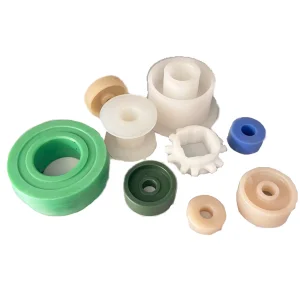
Precision CNC Machined POM / Delrin Wheels & Bushings for Iraq
View Product Details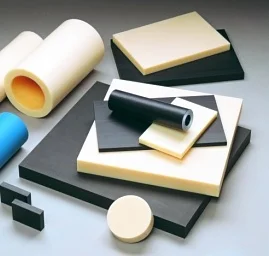
OEM Engineering Plastic Cast Boards & Tubes for Iraqi Industry
View Product Details
High-Grade PA6/PA66 Board & Precision Tubes for Iraqi Workshops
View Product Details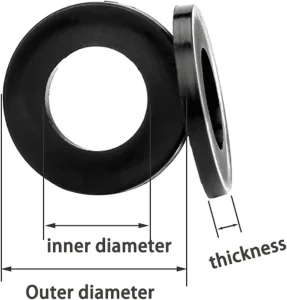
Heavy Impact Piling Machine Polymer Ring Cushions for Basra Port
View Product Details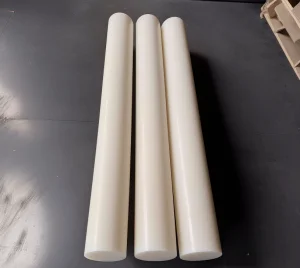
ODM/OEM Cast Polyamide PA6 Hollow Bars & Tubes for Iraq
View Product Details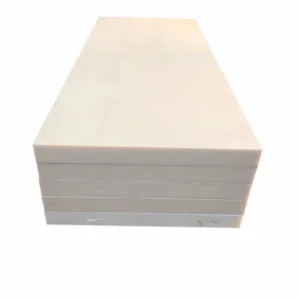
Natural Virgin MC Nylon Thick Plates for Iraqi Maintenance
View Product Details
Durable Hammer Cushions & Thrust Washers for Iraq Civil Works
View Product Details
Complete Polymer Stock: POM, PP, ABS, PTFE Hollow Billets for Iraq
View Product Details6. Technical Procurement Protocol for Iraqi Mechanical Engineers
To avoid common procurement pitfalls, Iraqi engineering departments and procurement specialists should adhere to the following checklist before finalizing orders with overseas manufacturers:
1. Specify Copolymer (POM-C) vs Homopolymer (POM-H)
POM-C resists thermal degradation and hot water hydrolysis, making it the superior choice for Iraq's municipal pipelines and industrial washdowns. POM-H offers slightly higher stiffness (+10%), but is prone to centerline porous cavitation and degrades rapidly in contact with alkaline fluids.
2. Demand Dual-Zone Ultrasonic Defect Testing
Heavy-walled POM tubes (wall thickness >25mm) must undergo automated ultrasonic scanning before dispatch. This ensures the tube wall is completely free of inner micro-voids caused by uneven differential cooling during extrusion.
3. Calculate Thermal Expansion Tolerances
POM possesses a coefficient of linear thermal expansion (CLTE) of ~110 x 10-6 K-1—roughly 8 times greater than steel. For outdoor applications in southern Iraq, engineers must factor in machining clearances of at least 0.15mm per 100mm diameter to prevent shaft binding in summer.
Technical Clarifications
Frequently Asked Questions (FAQ) for Iraqi Buyers
Direct technical and logistical answers for plant managers, purchasing directors, and machine shops in Iraq.
What are the standard dimensional ranges for POM tubes exported to Iraq?
Our production facilities maintain continuous extrusion molds for POM-C tubes ranging from Outer Diameter (OD) 25 mm up to 400 mm, with inner diameters (ID) customized to application requirements (minimum wall thickness 5 mm, maximum wall thickness 70 mm). Standard stock lengths are extruded at 1000 mm and 2000 mm, but custom cut-to-length billets (e.g., 250 mm or 500 mm) can be supplied to fit container stuffing and minimize machine-shop scrap in Iraq.
How does POM-C compare to brass or bronze bushings in Iraqi pumping stations?
In silty river water (such as the Shatt al-Arab) or saline discharge pumps in Basra, metallic bronze sleeve bearings require grease lines. When sand penetrates the grease, it creates an abrasive slurry that ruins the steel shaft. POM-C is chemically inert, self-lubricating, and exhibits high shock absorption without needing grease. Furthermore, POM weighs roughly 1/6th as much as bronze (density 1.41 g/cm³ vs. 8.8 g/cm³), reducing shipping freight to Iraq and lowering initial raw material expenditure by 60% to 75%.
What documentation is provided for customs clearance at the Port of Umm Qasr?
Every commercial export consignment destined for Iraq is provided with a full legalization and customs packet: Commercial Invoice and Packing List certified according to Iraqi chamber regulations, Original Bill of Lading (B/L), Certificate of Origin (CO), Factory In-House Mill Test Certificate (EN 10204 3.1), and third-party Pre-Shipment Inspection (PSI) documentation (SGS/BV/TÜV) confirming COSQC compliance.
Can POM tubes be turned and threaded easily on conventional lathes in Iraq?
Yes. POM is regarded among machinists as the single best-machining engineering polymer in the world. It produces crisp, easily broken chips rather than tangled birds-nest ribbons common with nylon or PTFE. High-speed steel (HSS) or sharp polished carbide inserts designed for aluminum provide excellent mirror surface finishes. Keep cutting tools sharp, apply moderate feed rates (0.1 to 0.3 mm/rev), and use standard compressed air or water-soluble coolants during deep internal boring to prevent thermal expansion.
How are POM tubes protected from UV and high temperatures during transit and storage in Iraq?
Natural (white) POM is susceptible to ultraviolet (UV) photodegradation under prolonged direct solar exposure. For long-term outdoor Iraqi applications, we supply UV-stabilized Black POM-C containing specialized furnace carbon black masterbatches (2% to 2.5% loading). For shipping, all tubes are packed with inner thermal vapor wrap, protective PE netting, and heavy wooden crating to prevent deformation inside shipping containers exposed to Persian Gulf summer heat.