Direct supply of high-grade engineering polymers tailored to European tolerances (ISO 2768-mK), delivering zero-internal-stress machinability for CEE precision tooling workshops.
An authoritative breakdown of Hungary's transformation into Central and Eastern Europe's electromobility hub, driving intense demand for tight-tolerance, lightweight, and electrically non-conductive machined polymer parts.
The manufacturing epicenters anchored by Audi Hungaria in Győr—the world's largest engine manufacturing plant—and Mercedes-Benz in Kecskemét require Tier-1 and Tier-2 suppliers capable of delivering lightweight components that resist friction, wear, and aggressive automotive lubricants. CNC machined POM-C gears, PA66 thrust washers, and cast nylon sheaves drastically reduce unsprung mass while attenuating harmonic vibration across automated chassis transport systems.
Debrecen has emerged as Europe’s premier gigafactory battery hub, driven by massive investments from CATL, Eve Energy, and the BMW Group's pure-electric Neue Klasse plant. Battery module assembly, electrode winding, and electrolyte dosing require non-sparking, chemically inert tooling components. Precision machined PTFE gaskets, ESD-safe UHMWPE conveyor wear strips, and PEEK vacuum chucks ensure zero metallic contamination during cleanroom production.
The industrial regions surrounding Budapest and Székesfehérvár host sophisticated automation integrators, machine builders, and pharmaceutical leaders such as Richter Gedeon. Custom end-of-arm tooling (EOAT), CNC routed vacuum manifold plates, and zero-backlash polymer timing pulleys are imperative. Polymer machining provides agile prototype-to-series scalability without the prohibitive lead times or capital expenditures of injection mold tooling.
The global precision machining landscape is transitioning from heavy alloys (brass, bronze, stainless steel) to advanced polymeric compounds, driving efficiency, ecological compliance, and radical component longevity.
| Polymer Matrix | Tensile Yield / Modulus | Thermal Range (°C) | Friction & Wear Profile | Optimal Application Across Hungary |
|---|---|---|---|---|
| MC Cast Nylon (PA6G) | 85 MPa / 3,400 MPa | -40°C to +110°C | Dynamic CoF: 0.22; Self-lubricating wear resistance | Crane outrigger pads, heavy transport sheaves, gear racks in Győr rail terminals |
| Acetal Copolymer (POM-C) | 68 MPa / 2,800 MPa | -50°C to +105°C | Ultra-low friction (0.18); 0.2% moisture absorption | Precision EV battery assembly fixtures, fluid valves, dimensional metering gears |
| UHMWPE (PE-1000) | 25 MPa / 750 MPa | -150°C to +85°C | Lowest dynamic wear (0.12); zero water absorption | High-speed bottling lines in Sopron, wear strips for logistics sorting in Budapest |
| High-Performance PEEK | 115 MPa / 4,200 MPa | -60°C to +260°C | High load at temperature; high dielectric strength | Semiconductor testing, high-voltage battery enclosures, chemical processing nozzles |
| PTFE (Virgin / Carbon-Filled) | 28 MPa / 650 MPa | -200°C to +250°C | Extreme chemical inertness; lowest static CoF (0.05) | Electrolyte handling manifolds in Debrecen, pharmaceutical mechanical seals |
Unlike raw resin converters, our manufacturing plant incorporates dual-stage thermal annealing for all semi-finished shapes prior to CNC milling. This dissipates internal polymer extrusion stresses, completely neutralizing the warping, dimensional drift, or localized micro-cracking frequently observed when Hungarian machine shops cut deep pockets into unconditioned stock.
Polymers present thermodynamic challenges during machining, including lower glass transition thresholds ($T_g$) and thermal conductivity 100x lower than aluminum. We use diamond-like carbon (DLC) coated single-flute endmills, razor-sharp rake angles (15°–25°), and high-volume cold air swirl tubes to prevent melt-back and attain mirror-like Ra 0.4 µm finishes.
Every batch shipped into the European Union undergoes Zeiss Coordinate Measuring Machine (CMM) dimensional verification, dynamic balance inspection for rotational rollers, and material composition analysis. Complete EN 10204 3.1 inspection certificates, raw material lot identification, and RoHS 3/REACH certificates are provided with every crate.
A streamlined, risk-mitigated supply chain architecture engineered to eliminate technical ambiguity, reduce prototyping iterations, and ensure on-time delivery across Central Europe.
Upon receiving 3D models (.STEP, .IGES) or 2D technical drawings (.DWG, .PDF), our polymer application engineers review wall thickness limits, internal corner radii, thermal expansion allowances, and moisture absorption factors relative to Hungary's operating climatic conditions.
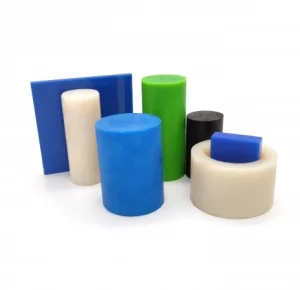
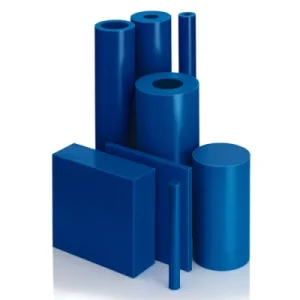
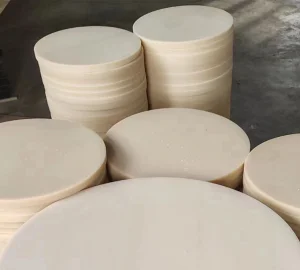
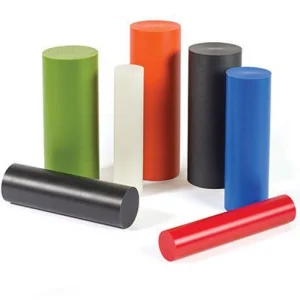
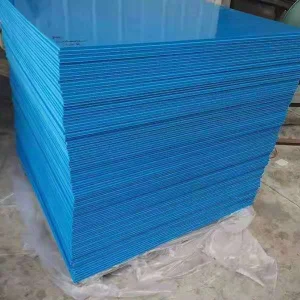
Semi-finished rods, tubes, or thick plates are cast or extruded in-house. Monomer casting (MC nylon) or high-pressure ram extrusion (UHMWPE) ensures superior mechanical homogeneity, absence of gas pockets or porosity, and optimal structural stability for high-speed turning.
Our machine park includes 3-axis, 4-axis, and 5-axis CNC machining centers equipped with high-speed spindles (up to 24,000 RPM) and specialized vacuum holding fixtures for thin plates. Parts are finished to DIN ISO 2768-m or custom drawing tolerances down to ±0.015 mm.
Polymers are measured in a temperature-controlled metrology laboratory (20°C ± 1°C) using optical video measuring systems and tactile 3D CMM probes. This eliminates thermal expansion errors and verifies critical geometries prior to export clearance.
Nylon and hygroscopic polymers are vacuum-sealed with desiccant packs to prevent moisture absorption during transit. High-density edge protectors and reinforced wooden export cases eliminate structural damage during intercontinental logistics.
Goods are routed via direct air freight to Budapest Ferenc Liszt International Airport (BUD Cargo City) for urgent batches, or rail freight (via the New Silk Road rail corridor) to Rail Cargo Terminal - BILK, arriving smoothly through Hungarian customs under DDP or DAP terms.
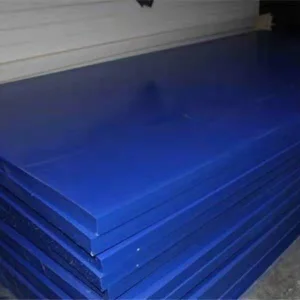
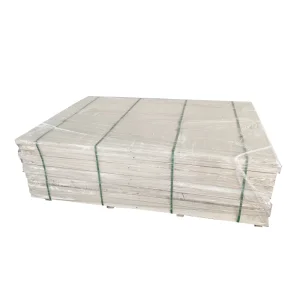
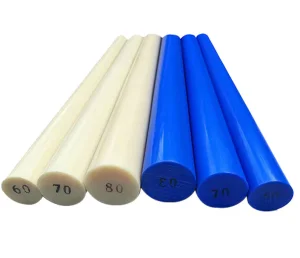
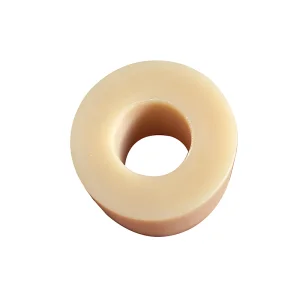
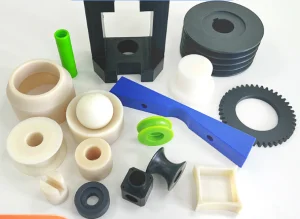
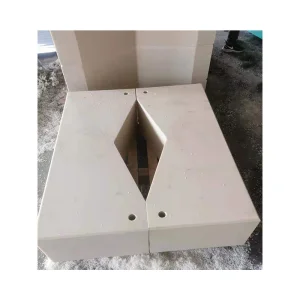
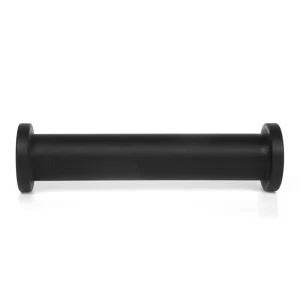
Complete portfolio of engineering stock shapes and fabricated wear elements available for immediate prototype milling or recurring container-load supply agreements for Hungary.
Detailed technical, quality, and supply-chain answers for Hungarian plant managers, mechanical design engineers, and industrial procurement professionals.
Polymers have a coefficient of linear thermal expansion (CLTE) approximately 5 to 10 times greater than structural steel or aluminum. To maintain tolerances down to ±0.02 mm on parts for Hungarian automotive customers, our CNC climate facilities operate at a controlled 20°C ± 1.5°C. We utilize balanced roughing and finishing toolpaths with intermediate dwell periods that allow the substrate to cool. Furthermore, we program tool compensation profiles based on real-time infrared thermal monitoring and deliver parts with certified inspection records measured at DIN standard reference temperatures.
All raw resins and finished CNC machined plastic parts are fully compliant with EU Regulation (EC) No 1907/2006 (REACH) concerning Substances of Very High Concern (SVHC), as well as EU Directive 2011/65/EU (RoHS 3). For parts utilized in Hungarian food-contact or pharmaceutical packaging equipment, we provide certification conforming to EU Regulation (EU) No 10/2011 and US FDA 21 CFR 177. Every delivery is accompanied by an EN 10204 type 3.1 material test certificate confirming hardness, density, and batch traceability.
For batch volumes ranging from 1 to 15,000 units, CNC machining avoids the heavy upfront steel tooling costs (€8,000 to €45,000 per mold) and 8-to-14-week lead times required for injection molds. Machining allows immediate iteration of CAD geometry for the fast-evolving EV battery and automated assembly line designs common in Debrecen and Győr. Moreover, CNC machining handles thick cross-sections (up to 150 mm) without the sink marks, internal voids, or differential shrinkage common to thick injection-molded parts.
Nylon materials naturally absorb ambient atmospheric moisture (up to 2.5%–3.0% at equilibrium), causing linear volumetric expansion of approximately 0.2% to 0.3% per 1% of absorbed water. When engineering precision parts for European applications where dimensional shift is critical, we often recommend Acetal Copolymer (POM-C) or PET-P, which absorb <0.2% moisture. Where nylon’s superior impact strength and wear characteristics are mandatory, we pre-condition the parts or machine them to pre-calculated offset dimensions, sealing them immediately in moisture-impermeable aluminum foil vacuum bags with desiccant.
Standard prototype turnaround is 3 to 7 working days, while recurring production volumes of 500 to 5,000 pieces typically dispatch within 12 to 18 working days. Logistics into Hungary can be customized according to budget and project schedules: express air courier (DHL/FedEx, 4–6 days door-to-door), scheduled air freight to Budapest Ferenc Liszt Cargo City (6–8 days), China-Europe Rail Express via Zahony/Budapest BILK intermodal terminal (18–22 days), or consolidated ocean freight via Koper or Hamburg ports (30–35 days). We support DDP (Delivered Duty Paid) shipping where all customs duties and VAT are handled directly.
Our engineering department works directly with neutral 3D CAD files including STEP (.stp, .step), IGES (.igs), and Parasolid (.x_t), alongside native SolidWorks, Autodesk Inventor, and Siemens NX files. For dimensional tolerances, thread pitch details, and surface roughness requirements, we ask customers to include a 2D PDF or DWG drawing. Quotations including material selection advice and comprehensive DFM feedback are delivered within 12 hours.
Upload your STEP or PDF drawings today. Our senior engineering team conducts an immediate DFM analysis, confirms polymer stock availability, provides tolerance verification, and delivers a competitive manufacturing quotation within 12 hours.