
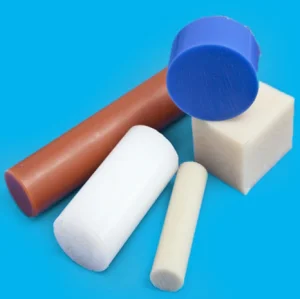
Extruded & Cast Semi-Finished
Technical Specs & RFQ
Engineered to satisfy stringent DIN EN ISO 2768-1 tolerance criteria, EU food contact guidelines, and cryogenic cleanroom cleanliness specifications.
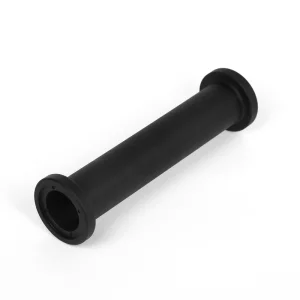
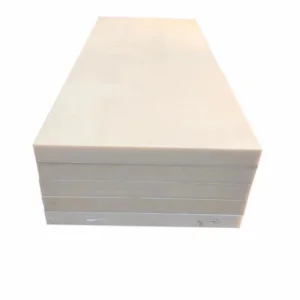
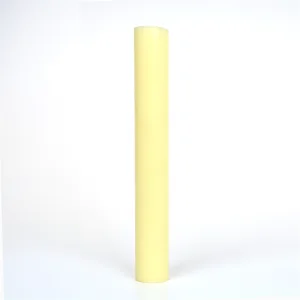
Analyzing how Brainport Eindhoven high-tech clusters, Dutch maritime corridors, and circular greenhouse robotics drive global precision CNC component sourcing.
The Netherlands maintains one of the world's most sophisticated and vertically integrated advanced manufacturing infrastructures. Anchor nodes such as Brainport Eindhoven, often characterized as the epicenter of European lithography and Mechatronics, alongside maritime industrial complexes spanning Rotterdam and Dordrecht, have created unprecedented demand for tight-tolerance, low-wear engineering thermoplastic and composite components.
Historically, Dutch first-tier systems architects relied extensively on domestic or DACH-region milling machine shops. However, acute geopolitical challenges, staggering regional electricity tariffs across Central Europe, and severe labor shortages across technical machinists have challenged conventional procurement pathways. Dutch OEMs are experiencing escalating lead times—frequently surpassing 14 to 18 weeks for basic milled acetal guides or heavy-duty cast nylon sheaves. Consequently, Dutch strategic buyers, procurement managers, and mechanical development teams are establishing resilient, direct relationships with qualified Tier-1 Chinese manufacturers possessing integrated polymer formulation, controlled annealing, and multi-axis CNC milling infrastructure.
Semiconductor inspection equipment, sub-nanometer wafer handling robotics, and medical diagnostics demand non-conductive, low-outgassing polymers machined under climate-controlled conditions without internal stresses.
Offshore pipe lay systems, trailing suction hopper dredgers (TSHD), and dock installations demand massive self-lubricating PA6G sheaves, wear plates, and UHMWPE fender strips immune to North Sea saltwater galvanic corrosion.
From automated tulip harvesting robotics to high-throughput dairy equipment and poultry processing, Dutch agritech requires chemically sanitizable, FDA/EC 1935/2004 approved POM, PTFE, and blue-tinted visual-detection plastics.
Dutch mechanical design engineers adopt an unapologetically pragmatic sourcing doctrine: while critical core intellectual property remains in the Netherlands, repetitive mechanical wear components, structural polymer housings, precision spacers, and high-wear sliding bearings are outsourced to specialized Chinese facilities capable of demonstrating flawless batch repeatability, complete material traceability, and verified CMM metrology reports.
Overcoming plastic deformation, hygroscopic swelling, and thermal dissipation challenges in high-precision CNC multi-axis milling.
Precision machining of engineering polymers differs fundamentally from aluminum or stainless steel tooling. Thermoplastics exhibit linear thermal expansion coefficients ($a$) up to ten times greater than austenitic steels, significantly lower moduli of elasticity, and localized thermal sensitivity during high-shear chip formation.
At our Xinhe manufacturing facilities, our production methodology integrates pre-machining thermal stabilization protocols. For hygroscopic materials such as extruded PA6 and PA66, our annealing cycles eliminate internal stresses induced during monomer polymerization and cooling, preventing post-machining warpage when parts enter the humid coastal atmospheres of Zeeland or North Holland.
| Polymer Formulation | Tensile Modulus (MPa) | Continuous Temp (°C) | Water Absorption (24h Sat. %) | Key Machining Characteristic | Dutch Application Sector |
|---|---|---|---|---|---|
| POM-C (Polyacetal Copolymer) | 2,800 - 3,100 | -40 to +100 | 0.2% | Zero center-line porosity, crisp chip formation, exceptional thread stability | Food & Semiconductor |
| Cast PA6G (Oil-Filled MC Nylon) | 3,000 - 3,400 | -40 to +110 | 0.7% (Ambient) | High ductility, self-lubricating additive lowers friction coefficient to 0.12 | Rotterdam Maritime Sheaves |
| UHMWPE (PE-1000 Ultra-High MW) | 700 - 1,000 | -150 to +80 | < 0.01% | Zero notch sensitivity, requires specialized razor-honed negative rake tooling | Canal Lock Sluice Wear Strips |
| PEEK-450G (Polyetheretherketone) | 3,800 - 4,200 | -60 to +250 | 0.1% | Sub-micron stability, chemical inertness, high-frequency dimensional retention | ASML Lithography Chuck Insulators |
| PTFE (Virgin Polytetrafluoroethylene) | 400 - 700 | -200 to +260 | 0.00% | Subject to cold flow under load; requires cryogenic deburring and fixture stabilization | Chemical Valves & Agritech Diaphragms |
| PP-H (Polypropylene Homopolymer) | 1,300 - 1,600 | 0 to +100 | < 0.02% | Superb weldability, high chemical resistance against harsh pickling baths | Water Treatment & Delta Works Tanks |
Plastics do not conduct heat into the parent stock; frictional heat remains trapped directly within the cutting zone. We deploy mirror-polished solid tungsten carbide (VHM) single-flute and double-flute endmills with 15° to 25° positive rake angles. This ejects chips cleanly without melting the workpiece boundary, securing an Ra 0.8 μm surface roughness straight off the spindle without supplementary polishing.
The Netherlands averages relative air humidity levels of 75% to 85% year-round. When fabricating nylon parts destined for coastal Dutch ports, our engineers calculate dimensional allowance offsets based on water absorption curves, delivering components that expand into exact blueprint equilibrium tolerances upon field commissioning in damp environments.
Combining raw monomer cast synthesis, sheet extrusion, and 5-axis CNC machining under a unified ISO 9001:2015 quality management umbrella.
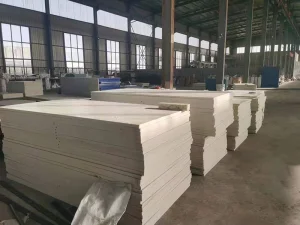
Unlike Western job-shops that purchase raw polymer bars from intermediaries at significant surcharges, SHUNDA casts its own MC nylon and extrudes POM/HDPE stock in-house. This guarantees material homogeneity, reduces procurement cycles, and eliminates non-value-added intermediary markups.
Every critical batch destined for our European clientele undergoes comprehensive dimensional auditing using bridge CMMs, digital profile projectors, and contact surface roughness testers. Detailed Inspection Reports (FSI/FAI) and material certificates in accordance with EN 10204 3.1 accompany every consignment.
Our machine floor features precision 3-axis, 4-axis, and simultaneous 5-axis machining centers reaching up to 24,000 RPM. This tooling speed ensures clean burr-free chamfers, intricate multi-face contours, thin-walled geometries, and deep pocketing without mechanical deflection.
Managing international logistics can create administrative overhead for procurement teams. SHUNDA provides comprehensive DDP (Delivered Duty Paid) solutions directly to facilities in North Brabant, Gelderland, Overijssel, or South Holland. Sea freight consolidations through the Port of Rotterdam clear customs efficiently under EU TARIC trade codes, while express aerospace prototypes are dispatched via Schiphol (AMS) within 3 to 5 business days.
Proven mechanical engineering solutions solving wear, weight, corrosion, and electrical insulation bottlenecks.
Within ultra-clean semiconductor wafer staging and transport cassettes, conventional metals risk particulate shedding, scratching, or electro-static discharge (ESD). We manufacture custom ESD-safe PEEK and POM-C end-effector vacuum wands, alignment combs, and roller guides with tight surface finishes (Ra < 0.4 μm). These parts undergo ultrasonic cleaning and double-vacuum nitrogen packing, meeting zero-hydrocarbon cleanroom specifications.
Offshore wind contractors operating in Vlissingen and IJmuiden utilize massive wire ropes that rapidly grind down bronze or steel sheaves, resulting in accelerated cable fraying and premature failure. Our oil-impregnated cast PA6G sheaves and winch cable barrels reduce structural weight by 85% compared to cast iron while increasing wire rope operational lifespan by over 300% through elastic micro-cushioning.
Automated food handling lines in the Westland and Gelderland regions demand continuous washdown resistance under corrosive acidic and chlorine detergents. We mill complex helical metering timing screws and starwheels from optical blue POM and FDA-grade UHMWPE, enabling automated optical inspection systems to instantly detect particulate contamination while operating at zero lubrication.
Dutch water boards (Waterschappen) maintain hydraulic lock barriers and tidal surge gates subject to continuous marine submersion. Bronze bushings frequently seize due to sediment and silt ingress. Our custom-machined self-lubricating synthetic composite bushings and UHMWPE sliding pads deliver maintenance-free operation across decades of brackish water immersion.
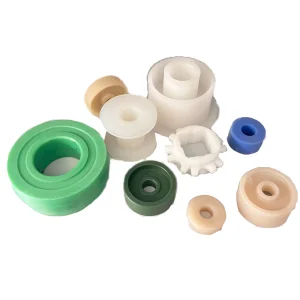
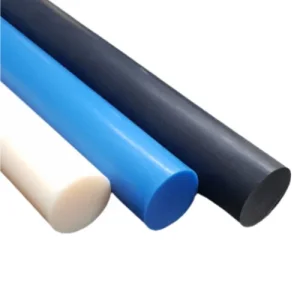
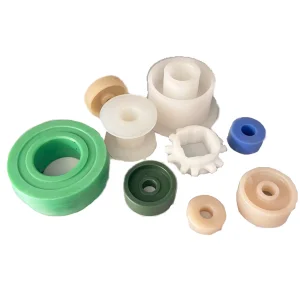
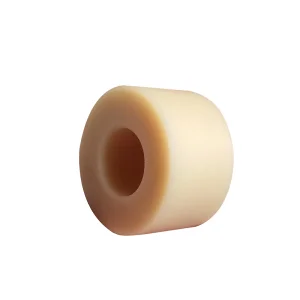
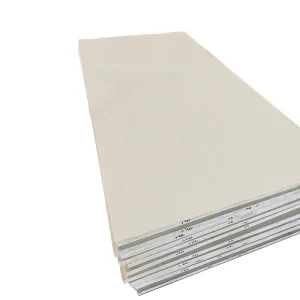
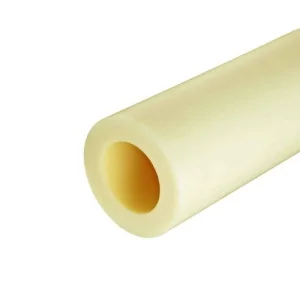
Explore our complete export range engineered for European original equipment manufacturers and regional distributor networks.
A granular economic breakdown contrasting domestic European contract machining with direct China manufacturing partnerships.
| Evaluation Parameter | Local Dutch / Western EU Machine Shop | SHUNDA Direct Manufacturing (Hebei, China) | Strategic Impact on Dutch OEMs |
|---|---|---|---|
| Raw Polymer Stock Surcharges | High (purchasing through multiple European distribution markups) | Factory Base Cost (Direct in-house compounding, casting & extrusion) | 25% - 40% immediate baseline bill-of-materials savings |
| Spindle Hourly Machine Rates | €75.00 - €115.00 / hour (due to local energy and labor costs) | €18.00 - €28.00 / hour (fully amortized multi-axis CNC cells) | Drastic cost reduction across high-cycle 3D contouring operations |
| Capacity & Scalability | Constrained (severe regional shortages of skilled CNC programmers) | Massive scalable capacity (dedicated multi-shift operations, 50+ CNC units) | Elimination of production bottlenecks for volume series rollouts |
| Lead Times (Production Phase) | 8 - 14 weeks typical delivery queue | 10 - 15 business days production turnaround | Agile adaptation to fluctuating customer order schedules |
| Freight & Clearance Options | Local road freight (1-2 days) | Express Air (3-5 days) or Direct Sea to Rotterdam (22-26 days) | Predictable supply chains coordinated via structured buffer stock |
For Dutch procurement executives calculating Total Cost of Ownership (TCO), the calculus extends far beyond initial invoice cost. Factoring in intercontinental logistics, import customs clearance, and inventory carrying cost, strategic sourcing from SHUNDA delivers a sustained net margin enhancement averaging 32% to 48% across precision polymer components without sacrificing dimensional compliance.
Direct answers addressing material certifications, tolerance controls, import duties, and sample validations.
Every polymer batch produced or machined in our facility utilizes virgin resin feedstocks free from SVHC (Substances of Very High Concern) under the EU REACH Regulation (EC 1907/2006) and RoHS Directive 2011/65/EU. We provide full third-party test reports (SGS/TÜV) upon project initiation confirming compliance down to parts-per-million levels.
On stable polymers such as POM-C and PEEK, we routinely achieve and maintain ISO 2768-m (fine) tolerances down to ±0.005 mm (±5 μm). For hygroscopic materials like Cast PA6, we maintain ±0.02 mm under climate-controlled machining conditions. Furthermore, our engineers calculate dimensional moisture absorption expansion based on your operational humidity parameters in the Netherlands, compensating tooling coordinates so parts settle into precise blueprint dimensions post-installation.
For urgent rapid prototypes or pilot builds, express air freight via Schiphol Airport (AMS) delivers within 3 to 5 business days from dispatch. For volume series production, sea freight FCL or LCL shipments depart from Tianjin or Qingdao Port directly to the Port of Rotterdam with an ocean transit time of 22 to 26 days. We coordinate all customs formalities under DDP delivery terms directly to your factory dock.
Yes. For clients within the Dutch agrotechnology and food processing sectors, we machine parts exclusively from certified virgin POM, UHMWPE, PTFE, and PEEK formulations certified under FDA 21 CFR § 177 and European Framework Regulation (EC) No 1935/2004. Material declarations of compliance (DoC) accompany each shipment.
We execute legally binding bilateral Non-Disclosure Agreements (NDAs) prior to receiving STEP, IGES, or DXF files. Engineering files are stored on isolated, encrypted internal servers accessible only to the dedicated production CAM programmers assigned to your project. Finished parts are not displayed publicly without explicit written consent.
Our quality department issues a complete documentation packet including: (1) First Article Inspection (FAI) Report, (2) Raw Material Certificate of Analysis (COA / EN 10204 3.1), (3) Zeiss CMM dimensional audit charts, and (4) High-resolution optical packaging verification photos prior to crate sealing.