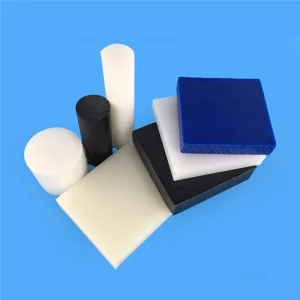
Engineered Semi-Finished Polymers & Precision Components
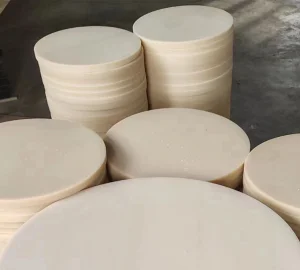
Direct factory configurations across MC Cast Nylon, POM, HDPE, UHMWPE, ABS, and structural polymers manufactured under strict ISO 9001:2015 dimensional tolerances.

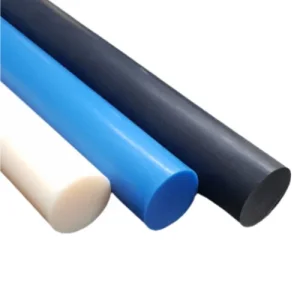
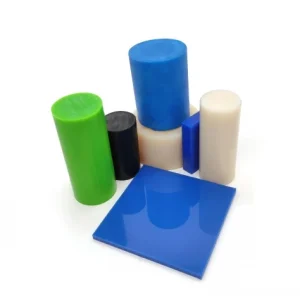
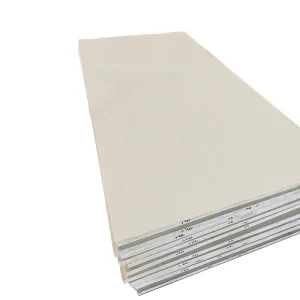
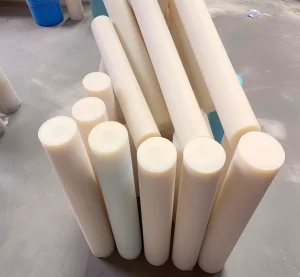
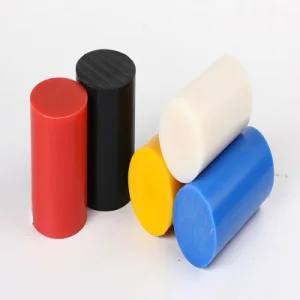
The "White Stripe" Industrial Definition: Tribology and Polymer Chemistry
Deconstructing semantic search ambiguity: Distinguishing solid-lubricant visual wear tracks from co-extruded UHMWPE/POM sliding interfaces.
Solid Lubricant Striping
Within mechanical drive systems, "White Stripe" commonly denotes an internal self-lubricating micro-composite matrix. Typically formulated via MC Cast Nylon (PA6) compounded with solid PTFE or micronized white silicone wax (such as Nylatron® LFG or Oil-filled white nylon). The visible striation or pigmentation distinguishes low-friction grades tailored for dry, grease-free installations.
Dual-Color Dual-Durometer UHMWPE
For conveyor engineering, "White Stripe" represents dual-extrusion wear strips (e.g., a white virgin UHMWPE dynamic contact face laminated over a rigid black recycled substrate). This visual layer acts as a built-in optical maintenance indicator: when the white 3mm boundary layer wears away, scheduled preventative changeout is triggered before structural metal-on-metal collision.
Polyoxymethylene (POM-C) Optical Striping
In high-speed beverage and bottling packaging chains, acetal polymers feature longitudinal white micro-stripes running down the extruded rod or plate profile. These marks distinguish homopolymer from copolymer resin lots, preventing thermal degradation and cross-contamination during multi-shift machining operations on automated milling centers.
Specialized Industrial Use Cases by Operating Environment
How modern manufacturing facilities deploy solid-lubricated white stripe cast plastics to eliminate down-time and satisfy extreme duty cycles.
Food Processing & Cold Storage Logistics
In high-throughput automated sorting hubs and sub-zero distribution networks, traditional hydrocarbon grease emulsifies or freezes, inducing motor overload. White stripe self-lubricating PA66 and UHMWPE guide tracks provide frictionless movement with a dynamic coefficient (μ) as low as 0.12. They are fully FDA 21 CFR 177.1500 and EU 10/2011 compliant for direct food packaging contact.
Piling Machinery & Heavy Impact Foundations
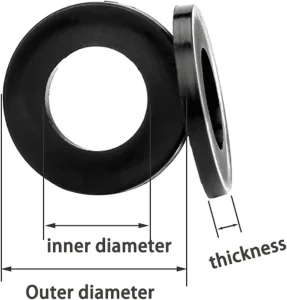
Hydraulic piling hammer caps and crane outrigger footings demand dynamic shock absorption. Incorporating specialized black nylon ring cushions embedded with white stress-relief monitoring stripes ensures instantaneous impact dampening. This reduces structural steel fracture while visually signaling compressive strain limits during bridge and foundation piling operations.
Corrosive Wastewater & Chemical Scrubber Lines
Where conventional metals suffer galvanic corrosion and pitting, white-striped polypropylene (PP) and polyoxymethylene (POM) components thrive. Machined valve plugs, chemical scrubber packing grids, and pump wear rings withstand pH ranges from 1 to 14 without dimensional swell, stress cracking, or leaching into closed-loop potable water systems.
| Polymer Parameter | White Stripe Self-Lubricated PA6 | Standard Unfilled Natural PA6 | Virgin UHMWPE (White/Black) | Acetal POM-C Copolymer |
|---|---|---|---|---|
| Dynamic Coeff. of Friction (μ) | 0.12 - 0.18 (Dry) | 0.35 - 0.42 (Dry) | 0.10 - 0.15 | 0.25 - 0.32 |
| Tensile Strength at Yield (MPa) | 78 - 85 | 70 - 80 | 23 - 28 | 65 - 72 |
| Izod Impact Strength (kJ/m²) | 6.5 - 9.0 | 4.5 - 6.0 | > 120 (No Break) | 6.0 - 8.0 |
| Water Absorption (24h Sat., %) | 1.4% - 1.8% | 2.8% - 3.2% | < 0.01% | 0.20% - 0.25% |
| Continuous Operating Temp. (°C) | -40 to +115 °C | -40 to +100 °C | -150 to +80 °C | -50 to +105 °C |
| Primary OEM Value Prop | Maintenance-free, zero grease | Economical load structural stock | Unmatched slurry abrasion wear | Micron-level CNC dimensional hold |
Chinese Manufacturing Resilience & Supply Chain Velocity
How Xingtai's concentrated polymer cluster out-competes European and North American domestic distributors on lead times, tooling scalability, and unit economics.
Upstream Chemical Aggregation
Situated within Hebei's primary polymer production belt, SHUNDA procures caprolactam monomer and virgin polyolefin resins directly from state-level petrochemical refineries. This direct integration bypasses third-party resin brokers, insulating global buyers from transatlantic resin spot spikes while ensuring certified batch-level melt flow index (MFI) consistency.
Thermal Annealing & Stress Relief
A frequent failure mode in imported plastic stock is warping during CNC machining. SHUNDA executes programmed 48-hour liquid oil and hot-air thermal stress-relieving cycles. This mitigates internal residual crystallization forces, permitting multi-axis CNC turn-milling down to DIN ISO 2768-m tolerances without post-machining dimensional distortion.
Container-Optimized Logistic Bundling
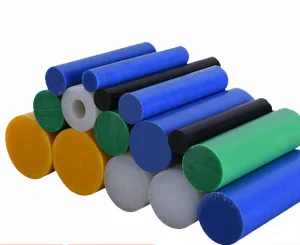
Distributors reduce landed shipping overhead by consolidating heavy cast MC nylon rods alongside high-volume low-weight HDPE sheets and customized CNC-machined bush rings in a single 40ft HQ container. Factory-direct vacuum-sealed seaworthy crating guarantees zero ambient moisture absorption during multi-week ocean transit.
The Horizon of Tribological Polymers: 2025 to 2030
Strategic product milestones bridging classical engineering thermoplastics with carbon neutrality, AI-driven quality assurance, and nano-reinforced formulations.
In-Situ Tribological Additives
Widespread commercialization of Cast Nylon PA6 formulations modified with liquid wax, micro-PTFE particles, and MOS2 solid compounds, cutting external mechanical grease dependency to absolute zero.
Online Laser Thickness & Void AI
Integration of real-time ultrasonic and continuous laser non-destructive testing (NDT) across horizontal extrusion lines, detecting micro-porosity and density drift before stock departs cooling baths.
Bio-Polyamides & Circular Monomers
Development of chemically depolymerized cast nylons utilizing post-industrial engineering plastic regrind with certified virgin equivalent shear modulus, reducing scope 3 carbon duties for EU importers.
Nano-Graphene Enhanced Polyamides
Dispersal of exfoliated graphene nanoplatelets within MC cast monomers to achieve 40% higher heat dissipation along sliding contact paths, tripling operational RPM capacity in turbine bush sleeves.
International Quality Standards & Regulatory Conformance
Eliminating trade border hurdles through comprehensive testing, full traceability, and third-party laboratory accreditations.
RoHS & REACH SVHC Screening
All stock shapes undergo rigorous spectroscopy to confirm absolute zero traces of restricted plasticizers, heavy metals, halogenated flame retardants, and 230+ Substances of Very High Concern under EU REACH regulation 1907/2006.
Material Traceability (EN 10204 3.1)
Every commercial wholesale shipment is backed by authenticated 3.1 Mill Test Certificates detailing specific gravities, hardness (Rockwell R / Shore D), tensile modulus, and Charpy impact data linked to the resin lot number.
Precision Metrology & CMM Validation
Finished custom CNC machined plastic parts are checked on calibrated Coordinate Measuring Machines (CMM) in temperature-controlled test rooms (20°C ± 1°C) to counter temperature-dependent plastic expansion factors before signoff.
Frequently Asked Questions by Polymer Engineers & Buyers
Direct technical clarifications on material selection, machining parameters, minimum orders, and container packaging protocols.
Complete Polymer Semi-Finished & Machined Product Line
Source direct-from-manufacturer stock across our core engineering materials. Precision tolerances, verified raw material chemistry, and export-ready logistical reliability.