
Featured Industrial Rubber Staf & Semi-Finished Shapes
Direct factory inventory featuring ultra-dense SBR/nitrile insertion cloth rubber mats, high-tensile polyamides, self-lubricating POM bar stock, and UHMWPE abrasion plates manufactured to international tolerances.
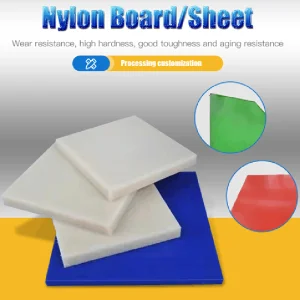
SBR Nitrile Insertion Cloth Nylon Rubber Mat Flooring Sheet
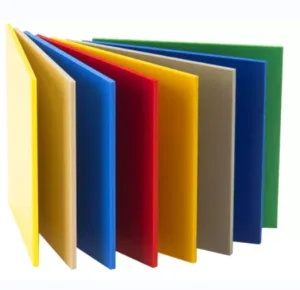
High-Density UHMWPE Abrasion-Resistant Sliding Sheet
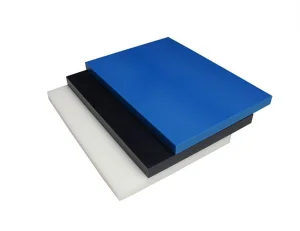
Engineering Plastic PA6 Polyamide Nylon / UHMWPE / PTFE / HDPE Bar
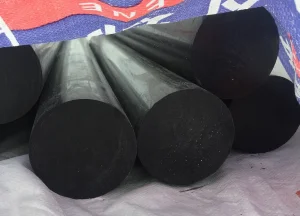
Wholesale Industrial POM Acetal Rod (Black & Virgin White)
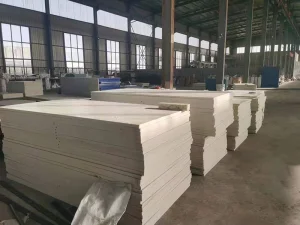
OEM PA6 / PA66 Nylon & ABS Structural Polymer Heavy Sheets
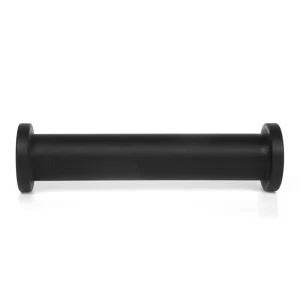
Precision Nylon / PTFE / PP Polymer Roller Core & Solid Cylinders
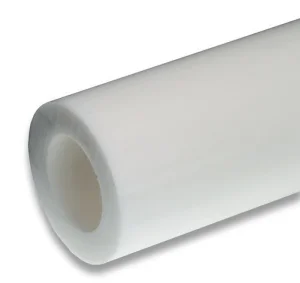
Centrifugally Annealed POM Acetal Tube & Precision Hollow Pipe
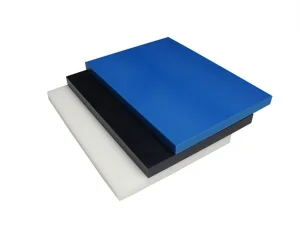
Virgin Natural, Black & MoS2 Lubricated Blue Nylon Plates
Engineering Taxonomy: Industrial Rubber Staf & Advanced Polymer Matrices
Modern high-velocity manufacturing environments necessitate material interfaces capable of dampening extreme dynamic loads, isolating vibration, repelling corrosive chemicals, and mitigating destructive tribological friction.
Within heavy manufacturing, marine docking systems, slurry conveyance, and automated factory lines, the term "Rubber Staf" encompasses engineered solid elastomeric rod stock, vulcanized extrusion staves, fabric-reinforced insertion liners, and heavy-duty impact buffering beams. Fabricated from synthetic polymers including Styrene-Butadiene Rubber (SBR), Acrylonitrile Butadiene (NBR), Ethylene Propylene Diene Monomer (EPDM), and cast Polyurethane (PU), these industrial components provide critical mechanical isolation.
When married with adjacent engineering plastics such as cast Polyamide 6 (MC Nylon), Polyoxymethylene (POM Acetal), and Ultra-High Molecular Weight Polyethylene (UHMWPE), rubber staf architectures establish a synergistic wear system. The rubber component absorbs cyclical kinetic deflection and dampens harmonic resonance, while the mating engineering polymers present an unyielding, low-coefficient sliding surface. This technical convergence delivers dramatic Total Cost of Ownership (TCO) reductions across world-scale industrial infrastructure.
Every wholesale batch of industrial rubber staf and co-polymer stock undergo hydrostatic autoclave curing, automated laser-guided caliper validation, and multi-axis mechanical shear benchmarking in accordance with ISO 9001:2015 frameworks.
Technical Roadmap & Future Engineering Horizons
Accelerating from traditional synthetic vulcanizates toward nano-composite elastomeric matrices, dynamic self-healing polymers, and closed-loop circular elastomers engineered for net-zero industrial footprints.
Infusion of pristine functionalized carbon nanotubes (CNTs) into rubber staf compounding enhances thermal dissipation by 340%, eliminating localized heat buildup inside high-frequency cyclic dampening pads and heavy marine fender staves.
Transitioning feedstocks from petroleum crackers to bio-derived isoprene and circular succinic acid matrices. Reduces upstream Scope 3 greenhouse gas footprints by 58% while maintaining uncompromised elongation at break.
Co-extruding conductive elastomer sensor traces directly within heavy rubber staves. Real-time resistive measurement identifies internal micro-cavitation and shear delamination before catastrophic physical rupture occurs.
Breakthrough thermo-mechanical shearing and biological devulcanization processes allowing up to 45% post-industrial reclaimed rubber staf fractions to be seamlessly compounded back into virgin matrices without compromising tensile modulus.
Macro Industry Solutions: Engineering Elastomers in Hostile Operating Theaters
How world-class industrial operators deploy our composite rubber staf arrays, high-crystallinity nylons, and chemical-resistant polyolefins to eliminate catastrophic process bottlenecks.
Berthing panamax and capesize bulk vessels generates megajoules of kinetic impact. Our high-strain rubber staf buffering beams, clad with ultra-dense UHMWPE low-friction faceplates, convert localized berthing shocks into managed elastic deformation while resisting seawater salinity, UV ozone oxidation, and marine growth.
Abrasive run-of-mine ore pulverizes unprotected infrastructure. Our cloth-insertion rubber sheets and resilient rubber staves provide vital sub-liner impact cushioning under heavy steel plates or MC cast nylon drop-boxes, absorbing angular shock waves and attenuating acoustic decibel emissions below OSHA industrial limits.
High-speed passenger and heavy freight rail networks rely on dual-durometer rubber staf dampeners and MoS2-filled cast nylon wear plates inside the wheel-truck (bogie) suspension assembly to prevent metal-on-metal micro-fretting and catastrophic fatigue failures.
Demanding sterile FDA compliance and unyielding resistance to caustic CIP (Clean-in-Place) washdown chemicals. Utilizing sanitary white POM rod bushings, food-grade virgin UHMWPE side rails, and oil-impervious white nitrile rubber staf wipers to prevent biological contamination.
China Factory 4.0: Supply Chain Resilience & Production Scale
How our advanced Hebei manufacturing base combines automated continuous vulcanization lines, closed-loop PLC thermal regulation, and vertical polymer synthesis to guarantee lead-time reliability.
Eliminates human formulation variance. High-capacity internal mixers and twin-screw compounding machines blend virgin synthetic elastomers with carbon black, silane coupling agents, and specialized plasticizers with 0.05% weight accuracy.
Continuous ultra-high frequency (UHF) vulcanization tunnels ensure uniform cross-linking through the entire core of heavy rubber staf stock, completely eradicating the unvulcanized soft centers common in conventional batch curing.
Engineering plastic rods, tubes, and sheets undergo multi-stage oil bath and infrared stress-relief cycles. This critical step relieves residual molecular stresses, guaranteeing dead-straight machinability without warping.
Continuous scanning monitors dimensional concentricity and wall consistency in real time. Dynamic feedback loops instantly calibrate the downstream haul-off speed, maintaining strict ISO 2768-m tolerances.
Situated in Xingtai, Hebei, our factory connects directly to Tianjin Port via bonded intermodal freight lines. Bulk containerized ocean orders clear export customs directly from factory ramps within 24 hours of final crating.
Global Enterprise Procurement Intelligence: TCO & Risk Mitigation
Navigating international supply volatility, raw material hedging strategies, container freight optimization, and material verification protocols for senior procurement executives.
| Material Classification | Specific Density (g/cm³) | Durometer / Hardness | Tensile Strength (MPa) | Operating Temp Range | Primary Industrial Use Case |
|---|---|---|---|---|---|
| Fabric-Inserted SBR Rubber Staf | 1.45 ± 0.05 | 65 ± 5 Shore A | 12 - 16 MPa | -30°C to +85°C | Heavy flange gaskets, impact skirtboards, marine dock fenders |
| Nitrile (NBR) High-Oil Compound | 1.30 ± 0.05 | 70 ± 5 Shore A | 14 - 18 MPa | -25°C to +120°C | Petroleum fluid seals, hydraulic buffers, machinery aprons |
| Cast Polyamide (MC Cast PA6) | 1.15 ± 0.02 | 82 Shore D | 78 - 85 MPa | -40°C to +105°C | Heavy crane sheaves, drive gears, sliding blocks, haulage idlers |
| Polyoxymethylene (POM Acetal) | 1.41 ± 0.02 | 85 Shore D | 65 - 72 MPa | -50°C to +100°C | Precision metric gears, fuel senders, medical fluid manifolds |
| UHMWPE Ultra-Wear Liners | 0.94 ± 0.01 | 66 Shore D | 28 - 35 MPa | -150°C to +80°C | Hopper chute wear liners, conveyor chain guides, truck beds |
To shield enterprise buyers from volatile global butadiene and caprolactam spot market spikes, we offer quarterly indexation agreements tied to international ICIS petrochemical benchmarks, ensuring price stability across multi-year contracts.
Optimize overseas 40ft High Cube freight costs by consolidating heavy, dense vulcanized rubber sheeting on container floors while palletizing lightweight, rigid POM rods and hollow MC nylon tubes directly above, maximizing both weight and volumetric cube limits.
Every export shipment is accompanied by complete EN 10204 Type 3.1 Material Test Reports, including rheometer vulcanization curves, Shore hardness distributions, tensile elongation logs, and complete resin lot provenance.
Localized Regulatory Support & Environmental Compliance
Maintaining strict adherence to international environmental and mechanical safety frameworks to ensure seamless customs clearance and frictionless local market integration worldwide.
Our rubber staf formulations and engineering stock shapes are completely free of Substances of Very High Concern (SVHC). Formulated without polycyclic aromatic hydrocarbons (PAHs), chlorinated paraffins, or toxic lead/cadmium stabilizers.
Supplying dedicated non-marking, odorless, and non-toxic polymer grades specifically developed for food-contact rubber articles, beverage bottling lines, dairy valves, and pharmaceutical transport systems.
Our internal metrology department translates Western engineering callouts (e.g., ASTM D2000 2BG 714 B14 EO14 EO34) directly into precise factory batch formulations, ensuring zero ambiguity between overseas prints and physical parts.
High-Precision Polymer Shapes, Tubes & Heavy Pads
Expanded wholesale inventory showcasing high-impact MC nylon outrigger pads, specialized PTFE and POM machined tubes, and calibrated engineering rod stock available for immediate container loading.
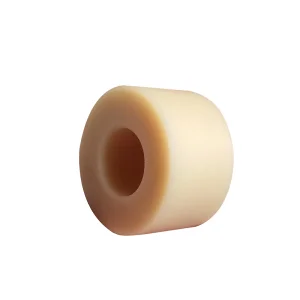
Industrial Grade ABS, Nylon & PP Thin/Thick Wall Structural Tubes
Heavy Duty Polyamide PA66 & UHMWPE Custom Calibrated Bars
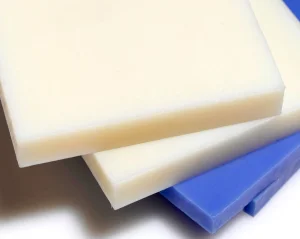
Continuous Extruded & Cast Blue / Natural Nylon Bearing Stock
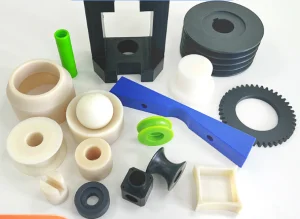
Monomer Cast (MC) Crane Outrigger & Hydraulic Buffer Pads
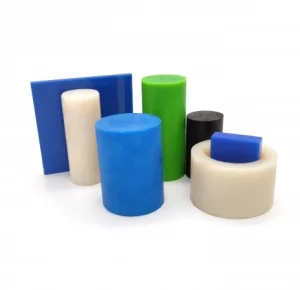
Virgin PTFE Fluoropolymer & Polypropylene Heavy Billet Stock

Large Format Monomer Cast MC Nylon Industrial Wear Sheets
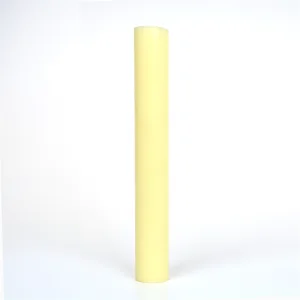
Extruded Pure PA6 Nylon Rods for High-Volume Automatic Lathes
High Density Polyethylene (HDPE 300/500) Chemical Protection Sheet
Frequently Asked Engineering & Sourcing Questions
Detailed technical answers prepared by our senior polymers engineers addressing material compounding, dimensional stability, machining tolerances, and export protocols.
What distinguishes industrial "Rubber Staf" from standard extruded commercial rubber profiles?
Industrial rubber staf refers to high-durometer, densely vulcanized structural rods, impact staves, and heavy buffering profiles designed to withstand severe cyclic mechanical shear and extreme hydrostatic compression. Unlike commercial architectural weatherstripping or consumer moldings, industrial rubber staf utilizes premium virgin synthetic elastomer formulations (such as reinforced SBR, NBR, and EPDM) cured via high-pressure hydraulic presses or continuous microwave UHF vulcanization. This process guarantees high tensile rupture strength (>15 MPa), exceptional rebound resilience, controlled compression set characteristics under DIN 53517, and internal molecular density completely free of porosity or voids.
How does an engineer choose between MC Cast Nylon and POM Acetal for heavy mechanical wear components?
The choice depends strictly on moisture exposure and operating shock loads:
- Select MC Cast Nylon (PA6-G): When maximum tensile load capacity, abrasive grit resistance, and heavy impact absorption are required (such as crane sheaves, rock-quarry conveyor guides, and heavy wear shoes). However, nylon absorbs 1.5% to 3.0% ambient moisture, which induces slight volumetric dimensional expansion.
- Select POM (Polyoxymethylene / Acetal): When operating in high-humidity or submerged aqueous environments requiring zero moisture swell (<0.2% water absorption), low sliding friction, and exceptionally tight dimensional tolerances (such as high-speed precision metric gears, delicate valve seats, and analytical instrument bushings).
What are the advantages of textile fabric insertion cloth inside SBR/Nitrile rubber sheets?
Incorporating one or more plies of high-tenacity woven synthetic nylon or polyester fabric inside the rubber matrix drastically restricts elongation under tensile strain. While pure unreinforced rubber expands laterally when bolted down under high compressive torque (causing gasket creep and bolt-tension relaxation), insertion cloth sheets retain mechanical rigidity, resist bolt tear-out, and maintain sealing pressure across wide thermal swings in high-pressure piping flanges and heavy chute linings.
Can your factory produce custom-compounded elastomers to meet specific ASTM D2000 line callouts?
Yes. Our in-house compounding laboratory translates exact ASTM D2000 or SAE J200 line callouts (e.g., ASTM D2000 M2BG714 B14 EF11 EF21 EO14) into customized polymer blends. We formulate base rubbers with exact cross-linking density, specialized cure packages (peroxide vs. sulfur-cured), antioxidant systems, and conductive carbon loadings to hit targeted tensile, elongation, oil-swell, and low-temperature brittleness parameters.
How do you mitigate internal residual stresses in thick-gauge extruded and cast engineering plastics?
Unrelieved internal stress is the leading cause of warping and cracking during high-speed CNC milling and turning. We subject all semi-finished cast nylon blocks, extruded POM rods, and thick polymer plates to computer-controlled multi-cycle annealing cycles. Heating the material slowly in convection or heated oil chambers to just below the glass transition point, followed by uniform cooling rates over several days, completely relieves frozen-in molecular chain stresses, ensuring superior dimensional stability during aggressive chip removal.
What is the typical lead time and minimum order quantity (MOQ) for international containerized procurement?
For standard warehouse stock shapes (such as standard diameter POM rods, pure nylon sheets, and standard gauge SBR rubber rolls), orders ship within 5 to 7 working days. For custom compounded colors, specialized durometers, or precision CNC-machined components, lead times typically run 14 to 21 working days. We support flexible mixed-SKU container loadouts with an MOQ as low as 500 kg per individual specification, allowing distributors to consolidate their complete polymer and rubber inventory within single ocean shipments.
Optimize Your Polymer & Rubber Staf Supply Chain Today
Connect directly with our engineering division in Xingtai, Hebei. Send us your CAD drawings (.STEP, .DWG), polymer material specifications, or procurement schedules for a comprehensive DFM review, certified material verification, and factory-direct volume pricing within 12 hours.