Factory-Direct Engineering Polymers & Fasteners
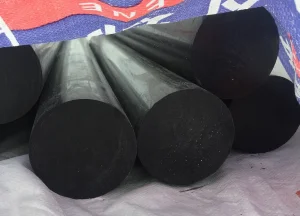
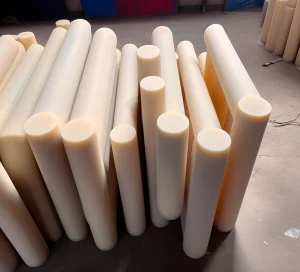
Explore our top-tier wholesale engineered elastomer rods, high-performance wear sheets, and custom CNC processed polymers supporting industrial fastener integrations.

Engineering Architecture of Modern Rubber Nut Fasteners
A rubber nut, often designated in blind-hole fastenings as a Well-Nut or elastomeric expanding insert, combines a flanged synthetic rubber bushing with a captive brass or stainless steel internal thread. When tightened, the elastomer draws up into a broad bulb, dampening harmonic vibrations and sealing out fluids.
Tri-Elastomer Formulation
We formulate high-grade Neoprene (Chloroprene), EPDM, and Nitrile (NBR) compounds tailored to ambient ozone, UV exposure, automotive fuel mists, and industrial lubricants. The modulus of elasticity is strictly balanced between Shore A 55 and 70 to ensure repeated elastic memory and zero plastic creep over long mechanical duty cycles.
Captive Brass Vulcanization
Internal metric and UNC threads (M4 to M10) utilize high-tensile brass alloys (CW614N/CZ121) or 316 stainless steel. Advanced silane coupling agents and high-pressure transfer molding fuse the threaded insert chemically with the sleeve, delivering exceptional torque-to-strip resistance and pull-out strengths exceeding standard industry shear thresholds.
Galvanic & Acoustic Barrier
Eliminating direct metal-to-metal contact prevents electrochemical galvanic corrosion across dissimilar materials—such as carbon steel bolts mounted to thin-gauge aluminum enclosures or carbon fiber sheets. Simultaneously, the acoustic impedance mismatch absorbs airborne noise and structurally transmitted vibration.
Industry Trends & Global Procurement Requirements
As automated assemblies demand lower curb weights and superior NVH (Noise, Vibration, and Harshness) suppression, global sourcing leads are shifting from conventional stamped nuts to multifunctional elastomeric blind hardware.
Electric Mobility & Battery Packs
In EV battery pack enclosures and BMS housing shields, rubber nuts isolate fragile electronics from road-frequency resonance while sustaining an ingress barrier against rain, slush, and electrolyte vapors. They also prevent galvanic cell formation between lightweight composite lids and alloy trays.
Thin-Wall Substrate Clamping
Conventional tapping inserts strip thin-gauge sheet metal (< 1.5mm) and shatter brittle acrylic panels or carbon fiber fairings. Rubber nuts exert zero tapping stress, expanding gently against the blind wall to create an evenly loaded elastomeric clamp that preserves substrate integrity.
Stringent Compliance Frameworks
Global buyers in Europe and North America enforce rigorous compliance protocols. Our formulations strictly satisfy RoHS 3, REACH SVHC limits, and meet UL94 HB or V-0 flame-retardant standards for electronic enclosures and transit interiors without polybrominated diphenyl ethers.
| Elastomer Base | Hardness (Shore A) | Chemical Resistance | Thermal Range | Primary Industrial Use Cases |
|---|---|---|---|---|
| Neoprene (CR) | 60 ± 5 | Moderate oils, UV, weather, ozone | -35°C to +105°C | General industrial, HVAC brackets, electronics |
| EPDM | 65 ± 5 | Superior steam, water, acids, UV | -45°C to +130°C | Solar mounting, automotive windshields, rail transit |
| Nitrile (NBR) | 70 ± 5 | Petroleum fuels, hydraulic oils, greases | -30°C to +110°C | Engine bays, heavy machinery pumps, motorcycle fairings |
| Fluoroelastomer (FKM) | 75 ± 5 | Extreme acids, solvents, fuels, high heat | -20°C to +200°C | Chemical processing, aerospace instrumentation |
China Factory 4.0: Supply Chain Resilience & Precision Advantage
Rooted in Hebei's advanced polymer industrial cluster, our manufacturing infrastructure combines vertical compound mixing, automated continuous curing, and closed-loop optical quality inspection.
Continuous Vulcanization
Multi-cavity high-precision injection tooling equipped with real-time temperature zoning ensures that the internal brass bushing is concentric down to ±0.05mm, preventing cross-threading during rapid automated air-tool installation.
Optical CCD Inspection
Every production batch traverses high-speed 360-degree glass plate vision sorting systems. Internal threads, shoulder thickness, and rubber body flashing are checked optically at 800 parts per minute to deliver zero-defect PPM benchmarks.
Raw Compound Integration
By compounding virgin elastomer bases, carbon blacks, and plasticizers on site, our chemical engineers maintain complete control over shore durometer, tensile modulus, and batch-to-batch chemical stability without subcontractor markups.
Logistics & Buffer Scale
With strategic access to Tianjin and Qingdao maritime ports, we operate dedicated staging facilities capable of maintaining safety stock for JIT enterprise procurement schedules and containerized bulk freight deliveries worldwide.
Global Commercial & Localized Industrial Applications
From high-speed locomotive cab assemblies to marine electronics exposed to severe saltwater spray, rubber nuts provide universal blind fastening with built-in isolation.
Automotive & Motorsports
Securing front windscreens, aerodynamic splitters, radiator shrouds, and motorcycle fairings. The elastomer absorbs extreme wind buffeting, protects painted sheet panels from micro-fractures, and eliminates metallic rattle at highway frequencies.
Marine, Nautical & Offshore
Mounting deck transducers, radar reflectors, bilge pumps, and kayak gear tracks onto hollow fiberglass, rotational molded polyethylene (PE), and aluminum hulls. When tightened, the bulb seals the drill hole against high-pressure bilge and spray ingress.
HVAC, Compressors & Enclosures
Industrial air handlers, refrigeration chillers, and compressor side panels experience steady rotary oscillation. Installing rubber nuts terminates metal-to-metal contact, dropping operating decibel levels and preventing screws from backing out.
Frequently Asked Technical Questions (FAQ)
Engineered solutions, torque specifications, and application guidelines for procurement specialists and design engineers.
Heavy-Duty Semi-Finished Polymers & Precision Components
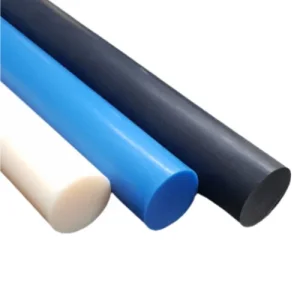
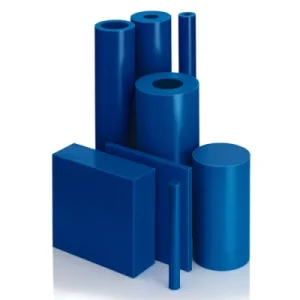
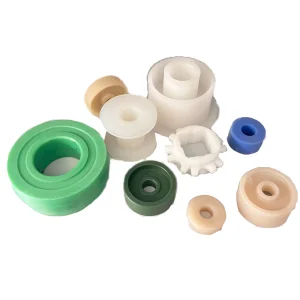
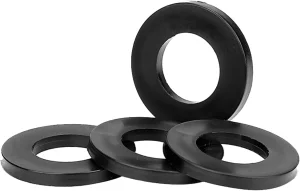
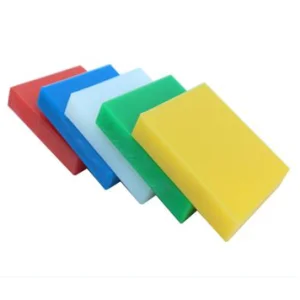
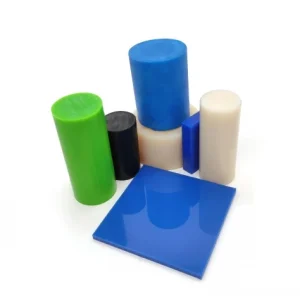
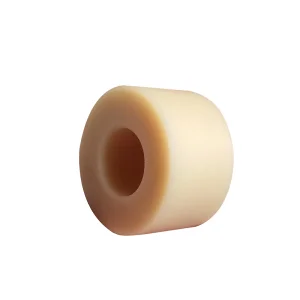
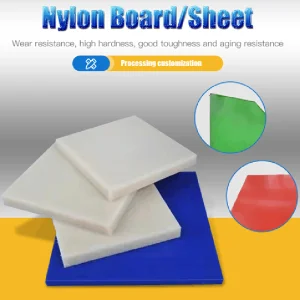
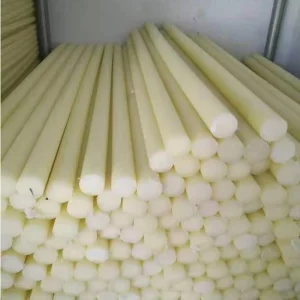
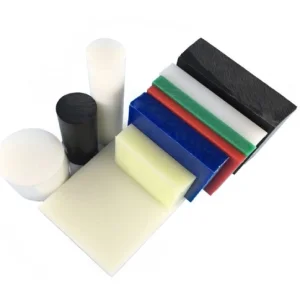
Supplement your fastening hardware with industrial-grade raw engineering rods, high-wear nylon stock, and CNC-turned plastic sleeves.