
Industrial Rod & Machining Stock Showcase (Part I)
Engineered structural elastomers and thermoplastic profiles manufactured directly in our Xingtai production complex to DIN/ISO standard tolerances.
Technical White Paper: Rubber 6 Rod & Polyamide Engineering Architectures
A rigorous examination of viscoelastic behavior, dynamic damping coefficient thresholds, and synthetic monomer casting formulations for heavy mechanical stress isolation.
Viscoelastic Damping Kinetics
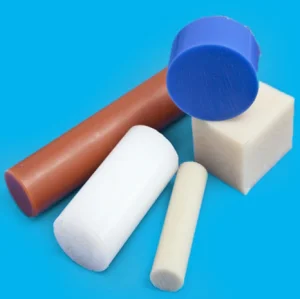
The term "Rubber 6 Rod" traditionally describes both advanced high-modulus synthetic elastomer compounding rods and tough, shock-absorbing Polyamide 6 (PA6/MC Cast) semi-finished stock engineered for heavy pile-driving hammers, mining buffers, and oscillating shafts. These materials bridge the modulus gap between hyper-elastic vulcanizates and rigid structural polyamides, offering superior kinetic energy dissipation per cubic centimeter.
Monomer Polymerization (MC)
Unlike conventional extrusion processes that generate anisotropic stresses and micro-voids, SHUNDA utilizes liquid caprolactam anion catalytic polymerization within pressurized thermal chambers. This produces a monolithic crystalline structure with minimal internal stress, higher glass transition thermal stability, and uniform tensile strength across core diameters up to 500mm.
Tribological Performance
By compounding internal lubricants (solid molybdenum disulfide MoS2 or synthetic oil additives), the friction coefficient is reduced to below 0.18 under dynamic boundary lubrication regimes. The material eliminates stick-slip vibration, prevents galling on steel mating shafts, and prolongs maintenance intervals in continuous high-frequency reciprocating machinery.
| Physical / Mechanical Properties | Standard Test Method | Cast PA6 / Synthetic Rod | Extruded PA66 Benchmark | Engineering Advantage |
|---|---|---|---|---|
| Density (g/cm³) | ISO 1183 / ASTM D792 | 1.15 – 1.16 | 1.14 – 1.15 | Uniform mass distribution, zero cavitation |
| Tensile Strength at Yield (MPa) | ISO 527 / ASTM D638 | 85 – 110 | 75 – 85 | High ultimate load capacity before permanent deformation |
| Shore Hardness / Ball Indentation | ISO 2039-1 | M88 – M92 (Rockwell) | M80 – M85 | Exceptional surface indentation and brinelling resistance |
| Charpy Notched Impact (kJ/m²) | ISO 179 | ≥ 4.5 (High Toughness) | 3.5 – 4.0 | High impact damping capacity for piling caps and cushions |
| Coefficient of Kinetic Friction (Dry) | ASTM D1894 | 0.18 – 0.22 (Oil-Filled) | 0.35 – 0.42 | Substantially reduced interfacial heating and wear rate |
China Factory 4.0: Supply Chain Resilience & Processing Capability
Vertically integrated production infrastructure based in Xinhe County, Hebei, combining automated monomer casting lines with high-speed multi-axis CNC machining centers.
Vertical Integration
By synthesizing casting stock directly from premium raw monomers down to precision finished components, SHUNDA eliminates intermediate distribution markups, giving tier-1 contractors up to a 28% unit cost advantage.
Continuous Quality Control
Every casting run undergoes ultrasonic non-destructive flaw detection (NDT) to verify absence of internal shrink holes or air pockets, ensuring zero fracture hazards under high-impact hydraulic cycles.
In-House Tooling & CNC
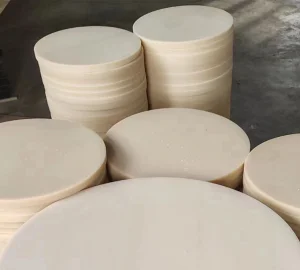
Equipped with specialized plastic-cutting diamond tooling, 4-axis machining benches, and heavy-tonnage lathes, our factory manufactures customized bushings, impact cushions, and gears directly from CAD models.
Buffer Inventory System
We maintain an active raw polymer and standard round bar inventory exceeding 850 metric tons, providing dependable 72-hour dispatch for standard specifications during unexpected supply-chain shocks.
Macro Industrial Solutions: Engineering Toughness Where Metals Fail
From maritime infrastructure to deep-shaft mineral extraction, custom structural rods and cushion pads solve vibration wear and chemical corrosion challenges.
Deep Foundation & Piling Engineering
High-energy hydraulic and diesel impact piling rigs generate massive shockwaves that instantly crack steel-on-steel contact plates. Our high-toughness cast nylon and synthetic cushion blocks absorb harmonic recoil spikes, safeguarding the mechanical head while providing consistent downward energy transfer.
Bulk Materials & Mining Systems
Conveyor drive sprockets, bucket elevator guides, and hopper slide rails operating under mineral sludge conditions experience abrasive degradation. Self-lubricating PA6 and UHMWPE components withstand abrasive slurry attacks and eliminate external grease contamination.
Offshore & Marine Subsea Systems
Saltwater exposure accelerates pitting corrosion in bronze and steel bushings. Modified Polyamide 6, POM, and polymer rods do not oxidize, feature low marine organism adhesion rates, and maintain structural integrity under continuous submerged hydraulic cycles.
International Compliance, Regulatory Standards & Dedicated Logistics
Ensuring cross-border regulatory compliance, international documentation support, and end-to-end trace verification for global mechanical engineering procurement teams.
RoHS & REACH Compliance
All virgin polymer resins, color masterbatches, and internal compounding additives comply fully with EU RoHS Directives and REACH SVHC restrictions, certified with testing reports from SGS.
Full Lot Traceability
Every rod, bar, or machined cushion batch ships with a dedicated Mill Test Certificate (EN 10204 3.1 standard), detailing monitored melt temperatures, specific gravity, and Shore hardness indices.
Protective Sea-Freight Packing
Solid rods and profiles are packaged in reinforced fumigation-free wooden crates wrapped in multi-layer vapor barrier films, preventing moisture absorption and warpage during ocean transit.
12-Hour Technical Response
Dedicated international application engineers review STEP/DWG files, provide tolerancing advice, evaluate environmental factors, and issue DFM (Design for Manufacturability) reports within 12 hours.
Technology Roadmap & Future Outlook: Next-Gen Elastomeric Polymers
Continuous investment in nano-reinforced polymer composites, circular recycling chemistry, and precision cryogenic processing protocols.
Graphene & Carbon Nano-Reinforcement
SHUNDA’s materials research lab is running pilot testing with functionalized graphene nanoplatelets within the caprolactam monomer matrix. Initial test batches exhibit a 40% enhancement in flexural modulus without sacrificing intrinsic elastomeric elongation at break.
Closed-Loop Monomer Recovery
Addressing global sustainability initiatives, our NextGen line uses chemical depolymerization processing for in-house turnings and offcuts. By converting post-machining scrap back into high-purity caprolactam feedstock, virgin-equivalent properties are preserved while reducing carbon footprints.
Cryogenic Deflashing & Machining
To eliminate burrs on flexible elastomeric and high-viscosity polyamide components, automated liquid nitrogen cryogenic finishing units are being deployed across our custom parts machining facility, guaranteeing smooth edges on complex parts.
Industrial Rod & Machining Stock Showcase (Part II)
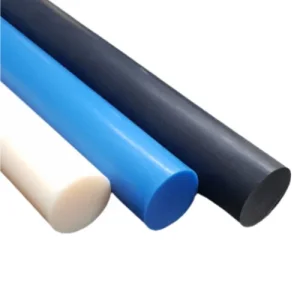
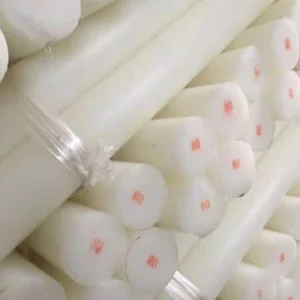
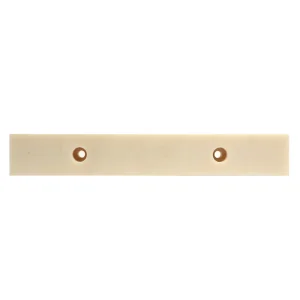
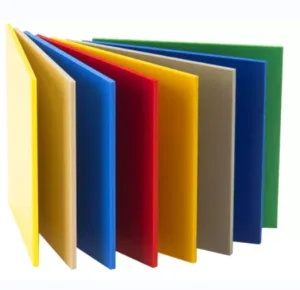
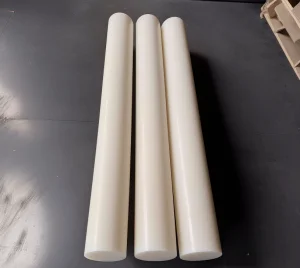
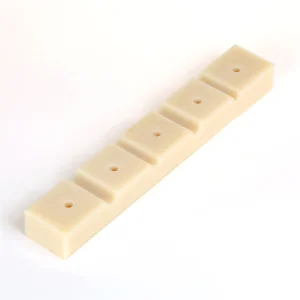
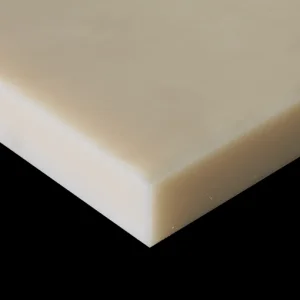
Comprehensive array of structural cast stock, sliding chains, and customized CNC plate solutions directly from the source manufacturer.
Technical & Procurement FAQ: Engineering Polymers
Authoritative technical solutions addressing dimensional tolerances, material selection tradeoffs, and international container freight logistics.
What is the mechanical distinction between PA6 and Rubber 6 Rod?
While standard PA6 focuses purely on high modulus and static yield strength, elastomeric Rubber 6 rods are cast or compounded with chemical plasticizers and shock modifiers to increase dynamic resilience, lower the notch sensitivity factor, and absorb cyclic mechanical impacts in piling hammer cushions.
How do environmental conditions affect nylon rod dimensions?
Polyamides absorb atmospheric water vapor through hydrogen bonding up to an equilibrium of 2.5–3.0% under ambient conditions. This moisture absorption expands component dimensions by ~0.2–0.3% while increasing impact ductility. When tight tolerances are required in wet conditions, we recommend POM or specialized post-machining heat treatment.
Can SHUNDA manufacture custom diameters and cross-sections?
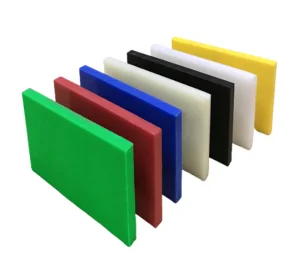
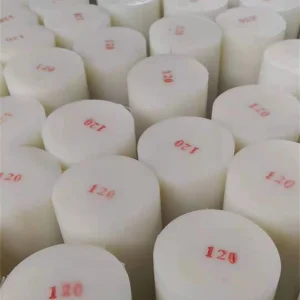
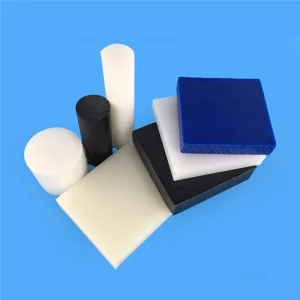
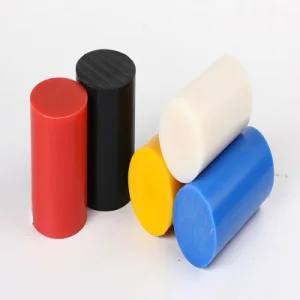
Yes. Our vertical gravity casting and centrifugal casting infrastructure accommodates solid rod diameters ranging from 20mm up to 500mm, hollow tubes with up to 1000mm outer diameter, and custom profile extrusions. Custom colors (natural, black, blue, yellow, oil-green) are matched using RAL standards.
What are your typical production lead times for wholesale export?
Standard diameter rods and sheets stored in our buffer warehouse dispatch within 3 business days. Custom formulated monomer cast runs or precision CNC production schedules range between 10 to 20 working days, depending on batch volume, complete with factory inspection reports and certificates of analysis.