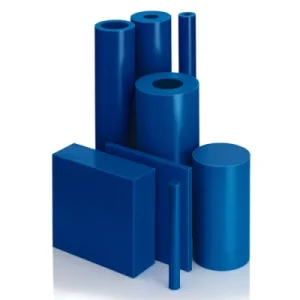
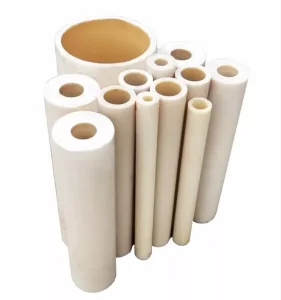
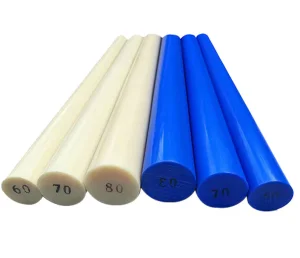
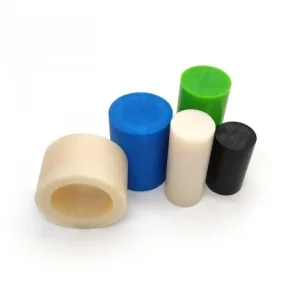
Wholesale POM Bar & High-Tolerance Engineering Stock
Ultra-dense, center-porosity-free acetal copolymer and nylon billets available for immediate B2B container shipments and custom cut-to-length orders.

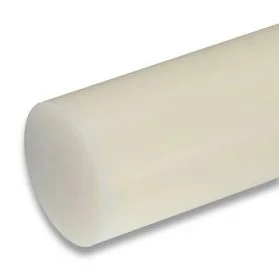
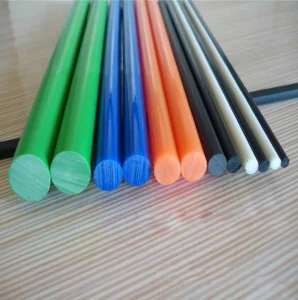
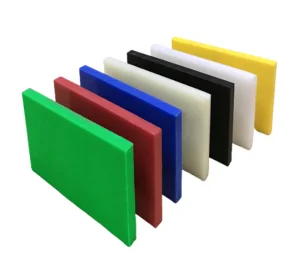
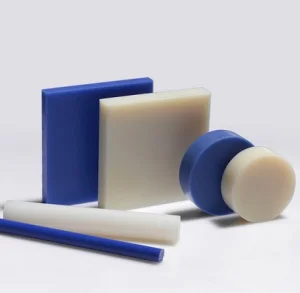
The Global Evolution of Polyoxymethylene (POM) Bars in Modern Engineering
Deconstructing crystallographic stability, center-line void mitigation, and metal-to-polymer replacement economics across Tier-1 original equipment manufacturers.
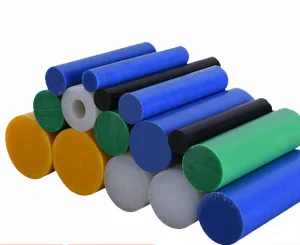
Polyoxymethylene (POM), colloquially recognized as acetal or polyacetal, is a high-performance semi-crystalline engineering thermoplastic characterized by high structural stiffness, exceptional torsional flexural fatigue endurance, and a remarkably low dynamic coefficient of friction. In modern high-throughput precision CNC machining environments, the demand for high-integrity wholesale POM bar stock has transitioned from standard commoditized supply toward highly engineered, defect-free extruded round bars capable of holding sub-10-micron geometric dimensional tolerances without post-operational creep.
From an industrial perspective, two fundamental variants govern global acetal procurement: POM-C (Copolymer) and POM-H (Homopolymer, commonly Delrin). Copolymer formulations demonstrate superior resistance against thermal-oxidative degradation, aggressive alkaline washdowns, and continuous hot-water hydrolysis up to 80°C. Critically for wholesale machinists, POM-C round bars exhibit virtually zero center-line porosity when extruded under proprietary slow-differential vacuum-assisted calibrators. Conversely, homopolymer grades provide approximately 10-15% higher room-temperature tensile strength and elevated surface hardness, making them suitable for ultra-high-pressure hydraulic seats, albeit with higher vulnerability to centerline void formations during large-billet extrusion (diameters exceeding 60 mm).
Current industrial trends indicate accelerated conversion from phosphor bronze, mild steel, and zinc die-cast parts to engineered POM bar components. Automotive electrification platforms leverage carbon-doped electroconductive POM bar stocks to fabricate anti-static fuel delivery ports, window regulator gears, and drive pinions, achieving up to 65% weight reduction while dramatically dampening audible gear meshing noise (NVH reduction).
Controlled In-Line Annealing Cycles
Extruded polyacetal bars undergo our proprietary 48-hour fluid-bath thermal stress-relieving sequence. This systematically eliminates frozen-in internal stresses created during core-to-shell quenching.
- Prevents part banana-curving during longitudinal milling
- Guarantees symmetrical micro-pore distribution
- Eliminates sudden cracking during heavy drilling operations
Micro-Crystalline Homogeneity
By dosing pristine, un-recycled polyformaldehyde resins combined with high-performance nucleating additives, our extrusion lines deliver an exceptionally high crystallization rate exceeding 72%.
- Flawless, burr-free microscopic chip breakings
- Mirror-like Ra 0.4 µm surface finish straight off the lathe
- Equalized thermal expansion coefficient (CLTE) in X and Y planes
Aggressive Chemical Immunity
POM bar structural stock demonstrates unmatched resilience against automotive fuels (E10, E85, diesel), industrial solvents, synthetic greases, and harsh neutral detergents.
- No environmental stress cracking (ESC) in hydrocarbon environments
- High resistance to common sterilization reagents (autoclaves)
- Total dielectric breakdown strength up to 40 kV/mm
Comparative Polymer Matrix: POM Bar vs. Alternate Engineering Stocks
A validated cross-polymer empirical evaluation designed for CAD/CAM designers, procurement engineers, and precision workshop managers.
| Polymer Parameter (Unit / Standard) | POM-C (Extruded Acetal) | PA6 Cast Nylon | UHMW-PE (1000 Grade) | PTFE (Virgin Fluoropolymer) |
|---|---|---|---|---|
| Bulk Density (g/cm³ | ISO 1183) | 1.41 - 1.42 | 1.15 - 1.16 | 0.93 - 0.94 | 2.15 - 2.20 |
| Yield Tensile Strength (MPa | ISO 527) | 65 - 70 Optimal Rigidity | 75 - 85 | 20 - 25 | 20 - 35 |
| Modulus of Elasticity (MPa | ISO 527) | 2,900 - 3,200 | 3,000 - 3,400 | 700 - 850 | 500 - 750 |
| Elongation at Break (% | ISO 527) | 25 - 40% | 20 - 50% | > 300% | 250 - 400% |
| 24h Moisture Absorption (% in H2O 23°C) | 0.20% Sub-Micron Stable | 2.50% - 3.20% (Swelling Risk) | < 0.01% | < 0.01% |
| Dynamic Coeff. of Friction (Dry Steel, -) | 0.25 - 0.32 | 0.35 - 0.42 | 0.12 - 0.20 | 0.04 - 0.10 Lowest Friction |
| Rockwell Hardness (M-Scale | ISO 2039-2) | M84 - M88 | M85 - M90 | Shore D 62 | Shore D 55 |
| Continuous Operating Temp (°C) | -50 to +105°C | -40 to +110°C | -150 to +80°C | -200 to +260°C |
| Center Porosity Susceptibility | Extremely Low (Annealed) | Low (Cast Matrix) | None | None |
Key Engineering Takeaway: While Polyamide 6 (Nylon) yields marginally higher absolute dry tensile metrics, its notorious atmospheric hydrophilicity (absorbing up to 8% ambient moisture in tropical logistics chains) triggers severe volumetric expansion, loosening interference fits and causing precision gears to bind. In contrasting contrast, POM bar stock maintains an impervious dimensional envelope across varying relative humidities, making wholesale acetal bar stock the unequivocal gold standard for fluid meters, fuel sensors, hydraulic spools, and dynamic conveyor bushings.
Enterprise Sourcing: Total Cost of Ownership (TCO) & Dimensional Quality Control
Why Tier-1 global industrial purchasers prioritize raw resin purity, strict outer-diameter tolerances, and full ultrasonic batch tracking.
DIN EN 15860 Tolerances
All wholesale POM bars conform strictly to ISO/DIN outer diameter dimensional classifications. Extrusion dies maintain a uniform positive tolerance (+0.2 to +1.2 mm depending on OD) ensuring continuous CNC automatic bar-feeder compatibility.
100% Virgin Resins
We reject post-industrial regrind, floor sweepings, or re-pelletized scrap. Virgin polyacetal guarantees molecular chain integrity, consistent melt flow index (MFI), and predictable dielectric properties across every production run.
Camber & Straightness Control
Longitudinal straightness deviation is constrained below 1.0 mm per meter of linear stock. This critical standard eradicates spindle vibration in Swiss-style screw lathes, extending cutting tool carbide longevity by over 35%.
Seaworthy Vapor Packing
Export bundles are wrapped with VCI (Vapor Corrosion Inhibitor) polymer film, bundled on fumigated Euro/ISPM-15 wooden cradles with plastic banding, guaranteeing clean delivery free from maritime atmospheric degradation.
High-Precision Industrial Solutions Delivered by Wholesale Acetal Stock
Across cleanroom food handling lines to high-shock subsea valve manifolds, POM round bars represent the backbone of contemporary precision mechanical fabrication.
Food Processing & Bottling Conveyors
Engineered natural-white POM bars conform directly to FDA Title 21 CFR 177.2470 and European Regulation (EU) No 10/2011 for direct food contact. Acetal components endure high-temperature CIP (Clean-in-Place) washdown regimens with caustic cleaners without structural blistering or yellowing.
- Star-wheels, scroll feeds, timing screws, and guide bushings
- Meat slicing machine rotor heads and sanitary scraper blades
- Low-chatter line rollers avoiding micro-plastic contamination
Automotive & Commercial Vehicle Actuation
Modern passenger and electric commercial vehicles deploy up to 12 kilograms of machined polyoxymethylene parts per chassis. The material's self-lubricating profile eliminates the necessity for greasy lubricants that collect abrasive road dust.
- Door latch mechanisms, seat recliner gears, and sunroof tracks
- Fuel pump housings, fuel level sender floats, and DEF injectors
- Hydraulic clutch master cylinder pistons and brake pedal bushings
Fluid Metering, Water Treatment & Valves
Unlike bronze components that suffer dezincification or nylon that seizes up due to water absorption, POM copolymer round bars provide flawless operational integrity in municipal cold- and hot-water distribution lines.
- Precision rotary water meter multi-jet impellers and chambers
- Irrigation solenoid valve manifolds, poppets, and backflow preventers
- Reverse osmosis filtration membrane end caps and quick connectors
Regulatory Compliance, Mill Test Certificates & Localized Global Support
Eliminating regulatory frictions across Europe, North America, Southeast Asia, and South America with rigorous material pedigree documentation.
In international polymer commerce, raw material compliance is paramount. Substandard acetal billets produced with unauthorized additives, heavy metals, or toxic formaldehyde stabilizers can lead to total container rejections by customs authorities in destination ports like Rotterdam, Long Beach, or Hamburg. SHUNDA provides verifiable EN 10204 Type 3.1 Material Test Reports (MTR) with every export consignment, confirming melt volume-flow rate (MVR), tensile modulus, Charpy notched impact strength, and exact lot trace numbers mapped to original monomer batches.
RoHS 3 & REACH SVHC
Certified free of cadmium, hexavalent chromium, lead, mercury, polybrominated biphenyls (PBBs), and 230+ Substances of Very High Concern under EU REACH Annex XVII mandates.
FDA / NSF Sanitary Grades
Natural White POM bars strictly comply with FDA 21 CFR 177.2470 requirements for repeated food contact, as well as NSF 61 standards for potable drinking water system devices.
Flexible Global Trade (Incoterms)
Comprehensive ocean and multimodal air logistics execution via FOB Tianjin/Qingdao, CIF, CFR, or door-to-door DDP arrangements complete with inland customs bond handling.
12-Hour Technical Response
Dedicated English-speaking technical polymer engineers assess 2D/3D component drawings (DWG, STEP, DXF), validating machinability, cutter clearance, and billet optimization.
Material Roadmap: The Next Horizon in Functionalized Polyacetal Extrusion
Addressing extreme industrial operating environments through conductive compounds, PTFE lubrication blends, and bio-circular monomer feedstocks.
Electrostatic Dissipative (ESD) POM Bars
Engineered with micro-dispersed carbon nanotube (CNT) networks or conductive furnace black, ESD POM provides consistent surface resistivity of 10^6 to 10^9 Ω/sq without sloughing or shedding carbon particulates. Indispensable for semiconductor testing fixtures, automated hard drive handling arms, and ATEX zone explosive vapor components.
PTFE-Blended Internally Lubricated Stock
Homogeneously incorporating 15% to 20% fine micronized PTFE fibers into virgin POM copolymer matrices lowers the coefficient of sliding friction down to an astonishing 0.14 against steel mating pairs. This completely abolishes "stick-slip" phenomena in low-speed, high-load astronomical positioning gimbals and robotic joint bearings.
Bio-Attributed & Circular Monomer POM
Aligning with 2030 corporate Scope 3 decarbonization commitments, our developmental pipeline incorporates ISCC PLUS mass-balanced polyoxymethylene resin. Synthesized from bio-methane extracted from agricultural waste streams, these circular bars reduce product carbon footprint (PCF) by up to 52% with exact parity in structural and thermal performance.
Frequently Asked Questions: Wholesale POM Bar Procurement & Machining
Real-world insights directly addressing questions posed by CNC machinists, toolmakers, and global procurement professionals.
Precision Finished Engineering Plastic Billets & CNC Components
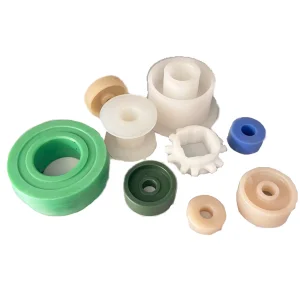
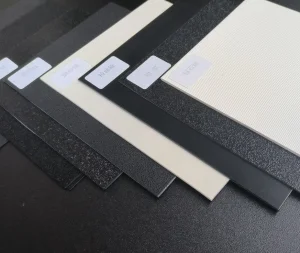
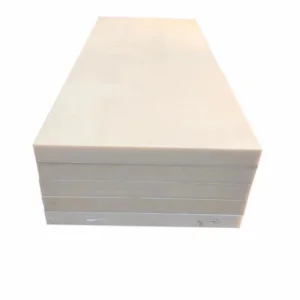
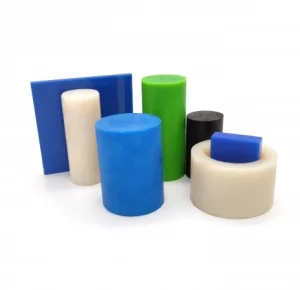
Explore our complete export spectrum comprising ultra-wear UHMWPE pads, MC cast boards, precision PEEK pulleys, and large-format polymer stock.