Direct Factory Semi-Finished & Finished Polymers (Batch A)
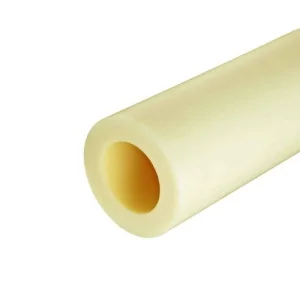
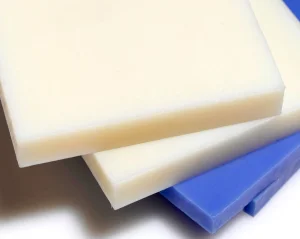
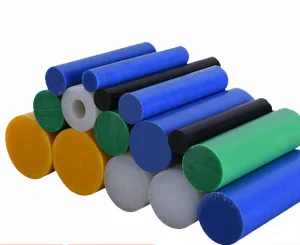
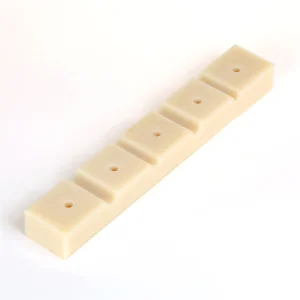
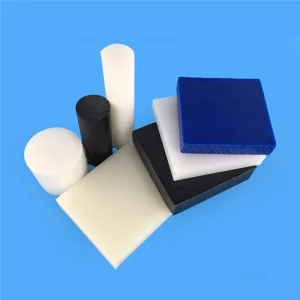
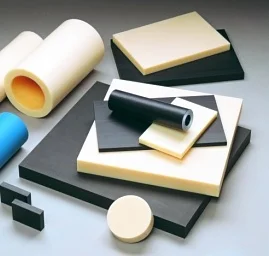
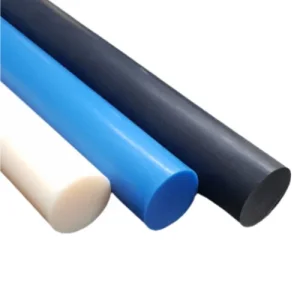
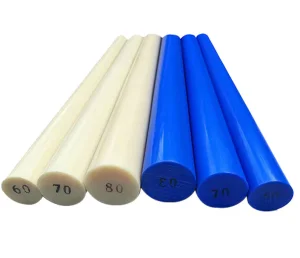
Premium-grade polyamide profiles, extruded blocks, and custom-turned junction blocks available for direct wholesale supply and precision CNC tailoring.
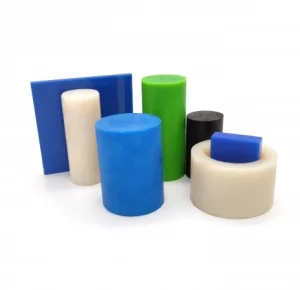
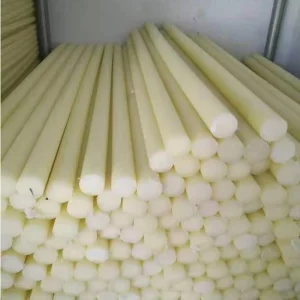
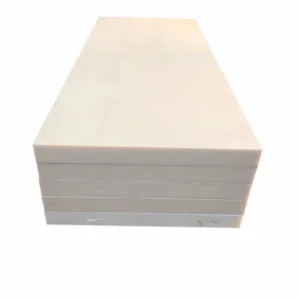
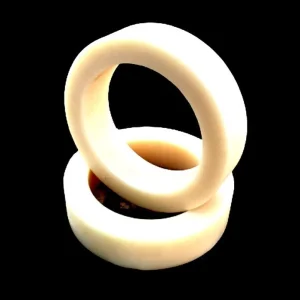
Wholesale Nylon Joint Engineering: Technical Dynamics & Structural Architecture
A rigorous industrial perspective on the thermodynamic, kinematic, and chemical demands placed upon synthetic polyamide joints, articulation couplings, and structural connectors in tier-1 manufacturing.
Dynamic Kinematics & Modulus
Industrial nylon joints—ranging from universal ball joints to threaded elbow couplings and articulating hinges—rely heavily on the continuous viscoelastic behavior of Polyamide 6 (PA6) and Polyamide 66 (PA66).
Under repeated torsional strain, standard polymers fail through micro-crack propagation. By engineering controlled monomer casting (MC Nylon) matrices, our manufacturing methodology stabilizes cross-molecular bonding, preserving elasticity under heavy mechanical impact.
Tribological Self-Lubrication
Unlike metal linkages (brass, bronze, stainless steel), custom-machined nylon joint components operate in abrasive particulate environments without secondary grease.
Infusing liquid lubricants, MoS2 (Molybdenum Disulfide), or PTFE directly into the molten polymer creates an exceptionally low coefficient of friction (down to 0.12). This prevents galling, reduces thermal buildup at contact points, and extends the MTBF (Mean Time Between Failures) of heavy assemblies.
Vibration & Acoustic Damping
In automated transfer lines and fluid-power networks, resonant vibration destroys rigid couplings. Polyamide materials exhibit a naturally high loss factor (tan δ), absorbing acoustic harmonics and shock loads.
By absorbing dynamic deflections of up to 4.5% without permanent plastic deformation, our wholesale nylon joint fittings protect sensitive valves, pneumatic actuators, and electronic control housings.
Macro Industry Solutions: Engineering-Grade Replacements for Metal Joints
Across chemical processing, industrial logistics, renewable energy, and subsea operations, engineering plastic joints eliminate galvanic corrosion while delivering remarkable weight-to-strength ratios.
Fluid Transfer & Piping
Swivel and flange nylon joints resist harsh acids, alkaline washes, and salt spray where 316 stainless steel pits and fails. Excellent for petrochemical processing and offshore desalination pipelines.
Automated Intralogistics
Lightweight articulating conveyor joints reduce line inertia, enabling robotic parcel handling systems to run at higher cycle frequencies while cutting electric motor power draw by up to 25%.
Heavy Mining & Excavation
Outrigger connectors, pivot bushes, and dust-excluding ball sockets fabricated from modified MC Nylon handle severe abrasive dirt, crushed stone slurry, and extreme dynamic impact loads.
Renewable Energy Tracking
Solar tracker linkages made from UV-stabilized PA66 with glass-fiber reinforcement survive thermal cycling from -40°C to +85°C without creep, stress cracking, or dielectric breakdown.
Polymer Joint Matrix: Comprehensive Mechanical & Thermal Benchmark
Selecting the optimal thermoplastic material for your custom-machined joint requires balancing tensile yield, elongation, continuous operational temperature, and moisture ingress parameters.
| Polymer Formula | Tensile Strength (MPa) | Impact Strength (kJ/m²) | Max Continual Temp (°C) | Key Operational Advantages | Primary Industrial Use-Case |
|---|---|---|---|---|---|
| Cast PA6 (MC Nylon) | 80 - 95 | > 5.0 (Charpy) | 105°C | Zero residual casting stress, high hardness, massive component capability | Heavy crane sheaves, massive articulating ball joints, mining linkages |
| Extruded PA66 (Polyamide 66) | 85 - 100 | > 4.5 | 120°C | Superior creep resistance, high melting point, high stiffness | Precision threaded pipe couplings, pneumatic quick-connects, structural clamps |
| PA66 + 30% Glass Fiber | 150 - 175 | > 9.0 | 140°C | Exceptional rigidity, minimal thermal expansion, high heat tolerance | Automotive under-the-hood articulating linkages, heavy chassis brackets |
| POM-C (Polyacetal) | 65 - 75 | > 6.0 | 100°C | Negligible water absorption (0.2%), dimensional precision in submersion | Submersible sanitary joints, food-grade metering couplings, fuel line joints |
| UHMWPE | 25 - 40 | No Break | 80°C | Extreme sliding abrasion resistance, cryogenic operational resilience | Guide shoe joints, chute pivot slides, low-temperature marine links |
Global Supply Chain Continuity, Quality Control & Compliance Safeguards
In high-stakes OEM manufacturing, supply chain predictability, full material lot traceability, and strict adherence to global environmental frameworks are non-negotiable.
Regulatory Certification & Compliance
Every shipment of wholesale nylon joints, sheets, and rods leaves our Hebei manufacturing facilities fully certified to international standards: RoHS Directive (EU) 2015/863 and REACH (EC No 1907/2006).
For sanitary, beverage, and medical instrumentation components, dedicated virgin FDA-compliant resin stocks are isolated to guarantee zero contamination from toxic heavy metals, phthalates, or unreacted monomer precursors.
Precision Metrology & Quality Control
Our in-house metrology laboratories utilize multi-axis Coordinate Measuring Machines (CMM), optical shaft comparators, and automated ultrasonic flaw detectors.
Polyamides naturally absorb ambient humidity (up to 3.0% under ISO 62 standards). Our specialized post-annealing and controlled moisture pre-conditioning cycles stabilize internal crystalline lattices, ensuring that machined tolerances (±0.02 mm) remain stable through transatlantic shipping and variable climates.
Global Export Logistics & Packaging
With more than two decades supporting industrial hubs across North America, Europe, Australia, and Southeast Asia, our factory deploys moisture-barrier foil packaging, desiccated crating, and corner-reinforced pallets.
We provide full customs support: Certificate of Origin (CO), Form E/A, verified Material Safety Data Sheets (MSDS), and comprehensive dimensional inspection reports with every production batch.
Technical Roadmap: Next-Generation Polyamide Articulation & Joint Systems
Continuous investment in advanced polymer compounding keeps our OEM partners ahead of rigorous efficiency benchmarks and emerging industrial use cases.
Nanotube (CNT) Electrostatic Dissipation
To serve dangerous explosion-proof (ATEX) cleanrooms and automated electronics assembly lines, we compound polyamide joints with multi-walled carbon nanotubes.
This lowers surface resistivity to 104 - 108 Ω/sq, dissipating static charges safely without sacrificing the mechanical impact resistance of standard PA6.
Bio-Based Long-Chain Polyamides (PA56 & PA610)
To reduce lifecycle carbon footprints, we have integrated sebacic acid formulations sourced from non-food agricultural feedstocks.
These specialized grades cut water absorption down to 0.4% (approaching acetal performance) while delivering outstanding chemical resistance against aggressive automotive glycol and brake fluids.
Digital Twin FEA & Mold-Flow Optimization
Before casting or tooling high-volume joints, our engineers run thermal shrinkage and molecular orientation simulations through advanced finite element software.
This early-phase analysis eliminates sink marks, voids, and knit-line weakness at high-stress elbows, ensuring every unit matches original drawing tolerances perfectly.
Technical & Procurement FAQ: Nylon Joint Manufacturing
Comprehensive engineering guidance to assist strategic buyers and machine designers during the technical specification process.
How does hygroscopic swelling impact nylon joint dimensions in humid settings?
Unfilled Polyamide 6/66 absorbs between 1.5% to 3.0% atmospheric moisture, resulting in a linear dimensional expansion of approximately 0.2% to 0.3%. When tight fits are mandatory in moist environments, we recommend specifying POM (Polyoxymethylene), pre-conditioning components to equilibrium, or engineering additional clearance tolerances (±0.05 mm) into bearing journals and thread profiles.
What is the difference between cast MC nylon and extruded nylon for large joints?
Monomer Casting (MC Nylon) synthesizes the polymer directly inside atmospheric molds via anionic polymerization. This process yields molecular weights up to 1,000,000 g/mol (versus 30,000 to 50,000 for extruded nylon) with zero extrusion stress. Cast nylon delivers superior dimensional stability, higher tensile strength, and easier chip formation during CNC milling for joints exceeding 100 mm in diameter.
Can you machine threads and internal undercuts directly into nylon joint blanks?
Yes. Our multi-axis CNC turning and milling centers work with standard formats like STEP, DWG, DXF, and PDF. We cut imperial, metric, and specialized trapezoidal threads directly into solid nylon stock. Our engineers adjust cutting tool geometries, use positive rake angles, and manage feed rates to prevent chip wrap and thermal distortion during threading.
What custom fillers can be compounded to enhance joint performance?
We supply a range of modified compounds, including 30% glass fiber reinforcement for flexural stiffness, graphite or MoS2 for reduced sliding friction, carbon fiber for weight reduction, and oil-impregnated polymers for maintenance-free dynamic pivots running under continuous load.
Direct Factory Semi-Finished & Finished Polymers (Batch B)
Comprehensive catalogue of tubes, wear plates, guide blocks, and chains available in custom grades and standard cross-sections for immediate dispatch.