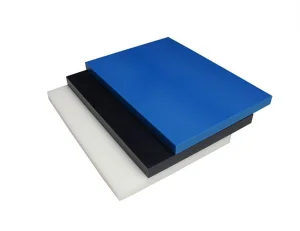
Direct Factory Inventory
Engineered Polymers & Precision Semi-Finished Catalog
Explore our primary manufacturing series. Every product undergoes controlled continuous casting, vacuum calibration, and uniform thermal annealing to ensure zero internal voids and superior dimensional stability during CNC milling and turning operations.
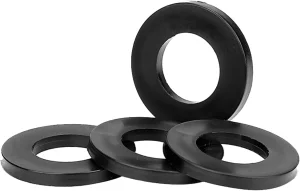
Discount Impact Blue White Black Color Nylon Ring Cushion Use For Impact Hammer For Piling Machine Suppliers, Exporters
View Product Specifications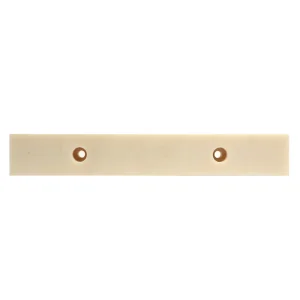
OEM Nylon,ABS,HDPE ,UHMWPE Plastic Sheet Pad With Hole Supplier, Company
View Product Specifications
Wholesale Engineering Plastic Polyamide PA6 PA66 Solid Nylon Rod , PTFE Rod, ABS Rod Plastic Solid Rod And Bar Customized Color With Size Factory, Companies
View Product Specifications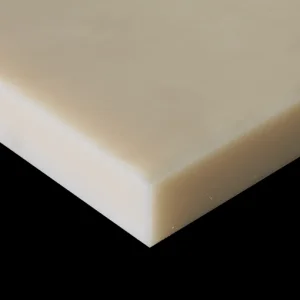
Cheap Natural MC Nylon Sheet Factories, Exporters
View Product Specifications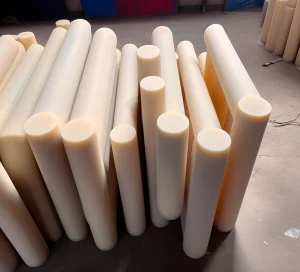
High-Quality MC Nylon Rod Manufacturer, Exporter
View Product Specifications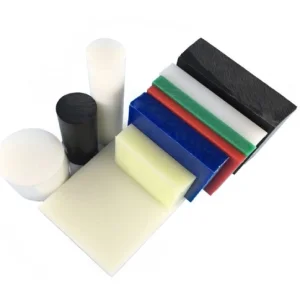
High-Quality Engineering Plastic Polyamide PA66 Nylon PP UHMWPE PTFE HDPE ABS Plastic Sheet Rod And Bar Customized Color With Size Manufacturers, Suppliers
View Product Specifications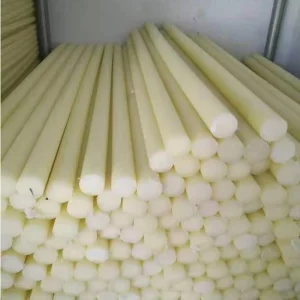
Discount ODM OEM Engineering Plastic Cast PA6 Polyamide Nylon ABS PP PTFE Plastic Rod And Bar Customized Color With Size Manufacturers, Suppliers
View Product Specifications
Industry Macro Intelligence
Global HDPE Rod Market Evolution & Sourcing Dynamics
The international engineering plastics market is transitioning from commodity-grade polymers to ultra-consistent, molecularly engineered polyethylenes. As international infrastructure modernization accelerates, enterprise buyers demand tight tolerance rod stock that bridges structural rigidity and chemical inertness.
6.8%
Global HDPE CAGR (2024-2032)
< 0.01%
Moisture Absorption Rate
350mm
Max Single-Rod Diameter
100%
Stress-Relieved Stock
Material Substitution Paradigm
Global mechanical designers are replacing bronze, carbon steel, and fluoropolymers with high-grade HDPE (PE300/PE500) rods. Operating with a low specific gravity of 0.95-0.96 g/cm³, HDPE eliminates 85% of structural deadweight while terminating wet-well electrochemical oxidation entirely.
Mass Reduction
Zero Corrosion
Self-Lubricating
Environmental Mandates & Circularity
Strict European REACH protocols and US EPA PFAS restrictions are driving buyers away from fluoropolymers toward uncontaminated, microplastic-stable pure polyolefins. Our virgin-grade HDPE rods are 100% recyclable, halogen-free, and comply with RoHS III emission mandates across all manufacturing phases.
RoHS / REACH
Zero PFAS
Circular Polyolefins
Total Cost of Ownership (TCO)
Machined HDPE components exhibit outstanding abrasion resilience under slurry environments. Extended wear life paired with near-zero lubrication maintenance translates to an estimated 42% TCO savings over conventional cast iron and bronze bushings throughout a 5-year operating lifecycle.
Low Wear Factor
Slurry Resistant
Dry-Run Capable
Material Physics & Benchmark Data
Technical Property Matrix: HDPE Rod vs Engineering Polymers
Evaluating thermoplastic stock requires balancing mechanical modulus against hygroscopic expansion. Unlike Polyamides (PA6/PA66) that expand through ambient moisture pickup, HDPE provides absolute hydrophobic stability, making it optimal for submerged valve seats, marine guides, and wastewater scrapers.
| Physical / Mechanical Property | Standard Testing Protocol | HDPE (High-Density PE) | Cast Nylon (PA6C) | Acetal / POM-C | UHMWPE (PE-1000) |
|---|---|---|---|---|---|
| Density (g/cm³) | ISO 1183 / ASTM D792 | 0.95 - 0.96 | 1.15 - 1.16 | 1.41 - 1.42 | 0.93 - 0.94 |
| Tensile Strength at Yield (MPa) | ISO 527 / ASTM D638 | 25 - 32 | 75 - 85 | 65 - 70 | 20 - 25 |
| Elongation at Break (%) | ISO 527 | > 350% | 25% - 40% | 30% - 40% | > 300% |
| Shore Hardness (Scale D) | ISO 868 / ASTM D2240 | 63 - 68 D | 82 - 85 D | 80 - 84 D | 60 - 64 D |
| Water Absorption (Saturation, 23°C) | ISO 62 / ASTM D570 | < 0.01% | 6.0% - 7.5% | 0.8% | < 0.01% |
| Coefficient of Sliding Friction (Dry) | ASTM D1894 | 0.20 - 0.28 | 0.35 - 0.42 | 0.25 - 0.32 | 0.10 - 0.15 |
| Continuous Service Temperature | UL 746B | -50°C to +80°C | -40°C to +105°C | -50°C to +100°C | -150°C to +80°C |
| Dielectric Strength (kV/mm) | IEC 60243 | 45 - 50 | 20 - 25 | 20 - 40 | 45 |
Smart Manufacturing & Infrastructure
China Factory 4.0: Supply Chain Agility & Scalability
Located in the national polymer manufacturing hub of Xinhe County, Hebei Province, our production facilities combine high-throughput German extrusion engineering with closed-loop process digitalization, guaranteeing rapid international fulfillment cycles.
Continuous Twin-Screw Extrusion
Equipped with high L/D ratio multi-zone temperature-controlled barrels, preventing thermal shear degradation and preserving polymer chain lengths for maximum impact strength.
Homogeneous Melt
Zero Black Specks
Thermal Annealing Ovens
Every extruded bar undergoes a computer-monitored 48-hour secondary annealing cycle. This completely relieves residual radial cooling tension, eliminating rod warpage during CNC boring.
Stress-Relieved
Zero Camber
Ultrasonic Non-Destructive Testing
Automated inline ultrasound scanners inspect inner core density, detecting internal micropores, centerline voids, and cooling cavities before stock enters intermediate warehousing.
Zero Core Cavities
100% Solid
Integrated Export Packaging
Heavy-gauge moisture-proof wrapping, custom wooden crating, and direct highway links to Tianjin and Qingdao ports assure ocean-ready protection against sea-freight mechanical impact.
FOB / CIF / DDP
Rapid Port Dispatch
Global Deployment Verification
Mission-Critical Industrial Applications for HDPE Rods
From petrochemical refining along the Houston Ship Channel to automated beverage bottling plants across Western Europe, our solid HDPE rounds deliver verified mechanical performance under the harshest working conditions.
Chemical Fluid Valves & Flanges
With resistance to 98% sulfuric acid, concentrated hydrochloric solutions, and aggressive alkaline washdowns, machined HDPE valve plugs, stems, and ball valve seats prevent costly shutoffs in electroplating and chlorine generation plants.
Marine Infrastructure & Port Bumpers
Moisture absorption creates biofouling and rot in timber and nylon. HDPE round rods are turned into mooring fender rollers, anti-chafing bushings, and jetty pile sleeves that resist seawater salt crystallization and UV radiation.
Hygienic Food & Beverage Processing
Compliant with FDA 21 CFR 177.1520 regulations, our natural white HDPE rod stock is non-toxic, odorless, and zero-staining. Frequently machined into star wheels, timing screws, meat processing spacers, and sanitary guide rails.
Mobile Heavy Crane Outrigger Pads
Compressive yield strength under load is critical for stability. Turned from large-diameter PE-HD cylinders or fabricated out of thick blocks, outrigger safety pads distribute thousands of tons of ground pressure without splitting or bending.
Cryogenic & Cold Storage Guides
While brittle plastics shatter below zero, HDPE maintains high notch-impact resistance down to -50°C. Cold storage sorting conveyors and arctic pipeline supports utilize HDPE machined sleeves to prevent costly winter fractures.
Electrical Cable Spacers & Isolators
High dielectric strength (>45 kV/mm) and minimal loss factors qualify virgin HDPE rods as preferred high-voltage cable conduit spacers, standoff insulators, and neutral earthing blocks in utility distribution grids.
Engineering Specifications
Standard Operating Protocol: Ordering & CNC Machining
A structured engineering checklist to ensure smooth transitions from standard CAD files to final production, minimizing machining cycle times and preventing material waste.
01
Stock Sizing & Tolerances
Order bar stock with +0.5mm to +2.0mm oversize allowance. Our precise extrusion lines guarantee outer diameter roundness tolerances within ±0.15mm on standard diameters from 15mm up to 200mm.
02
Tooling Geometry & Rake
Employ high-speed steel (HSS) or polished carbide tooling with high positive rake angles (15° to 30°) and generous chip flutes. Ground sharp cutting edges prevent burr accumulation and surface gouging.
03
Spindle Feeds & Cooling
Maintain high surface cutting speeds (250 - 450 m/min) coupled with continuous feed rates to evacuate heat into the chip. Utilize dry clean compressed air cooling or synthetic water-soluble flood emulsions.
04
Precision Deburring & QA
Parts are clean-machined with razor chamfering tools followed by CMM laser dimensional validation against original DXF/STEP models, ensuring full assembly compliance prior to packing.
Technical Clarifications
Frequently Asked Questions: Sourcing & Machining HDPE Rods
Comprehensive engineering answers addressing the most common questions raised by industrial distributors, OEM buyers, and fabrication specialists.
How does HDPE differ from UHMWPE in machinability and mechanical rigidity?
HDPE (PE-300 / PE-500) features a higher modulus of elasticity and higher tensile yield strength (up to 32 MPa) compared to UHMWPE (20-25 MPa). It turns crisply on CNC lathes, forming cleanly parted chips without filament wrapping. UHMWPE exhibits substantially higher abrasion resistance but requires custom tooling geometry to prevent stringy continuous burrs.
Why do standard extruded HDPE rods sometimes bow or twist during heavy machining?
Bow or twist occurs when residual cooling stresses within the core are released unevenly during material removal. We eliminate this issue at the factory level by subjecting all rods to automated 48-hour continuous annealing ovens. This relieves inner frozen tension, ensuring parts remain straight even after extensive deep slotting or drilling.
Are your HDPE rods suitable for direct food and drinking water contact?
Yes. Our virgin natural white and black HDPE rods comply fully with US FDA 21 CFR 177.1520 and European Regulation (EU) No 10/2011 standards. We supply full trace certificates of analysis (COA) confirming zero heavy metals, zero phthalates, and zero BPA migration for dairy, bakery, and municipal water applications.
What is the maximum standard stock diameter and custom profile length available?
We routinely extrude solid HDPE rods from 10mm up to 350mm in diameter. Standard stock lengths are 1000mm and 2000mm, but our continuous extrusion pullers can supply customized lengths up to 4000mm or cut-to-size discs to match container dimensions and lower material scrap rates.
Can HDPE rod be welded to HDPE sheet structures during chemical tank assembly?
Yes. HDPE is a thermoplastic polyolefin that hot-air welds and extrusion welds seamlessly. Rods can be turned into customized threaded plugs, welded structural reinforcements, or machined filler spools matching standard DVS 2207 welding guidelines.
How does UV exposure affect outdoor installations of natural vs black HDPE rods?
Natural (white) HDPE will gradually experience UV photodegradation and embrittlement after 12-24 months of direct desert sunlight. For outdoor solar mounting, marine berths, and agricultural machinery, we recommend our specialized Carbon-Black masterbatch compound containing 2.5% finely dispersed furnace black, yielding a 15+ year operational outdoor lifespan.
Complete Polymer Portfolio
Comprehensive Engineering Polymers & Specialized Stock
In addition to standard HDPE semi-finished forms, our production base extrudes and casts custom Polyoxymethylene (POM), Polyamide (PA6/MC), and custom CNC machined components engineered to drawing tolerances.
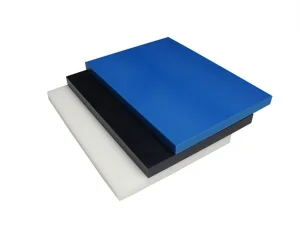
Wholesale Natural Nylon Plate/Sheet, Black Nylon Plate/Sheet, Blue Nylon Plate/Sheet Exporter, Product
View Product Specifications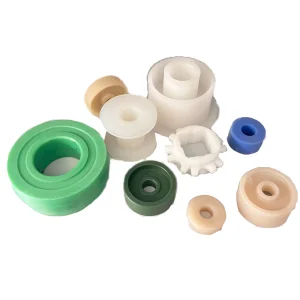
China CNC Machined Parts Exporters, Product
View Product Specifications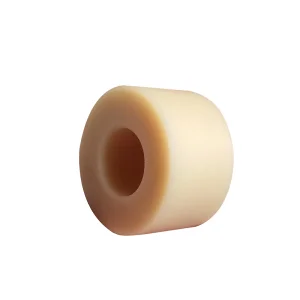
China Good Wholesale Vendors China High Hardness Plastic Products POM /Delrin Nylon/Rods 10mmx1000mm White Rod/Color Plastic Rods Manufacturers, Supplier
View Product Specifications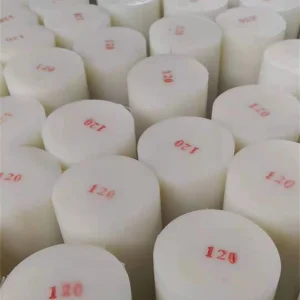
Discount ODM OEM Engineering Plastic Cast PA6 Polyamide Nylon Oil Filled Nylon Rod Glass Filled Nylon Rod Plastic Tube Rod And Bar Customized Color With Size Manufacturers, Company
View Product Specifications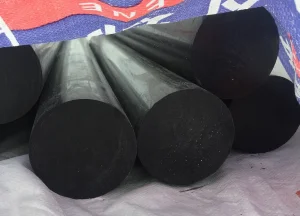
Wholesale POM Rod Black POM Rod, White POM Rod, POM Bar, POM Plastic Rod Factories, Products
View Product Specifications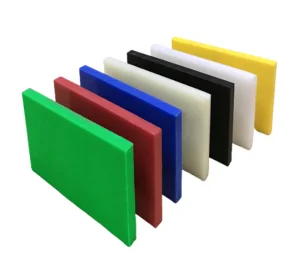
Cheap China Engineering Plastic Polyamide PA6 PA66 Nylon PP UHMWPE PTFE HDPE ABS Plastic Sheet Rod And Bar Customized Color With Size Suppliers, Exporters
View Product Specifications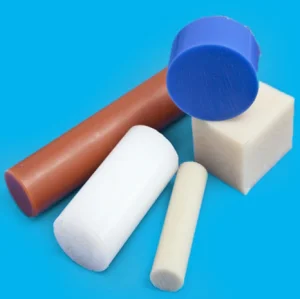
Famous China Engineering Plastic Polyamide PA6 PA66 Nylon PP UHMWPE PTFE HDPE ABS Plastic Rod And Bar Manufacturers, Suppliers
View Product Specifications