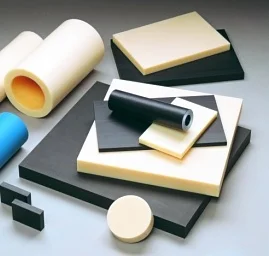
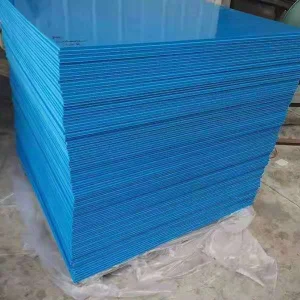
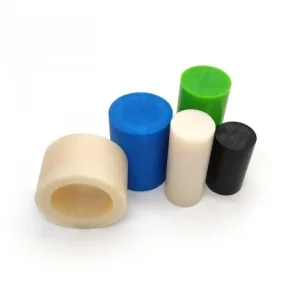
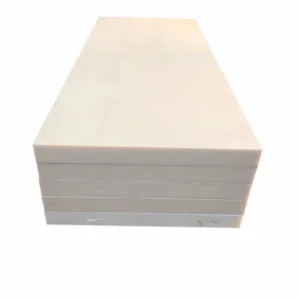
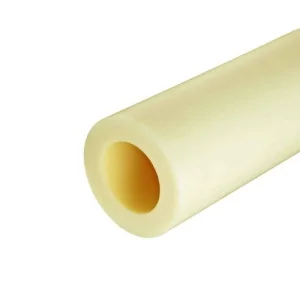
Featured Semi-Finished & Cast Ring Precursor Solutions
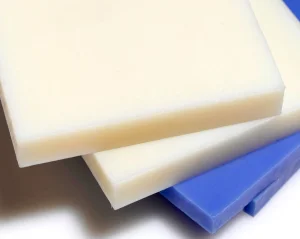
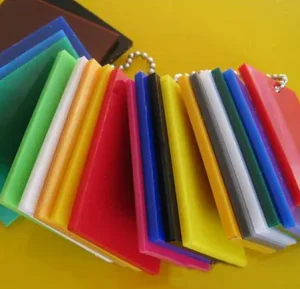
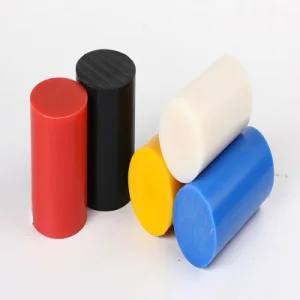
Direct factory stock engineered from high-purity caprolactam and premium polymers. Manufactured to tight ASTM/DIN tolerances ready for global wholesale distribution and immediate CNC line feeding.
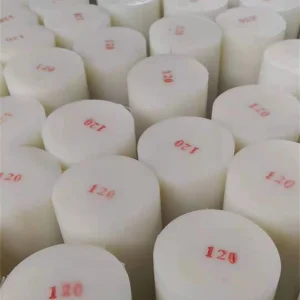
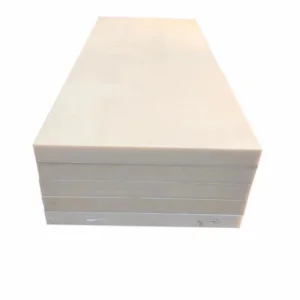
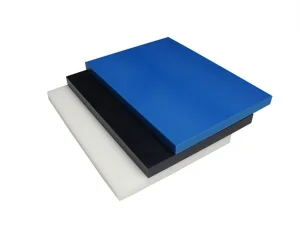
Macro-Industrial Paradigm: The Strategic Transition to Engineered Cast Rings
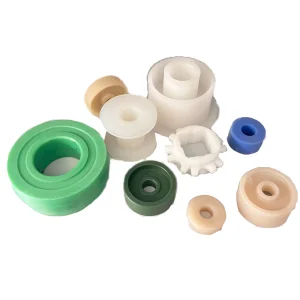
Replacing phosphor bronze, manganese steel, and babbitt metals with high-molecular-weight monomer cast rings (MC PA6G) reduces unlubricated friction, slashes rotational inertia by 85%, and eliminates galling catastrophes across heavy transmission machinery.
High-Weight Molecular Synthesis
Monomer Casting (MC) involves the direct anionic in-situ polymerization of molten caprolactam within calibrated molds. This chemistry achieves molecular chain weights between 250,000 to 350,000 g/mol, far surpassing the 30,000 to 40,000 g/mol ceilings of standard extruded PA66. The result is a highly ordered, 48% to 52% crystalline morphology with exceptional tensile resilience.
Tribological Self-Lubrication
Cast rings blended with micro-encapsulated liquid lubricants or molybdenum disulfide (MoS2) drastically reduce the dynamic coefficient of dry friction ($\mu = 0.12 - 0.18$). When mating with hardened steel raceways, these rings inhibit micro-welding, dampen high-frequency harmonic vibration, and prevent surface fretting corrosion in critical rotating assemblies.
Stress-Relieved Casting Precision
Standard extrusion processes induce high residual hoop stresses due to inhomogeneous shear cooling. Our vertical centrifugal and pressure-assisted mold casting cycles are maintained under precise isothermal conditions followed by multi-stage thermal annealing tanks. This eliminates ovality warp and allows ultra-precise CNC turning within ±0.02 mm.
Corrosive Chemical Resistance
Unlike brass, bronze, and carbon steels that suffer from electrolytic pitting and acidic oxidation, engineering grade cast nylon, UHMWPE, and POM cast rings demonstrate near-total inertness across hydrocarbons, greases, synthetic diesters, mild bases, and industrial saline atmospheres common in marine operations.
Comparative Polymer Formulation & Cast Ring Metallurgy
A validated baseline designed by our senior polymer chemists. Evaluate compressive yield thresholds, limiting pressure-velocity (PV) factors, and thermal stability metrics before commissioning high-volume production runs.
| Material Formulation | Specific Density (g/cm³) | Tensile Yield (MPa) | Compressive Modulus (MPa) | Limiting PV Rating (MPa·m/s) | Max Temp (°C Short/Cont) | Primary Industrial Use-Case |
|---|---|---|---|---|---|---|
| Natural MC PA6G Ring Monomer Cast |
1.15 | 85 - 90 | 3,200 | 1.85 | 160 / 105 | Standard crane sheaves, slewing rings, spacers |
| Oil-Filled Cast PA6+Oil Self-Lubricated |
1.14 | 72 - 78 | 2,900 | 3.45 | 150 / 95 | Unlubricated high-speed wear rings, guide bushes |
| MoS2 Filled Cast PA6 High Rigidity |
1.16 | 90 - 98 | 3,550 | 2.20 | 170 / 115 | Heavy mining excavator pivot rings, high shock hubs |
| POM-C Acetal Copolymer Dimensional Stability |
1.41 | 65 - 70 | 2,800 | 1.25 | 140 / 100 | Subsea valves, tight tolerance pharmaceutical rings |
| UHMWPE Ultra-High PE Abrasion Proof |
0.94 | 28 - 32 | 950 | 1.10 | 90 / 65 | Slurry transport flange rings, hopper flow wear rings |
| Virgin & Filled PTFE Thermal/Chemical |
2.16 | 22 - 35 | 650 | 0.75 | 260 / 220 | Cryogenic seals, aggressive acid pump back-up rings |
Mission-Critical Deployments: Engineered Cast Rings in Action
From arctic offshore platforms to ultra-deep surface mining, custom cast polymer rings resolve the fundamental engineering bottlenecks of premature friction wear, maintenance overhead, and lubricant contamination.
Open-Pit Mining & Excavation
Dragline buckets and electric mining shovels subject boom sheave rings to multi-ton dynamic shock loads. Cast PA6+MoS2 rings absorb crushing point loads without spalling, cushioning steel wire ropes and extending wire rope operating lifecycles by up to 300% compared to cast steel sheaves.
Offshore Wind Yaw & Pitch Drive
Marine nacelles require continuous angular alignment under aggressive saltwater exposure. Oil-impregnated cast nylon segmented rings provide maintenance-free slewing bearing isolators. They operate dry without fluid grease washouts, preventing offshore turbine maintenance visits costing thousands of dollars per hour.
Subsea Mooring & Fairlead Systems
FPSO (Floating Production Storage and Offloading) winches encounter cyclic seawater immersion and crushing radial forces. Monomer cast nylon rings replace phosphor bronze bushings, eliminating galvanic coupling between dissimilar metals and resisting marine biological bio-fouling.
Pulp, Paper & Corrugated Rollers
The wet-end chemical baths of paper production mills rapidly corrode metal bearing housings. Hydrolysis-resistant polymer rings survive constant warm steam, bisulfite liquors, and caustic washes, maintaining runout tolerances within ±0.03 mm across high-speed web handling cylinders.
Automated Bottling & Food Filling
FDA/EU-compliant natural POM and virgin cast polyamide rings function as rotating star-wheel indexing collars and conveyor guide rings. Requiring zero external liquid oil lubricants, they guarantee zero hydrocarbon contamination across sterile beverage capping carousels.
International Regulatory Assurance & Localized Support
Wholesale purchasing requires uncompromising verification. Our production facilities maintain ISO 9001:2015 certification with rigorous batch-level material testing, chemical traceability, and rapid localized customs documentation.
EN 10204 3.1 Certification
Every cast ring shipment is matched to an authentic 3.1 Mill Inspection Certificate validating mechanical yield, Izod impact, density, shore hardness, and thermal heat deflection values derived from calibrated batch coupon specimens.
REACH & RoHS Validation
Fully compliant with EU Regulation (EC) No 1907/2006 (REACH) covering 235+ Substances of Very High Concern (SVHC) and Directive 2011/65/EU (RoHS 3). Verified heavy-metal free for international OEM supply integration.
FDA Food Contact Verification
Natural virgin MC PA6, POM-C, and UHMWPE formulations conform to FDA 21 CFR 177.1500 and EU 10/2011 for direct food contact, sanitary conveyor hardware, and pharmaceutical dispensing line components.
Global Export Packing Engineering
Machined cast rings feature moisture-impermeable vacuum sealing with desiccants to preserve dry-as-molded dimensional tolerances during intercontinental sea freight. Packed in ISPM-15 heat-treated plywood crates.
Technology Roadmap: Next-Gen Polymer Rings (2025–2030)
Our ongoing R&D efforts are advancing composite polymer matrix designs to push thermal ceilings, integrate smart real-time wear telemetry, and establish sustainable closed-loop industrial monomer synthesis.
Carbon Nanotube & Graphene Infusion
Integrating low-loading multi-walled carbon nanotubes (MWCNTs) directly into liquid monomer precursors. This enhances tensile yield strength by 35%, provides controlled electrostatic dissipation (ESD 10^6 - 10^9 Ω/sq), and increases wear endurance under ungreased sliding regimes.
Embedded Sensor-Core Wear Rings
Incorporating passive RFID and nanoscale conductive resistance strips at critical wear-depth milestones. When a rotating cast ring reaches 80% wear life, the automated machine control system receives immediate preventive maintenance telemetry before shaft scoring occurs.
Closed-Loop Monomer Recycling
Pioneering catalytic depolymerization methods to break spent industrial cast nylon rings back down into pure ε-caprolactam monomer liquid with zero loss of virgin molecular weight properties, reducing embedded carbon footprints by up to 68%.
Wholesale Procurement & Engineering FAQ
Detailed technical answers to common queries submitted by rotating equipment designers, wholesale procurement directors, and maintenance superintendents.
How does cast monomer nylon (MC PA6G) outperform standard extruded nylon (PA66) in cast ring rings?
Monomer casting takes place under ambient pressure via catalytic polymerization in a mold. Extrusion forces molten resin through dies under high shear, generating high directional orientation and residual hoop stress. Cast nylon rings achieve an ultra-high molecular weight (approx. 300,000 g/mol vs. 35,000 g/mol for extruded), significantly higher degree of crystallinity, higher hardness, superior tensile strength, and far superior dimensional stability during post-machining operations.
How do you compensate for moisture absorption and thermal expansion in cast ring sizing?
Polyamides naturally absorb ambient humidity (up to 2.5% at equilibrium). Our engineers apply a standard calculation offset: Total diametrical running clearance $C = \Delta T \times \alpha \times D + S_{moist}$, where $\Delta T$ is operating temperature differential, $\alpha$ is coefficient of thermal expansion ($8 \times 10^{-5} \text{ K}^{-1}$ for PA6G), $D$ is shaft diameter, and $S_{moist}$ is an intentional 0.002 to 0.003 mm/mm clearance buffer. For submersion applications, we recommend oil-filled cast nylon, POM-C, or UHMWPE which exhibit minimal water absorption.
Can you manufacture large-diameter custom cast rings beyond standard supplier catalogs?
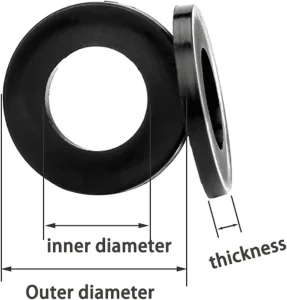
Yes. We specialize in custom centrifugal and gravity casting of heavy industrial rings, gear blanks, and cylindrical shells ranging from outer diameters (OD) of 50 mm up to 2,500 mm with wall thicknesses up to 200 mm. We design and build in-house tooling to cast near-net-shape rings, reducing raw material waste and machining time.
What cutting speeds and tool geometries should be utilized for CNC turning cast rings?
We recommend razor-sharp polished carbide or diamond (PCD) tools with generous positive rake angles ($15^\circ - 25^\circ$) and relief angles ($8^\circ - 12^\circ$). Maintain rapid cutting feeds ($0.15 - 0.4 \text{ mm/rev}$) and surface speeds ($250 - 500 \text{ m/min}$) with air-blast or water-soluble flood cooling. Never allow a dull tool to dwell on the polymer face, as frictional heat buildup will induce local plasticization, tool gumming, and dimensional creep.
What are standard wholesale lead times, Minimum Order Quantities (MOQ), and shipping terms?
Standard stock precursor rings, tubular billets, and rods ship within 3 to 7 business days. Custom mold-cast or precision CNC finished rings typically require 14 to 21 business days, inclusive of mold fabrication and annealing. We accommodate low-volume evaluation orders ($500 - $1,000 minimum value) alongside multi-container contract schedules shipped under FOB, CIF, or DDP terms worldwide.
How do you guarantee batch-to-batch consistency and void-free interior wall structures?
All monomer batches are catalyzed under closed vacuum degassing to extract entrapped micro-air bubbles before gravity or centrifugal pouring. Random and critical production lots undergo ultrasonic non-destructive testing (NDT) to confirm the complete absence of internal shrinkage voids, air pockets, or crystallization defects across the entire ring cross-section.
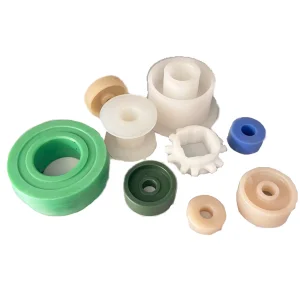
Specialty Formulations, Rings & Custom Polymer Hardware
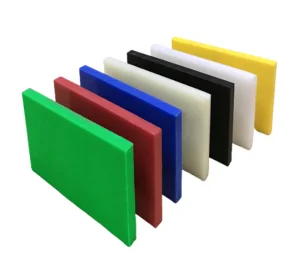
Explore our expanded suite of high-performance polymer rings, plates, custom pulleys, and reinforced hollow tubes engineered to withstand demanding continuous-duty industrial operating environments.