
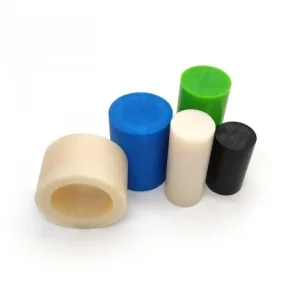
Industrial Catalog Group 01
High-Performance Semi-Finished Stock & Machine Profiles
Engineered extruded and cast thermoplastic bars, sheets, and tubes manufactured under tight molecular chain control for superior sliding wear and severe-service duties.
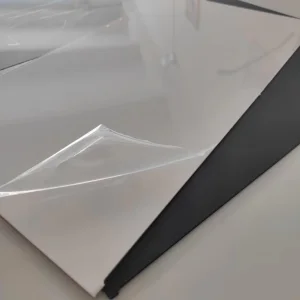
Smooth ABS Engineering Plastic Thermoforming Sheet
View Specifications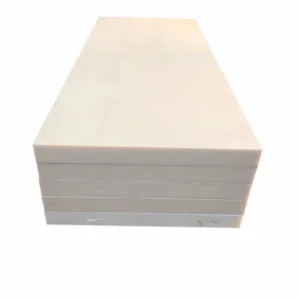
Natural Cast MC Nylon Heavy-Duty Wear Plates
View Specifications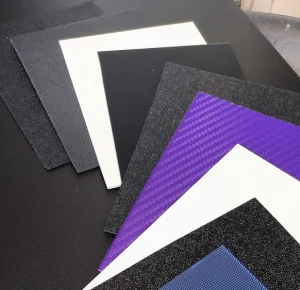
Custom Textured & Flat Industrial ABS Sheets
View Specifications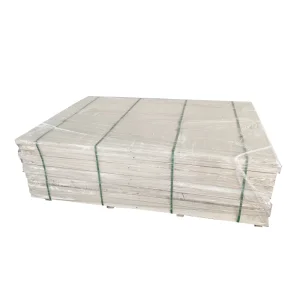
Virgin UHMWPE, PTFE, HDPE & PA66 Sintered Stock
View Specifications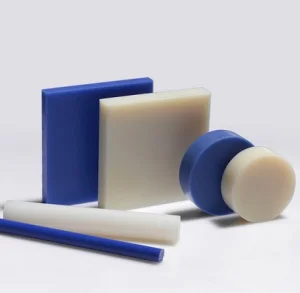
Wear-Resistant UHMWPE Flat Bar & Round Stock
View Specifications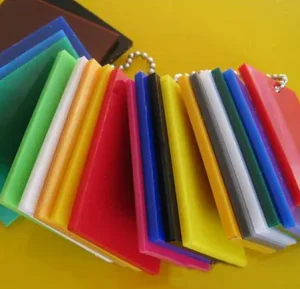
Rigid Heavy-Duty Crane Outrigger Support Pads
View Specifications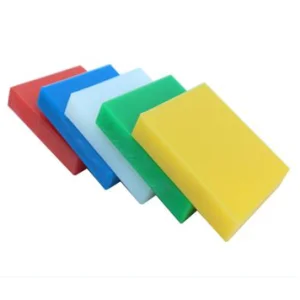
Custom Dimension UHMWPE & Acetal Machining Bars
View Specifications
Technical Whitepaper
Global State of Industrial Polymers: The UHMW Flat Bar Engineering Paradigm
An in-depth perspective on why Ultra-High Molecular Weight Polyethylene (UHMW-PE) flat profiles dominate tribological systems across modern high-throughput automation and extreme operating environments.
3-9M
Molecular Weight (g/mol)
Superior long-chain entanglement resisting mechanical shear
<0.12
Coefficient of Friction
Dynamic self-lubricating surface without external grease
0.01%
Moisture Absorption
Near-zero dimensional swelling in fully submerged aqueous media
10x
Wear Life vs Carbon Steel
Slurry abrasion resistance verified via ASTM G75 standards
Molecular Viscosity & Impact Resistance
Unlike standard HDPE, which flows easily during conventional injection cycles, UHMW-PE has an ultra-high average molecular weight between 3.5 to 9.2 million g/mol. This extreme molecular mass prevents typical melt index testing (MFI = 0), imparting unparalleled resistance to crack propagation, ballistic impact, and micro-delamination even in cryogenic states down to -150°C.
Tribological Performance Under Load
In automated bottling, bulk conveyance, and machine sliding interfaces, surface fatigue and thermal buildup cause catastrophic component degradation. UHMW flat bars dissipate frictional heat smoothly across their dense crystalline structure, preventing galling on contact metals and reducing maintenance-related plant shutdowns by over 40% across factory lifecycles.
Chemical Inertness & Non-Stick Integrity
A non-polar paraffinic structure renders UHMW flat bars impervious to aggressive chemical washdowns involving concentrated acids, alkaline sanitizers, and caustic CIP (Clean-In-Place) agents. Zero pinhole porosity guarantees that fine powders, clays, slurries, and organic materials will not build up or crust onto critical guide surfaces.
Comparative Matrix
Engineering Thermoplastics: Technical Selection Parameters
Procurement engineers can evaluate polymer tradeoffs below to confirm optimal tensile strength, impact absorption, and coefficient of friction for wear track requirements.
| Polymer Classification | Tensile Modulus (MPa) | Izod Impact (kJ/m²) | Dyn. Coeff. of Friction (Dry) | Water Absorption (24h %) | Target Industrial Use |
|---|---|---|---|---|---|
| UHMW-PE (Virgin PE-1000) | 700 – 900 | No Break (>120) | 0.10 – 0.15 | < 0.01% | Chute wear liners, high-speed slider bars, bottling guide tracks |
| Cast MC Nylon (PA6C) | 3,000 – 3,400 | 4.5 – 6.0 | 0.25 – 0.35 | 6.5% (At Saturation) | Heavy-load crane outriggers, massive sprockets, industrial sheaves |
| Polyoxymethylene (POM Acetal) | 2,800 – 3,200 | 6.0 – 8.0 | 0.20 – 0.28 | 0.20% | High-precision gears, dimensionally critical valve sleeves |
| HDPE (PE-300 / PE-500) | 1,000 – 1,200 | 10 – 14 | 0.25 – 0.30 | < 0.01% | Chemical storage holding tanks, general marine timber pads |
| PTFE (Teflon Grade) | 400 – 600 | 16 | 0.04 – 0.08 | 0.00% | Continuous thermal seals (>200°C), semiconductor acid fixtures |
Application Engineering
Localized Heavy-Duty Use Cases Across Key Industrial Hubs
Tailored machining specs, profiles, and alloy compositions deployed across key international manufacturing, mining, and maritime corridors.
Port & Mining Chute Systems
Region: Pilbara (Australia) & Antofagasta (Chile)
Bulk mineral transfer chutes handle millions of metric tons of abrasive iron ore, bauxite, and copper concentrates. Custom UHMW flat liner bars protect underlying carbon structural steel from deep scour corrosion, maintaining unrestricted gravity discharge without freezing or caking during humid monsoon cycles.
Cold-Chain & Bottling Conveyors
Region: Midwest Corridor (USA) & Rhine-Ruhr (Germany)
High-speed food beverage bottling and packaging lines run up to 1,200 cans per minute. Extruded UHMW guide profiles and flat wear strips ensure nearly noiseless, lubrication-free bottle transport, complying fully with stringent FDA 21 CFR §177.1520 direct contact hygiene standards.
Marine Fender Face Shielding
Region: Port of Rotterdam & Singapore Maritime Gateway
Berthing container ships inflict immense shear and kinetic impact loads on dock walls. Chemically cross-linked, UV-stabilized UHMWPE flat bars and face pads absorb compressive shocks while presenting an ultra-slick barrier that prevents hull damage and paint stripping during tidal surges.
Automated Storage & Retrieval (ASRS)
Region: East Asia & Pan-European Logistics Hubs
Autonomous shuttles and robotic crane masts operate nonstop in high-density e-commerce fulfillment centers. Low-friction UHMW flat tracks eliminate mechanical vibration, slash drive-motor amperage draw, and prevent micro-dust generation inside cleanroom operations.
Supply Chain Excellence
China Factory Scalability: Upstream Polymer Control & Lean Processing
How specialized compression sintering, ramped annealing cycles, and vertically integrated machining protect overseas procurement networks from price shocks and delivery delays.
Precision Sintering & Stress Relief
Internal stress accounts for up to 90% of plastic warping during multi-axis CNC milling. Our Xingtai facilities utilize closed-loop, multi-zone thermal ramp ovens to anneal thick UHMW slabs over 48-hour continuous cycles. Sintering under high hydrostatic tonnage removes residual shear gradients, ensuring cut bars remain flat over years of mechanical cycling.
Drawing-to-Part CNC Integration
Equipped with 3-axis, 4-axis, and high-speed multi-spindle portal routing stations, we machine complex mounting counterbores, beveled edge details, interlocking dovetails, and compound curvatures directly from customer-supplied CAD (DWG, STEP, IGES) files, keeping dimensional tolerances inside ±0.05 mm across large production runs.
Tier-1 Export Packing & Ocean Logistics
Long flat plastic profiles can bow or twist when poorly packed for maritime transit. Every batch of custom bars is interleaved with protective anti-friction film, steel-banded onto reinforced fumigated solid-timber pallets, and moisture-sealed in vacuum-grade barrier wraps to protect surface finishes from Tianjin Port to final buyer discharge docks.
Future Innovations
Next-Generation Technology Roadmap & Regulatory Compliance
Pioneering functionalized compounds, circular polymer reuse benchmarks, and international standards ensuring zero-defect deployments.
Functionalized Additive Formulations
To meet evolving requirements across automated operations, our materials laboratory has developed specialized formulations:
• UHMW-ESD: Carbon-nanotube filled stock offering surface resistivity between 105 and 109 Ω/sq for electronics and hazardous explosive handling (ATEX).
• Metal-Detectable: Micro-doped additive profiles recognizable by food plant X-ray inspection systems.
• Self-Lubricating Ceram-P: Glass and silicone-doped compounds delivering elevated load-bearing capability and higher PV limits.
Circular Economy & Regenerated PE-Regrind
Environmental standards demand transparent carbon metrics. We operate dedicated closed-loop recycling infrastructure where 100% of clean internal milling swarf and trimming scrap is segregated, remilled, and dry-blended into certified Recycled UHMW (Black/Green Eco Grade). This process slashes cradle-to-gate embodied carbon by 52% while matching virgin mechanical shear properties for non-food applications.
Global Certification & Traceability
Every shipment is backed by batch-specific Mill Test Certificates (MTC) providing full traceable chemistry:
• RoHS 3 & REACH: Verified free of SVHCs, halogenated fire retardants, or banned heavy plasticizers.
• FDA & EU 10/2011: Migration tested for non-toxic contact with wet, dry, or oily food matrices.
• Dimensional Reports: Coordinate Measuring Machine (CMM) reports supplied on demand.
Direct Procurement Q&A
Engineering Inquiries & Technical Support
Transparent answers to technical questions raised by plant managers, design engineers, and OEM purchasing executives.
What is the key functional difference between UHMWPE and standard HDPE flat bars?
While both are polyethylenes, standard HDPE features a molecular weight between 300,000 and 500,000 g/mol, which melts easily for standard extrusion and blow molding. UHMWPE contains 3 to 9 million g/mol, producing dense polymer chain entanglement. This delivers up to 10 times higher abrasion resistance, vastly superior notch-impact damping, and a markedly lower coefficient of friction that prevents stick-slip behavior under high sliding velocity.
How does thermal expansion affect the installation of long UHMW flat bars?
UHMWPE exhibits a relatively high linear thermal expansion coefficient (approx. 1.5 to 2.0 × 10⁻⁴ K-1). When mounting continuous guide tracks longer than 2 meters, our engineers recommend using slotted bolt holes rather than fixed circular holes, along with stepped overlap or 45° scarf joints. This accommodates axial expansion during ambient temperature shifts without buckling the flat bar between anchor bolts.
Can UHMW flat bars be bonded with commercial structural adhesives?
Because UHMW has an inert, non-polar surface energy (approx. 30 dynes/cm), standard epoxy, polyurethane, or cyanoacrylate glues will not wet the material effectively. Reliable attachment requires mechanical fastening (counterbored bolts, C-channel steel retainers) or specialized atmospheric plasma or corona surface treatments combined with modified acrylic bonding primers.
What cutting parameters should CNC machinists use for UHMW-PE stock?
Due to UHMW's relatively low melting point (approx. 135°C), high frictional heat can cause surface smear. Machinists should employ high positive-rake, razor-sharp two-flute carbide or diamond-coated (PCD) router tooling, high feed rates (approx. 0.15 to 0.5 mm/tooth), and continuous compressed vortex cold-air or mist cooling to evacuate chips cleanly without localized melting.
How do you guarantee color consistency and polymer purity in custom runs?
We source 100% prime virgin polymer powders from accredited petrochemical producers and verify raw materials using Fourier-Transform Infrared (FTIR) spectroscopy. Color masterbatches are gravimetrically dosed with twin-screw hot-melt compounding systems, ensuring uniform dispersion without resin degradation or pinhole voids across entire production batches.
What are standard export production lead times and sample delivery options?
Standard dimensions and stock raw slabs are typically dispatched within 5 to 7 working days. For custom CNC machined flat bars requiring bespoke tooling setups, our production lead time is 12 to 18 working days. Express sample shipments for engineering fitment tests are prepared within 72 hours via DHL/FedEx worldwide.
Industrial Catalog Group 02
Precision Finished Engineering Plastic Assemblies & Stock Profiles
Complete your supply chain requirement with our precision-turned rods, hollow tubes, extruded bars, and custom CNC components manufactured to strict tolerance protocols.
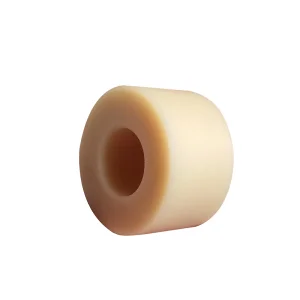
High Hardness POM Delrin & Nylon Turning Rods
View Specifications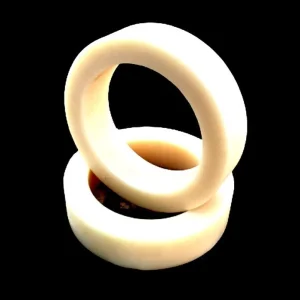
Natural MC Nylon Rings & Hollow Bushing Tubes
View Specifications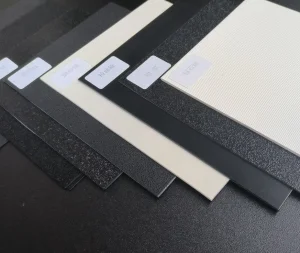
OEM Precision Calibrated Smooth ABS Extrusions
View Specifications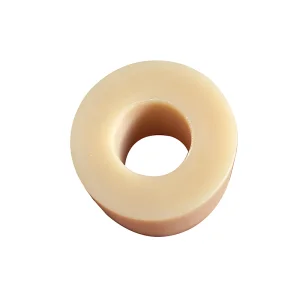
PA6, PTFE, HDPE & PVC Multi-Polymer Stock Profiles
View Specifications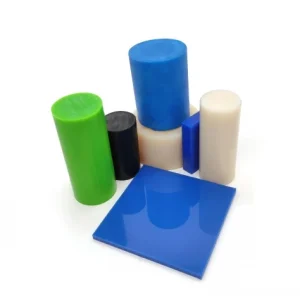
Durable Cast PA6 & PA66 High-Tensile Nylon Plates
View Specifications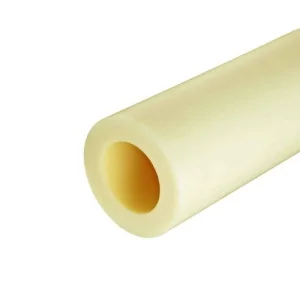
Extruded Polypropylene (PP) & ABS Hollow Tubes
View Specifications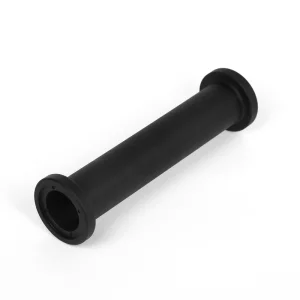
Heavy-Duty CNC Machined Cast Nylon Conveyor Rollers
View Specifications