
High-Grade Semi-Finished Polymer & Drive Stock
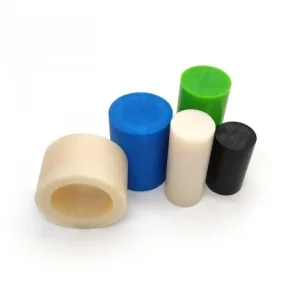
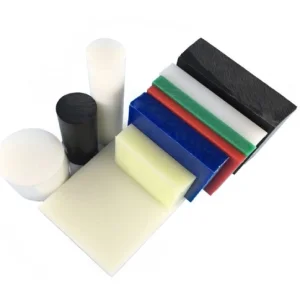
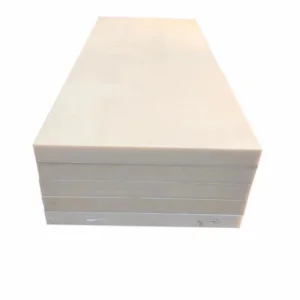
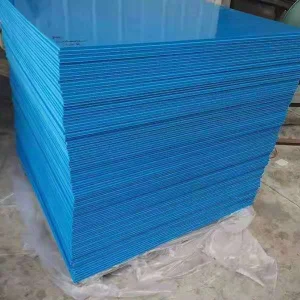
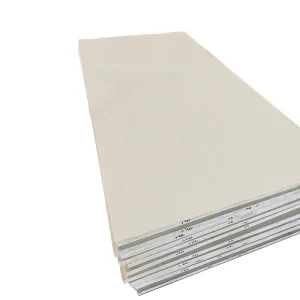
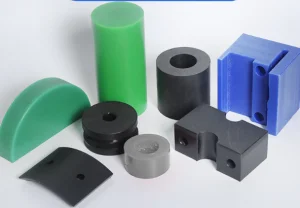
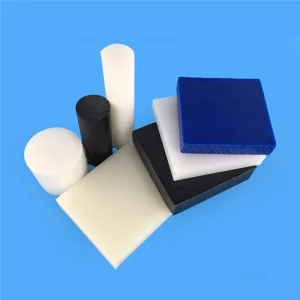
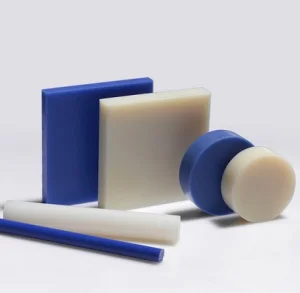
Direct from our precision manufacturing facility: heavy-duty PA6, polyamide, cast sheets, engineered rods, and precision blanks manufactured for high-stress kinematic cog assemblies.
The Global Paradigm Shift: Elastomeric Cogs vs. Traditional Metallurgy
Analyzing global supply chain trends, acoustic regulation compliance, and the tribological transition from legacy bronze-steel geartrains to advanced elastomeric and engineering polymer tooth configurations.
Kinematic Shock Absorption & Torsional Damping
Unlike rigid cast iron or stainless steel geartrains that transmit 100% of cyclic shock loads directly to drive shafts and bearings, OEM rubber cogs and composite polymer gears exhibit calculated viscoelasticity. The dynamic hysteresis of specialized HNBR, EPDM, and cast polyamide compounds absorbs transient peak torques, preventing catastrophic tooth shear and prolonging powertrain lifecycle by over 300% in heavy-vibration machinery.
Stringent Industrial Noise Regulations (OSHA / ISO 9612)
Global production environments are bound by strict occupational noise safety directives. Metal-on-metal meshing generates persistent high-frequency gear whine exceeding 85 dBA. Precision molded rubber cogs paired with cast nylon or POM idlers dampen resonance at the pitch circle, reliably dropping operating acoustic signatures down to 64–68 dBA without requiring costly acoustic enclosures.
Non-Lubricated & Cleanroom Contamination Control
Lubricant mist, oil bath churn, and grease splatters present acute contamination liabilities across pharmaceutical automation, semiconductor handling, and food manufacturing. Engineered elastomeric rubber cogs and solid self-lubricating polymer tooth configurations run completely dry. By eradicating external grease, facilities eliminate cleanroom particulate violations and prevent food recall risks under FDA Title 21 CFR.
Comprehensive Polymer & Elastomer Performance Matrix
Engineered for mission-critical mechanical transfer. Below is the comparative analysis developed by SHUNDA engineers comparing tensile modulus, hardness Shore scales, friction coefficients, and operational temperature envelopes.
| Polymer / Elastomer Substrate | Durometer / Hardness | Tensile Strength (MPa) | Coeff. of Friction (μ) | Continuous Temp Range (°C) | Primary Industrial Fit |
|---|---|---|---|---|---|
| Cast MC Nylon (PA6G) | Rockwell M85–M90 | 78–88 MPa | 0.20–0.25 (Dry) | -40°C to +110°C | Heavy Impact Cog Hubs & Sheaves |
| Polyoxymethylene (POM Acetal) | Rockwell M88 | 65–72 MPa | 0.25–0.32 | -50°C to +105°C | High-Precision Micro Cogs & Wet Systems |
| HNBR Elastomer (Fiber-Reinforced) | Shore 75A–90A | 22–28 MPa | 0.45–0.65 | -35°C to +150°C | High-Heat Automotive & Chemical Timing |
| Cast Polyurethane (CPU) | Shore 80A–98A | 35–52 MPa | 0.30–0.40 | -30°C to +85°C | High Abrasion Conveyor Drive Cogs |
| UHMWPE (Ultra-High Molecular) | Shore 65D | 20–35 MPa | 0.10–0.15 (Lowest) | -150°C to +80°C | Cryogenic, Corrosive & Chute Cogs |
| Virgin & Filled PTFE | Shore 55–60D | 18–30 MPa | 0.04–0.10 | -200°C to +260°C | Aggressive Acid/Alkali Metering Wheels |
Tooth Root Stress & Involute Tooth Geometry
Rubber cogs require specialized profile engineering compared to standard involute steel gearing. Under dynamic load, elastomeric teeth bend slightly along the pressure line. SHUNDA applies high-radius root filleting, parabolic tooth profiles (HTD / STD geometry), and internal chord fabric layers that distribute shear forces evenly across the cog carcass, totally eliminating premature root fracturing under shock start-stop cycles.
Thermal Dissipation & Hysteresis Management
Because elastomers possess lower thermal conductivity than steel, high-speed rotational cycles can cause internal heat accumulation through continuous mechanical hysteresis. By incorporating specialized compounding agents—such as thermal graphite micro-fillers and thermally conductive carbon black—our OEM cogs vent caloric buildup rapidly, maintaining structural integrity up to continuous operational thresholds of +140°C.
Total Lifecycle Cost (TCO) Optimization
While the upfront acquisition cost of custom-molded elastomeric cogs and precision machined polyamide mating wheels is comparable to stamped metal gears, the long-term operational savings are significant. Lubrication elimination, zero-wear on metallic drive shafts, reduced motor power draw due to 70% weight reduction, and extended mean time between failures (MTBF) drop total cost of ownership by up to 45% over a 5-year production horizon.
Mission-Critical Global Applications & Case Studies
From high-speed European e-commerce distribution centers to demanding mining extraction infrastructure across South America and Australasia, our custom-engineered cog wheels and machined polymer solutions deliver uncompromised precision.
Automated Intralogistics & Parcel Sorter Hubs
High-speed parcel distribution networks operate 24/7 with zero tolerance for track downtime. Heavy metallic sprockets create catastrophic link-wear on drive belts. Our polyurethane and vulcanized rubber drive cogs mesh silently with modular plastic belts, accelerating linear sortation speeds up to 3.5 m/s while eliminating metal dusting and belt snagging.
Food & Beverage Bottling Line Synchronization
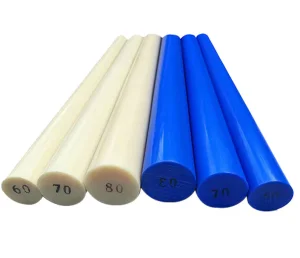
Direct washdowns using chlorinated solvents and pressurized caustic soda destroy carbon steel timing cogs. SHUNDA manufactures customized food-grade blue MC nylon cogs and FDA-compliant silicone/EPDM rubber profile teeth that resist aggressive chemical CIP (clean-in-place) washdown cycles without swelling, cracking, or leaching toxic compounds.
Heavy Construction & Deep Piling Impact Cushions
Hydraulic piling hammers strike with thousands of kilo-joules of kinetic energy per stroke. SHUNDA’s high-impact cast nylon cushions and tough elastomeric cog rings absorb catastrophic axial bounce shock, shielding pile heads and heavy machinery rams from catastrophic stress fractures during deep subsea and foundation drilling.
Agricultural Harvesting & Wet Mud Processing
Combines, sugar cane extractors, and potato harvesters operate in continuous mud, sand slurry, and fibrous debris. Fine grit acts as grinding paste that strips metal gears in weeks. Our elastomeric rubber cogs deflect abrasive particles away from the contact root, retaining true tooth profile morphology throughout demanding seasonal harvests.
Chemical Agitation & Corrosive Plating Baths
Electroplating lines and chemical reactors release corrosive acidic and basic fumes. Traditional steel gears seize from rapid oxidation within months. By pairing our CNC turned polypropylene (PP) or PTFE sprockets with EPDM drive cogs, chemical facilities gain 100% rust-proof, continuous power transmission under pH extremes ranging from 1 to 14.
End-to-End Export Compliance & Precision Metrology
Sourcing from our factory in Hebei Province provides overseas procurement directors with audited metallurgical security, full traceability back to virgin polymer masterbatches, and seamless international regulatory adherence.
ISO 9001:2015 & CMM Coordinate Verification
Every custom machined cog, gear blank, and molded timing tooth undergoes multi-axis coordinate measuring machine (CMM) metrology. We verify pitch diameter runout, circular pitch deviation, tooth thickness, and backlash tolerance down to micron accuracy against your STEP, DWG, or PDF design files prior to export palletizing.
RoHS 3, REACH 235 & FDA Certification
We mandate that 100% of resin feeds, plasticizers, and vulcanization accelerators meet European Union RoHS 2011/65/EU and REACH SVHC regulations. For sanitary sectors, our ultra-pure POM, UHMWPE, and silicone rubber compounds hold documented FDA 21 CFR 177 compliance certificates for direct food contact.
Climate-Controlled Vacuum Export Packing
Polyamides (PA6, PA66) are naturally hygroscopic, absorbing atmospheric moisture which can subtly alter tooth pitch dimensions during trans-oceanic shipping. SHUNDA applies moisture-barrier aluminum foil vacuum seal packaging, high-strength desiccants, and reinforced fumigated timber crates ensuring your stock arrives factory-dry.
2025–2035 Power Transmission Technology Roadmap
Examining the engineering breakthroughs transforming polymer and elastomeric drive technology over the next decade: AI-driven FEA modeling, self-healing polymers, and nano-reinforced tooth matrices.
Nano-Carbon Doping (2025–2027)
Integrating multi-walled carbon nanotubes (MWCNTs) and graphene nanoplatelets into HNBR and cast nylon matrices to elevate thermal conductivity by 250% and double shear strength under micro-tooth shock loads.
AI-Assisted Pitch Optimization (2028–2030)
Deploying machine-learning finite element analysis (FEA) to generate variable tooth pitch geometries that actively cancel vibrational harmonics, resulting in near-silent running across broad RPM spectrums.
Bio-Based Polyols & Elastomers (2031–2033)
Migrating virgin resin streams toward bio-based polyamides derived from castor beans and renewable elastomer lattices, targeting complete cradle-to-gate carbon neutrality without sacrificing mechanical durometer.
Smart Sensorized Cogs (2034–2035)
Embedding passive micro-RFID and piezo-resistive thread fibers directly into the cog root during casting, enabling real-time telemetry of internal tooth strain, temperature, and wear life directly to factory ERPs.
Precision Finished Components, Profiles & Machined Stocks
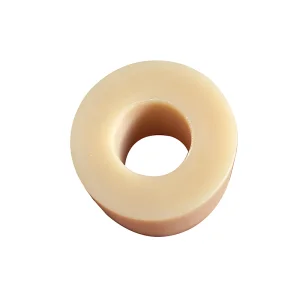
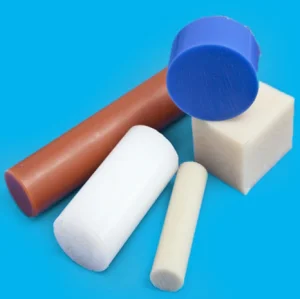
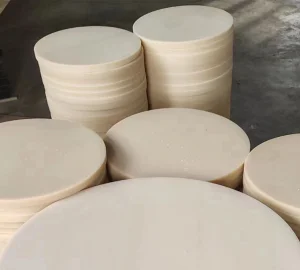
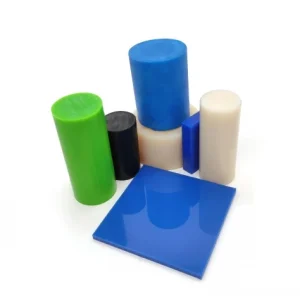
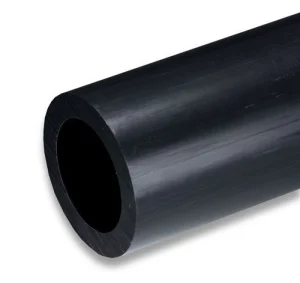
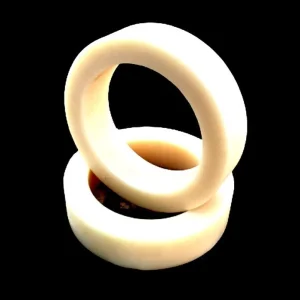
Explore custom precision-turned cast tubes, high-toughness nylon bars, acetal POM extrusions, and heavy impact cushions manufactured to stringent industrial specifications.
Frequently Asked Questions by Industrial Procurement Teams
In-depth technical answers addressing tooth deflection, continuous operating load thresholds, chemical exposure limits, and OEM tooling turnaround times.
How do OEM rubber cogs accommodate continuous dynamic tooth deflection under high torque?
Unlike steel gears which rely on infinite stiffness assumptions, elastomeric rubber cogs undergo calculated elastic deformation at the tooth contact zone. When torque is transferred, the driving face compresses while the tooth root absorbs shear stress. To prevent tooth hop or synchronization error, our engineers calculate the Pitch Circle Dynamic Deflection (PCDD) coefficient.
We tailor the Shore hardness (typically 80A to 95A for power cogs) and reinforce the core carcass with high-modulus polyester or aramid cords. This limits longitudinal pitch expansion to less than 0.15% across peak acceleration cycles while allowing the elastomer surface to absorb shock loads that would otherwise fracture brittle sintered metal gears.
When should our engineering team select Cast MC Nylon (PA6G) versus Acetal (POM) for mating drive wheels?
The decision hinges strictly on mechanical impact resistance versus dimensional stability in humid or wet operational settings:
Cast MC Nylon (PA6G): Superior choice for heavy impact loading, high cyclic shock, large diameters (>100 mm), and abrasive environments. Nylon's amorphous molecular matrix gives it exceptional toughness and wear life. However, it exhibits 1.5% to 3.0% equilibrium moisture absorption, requiring looser dimensional backlash tolerances in wet applications.
Acetal / Polyoxymethylene (POM): Ideal for high-precision, sub-millimeter pitch gear teeth, submerged water pump cogs, and continuous humidity. POM has near-zero moisture absorption (<0.2%), superior mechanical memory, and a lower coefficient of static friction against rubber cogs, maintaining tight AGMA 8-10 backlash tolerances under variable environmental humidity.
Can SHUNDA manufacture custom rubber and polymer cogs directly from customer 2D/3D CAD drawings?
Yes. We operate complete in-house multi-axis CNC turning and milling centers alongside custom compression molding lines. Overseas clients routinely provide native 3D formats (.STEP, .IGES, .X_T) and 2D engineering drawings (.DWG, .DXF, .PDF with geometric dimensioning and tolerancing).
Our engineering review evaluates root fillets, keyway stress concentrations, and thermal expansion offsets before initiating machining. We can machine complete drive cogs from monolithic billets of cast PA6, POM, or UHMWPE, or mold vulcanized rubber teeth around custom stainless steel or brass splined hubs.
What chemical compounds and oils degrade rubber cogs, and which elastomer blends prevent degradation?
Standard natural rubber (NR) and basic neoprene (CR) soften and swell rapidly when exposed to petroleum-based motor oils, synthetic esters, and aromatic fuels. In contrast:
Hydrogenated Nitrile (HNBR): Engineered specifically for motor timing and industrial gearboxes saturated with aggressive motor oil, zinc-dialkyldithiophosphate (ZDDP) additives, and hot transmission fluids up to +150°C.
EPDM Elastomers: Superior resistance to polar fluids, water-glycol hydraulic mixtures, phosphate esters, and CIP chemical washdowns (acids/alkalis), though incompatible with mineral oils.
Fluorocarbon Rubber (FKM / Viton): Deployed for extreme chemical exposure where universal fuel, acid, and solvent resistance is demanded alongside operating temperatures up to +200°C.
What is the standard production and shipping lead time for customized export batches?
For standard semi-finished bars, rods, and sheets held in warehouse inventory, packing and dispatch occur within 48 to 72 hours. For custom CNC machined prototype batches (1 to 50 pieces), rapid tooling and milling require typically 7 to 10 business days.
Series OEM production runs (1,000+ units requiring custom vulcanization molds or custom casting) typically require 20 to 25 calendar days for tooling fabrication, first-article inspection (FAI) approval, and complete batch quality verification. We support ocean FCL/LCL, air express (DHL/FedEx/UPS), and multimodal rail freight to European and global destinations directly from our factory in Hebei.
How does SHUNDA verify pitch circle concentricity and tooth thickness across large production volumes?
Quality governance follows a strict ISO 9001:2015 protocol utilizing calibrated metrological instrumentation. Pitch diameter runout and tooth-to-tooth spacing are verified using automated optical comparators and high-precision CNC Coordinate Measuring Machines (CMM) calibrated to ±0.001 mm.
Tooth profile compliance is measured across span micrometers and master gear roll testing stations to determine total composite error (TCE) and tooth-to-tooth composite error (TTE). Statistical Process Control (SPC) charting ensures Cp and Cpk values exceed 1.33 across series production batches.