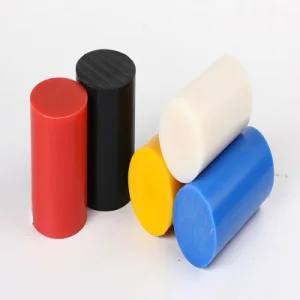
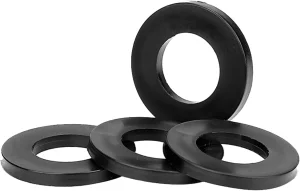
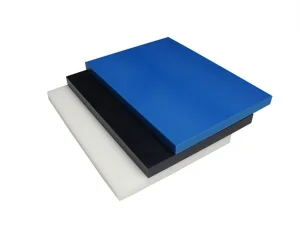
Factory Direct Precision Engineering Plastics & Bushings
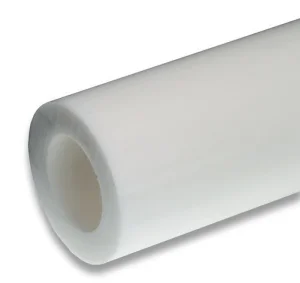
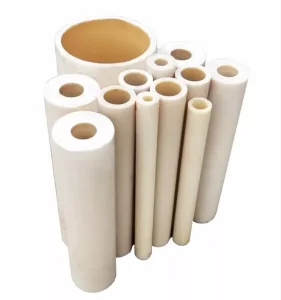
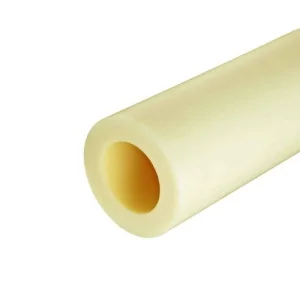
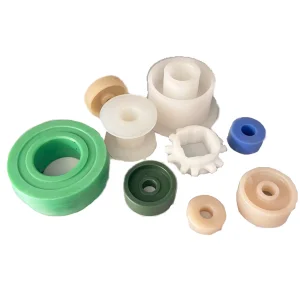
Explore our certified baseline engineering stock: extruded acetal hollow bars, polyamide semi-finished tubes, heavy-duty pile driving rings, and custom CNC milled wear components.

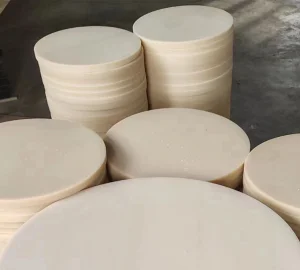
Global Commercial & Industrial Landscape of POM Hollow Tubing
Evaluating macro supply chain transformations, polymer crystallinity behaviors, and the rapid shift from subtractive solid rod boring to net-shape extruded POM hollow geometries.
Net-Shape Material Economics
Machining hollow cylindrical sleeves, fluid manifolds, and guide rollers directly from solid POM round rod wastes up to 62% of raw material as turning swarf. Our extruded OEM POM tubes eliminate the center-drilling phase, reducing cycle times by 45% and slashing scrap-handling logistics for Tier-1 sub-contractors.
Copolymer vs. Homopolymer Integrity
While homopolymer POM (Delrin) delivers elevated tensile strength, it suffers from pronounced center-line centerline porosity. Our OEM extrusion lines employ high molecular weight POM-C (Polyoxymethylene Copolymer), ensuring chemical resistance against pH 4–14 media, resistance to thermal degradation, and zero internal voiding.
Global Export Supply Chain Agility
Supply chain security requires redundant extrusion tooling and verified raw resins. As direct manufacturers based in China, we balance virgin resin partnerships (Celanese, DuPont, Polyplastics) with high-volume automated vacuum calibrations, allowing European, NA, and ASEAN buyers to bypass middlemen and compress delivery windows.
Engineering Whitepaper Insight: Center-Line Microporosity Mitigation in Heavy-Wall Hollow Profiles
In standard semi-finished manufacturing, producing heavy-wall polyoxymethylene tubing presents formidable thermodynamic challenges. POM possesses a sharp crystalline melting transition (approx. 165°C–178°C) coupled with high volumetric shrinkage (up to 14% during phase solidification). When cooling uncalibrated thick walls, the outer perimeter solidifies first, generating intense tensile pulling forces toward the core. Without advanced internal cooling mandrels and micro-metered vacuum sizing, internal vacuum voids, microporosity, and locked-in hoop stresses inevitably develop.
Our OEM factory deploys triple-stage differential vacuum calibration baths combined with heated internal sizing pins. By maintaining a uniform radial heat-extraction gradient throughout the profile circumference, polymer lamellae organize into dense, spherulitic crystal morphologies devoid of micropores. This ensures that precision boring, reaming, or thread-cutting operations on the inner diameter (ID) never breach hidden cavity voids, preserving 100% pneumatic and hydraulic hermetic sealing integrity.
Material Engineering Trends & Polymer Benchmark Matrix
Analyzing modern additive compounding, self-lubrication synergies, and comparative tribological data across premier engineering thermoplastics.
Tribological PTFE Blends
Compounding POM copolymer resin with 10%–20% micronized PTFE fibrils lowers dynamic coefficient of friction to 0.11, eliminating stick-slip chatter in dry-running robotic arm sleeves.
Food & Pharma Contact
Formulations complying with FDA 21 CFR § 177.2470 and EU 10/2011 enable hygienic deployment inside dairy homogenizers, beverage filler carousel tubes, and surgical actuators.
Static Dissipative (ESD)
Carbon-nanotube modified POM tubes achieve surface resistivities of 10^6 to 10^9 Ω/sq, mitigating explosive hazard potentials in volatile solvent and semiconductor handling lines.
Bio-Based Polyoxymethylene
Pioneering the green transition, ISCC PLUS mass-balanced POM tubes derived from bio-methanol drastically reduce corporate scope-3 carbon footprints without altering mechanical specs.
| Material Designation | Tensile Modulus (MPa) | Water Absorption (24h Sat. %) | Dyn. Friction Coeff. (μ Dry) | Continuous Temp. Limit | Dimensional Stability Grade |
|---|---|---|---|---|---|
| POM-C Extruded Tube (Shunda OEM) | 2,850 – 3,100 | 0.20% | 0.22 – 0.28 | -40°C to +105°C | Exceptional (Class A) |
| Polyamide 6 (PA6 Extruded) | 2,900 – 3,200 | 2.80% – 8.50% | 0.35 – 0.42 | -40°C to +90°C | Fair (Hygroscopic Shift) |
| MC Cast Nylon 6 (Polyamide) | 3,200 – 3,500 | 2.10% – 6.50% | 0.30 – 0.38 | -40°C to +105°C | Moderate (Swelling prone) |
| UHMWPE (PE-1000 Ultra High) | 700 – 850 | < 0.01% | 0.12 – 0.18 | -150°C to +80°C | Poor (Thermal Creep) |
| Bronze Bushing Alloy (SAE 660) | 100,000+ | 0.00% | 0.35 (Unlubricated) | Up to 230°C | High (Heavy weight) |
Application Scenarios: Where POM Hollow Profiles Excel
From deep-subsea fluid actuators to high-speed conveyor distribution hubs, witness why premier engineering teams specify our custom-extruded POM profiles.
Automotive Fuel Delivery & E-Mobility
POM exhibits total immunity to oxygenated fuels, ethanol blends, and synthetic lubricants. Extruded POM tubing functions as high-tolerance sender units, fuel module return housings, and lightweight thermal management valve sleeves within EV battery pack cooling manifolds.
High-Speed Conveyor & Material Handling
Replacing steel gravity rollers with thin-wall POM tubing reduces rotational inertia by 70%, allowing zero-pressure accumulation conveyors to accelerate faster while cutting motor drive power consumption. Natural damping drastically diminishes conveyor acoustic noise (dBA).
Fluid Valves, Pumps & Sanitary Flowmeters
Unlike cast nylon which swells under moisture absorption and seizes precision clearance impellers, POM tube retains microscopic dimensional boundaries (water absorption < 0.2%). It forms rotary metering valves, water filtration housings, and disinfectant dispensing pistons.
Medical Device Housings & Surgical Guides
Meeting USP Class VI biocompatibility criteria, medical-grade extruded POM tubes endure autoclave cycles, gamma radiation sterilization, and aggressive enzymatic cleaners. Commonly converted into trocar sleeves, endoscopic guide tubes, and surgical instrument handles.
Industrial Automation & Robotic Bushings
In cleanroom pick-and-place systems where oil lubricant mist is strictly prohibited, self-lubricating POM hollow sleeves run against hardened ground steel shafts for millions of linear cycles with zero grease lubrication, eliminating cross-contamination risks.
Agriculture & Chemical Spray Nozzles
Farm machinery boom sprayers face aggressive organophosphate fertilizers and abrasive particulate slurries. Swapping brass tube assemblies for POM-C hollow components guarantees zero chemical pitting corrosion, extended service life, and 60% mass savings.
Factory Technical Roadmap & Advanced Extrusion Capabilities
Investing in computerized ultrasonic wall-thickness monitoring, clean air annealing ovens, and closed-loop robotic secondary machining.
Nano-Composite Reinforcement
Integrating surface-functionalized ceramic micro-spheres and graphene nanoplatelets to elevate heat deflection temperatures (HDT) past 135°C while retaining POM's iconic low-friction surface lubricity.
In-Line Ultrasonic Sizing
Equipping continuous extrusion lines with 4-axis rotating ultrasonic transducers. Real-time feedback automatically fine-tunes puller caterpillar speeds and melt pressure, eliminating wall-thickness runout.
Cryogenic & Nitrogen Annealing
Multi-stage computer-controlled convection ovens subject extruded hollow tubes to a 36-hour slow-ramp annealing protocol in inert nitrogen, dissolving internal shear stresses before CNC machining.
Lights-Out CNC Cellular Cells
Automated gantry-fed 5-axis lathe centers execute simultaneous internal boring, external thread-whirling, and cross-hole milling, delivering customer-ready sub-assemblies directly to international ports.
Total Cost of Ownership (TCO): POM Tube vs. Metal & Bronze
Why procurement directors are replacing stainless steel, brass, and bronze bushings with precision extruded polyacetal tubes.
Zero Lubrication Maintenance
Bronze bushings require continual greasing schedules, grease gun labor, and environmental cleanups. POM tube bushings possess built-in hydrodynamic boundary lubrication, eliminating maintenance costs over a 10-year machine operational window.
7x Weight Reduction Advantage
With a specific gravity of 1.41 g/cm³ versus 8.8 g/cm³ for bronze and 7.9 g/cm³ for 316 stainless steel, switching to POM hollow stock cuts air and ocean freight shipping fees by over 80% while easing manual assembly worker fatigue.
Cavitation & Galvanic Immunity
Dissimilar metals immersed in electrolyte fluid trigger aggressive galvanic corrosion that seizes shafts. POM is a dielectric insulator with dielectric strength > 20 kV/mm, completely immune to electrochemical cell oxidation and stray voltage decay.
Frequently Asked Questions: OEM POM Tube Procurement
Direct engineering answers addressing machining allowances, chemical resistance ratings, UV exposure limits, and export documentation.
What is the standard machining allowance on extruded POM tubes?
Extruded POM hollow bars are supplied with positive outside diameter (OD) and negative inside diameter (ID) tolerances (typically +0.4 mm to +2.0 mm on OD and -0.4 mm to -2.0 mm on ID depending on wall thickness). This guarantees that the tube easily cleans up to nominal finished dimensions during high-speed CNC turning and precision boring operations.
How does POM tube compare to PA6 (Nylon) tube in wet environments?
While PA6 nylon exhibits higher raw impact resistance when conditioned, its high water absorption rate (up to 8.5% at saturation) causes substantial swelling and loss of tensile modulus. POM absorbs a negligible 0.20% water over 24 hours, ensuring that close-tolerance bearing fits, gear backlash, and press-fit sleeves maintain strict dimensional stability regardless of humidity or submerged operation.
Can OEM POM tubes be used outdoors under direct sunlight?
Standard natural white POM is prone to photo-oxidation degradation when subjected to prolonged ultraviolet (UV) radiation, leading to chalking and surface micro-cracking. For outdoor agricultural, marine, or solar tracker applications, our factory supplies UV-stabilized Black POM tubes compounded with fine-particle carbon black additives, effectively absorbing UV radiation and extending lifespan up to 10+ years outdoors.
What cutting parameters and tooling should be used for machining POM tubes?
We recommend razor-sharp tungsten carbide or polycrystalline diamond (PCD) tools with polished top rakes to reduce frictional heating. Maintain high cutting speeds (250–450 m/min) combined with moderate feed rates (0.15–0.35 mm/rev). Always use air-blast cooling or soluble oil coolant to prevent local surface melting and eliminate chips promptly to avoid re-cutting swarf.
What export packaging standards are implemented for international container shipments?
All POM tube bundles are individually sleeved in protective polyethylene film to prevent surface scuffing, banded with non-metallic strapping, and boxed in ISPM-15 fumigated solid plywood crates or moisture-barrier heavy-duty honeycomb cartons. Pallets are balance-loaded to prevent warping during transoceanic cargo transits.
Complementary Engineering Stock & Semi-Finished Portfolio
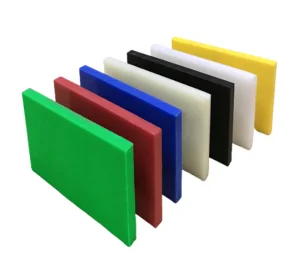
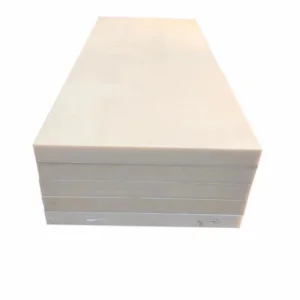
Complete your procurement package: custom cast polyamide plates, specialized POM tubes, impact piling cushions, and multi-polymer custom machined shapes.