
Industrial Polymer Plate & Rod Selection
Premium OEM-grade semi-finished engineering polymers tailored for heavy-wear, high-moisture, and chemical-intensive industrial systems.
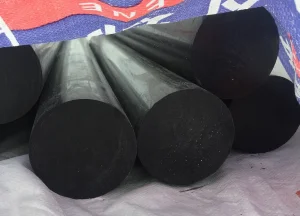
Cheap China Engineering Plastic Polyamide PA6 PA66 Nylon PP UHMWPE PTFE HDPE ABS Plastic Sheet Rod And Bar Customized Color With Size Suppliers, Exporters
Explore Product Specifications
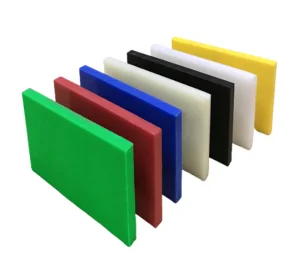
Discount Engineering Plastic Polyamide PA6 PA66 Nylon PP UHMWPE PTFE HDPE ABS Plastic Sheet Rod And Bar Customized Color With Size Companies, Product
Explore Product Specifications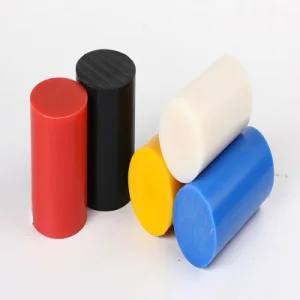
Discount MC Nylon Bar Manufacturers, Suppliers
Explore Product Specifications
Buy PP Rod ,ABS Rod,Nylon Rod Bar, PTFE Rod,Plastic Rod, All Kinds Of Plastic Products Factories, Exporter
Explore Product Specifications
China Cast Nylon Rod Manufacturers, Products
Explore Product Specifications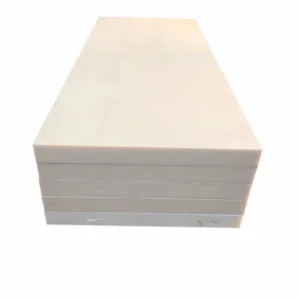
Buy Factory Free sample HDPE Sheet Panel Board Plate Manufacturer High Density Polyethylene Plastic Sheet Factory, Exporters
Explore Product Specifications
Buy MC Nylon Sheet Supplier, Company
Explore Product Specifications20+
Years Manufacturing Experience
19+
Dedicated Production Lines
±0.02mm
Precision CNC Machining Tolerance
<12h
Engineering Response Velocity
OEM Plate Factory Authority: Upstream Integration & Raw Material Control
As a Tier-1 OEM Plate Factory and global exporter based in Xinhe County, Hebei, SHUNDA provides a specialized bridge between high-throughput chemical polymerization and precision component fabrication. Unlike domestic distributors or secondary machining workshops, our end-to-end operational matrix begins at virgin resin compounding. Controlling the molecular crystallization process of Polyamide (PA6, PA66), Cast Monomer (MC) Nylon, Polyoxymethylene (POM-C/Acetal), Ultra-High Molecular Weight Polyethylene (UHMWPE), and Polypropylene (PP) ensures that every plate leaving our facilities meets strict stress-relief criteria.
Internal stress accumulation during rapid cooling is the primary cause of warping, distortion, and micro-cracking when machining thick-gauge plastic sheets. SHUNDA implements advanced horizontal and vertical annealing ovens running programmed isothermal cycles extending up to 72 hours for high-thickness plates (up to 200mm). This continuous thermal management preserves dimensional integrity through aggressive 5-axis CNC high-speed milling, turning, and broaching.
Cost-to-Performance Dominance
Direct supply channel integrations with leading Sinopec, Sabic, and Ensinger resin plants afford volume scale economies, mitigating price volatility across global commodity chains.
Aggregated Cycle Efficiency
With massive stock holding in semi-finished bars, thick plates, and custom casting molds, standard sizes export in under 7 business days, supporting Agile Just-In-Time replenishment.
Full-Spectrum CNC Machining
Integrated manufacturing floor equipped with large-bed CNC gantry routers, wire-cutting units, and automatic lathes directly transforms stock plates into assembly-ready components.
Global Enterprise Procurement: Localized Support & Compliance Assurance
Addressing the critical risk vectors of overseas engineering buyers through rigorous material certifications and logistical traceability.
International OEMs and Tier-1 automotive, mining, and aerospace subcontractors demand absolute transparency across raw material purity and traceability. Sourcing from SHUNDA mitigates systemic trade friction through a dedicated international documentation unit providing complete batch compliance records.
RoHS & REACH Directives
All polymer plates are systematically certified free of hazardous chemicals, heavy metals, halogenated flame retardants, and SVHCs, ensuring frictionless EU market distribution.
FDA Food-Grade Certification
Our virgin Polyoxymethylene (POM-C), Ultra-High Molecular Weight Polyethylene (UHMWPE), and Polypropylene (PP) lines comply with FDA 21 CFR 177 standards for food processing.
Comprehensive Mill Test Certificates
Every dispatch container is paired with batch-specific MTC reports detailing tensile yield strength, Izod notched impact, heat distortion temperature (HDT), and density.
| Polymer Category | Tensile Strength (MPa) | Thermal Limit (°C Cont.) | Dielectric Strength (kV/mm) | Key Compliance Thresholds |
|---|---|---|---|---|
| MC Cast Nylon (PA6G) | 80 - 95 | -40 to +110 | 20 - 25 | ISO 527, UL94-HB, REACH Compliant |
| POM-C (Acetal Copolymer) | 65 - 72 | -50 to +105 | 35 - 40 | FDA 21 CFR 177.2470, RoHS 3 Directives |
| UHMWPE (100% Virgin) | 25 - 40 | -150 to +80 | 45 - 50 | FDA Approved, USDA Sanitary Standard |
| High-Density PE (HDPE 300) | 22 - 32 | -50 to +80 | 40 - 45 | ASTM D4976, Direct Water Contact Safe |
| ABS (Rigid Sheet Plate) | 40 - 50 | -20 to +75 | 25 - 30 | UL94 V-0 Options, Non-Conductive Stable |
Localized Application Matrices & Engineering Megatrends
Analyzing structural polymer evolution across automated logistics, offshore infrastructure, clean transportation, and semiconductor processing.
Intralogistics & Material Handling
Automated parcel sorting and container loading systems rely heavily on custom-milled UHMWPE wear plates, PA6 sprockets, and low-friction POM belt guides to cut kinetic friction, slash drive power consumption, and eradicate acoustic vibration.
Heavy Construction & Pile Driving
Our heavy-gauge MC Nylon impact cushions and crane outrigger pads handle massive shock profiles during high-tonnage pile-driving operations, safeguarding hydraulic hammering assemblies without shattering or catastrophic yield failure.
Clean Energy & EV Battery Production
Engineered polypropylene (PP) and polyacetal (POM) vacuum plate tooling provide electrical insulation and acidic electrolyte resistance during lithium-ion pouch cell stacking, electrolyte injection, and battery module framing.
Industry Megatrends: The Shift from Bronze and Steel to Self-Lubricated Composites
Across Europe, North America, and Southeast Asia, heavy machinery builders are actively accelerating the transition from traditional phosphor bronze, brass, and cast iron wearing plates toward self-lubricating oil-filled and MoS2-doped MC Nylon plates. Polymer plates deliver up to an 85% reduction in deadweight, radically diminishing inertial power requirements on cranes, port loading booms, and offshore dredging rigs.
Concurrently, dry-running non-galling properties allow industrial operations to run in environmentally sensitive waterways and dust-prone open-pit aggregate mines without consuming grease lubricants. SHUNDA actively shapes this transition by investing in custom cross-linked polymers and nano-clay enhanced PA6 composites that expand load limits under zero-maintenance mandates.
Comprehensive Engineering Semis & Specialized Profiles
High-durability polymeric plates, tubes, wear cushions, and customized billets built for immediate CNC precision machining.
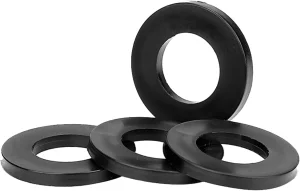
Discount Impact Blue White Black Color Nylon Ring Cushion Use For Impact Hammer For Piling Machine Suppliers, Exporters
Explore Product Specifications
Wholesale Ordinary Discount China Pure Nylon Rod for Sale High-Quality Nylon Rods for Industrial Applications Factories, Products
Explore Product Specifications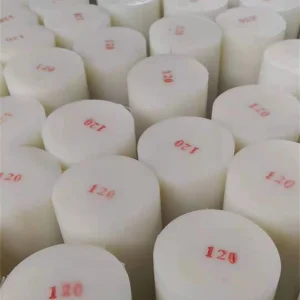
Discount ODM OEM Engineering Plastic Cast PA6 Polyamide Nylon Oil Filled Nylon Rod Glass Filled Nylon Rod Plastic Tube Rod And Bar Customized Color With Size Manufacturers, Company
Explore Product Specifications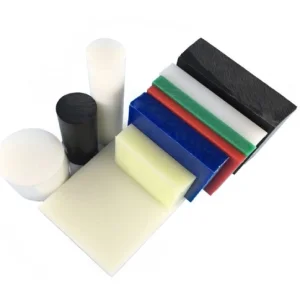
High-Quality Engineering Plastic Polyamide PA66 Nylon PP UHMWPE PTFE HDPE ABS Plastic Sheet Rod And Bar Customized Color With Size Manufacturers, Suppliers
Explore Product Specifications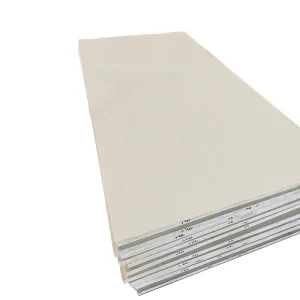
China China Engineering Plastic Casting Polyamide Nylon ABS PTFE HDPE UHMWPE Plastic Sheet Tube Rod And bar Customized Color With Size Suppliers, Companies
Explore Product Specifications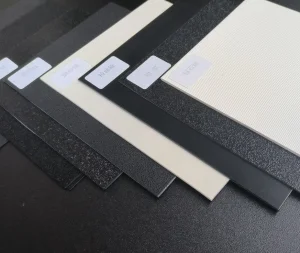
OEM China Engineering Plastic OEM Smooth Texture ABS Plastic Sheet Factory Customized Color With Size For Refrigerator Door Exporter, Products
Explore Product Specifications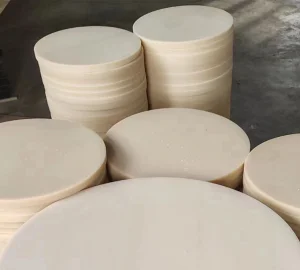
Discount Impact Cushion Use For Impact Hammer For Piling Machine Suppliers, Exporters
Explore Product Specifications
Cheap China Engineering Plastic polyamide PA6 PA66 Nylon PP UHMWPE PTFE HDPE ABS plastic Sheet Companies, Products
Explore Product SpecificationsEngineering & Procurement FAQ: Whitepaper Technical Digest
Detailed technical intelligence addressing polymer stability, thermal stress relief, tooling tolerances, and global shipping logistics.
How does SHUNDA ensure large-format MC Nylon plates do not warp after machining?
Warpage in Polyamide plates stems from internal residual cooling stress. Our facility implements an automated post-casting thermal annealing protocol inside inert, oil-jacketed or air-circulating ovens. Plates are maintained at uniform secondary transition temperatures (approx. 140°C - 160°C) followed by controlled slow cooling. This process equalizes molecular chain density, ensuring flat plates during deep slotting, routing, and surfacing.
When should an engineer specify Polyoxymethylene (POM) over Cast Nylon (PA6G)?
POM (Polyacetal) exhibits superior hydrophobic performance with water absorption rates of just 0.2% compared to standard PA6 (which absorbs up to 6-8% under saturation). For high-precision parts operating in humid, submerged, or fluid-handling settings—such as pump impellers, metering gears, and valve seats—POM-C offers vastly superior dimensional stability. Cast Nylon remains preferred for higher mechanical impact loads and severe mechanical abrasion.
Can you provide custom color-matched plates without altering mechanical properties?
Yes. Utilizing carrier masterbatches engineered specifically for each polymer family, we produce custom RAL/Pantone colors—including safety blue, emerald green, high-visibility yellow, and matte black—without degrading molecular chain molecular weight or reducing tensile strength. Special formulations, including UV-stabilized and carbon-conductive variants, are also available.
What are the standard export packaging standards for overseas sea and air freight?
To eliminate surface abrasions, bowing, and moisture exposure during transit, all plates are interleaved with anti-scratch PE film or kraft paper, banded with tensioned PET straps, and enclosed in heat-treated fumigated solid-wood crates compliant with ISPM 15 standards. Corner corner-boards and desiccant packs are standard across all full container (FCL) and consolidated (LCL) shipments.