
High-Performance Semi-Finished Polymer Tubing & Components
Procure industrial-grade polyamide hollow bars, cast rods, and specialized vibration dampening structures precision-engineered for severe mechanical interfaces.
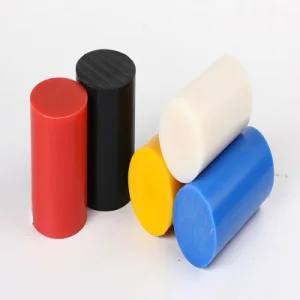
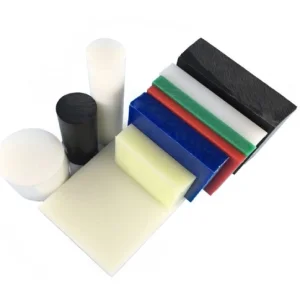
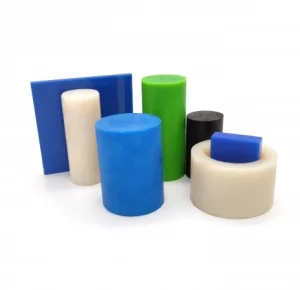
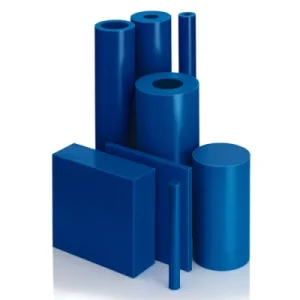
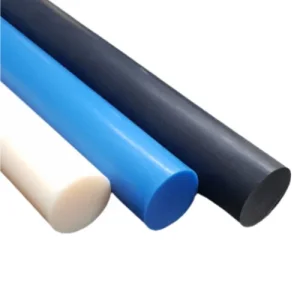
Structural Morphology: Cast PA6 (MC) vs. Extruded PA6 Pipe
Understanding the molecular-weight dynamics, crystalline structures, and operational boundaries between vertical monomer casting and continuous horizontal extrusion.
| Performance Characteristic | Cast Polyamide (MC PA6 Pipe) | Extruded Polyamide (PA6 Extrusion) | Testing Protocol (ASTM / ISO) |
|---|---|---|---|
| Crystallinity & Density | 45% – 50% (High Molecular Compactness) | 35% – 40% (Standard Semi-Crystalline) | ISO 1183 / ASTM D792 |
| Tensile Strength at Yield (23°C) | 85 – 92 MPa | 70 – 80 MPa | ISO 527 / ASTM D638 |
| Modulus of Elasticity in Tension | 3,400 – 3,600 MPa | 2,800 – 3,000 MPa | ISO 527 |
| Charpy Notched Impact Resistance | No break or > 4.0 kJ/m² | ~ 5.5 kJ/m² (Slightly Higher Ductility) | ISO 179 / 1eA |
| Heat Deflection Temp (HDT @ 1.8 MPa) | 105°C – 115°C | 65°C – 75°C | ISO 75 / ASTM D648 |
| Internal Stress State | Thermally Annealed (Near Zero Stress) | Moderate (Requires Stress-Relief Cycle) | Internal Optical Polarimetry |
Mission-Critical Operational Environments for PA6 Tubing
Eliminating premature component fatigue in extreme mechanical transmission, corrosive fluid handling, and high-impact structural assemblies.
Heavy Machinery & Rotary Bushings
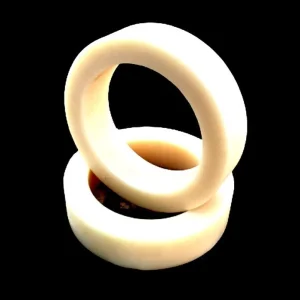
PA6 hollow bars replace traditional bronze sleeves in excavators and gantry cranes. The material offers dry-run capability, zero fretting corrosion, and low shaft-wear friction values.
Hydraulic Fluid & Fuel Conveyance
Extruded thin-wall PA6 line systems exhibit zero permeability to aromatic hydrocarbons, petroleum lubricants, and aliphatic solvents under sustained pressure pulsation cycles.
Pneumatic Automation & Robotics
Delivering high burst-pressure thresholds alongside high kink-recovery resilience. Widely deployed across robotic end-of-arm tooling and pneumatic valve manifold circuits.
Chinese Manufacturing Ecosystem & Supply Chain Resilience
Combining upstream caprolactam monomer localization with precision CNC machining integration to ensure cost predictability, swift lead times, and global shipping dependability.
Upstream Chemical Integration
Situated within the high-density chemical processing corridor of Hebei, direct pipeline raw polymer feeds shield procurement from worldwide supply bottlenecks and volatile feedstock pricing.
In-Line Annealing & Stress Relief
Advanced thermal conditioning cycles run up to 180°C in oxygen-free oil/air baths, eliminating internal core residual stress to guarantee structural dimensional stability during precision CNC turning.
Global Export Ready Logistics
Full conformance with maritime ISPM-15 fumigation standards, high-barrier moisture-proof vacuum packing, and localized customs clearance support for key North American and European trade routes.
High-Grade Precision Machining Stocks & Shapes
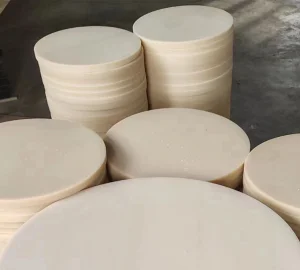
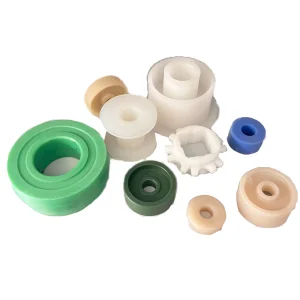
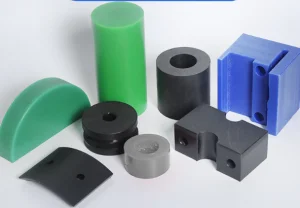
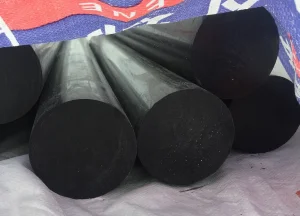
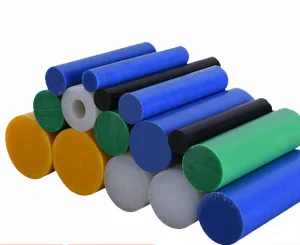
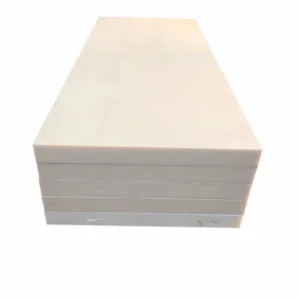
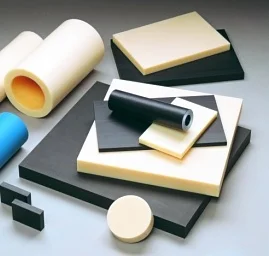
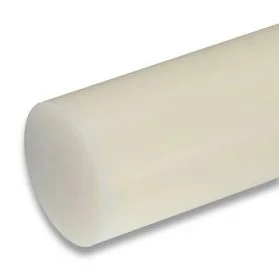
Comprehensive portfolio of customized engineering polymers, CNC converted wear pads, solid cylindrical billets, and specialized casting stocks.

Regulatory Integrity, Traceability & The Future of Polyamides
Proactive alignment with international environmental declarations, precision CNC tooling technologies, and advanced self-lubricating compound innovations.
REACH, RoHS & FDA Baseline
Our cast and extruded PA6 shapes maintain third-party SGS/TÜV batch certifications, assuring freedom from SVHCs, toxic halogen compounds, and heavy metal plasticizers.
Advanced Tribological Alloying
Researching and formulating solid lubricant additions (MoS₂, liquid oil suspensions, PTFE micropowders) directly into the caprolactam monomer melt to drop kinetic friction below 0.12.
Circular Bio-Polyamides Integration
Pioneering closed-loop post-industrial recycling processes, converting turning swarf back into purified chemical intermediates to support carbon-reduction mandates across overseas markets.
Frequently Answered Engineering Inquiries
Detailed technical intelligence to resolve procurement uncertainties regarding moisture absorption, machining tolerances, and chemical exposure limits.
How does atmospheric moisture absorption affect the dimensional tolerances of PA6 Pipe?
Polyamide 6 is inherently hygroscopic due to its polar amide groups, absorbing up to 2.5% - 3.0% moisture by weight under ambient conditions (50% RH) and up to 8.5% at total saturation. This results in volumetric growth of roughly 0.2% to 0.3% per 1% of absorbed water. For critical mechanical components operating in submerged or high-humidity environments, we recommend specifying POM (Polyoxymethylene) or applying pre-machining conditioning treatments, or adjusting the dimensional clearances during CNC turning.
What are the key cooling parameter considerations when machining custom parts from thick-walled PA6 hollow bars?
Because PA6 has lower thermal conductivity than structural metals, heat generated during high-speed cutting accumulates at the tool-workpiece interface, which can lead to thermal expansion, localized melting, or surface smearing. We advise utilizing sharp carbide or polycrystalline diamond (PCD) tooling with generous positive rake angles, high feed rates, and compressed air cooling or synthetic water-soluble flood coolants. Post-machining thermal stabilization is also available to relieve mechanical turning stresses.
Can OEM PA6 Pipe replace bronze or brass bushings in heavy industrial applications?
Yes. Cast PA6 (MC Nylon) provides 1/7th the weight of bronze, exhibits natural dry-running properties, cushions dynamic impact shock loads, and prevents abrasive scoring on mating steel shafts. In high-debris mining conveyors, agricultural equipment, and harbor cranes, switching to oil-filled or MoS₂-enhanced PA6 pipes often doubles service lifespan while eliminating regular grease lubrication schedules.
How does your factory ensure the absence of internal voids in heavy-wall cast nylon pipes?
We deploy vertical centrifugal casting rigs and vacuum-degassing injection molds during polymerization. Raw caprolactam monomer undergoes precise thermal monitoring as catalyst and activator solutions are added, ensuring uniform crystal growth from outer diameter inward. Every lot undergoes destructive density checking and non-destructive ultrasonic immersion testing to verify complete internal homogeneity before dispatch.