
Certified Engineering Stock & Semi-Finished Bars
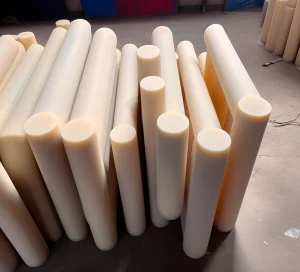
Direct factory supply of solid polyamide, polyoxymethylene, and polyolefin semi-finished profiles calibrated for precision Swiss-lathe turning and CNC milling centers.
Polymer Metallurgy: The Scientific Evolution of the PA6 Grey Bar
Why precision mechanical engineering teams are migrating away from bronze, steel, and standard natural polyamides to MoS2-modified, graphite-stabilized grey nylon solid rod stock.
Dry-Running Tribological Matrix
Unfilled natural polyamide suffers from high initial static friction and thermal accumulation under unlubricated sliding conditions. PA6 Grey Bar integrates finely dispersed Molybdenum Disulfide (MoS2) and micro-graphite particles directly into the polycaprolactam polymer backbone. This nucleating agent induces a hyper-crystalline molecular arrangement, yielding a friction coefficient as low as 0.18 without requiring external petroleum lubricants.
Dynamic PV Limit Superiority
The operational threshold of high-speed bushings and linear slide gibs is bounded by the PV limit (Pressure × Velocity). The structural incorporation of inorganic solid lubricants raises the compressive yield limit and substantially diminishes interfacial frictional heat buildup. Consequently, OEM PA6 Grey Bars sustain continuous operational PV values up to 45% higher than virgin PA66, preventing localized thermal galling and catastrophic plastic seizure.
Acoustic & Vibration Damping
In heavy mechanical transmissions, metallic-to-metallic tooth meshing generates severe harmonic resonance, metal fatigue, and audible decibel peaks. PA6 Grey components exhibit a mechanical damping loss factor (tan delta) orders of magnitude higher than carbon steel or bronze. It actively absorbs kinetic vibration, dampens rotational shock loading, and cushions fluctuating power transmission spikes in gear sets.
China Factory 4.0: Supply Chain Resilience & Molecular Density Control
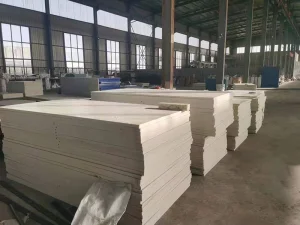
Inside SHUNDA's advanced polymerization and extrusion complex in Xinhe County, Hebei: Merging automated closed-loop production with rigorous stress-relieving annealing protocols.
Continuous Twin-Screw Co-Extrusion
Our facility utilizes high-torque, loss-in-weight gravimetrically dosed twin-screw extrusion systems. By tightly managing melt flow index (MFI), melt temperature zones within ±0.8°C, and vacuum degassing chambers, each PA6 grey bar achieves absolute core homogeneity, totally eliminating micro-voids, porosity, and gas occlusions that cause catastrophic failures during high-speed CNC turning.
Multi-Stage Thermal Annealing
Rapid cooling of extruded polymer stock traps massive internal shear stresses. SHUNDA executes a mandatory 48-hour thermal oil or convection soaking cycle at 160°C, followed by a computer-monitored gradual descent to ambient temperature. This process relieves 98.6% of internal residual stresses, guaranteeing that finished machined rings, bushings, and gears will not warp, ovalize, or crack under service.
Ultrasonic Inline Defect Scanning
Every batch of OEM PA6 grey round bars undergoes 100% inline non-destructive ultrasonic flaw detection. Ultrasonic pulse-echo testing validates structural integrity through large diameters from Ø20mm up to Ø500mm. Export containers departing Hebei are accompanied by full chemical composition dossiers, RoHS/REACH compliance files, and third-party dimensional certificates.
Physical, Mechanical & Thermal Properties: PA6 Grey Bar vs. Generic Polymers
Empirical data verified according to ISO and ASTM international testing standards under standardized conditions (23°C, 50% Relative Humidity).
| Physical / Mechanical Metric | Test Standard | OEM PA6 Grey Bar (MoS2 Filled) | Natural PA6 (Unfilled) | Acetal / POM Rod |
|---|---|---|---|---|
| Bulk Density (g/cm³) | ISO 1183 | 1.15 – 1.16 | 1.13 – 1.14 | 1.41 – 1.42 |
| Tensile Strength at Yield (MPa) | ISO 527 | 85 – 92 | 75 – 80 | 65 – 70 |
| Modulus of Elasticity in Tension (MPa) | ISO 527 | 3,600 – 3,850 | 2,900 – 3,200 | 2,800 – 3,100 |
| Rockwell Hardness (M Scale / R Scale) | ISO 2039-2 | M 88 / R 118 | M 82 / R 112 | M 84 / R 115 |
| Izod Impact Strength Notched (kJ/m²) | ISO 180/1A | 5.5 – 7.0 | 4.5 – 6.0 | 5.0 – 6.5 |
| Dynamic Coefficient of Friction (μ dry steel) | ASTM D1894 | 0.18 – 0.22 | 0.30 – 0.38 | 0.25 – 0.32 |
| Heat Deflection Temp (HDT 1.8 MPa, °C) | ISO 75-2 | 95 – 105 | 70 – 75 | 85 – 95 |
| Melting Temperature (°C) | ISO 11357 | 220 – 225 | 220 – 222 | 165 – 175 |
| Saturation Moisture Absorption (in water, %) | ISO 62 | 6.0 – 7.5 | 8.5 – 9.5 | 0.75 – 0.85 |
*Values shown reflect typical production line test averages from SHUNDA engineering laboratory. Tolerances adhere to DIN 16980 standards for extruded/cast rod profiles.
Heavy-Industry Application Scenarios: Engineered for Zero Downtime
Global tier-1 OEMs choose our custom PA6 grey rods and bars to fabricate structural components exposed to extreme friction, dirt contamination, and cyclic mechanical strain.
Hydraulic Wear Rings & Guide Gibs
Excavator booms, marine davits, and heavy forging presses deploy machined PA6 grey wear bushings. The material absorbs microscopic metallic grit within its polymer boundary layer, shielding mating steel piston rods from scratching while avoiding seizure during high-pressure side-loads.
High-Torque Quiet Gears & Pinions
In high-speed pharmaceutical packaging, bottling conveyors, and paper mills, PA6 grey spur and helical gears cut drive-system decibels by 8–14 dB compared to cast bronze. Self-lubricating MoS2 eliminates the hazard of food or product contamination from leaking oil lubricants.
Tower Crane Sheaves & Cable Pulleys
Wire rope sheaves turned from large-diameter cast PA6 grey round bars cushion high-tensile steel cables. By matching cable elastic contact zones, polyamide sheaves boost steel cable operational lifespans by up to 300% relative to conventional cast iron pulleys.
Harsh Marine & Port Infrastructure
Port dock fender buffers, ship steering linkages, and offshore winch bushings operate under saltwater immersion. PA6 grey avoids galvanic corrosion, resists brine degradation, and tolerates the abrasive ingress of marine silt far better than copper-tin bronze bushings.
CNC Machining Protocols: Achieving Micron-Level Tolerances in Polyamide
Polymers behave differently than metals during cutting. Understanding thermal dissipation, cutter geometry, and moisture equilibrium is critical to holding tight tolerances.
Tooling Angles & Rake Geometry
Unlike steels, PA6 exhibits low thermal conductivity and high elasticity. Machining requires high-speed steel (HSS) or fine-grained diamond-coated carbide inserts ground with generous positive rake angles (15°–25°) and relief angles (10°–15°). Razor-sharp cutting edges are paramount to shear the plastic cleanly without smearing, burning, or causing surface plastic deformation.
Thermal Expansion Compensation
The linear thermal expansion coefficient of PA6 is roughly 8–10 times that of carbon steel. For precision bores, machining centers must maintain flood cooling utilizing synthetic water-soluble cutting fluids or high-velocity compressed cold air blasts. Crucially, post-machining dimensional inspection should occur only after parts stabilize at standard reference room temperature (20°C).
Moisture Equilibrium Conditioning
All polyamide 6 materials absorb atmospheric humidity until reaching equilibrium (2.5%–3.0% at ambient relative humidity). This natural absorption increases impact toughness while inducing slight volumetric swelling (approx. 0.2%–0.3% dimensional expansion per 1% moisture gain). SHUNDA engineers assist global OEM buyers in factoring dimensional offsets into part drawings before precision machining begins.
Frequently Asked Questions by International Engineering Buyers
Direct technical clarity on polymer formulations, custom manufacturing parameters, MOQs, export packaging, and machining tolerances.
What is the chemical difference between natural PA6, PA66, and PA6 Grey Bar?
Natural PA6 (polyamide 6) is produced via ring-opening polymerization of caprolactam, offering outstanding impact toughness, chemical resistance, and ease of machining. PA66 has a slightly higher melting point and initial tensile stiffness. PA6 Grey Bar introduces specialized solid lubricants, primarily Molybdenum Disulfide (MoS2) and micro-graphite. These additives enhance surface lubricity, lower the sliding friction coefficient, boost thermal resistance, and increase wear life in dry-running mechanical assemblies.
When should an engineer specify Cast MC Nylon instead of Extruded PA6 Grey Bar?
Extruded PA6 grey bars are optimal for small to medium diameters (Ø10mm to Ø150mm) requiring mass production consistency, high elasticity, and high tensile elongation. Monomer Cast (MC) Nylon is polymerized inside atmospheric molds, making it the ideal choice for large-format rods (Ø150mm up to Ø500mm), heavy hollow tubes, and massive structural billets. Cast nylon achieves a higher molecular weight, superior crystallinity, higher surface hardness, and lower internal residual extrusion stresses.
How does SHUNDA ensure large-diameter nylon round bars don't crack during center boring?
Center-line cracking during deep hole drilling is caused by trapped internal cooling stresses. At SHUNDA, every solid rod undergoes a multi-stage thermal annealing cycle in computer-monitored ovens for 24 to 48 hours depending on diameter. Furthermore, our engineering team recommends using stepped drills with thinned webs, abundant cooling, and peck drilling cycles to evacuate swarf and minimize center-core frictional heat accumulation.
What standard stock diameters, lengths, and custom tolerances can SHUNDA provide?
We maintain continuous extrusion lines producing diameters from Ø15mm to Ø250mm, and casting lines up to Ø500mm. Standard lengths are 1000mm, 2000mm, or cut-to-length custom segments based on client bill of materials. Extruded bar diameter tolerances conform to DIN EN 15860 (+0.2mm to +2.5mm depending on diameter to allow CNC clean-up). Precision centerless grinding is available upon request to achieve h8 or h9 outer diameter tolerances.
Can PA6 Grey Bars be customized with specific additives like oil, glass fibers, or PTFE?
Yes. As a direct OEM manufacturer, SHUNDA provides customized compound masterbatches. Beyond our standard MoS2 grey blend, we produce liquid-oil-filled cast nylon (PA6+Oil, often green or yellow) for ultra-low wear applications, 30% glass-fiber reinforced PA6 for enhanced flexural modulus, and conductive/anti-static carbon-nanotube modified grades for explosive hazardous environment certifications.
How does SHUNDA protect precision plastic bars during international ocean transport?
Engineering plastics require strict protection against UV oxidation, mechanical surface gouging, and humidity fluctuation during maritime transit. All bars are wrapped with protective moisture-barrier film, clustered in high-strength bundles, and packaged inside fumigated solid wood crates or reinforced tri-wall corrugated export containers with internal steel strapping. Each shipment includes batch traceability tags matching the test certificate.
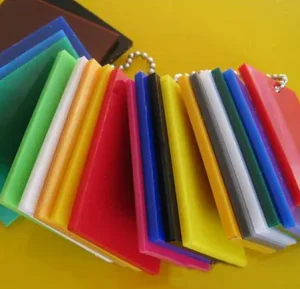
Related Engineering Polymers, Plates & Custom Formulations
Consolidate your international factory procurement with SHUNDA: full-range manufacturing across high-performance polyamides, ultra-high molecular weight polyethylenes, and custom CNC components.
Request Direct Factory Pricing & Engineering Dockets
Collaborate directly with SHUNDA's polymer engineers. We provide comprehensive CAD drawing reviews, material sample kits, resin lot inspection records, and competitive volume quotes within 12 business hours.