
Precision Nylon Plugs & Semi-Finished Polymeric Stock
Explore factory-direct engineered plastic billets, machined inserts, and nylon impact components produced under strict ISO 9001:2015 quality standards.
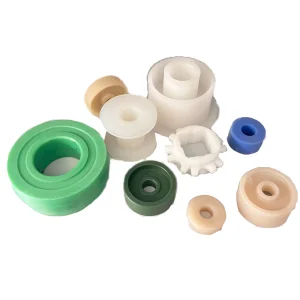
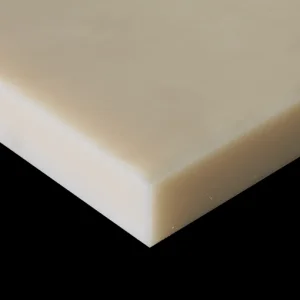
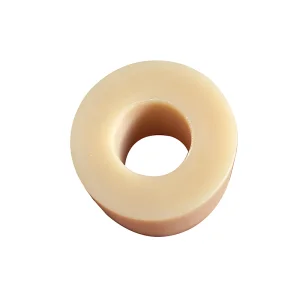
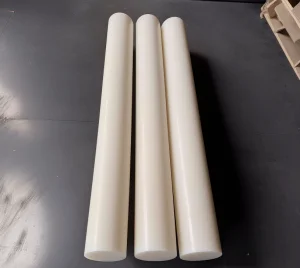
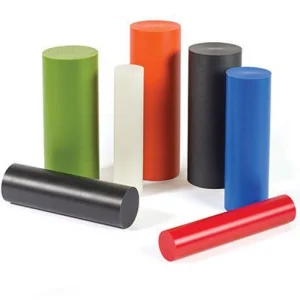
Engineering Superiority: OEM Nylon Plug Architecture & Polymer Chemistry
Industrial nylon plugs operate in hostile physical environments—from hydraulic block-off ports and thread protectors to high-pressure pipe end closures. Our components replace brittle brass and structural steel with optimized mechanical damping and anti-galling performance.
PA6 vs. PA66 vs. Cast MC Formulations
Polyamide plugs require balance between crystalline rigidity and impact damping. We formulate PA6 (extruded) for flexible snap-fits, PA66 for continuous thermal overhead up to 120°C, and monomer casting (MC Nylon) to eliminate internal voids in heavy cross-section plugs exceeding 150mm diameter.
Hydrolytic Stability & Moisture Equalization
All polyamides absorb ambient humidity. Our factory performs precise thermal annealing and humidity pre-conditioning for critical fluid-plug interfaces. This guarantees that your threads, O-ring lands, and push-in tapers maintain nominal geometric fit after marine or humid deployment.
Advanced Fillers & Lubricant Compounding
For extreme industrial environments, our OEM plugs integrate 30% glass fiber (PA6-GF30) for deflection resistance under continuous burst pressure, or molybdenum disulfide (MoS2) and solid-wax blends for friction-free reusable threaded assemblies without thread tape.
Engineering Thermoplastics Comparison for Plug & Sealing Hardware
Selecting the optimal polymer depends on load vectors, fluid compatibility, and temperature exposure. Compare key performance parameters across our primary engineering stock below.
| Polymer Variant | Tensile Strength (MPa) | Continuous Temp Range | Moisture Absorption (Sat.) | Primary Industrial Use-Case | Key Limitation |
|---|---|---|---|---|---|
| Cast MC Nylon (PA6C) | 80 - 95 | -40°C to +110°C | ~6.0% | Large diameter plugs, structural marine buffers, crane pads | Slight swelling in total immersion |
| Extruded PA66 | 85 - 105 | -30°C to +125°C | ~8.0% | High-temperature hydraulic manifold plugs, under-hood automotive | More brittle at sub-zero temperatures |
| POM-C (Acetal Copolymer) | 65 - 75 | -50°C to +100°C | ~0.8% | Subsea fluid plugs, sanitary fittings, tight-tolerance valves | Inferior impact resistance to PA6 |
| UHMWPE | 25 - 40 | -150°C to +80°C | <0.01% | Slurry pipe plugs, cryogenic stoppers, corrosive lining ports | Low mechanical yield point |
| PTFE (Polytetrafluoroethylene) | 20 - 35 | -200°C to +260°C | <0.01% | Extreme acid/solvent plugs, high-heat autoclave seals | Cold flow (creep) under load |
End-to-End Vertical Supply Chain: From Monomer to Finished OEM Part
Why Tier-1 global industrial distributors and equipment manufacturers rely on SHUNDA for complex plastic component production and raw material consolidation.
Direct Feedstock Synthesis
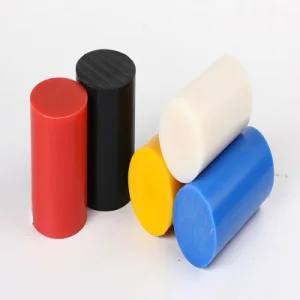
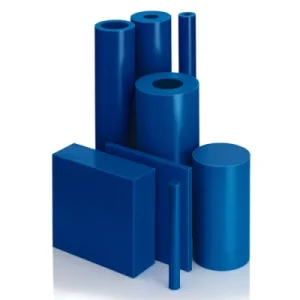
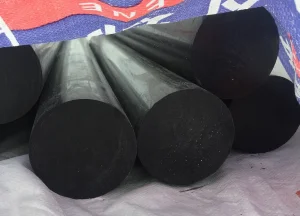
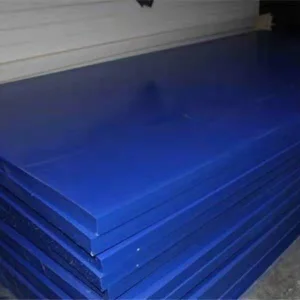
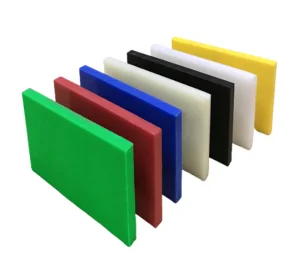
Unlike secondary machining shops that purchase rods from distributors, our Hebei manufacturing facility casts and extrudes our own semi-finished rods, tubes, and sheets. This allows zero mark-up on raw inputs and pristine internal void inspection using non-destructive ultrasonic verification.
Multi-Axis Precision CNC Hub
Equipped with high-precision 3-axis, 4-axis, and multi-spindle live-tooling lathes. We execute complex plug designs including standard metric (DIN 908/910), NPT, BSPP threading, hex sockets, dynamic flanged recesses, and micro-grooving for rubber O-ring encapsulation.
Global Compliance & Traceability
Fully compliant with international chemical safety standards including REACH (SVHC), RoHS 3, and FDA 21 CFR 177.1500 food-contact criteria for sanitary line plugs. Every production lot is paired with raw material 3.1 mill test certificates and dimensional CMM inspection reports.
Rapid Prototype to Full Production Run
Whether you require a pilot trial of 50 custom CNC threaded test plugs or a scalable injection tooling setup for 1,000,000 units/year, SHUNDA provides tooling engineering, rapid DFM (Design for Manufacturability) analysis, and scalable multi-cavity production paths.
Localized Applications & Next-Gen Trends in Nylon Components
The accelerated replacement of metal components by high-performance plastics is fundamentally altering mechanical engineering across heavy industries.
Hydraulics & Pneumatics
Heavy machinery manufacturers deploy threaded nylon hex plugs as protective shipping caps and temporary pressure relief ports. Non-scratching polyamide prevents damage to precision internal cylinder surfaces, eliminating galvanic corrosion typical of steel-on-aluminum pairings.
Automotive Lightweighting
Electric vehicle (EV) battery packs and coolant circuits are utilizing custom flame-retardant (UL94-V0) nylon drain plugs. Polyamide removes up to 65% of component weight compared to brass, while ensuring thermal stability during intense battery cycling.
Offshore & Marine Operations
Salt spray and electrolytic currents devastate metal fasteners. Marine mooring assemblies, sacrificial cathodic protection ports, and offshore cable trays incorporate self-lubricating MC nylon plugs that endure decades of continuous seawater immersion without galling.
Heavy Construction & Piling
Nylon plugs and dampeners are subjected to violent kinetic shocks. Heavy piling rigs integrate black molybdenum-impregnated cast nylon cushions that absorb thousands of high-energy cycles without micro-fissuring, protecting the hydraulic striker mechanisms from costly repairs.
Industry 4.0: Predictive Analytics
The engineering plastics industry is adopting smart manufacturing techniques. At SHUNDA, in-line infrared spectroscopy monitors polymer crystallization during the casting phase, preventing hidden shrink voids and delivering zero-defect batches for mission-critical assemblies.
Circular Economy & Bio-Polyamides
As corporate sustainability targets tighten worldwide, we are driving R&D into bio-based PA1010 and PA11 formulations derived from castor oil, alongside closed-loop clean-scrap recycling systems that minimize the carbon footprint of structural plastics.
OEM Nylon Plug Procurement & Engineering Questions
Detailed insights from our polymer engineers to assist you with component design, quoting parameters, and production timelines.
Polyamides have lower heat transfer coefficients and higher elastic memory than metals. We use mirror-polished carbide cutting tools running at optimal spindle speeds with flood emulsion cooling. This stops localized melting and ensures threads meet DIN 13-1 or ANSI/ASME B1.20.1 standards without burrs or thread distortion.
Yes. Natural nylon is semi-translucent off-white. For outdoor components subjected to direct sunlight, we compound virgin polymer with 2% carbon black (CB) or specialized hindered amine light stabilizers (HALS). This prevents embrittlement and surface micro-cracking caused by persistent UV exposure.
Because we produce our own raw rod and billet stock in-house, our CNC prototyping service accommodates flexible batches starting at 100 pieces. For custom injection-molded plugs requiring new molds, standard tool fabrication spans 20 to 25 business days, followed by T1 sample delivery in 48 hours.
We calculate linear expansion coefficients based on the target country and application environment. Plugs are machined to engineered tolerances that allow for equilibrium moisture content (EMC). Where tight zero-clearance fluid seals are required, we guide clients to our POM-C acetal or PTFE inventory.
Explore Our Broad Polymer Engineering Portfolio
Integrate cross-material orders to optimize container load logistics. We provide direct export consolidation across all semi-finished shapes and precision-machined assemblies.

Ready to Source Custom OEM Nylon Plugs & Parts?
Send your 2D CAD files (DWG, DXF, PDF) or 3D models (STEP, IGES) directly to our engineering team. We provide free manufacturability reviews and firm quotes within 12 hours.