
Factory-Direct Engineering Nylon Semi-Finished & Machined Stock
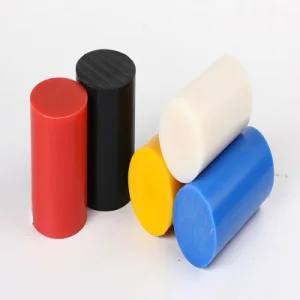
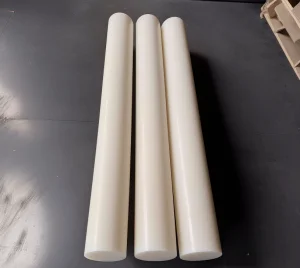
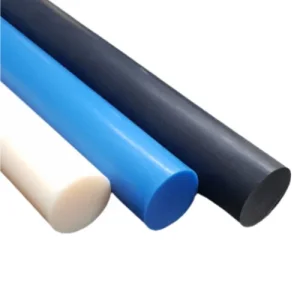
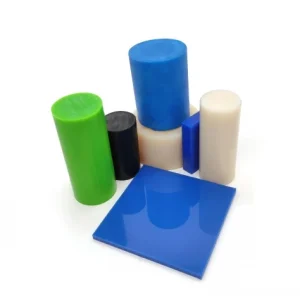
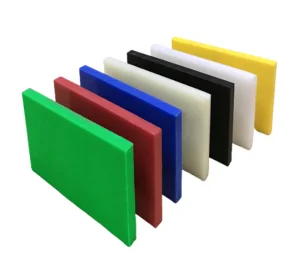
Our Hebei foundry manufactures virgin raw stock, cast tubular blanks, and impact cushions that form the certified billet foundation for our custom OEM nylon pipe flanges and industrial assemblies.
Engineering Architecture of Industrial Nylon Flanges
In modern industrial piping and fluid transfer systems, traditional metallic flanges (carbon steel, 316 stainless steel, and ductile iron) face compounding degradation vectors: electrolytic galvanic corrosion, pitting erosion under saline wash, excessive mass in aerospace and maritime hulls, and acoustic resonance transmission.
Zero Electrochemical Corrosion
Unlike stainless steel flanges that degrade in the presence of chloride ions or mixed electrolyte fluids, our engineered polyamide (PA) matrices possess total volumetric resistance to galvanic cell formation, making them immune to crevice corrosion under high-salinity marine and subterranean conditions.
High Strength-to-Weight Ratio
With an engineered specific density of 1.14 to 1.16 g/cm³—roughly one-seventh the weight of bronze or carbon steel—nylon flanges dramatically minimize static dead-load across suspended utility racks, chemical dosing manifolds, and mobile dredging pipeline networks without sacrificing burst pressure safety factors.
Vibration Damping & Fatigue Life
The semi-crystalline viscoelastic morphology of monomer-cast MC nylon absorbs dynamic hydraulic pulsation, motor excitation vibrations, and water hammer shock waves. Bolt-loosening cyclic fatigue is reduced by up to 68% relative to unyielding cast-iron flange couplings.
Polyamide Grade Comparative Engineering Data
Selecting the optimal polymer morphology determines seal integrity, bolt torque retention, and chemical durability under industrial operating parameters. Review our empirical baseline property matrix below.
| Material Designation | Tensile Strength (MPa) | Flexural Modulus (GPa) | Heat Deflection (HDT @ 1.8MPa) | Moisture Saturation (%) | Primary Flange Configuration |
|---|---|---|---|---|---|
| Cast PA6 (MC Nylon - Natural/Blue) Anionic Polymerization |
85 – 98 | 3.4 | 110 °C | 5.5 – 6.5 | Large diameter slip-on flanges, blind flanges, spacer rings up to 1200mm OD. |
| Extruded PA66 Virgin High Crystallinity |
80 – 90 | 3.1 | 95 °C | 7.0 – 8.0 | Standard PN10/PN16 threaded and socket-weld flanges for sanitary washdown. |
| PA6 + 30% Glass Fiber (GF30) Reinforced Composite |
145 – 175 | 8.5 | 205 °C | 3.2 – 4.0 | High-pressure ANSI Class 150/300 raised-face weld neck flanges with minimal creep. |
| MC Nylon + MoS₂ (Molybdenum Disulfide) Self-Lubricating |
82 – 92 | 3.6 | 115 °C | 5.0 – 6.0 | Rotary slip flanges, pipe guiding collar rings, slurry pumping manifolds. |
| Oil-Impregnated Cast Nylon Low Friction Coeff |
72 – 82 | 2.8 | 100 °C | 4.5 – 5.5 | Dynamic sealing companion flanges, oscillating swivel pipe joints. |
Localized Application Scenarios & Heavy-Industry Deployments
Engineered nylon flanges are replacing failure-prone metallic connections across severe service sectors. Our OEM components are deployed in over 45 industrial territories globally.
Desalination & Marine Ballast
In high-salinity reverse osmosis plants across the Middle East and coastal Australia, copper-nickel and super duplex flanges suffer localized bio-fouling and galvanic corrosion. Cast MC Nylon flanges offer complete hydrodynamic inertness against raw seawater, eliminating cathodic protection overhead.
Aggressive Chemical Pickling Lines
Electroplating and metallurgy operations utilize ambient hydrochloric and dilute sulfuric acid wash lines. Machined PA66 virgin flanges with PTFE envelope gaskets provide hermetic containment without the pinhole stress cracks typical of fluoropolymer-lined metallic castings.
Mining Tailings & Slurry Transport
Abrasive silica particles in copper and gold mining pipelines degrade pipe elbows and joints. Our blue MC Nylon flange rings absorb particle rebound energy through elastomeric hysteresis, outlasting standard schedule-40 steel flanges by a factor of 3.2 in slurry discharge networks.
Food & Beverage Washdown Systems
Sanitary milk processing, brewing, and bottling facilities undergo harsh CIP (Clean-In-Place) caustic washing cycles. Certified white PA6 flanges resist continuous disinfectant sanitizing washes while eliminating paint-flaking contamination risks entirely.
High-Voltage Substation Dielectric Spacers
Power transmission and transformer fluid circulation loops require electrical isolation between steel tank chassis and cooling radiator headers. Nylon insulating blind and companion flanges provide electrical breakdown protection in excess of 20 kV/mm.
Semiconductor Deionized (DI) Water Loops
Fabrication cleanrooms require piping components that eliminate heavy metal ion leaching. Ultra-pure, unpigmented virgin nylon companion flanges guarantee zero ionic contamination, sustaining resistivity benchmarks across microelectronics cooling circuits.
Chinese Factory Resilience & Lean Manufacturing Advantage
Operating from our modern facility in Xinhe County, Hebei, SHUNDA integrates polymer synthesis, casting, stress-relief annealing, and 5-axis CNC machining under one roof. Our localized industrial cluster provides distinct supply chain advantages for global OEM buyers.
Upstream Monomer Caprolactam Hegemony
China commands over 58% of global caprolactam feedstock refining capacity. Our plant maintains direct raw material pipeline sourcing contracts, insulating overseas OEM clients from Western feedstock allocations, refinery force majeures, and sudden raw-material price volatility.
Vertical Integration: Molten Monomer to Final Part
Unlike contract machine shops that purchase third-party stock bars at marked-up spot rates, we cast our own tubular billets and heavy-wall discs. This eliminates intermediate distribution margins, internal shipping lag, and raw stock porosity discrepancies.
Thermal Annealing & Creep Stabilization
Residual stresses from casting or extrusion cause warping when flanges are bored or faced. SHUNDA implements automated, microprocessor-controlled oil and circulating-hot-air annealing cycles (140°C to 160°C for 24–48 hours) to relax internal polymer orientation and ensure lifetime geometric stability.
Rapid Prototype to Full Production Run
Our agile tooling setups allow us to machine initial validation prototypes within 72 hours from CAD models (STEP/IGES/DWG). Transition to high-volume multi-spindle CNC turning accommodates production runs exceeding 50,000 units per month.
Global Standards Compliance & Dimensional Tolerancing
Every nylon flange manufactured at our facility conforms to recognized international standards. We guarantee drop-in compatibility with legacy metallic piping systems without field re-drilling or on-site rework.
ASME / ANSI B16.5 (Class 150 & 300)
Full conformance to American flange dimensional protocols: Slip-on (SO), Blind (BL), Threaded (TH), and Lap Joint (LJ). Bolt circle diameters (PCD), bolt hole counts, and raised-face (RF) serration profiles match steel mating flanges exactly.
DIN EN 1092-1 (PN6, PN10, PN16, PN25)
Metric flange configurations for European EPC contracts: Type 01 (plate), Type 05 (blind), Type 11 (weld neck), and Type 12 (slip-on hubbed). Fully certified across nominal diameters from DN15 through DN1000.
JIS B2220 Standards (5K, 10K, 16K)
Machined to Japanese Industrial Standards for marine auxiliary systems, shipbuilding piping, and heavy machinery fluid couplings throughout the Asia-Pacific territory.
Quality Verification & Traceability Protocols
Every production batch is accompanied by comprehensive 3.1 Inspection Certificates containing the following validated physical data:
Material Roadmap & Next-Generation Polymer Frontiers
Industrial piping environments are demanding higher service temperatures, wider chemical compatibility, and reduced carbon footprints. Our R&D team in Xinhe is advancing polyamide processing technology in three strategic directions.
Continuous Carbon-Fiber Reinforcement
By integrating continuous long-carbon-fiber strands into the caprolactam reaction injection mold, we are engineering ultra-rigid flanges with flexural moduli exceeding 18 GPa. This reduces thermal expansion coefficients by 65%, bringing them close to stainless steel values.
Bio-Based Polyamides (PA56 & PA410)
In response to international CBAM carbon-border compliance, SHUNDA is qualifying corn-derived, non-fossil monomer feedstocks. These bio-polyamides deliver thermal performance comparable to virgin PA6 while reducing Scope 3 cradle-to-gate carbon intensity by up to 42%.
PFAS-Free Low-Friction Additive Matrices
Anticipating global environmental restrictions on fluorinated additives, our material scientists have developed internal silicone-nanoparticle lubrication blends that achieve surface friction coefficients as low as 0.12 without relying on PTFE or halogenated compounds.
Standard & Custom Machined Stock for Global Procurement
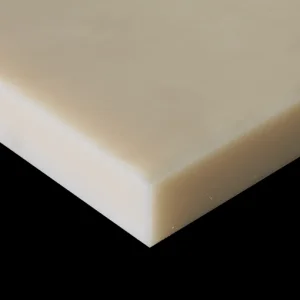
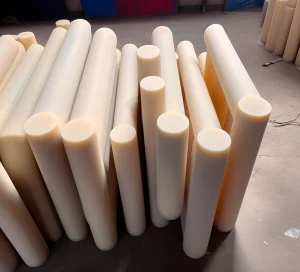
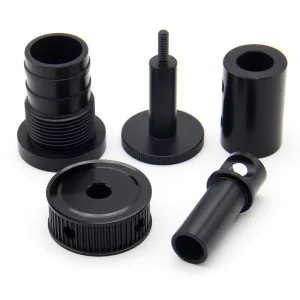
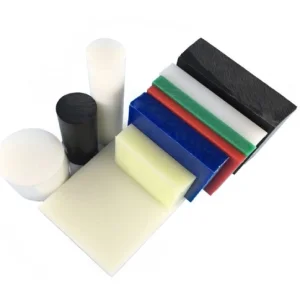
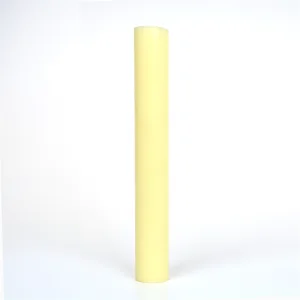
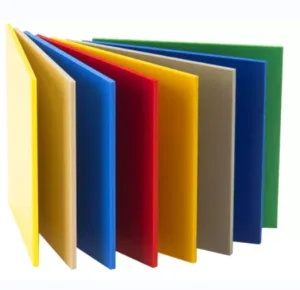
Explore our extended series of engineering polymers, MC cast sheets, thick-wall blanks, and 5-axis CNC finished turning parts available for prompt containerized export dispatch.
Engineering Questions & Practical Sourcing Guidance
In-depth responses from our chief polymer processing engineers and technical sales team, clarifying bolted joint dynamics, moisture absorption, and factory capabilities.