
High-Performance Engineering Semi-Finished Shapes
Direct supply from heavy casting reactors and precision extrusion lines. Optimized for heavy mechanical shock, slider plates, and critical load bearings.

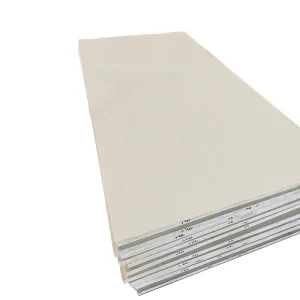
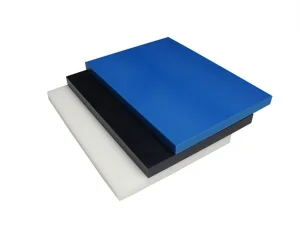
Commercial Dynamics of Engineering Nylon Blocks
The transition from structural metals to engineered polymers is driven by demand for weight reduction, corrosion immunity, and vibration attenuation across heavy manufacturing sectors.
Global Metallurgy Substitution
Modern industrial plants replace cast bronze, brass, Babbitt metal, and steel components with cast polyamide blocks. Monomer casting (PA6G) delivers a weight reduction of approximately 85% compared to steel while handling high-impact contact stress without micro-welding or surface galling.
Severe Duty Tribological Profiles
Unfilled and modified nylon blocks (MoS2-filled, oil-impregnated, and glass-reinforced) reduce dry sliding friction coefficients from 0.45 down to 0.12. This self-lubricating property minimizes grease consumption and protects expensive mating metallic shafts from premature wear.
Supply Chain Resiliency & Near-Net Shapes
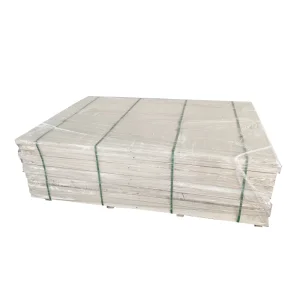
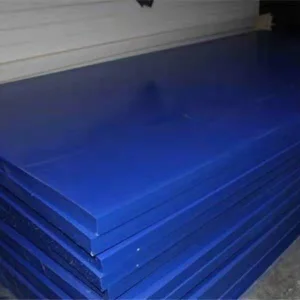
Procuring raw nylon slab stock reduces subtractive CNC machining scrap by up to 60%. As an established OEM manufacturing company in Hebei, China, SHUNDA casts heavy-section nylon slabs up to 300mm thickness free of internal pinhole voids or cooling-induced thermal stresses.
Comparative Tribological Performance Matrix
Material properties across extruded nylon, cast polyamides, and advanced polyolefins for high-load engineering specifications.
| Material Property | Extruded PA6 / PA66 | Cast MC Nylon (PA6G) | MoS2 Filled MC Nylon | Oil-Impregnated Nylon | UHMWPE / POM |
|---|---|---|---|---|---|
| Tensile Strength (MPa) | 75 - 85 | 85 - 95 | 90 - 105 | 70 - 80 | 40 - 70 |
| Flexural Modulus (GPa) | 2.8 - 3.2 | 3.3 - 3.8 | 3.6 - 4.2 | 2.9 - 3.4 | 0.7 - 2.8 |
| Dynamic Friction Coeff. | 0.28 - 0.35 | 0.20 - 0.25 | 0.15 - 0.20 | 0.10 - 0.15 | 0.12 - 0.22 |
| Impact Resistance (kJ/m²) | 5.0 - 7.0 | 6.0 - 9.0 | 4.5 - 6.0 | 7.0 - 10.0 | No Break / 6.0 |
| Continuous Service Temp | -40°C to +100°C | -40°C to +115°C | -40°C to +120°C | -40°C to +105°C | -200°C to +90°C |
| Target Industrial Roles | Gears, Spacers, Bolts | Large Sheaves, Bearings | Heavy Pinion Gears, Track Plates | High-Speed Bushings, Guides | Chute Liners, Sliding Guides |
Localized Applications & Macro-Engineering Solutions
Operational implementations where SHUNDA custom-machined nylon blocks resolve mechanical failure modes across core global industries.
Piling Machinery Cushion Blocks
Forged pile hammers create extreme destructive shock waves. Precision-machined, high-elasticity black nylon cushions dampen harmful harmonic reflections while protecting expensive steel pile heads, increasing machinery working lifespans under continuous cyclical fatigue.
Port & Marine Crane Sheaves
Cast polyamide sheaves and blocks reduce deadweight on crane booms by hundreds of kilograms. The lower elastic modulus of nylon expands the contact surface with steel wire ropes, reducing point-pressure concentrations and extending wire rope operational service life up to 300%.
Mining Conveyor Impact Slide Blocks
In high-tonnage ore and aggregate handling, traditional rollers break under dynamic boulder drops. Solid machined nylon and UHMWPE sliding beds provide a low-friction surface that absorbs kinetic energy, preventing belt tears and eliminating bearing freeze failures.
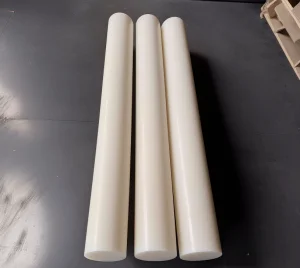
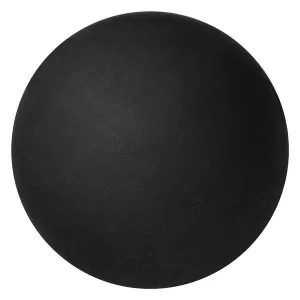
Precision Cast & Extruded Semi-Finished Shapes
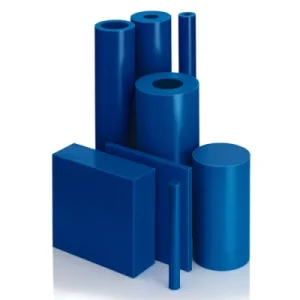
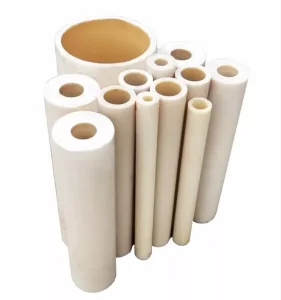
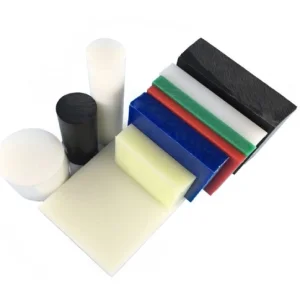
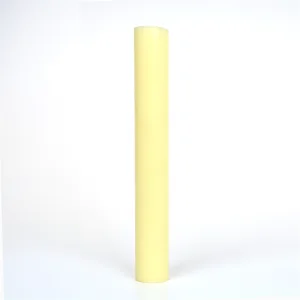
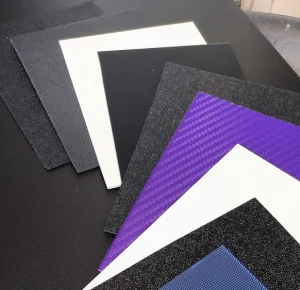
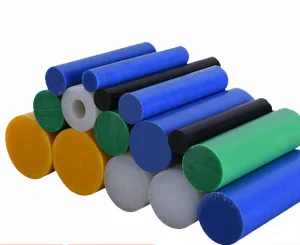
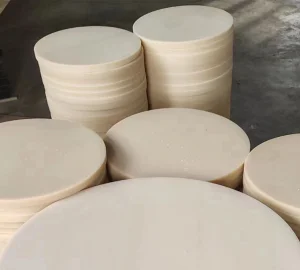
Dimensionally stabilized rods, tubes, and specialized shock blocks ready for close-tolerance 5-axis CNC machining.
Precision Manufacturing & Thermal Normalization
How SHUNDA achieves dimensional stability and tight machining tolerances across large-format semi-finished polyamide shapes.
Monomer Anionic Polymerization
Unlike standard screw extrusion which can introduce shear degradation, our large nylon blocks are produced through caprolactam monomer casting using specialized chemical activators. This yields polymers with up to 1,000,000 g/mol molecular weight and over 50% crystalline density.
Multi-Stage Stress-Relief Annealing
Thermal gradients during cooling can trap severe internal mechanical tension inside thick sections. Our proprietary 48-hour oil-bath or circulating-air annealing cycle neutralizes residual stresses, preventing warp, twist, or cracking during aggressive CNC roughing and finishing cuts.
Hydration Equilibrium Calibration
Polyamides absorb atmospheric ambient moisture, shifting final dimensions by 1.5% to 2.5%. Our engineering team calculates precise hygroscopic expansion offsets prior to CNC milling, ensuring your tight ±0.05mm tolerances remain true throughout on-site machinery assembly.
Frequently Asked Questions: OEM Nylon Block Sourcing
Engineering answers for procurement specialists, plant maintenance chiefs, and equipment designers.
What distinguishes Cast Nylon 6 (PA6G) blocks from Extruded Nylon 6/66 (PA66)?
Cast Nylon (MC Nylon / PA6G) is synthesized directly inside atmospheric pressure molds via liquid monomer casting. This yields a significantly higher molecular weight, superior crystallinity, higher compressive yield strength, and improved wear resistance compared to extruded PA6/PA66. Cast nylon blocks also carry far lower internal stress, making them the preferred choice for heavy mechanical components and extra-thick cross sections (over 50mm up to 300mm).
How does SHUNDA prevent moisture-induced dimensional instability in CNC-machined parts?
Polyamides naturally absorb ambient atmospheric humidity (up to 6–7% at total water saturation), leading to volumetric expansion. When manufacturing tight-tolerance parts (±0.05 mm), our factory applies thermal annealing, conditions the blanks to equilibrium humidity, and applies compensatory machining offsets. For underwater or wet applications where zero swelling is mandatory, our engineering staff will recommend self-lubricating POM (acetal) or UHMWPE instead.
Can you produce custom additives such as MoS2, Graphite, Glass Fiber, or Oil Fillers?
Yes. We blend specialized fillers during the liquid monomer polymerization process. Molybdenum Disulfide (MoS2) increases surface hardness, rigidity, and dry galling resistance; internal synthetic lubricating oils cut dry sliding friction down to 0.10 for continuous sliding bushings; and chopped glass fibers raise continuous heat distortion thresholds up to +160°C.
What file formats and minimum order quantities (MOQ) apply to custom OEM component orders?
Our CAD/CAM engineering team accepts 3D native formats including STEP (.stp), IGES (.igs), and SolidWorks, alongside 2D dimensional prints (PDF, DWG, DXF) with explicit GD&T callouts. Because we manage both raw plate casting and CNC multi-axis machining facilities in Hebei, we accommodate single-piece structural prototypes up to multi-thousand containerized recurring releases.
How do nylon impact cushions protect heavy hydraulic piling hammers compared to wood or metal?
Hardwood inserts split, char, and burn within hours under cyclic impact, while steel plates cause violent rebound waves that fracture internal hammer pistons. Cast nylon piling blocks offer an optimal balance of modulus and restitution: they absorb destructive high-frequency shock waves, store and transmit kinetic energy to the pile casing cleanly, and remain fracture-resistant under millions of hammer blows.
Polymer Technology Roadmap: Circular & Smart Polymeric Shapes
Advancing structural plastic efficiency through clean chemistry, circular reuse, and low-friction tribological engineering.
Bio-Based & Recycled PA Chemistries
SHUNDA continues developing next-generation cast nylon formulations that incorporate chemically depolymerized post-industrial scrap and bio-based sebacic/castor precursors, helping our European and North American partners meet Scope 3 sustainability objectives without sacrificing mechanical strength.
Self-Sensing Embedded Polymers
Integrating sub-micron conductive carbon networks into heavy wear blocks allows for non-destructive real-time capacitance monitoring of bearing wall thicknesses, enabling automated predictive maintenance alerts in harsh mining conveyors and remote offshore cranes.
Severe Cryogenic Polyamides
Standard nylon can turn brittle below -30°C. Our modified PA6 grades remain impact-tolerant down to -50°C, providing cold-chain transport, Arctic crane pads, and LNG support assemblies with exceptional fracture toughness without requiring costly fluoropolymers.