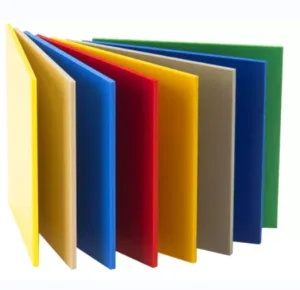
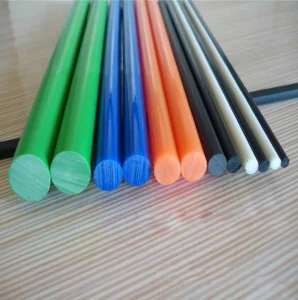
Featured Polymer Stock & Custom Fabrications
High-performance semi-finished engineering polymers and turn-key CNC machined components built to custom OEM drawings and strict tolerance standards.

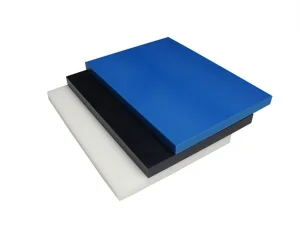
Next-Generation OEM Clear Bins: Precision Polymer Physics & Design Criteria
In advanced manufacturing, automated fulfillment, cold-chain pharmaceuticals, and cleanroom semiconductor fabrication, the humble "clear bin" has transformed from an off-the-shelf consumable into a critical structural asset. High-performance clear bins require rigorous optical transmission, high notch-impact resistance, dimensional stability under thermal cycling, and chemical resistance against harsh sterilization agents.
Optical Luminous Transmittance
Optical clarity is measured under ASTM D1003 protocols. Utilizing virgin Polycarbonate (PC), Polymethyl Methacrylate (PMMA), or clarified Polypropylene (PP) blends ensures internal clarity with a haze rating under 0.8%, optimizing machine-vision barcodes and LiDAR SKU recognition.
Notched Izod Impact Resistance
Industrial storage components endure continuous mechanical shock in AS/RS (Automated Storage and Retrieval Systems). Specially modified resin formulations eliminate micro-fissuring and catastrophic brittleness down to -40°C cryogenic storage parameters.
Permanent ESD Dissipation
For microelectronic assembly and cleanroom storage, bins feature surface-resistivity treatments and inherently dissipative polymers (IDP) that comply with ANSI/ESD S20.20, preventing electro-static discharge without sacrificing light transmission.
Macro Industry Solutions: Tailored Structural Engineering
Modern OEM clear bin deployment cannot rely on universal catalog dimensions. Operating environments vary from -30°C automated blast freezers to IPA-washed pharmaceutical suites. Below are field-tested configurations engineered across mission-critical sectors.
Automated Intralogistics & AS/RS
High-speed shuttle systems demand bin sidewall deflection of less than 1.2mm under maximum dynamic loads. Ribbed bottom geometries, reinforced corner pillars, and optical side cutouts allow overhead cameras and robotic gripping arms to retrieve payload without slippage.
Pharmaceutical & Medical Devices
Compliant with FDA 21 CFR § 177.1520 and USP Class VI, these autoclavable bins withstand hydrogen peroxide vapor (VHP), gamma irradiation, and EtO sterilization without yellowing, crazing, or leaching phthalates into sensitive surgical kits.
Semiconductor & Cleanroom
Fabricated inside ISO Class 7 cleanrooms, these bins exhibit non-outgassing properties verified under ASTM E595 (CVCM < 0.1%, TML < 1.0%). They protect silicon wafers, precision optics, and surface-mount components from particulate contamination.
Cold-Chain Food & Retail
BPA-free transparent copolyesters and crystal-grade polypropylene containers preserve pristine clarity in walk-in coolers and display cases. Engineered with anti-fog additive masters, they prevent condensate obscuration during humidity transitions.
Comparative Material Engineering Matrix
Selecting the ideal transparent thermoplastic resin requires balancing optical clarity, tensile modulus, heat deflection temperature (HDT), and unit economics. Our engineering team assists procurement directors in mapping performance to total cost of ownership.
| Polymer Grade | Luminous Clarity (%) | Tensile Modulus (MPa) | HDT @ 0.45 MPa (°C) | Primary Industrial Use-Case | Sterilization Tolerance |
|---|---|---|---|---|---|
| Polycarbonate (PC) | 89% - 91% | 2,350 | 135°C | High-impact AS/RS bins, drop-resistant robotics storage | Autoclave, Gamma, EtO |
| Clarified PP (Random Copolymer) | 84% - 87% | 1,200 | 90°C | Cost-sensitive retail display, chemical handling tanks | EtO, Mild Autoclave |
| PETG / PCTG Copolyester | 90% - 92% | 2,100 | 75°C | Medical sterile barrier boxes, deep-freeze logistics | Gamma, E-beam, EtO |
| Acrylic (PMMA) | 92% - 93% | 3,200 | 100°C | Optical inspection boxes, laboratory showcases | Liquid chemical wipe |
| SAN (Styrene Acrylonitrile) | 88% - 90% | 3,600 | 105°C | Rigid dimensional dividers, scratch-resistant drawers | EtO sterilization |
China Factory 4.0: Supply Chain Resilience & Precision Manufacturing
Based in Hebei's advanced polymer manufacturing hub, our integrated facilities leverage automated resin feeding, high-tonnage injection-compression molding machines, and 5-axis robotic finishing cells to eliminate variability and reduce production cycles.
Ultra-Large Mold Clamping (Up to 3,200T)
Large-scale clear bins and nested logistics totes require extreme clamping pressures and specialized hot runner hot-tip systems to eliminate knit lines, weld seams, and gas voids across massive optical surfaces.
In-Mold Closed-Loop Optical Sensing
Every cavity is monitored via cavity pressure and infrared thermal sensors. Real-time viscosity feedback automatically adjusts holding pressures and gate cooling, maintaining part-to-part weight uniformity within ±0.15%.
Raw Material Upstream Integration
Direct petrochemical pipeline relationships insulate our supply chain from monomer pricing volatility. Bulk silo storage of over 5,000 metric tons of prime virgin resins protects global supply schedules from geopolitical logistics shocks.
Fulfilling Global Enterprise Sourcing Mandates
Tier-1 procurement organizations require more than competitive per-piece pricing. Enterprise contracts hinge on robust ESG verification, full traceability, digital tool management, and strict supplier code of conduct compliance.
DFM & Tooling Co-Development
Our in-house mold tooling shop delivers Moldflow® analysis within 48 hours, highlighting draft angles, shear stresses, and sink marks before steel cutting begins on German 5-axis CNC machining centers.
PPAP Level 3 & Lot Traceability
Complete Production Part Approval Process documentation, including Gage R&R, Process Capability Studies (Cpk > 1.67), Material Certifications (MTR), and complete dimensional inspection reports via CMM.
ESG & Carbon Footprint Audits
Facility equipped with rooftop solar generation, water recovery closed loops, and verified ISO 14001 certification. We calculate cradle-to-gate Scope 1, 2, and 3 emissions per unit for corporate sustainability reporting.
JIT Logistics & Safety Stock
Consignment inventory and buffer warehousing options across North America and European transit hubs, supporting EDI order processing and flexible shipping terms (FOB, CIF, DDP).
Global Regulatory Assurance & Localized Support
Navigating global trade mandates requires rigorous conformance to international polymer purity and consumer health standards. Every resin lot is certified by independent third-party laboratories (SGS, TÜV, Intertek).
RoHS 3 & REACH SVHC Conformance
All formulations are verified zero-content for lead, cadmium, mercury, hexavalent chromium, PBBs, PBDEs, and phthalates. Complete full material disclosure (FMD) forms are maintained for European compliance.
FDA & EU No 10/2011 Food Contact
Transparent containers designed for food handling, commercial kitchen prep, and beverage processing adhere to non-migratory testing protocols for aqueous, acidic, and fatty foodstuffs.
Direct Bilingual Engineering Teams
Eliminate communication lag. Our dedicated international account teams consist of polymer materials scientists and tooling engineers fluent in English, offering 12-hour turnaround for all inquiries and rapid CAD iteration.
Technical Roadmap: The Future of Smart Storage Infrastructure
As warehouse robotics converge with computer vision and green regulations accelerate, the clear bin is evolving into an intelligent, circular component. Our R&D center is leading three structural breakthroughs:
Bio-Circular Transparent Resins
Commercializing ISCC PLUS certified mass-balanced bio-based Polycarbonate and chemically recycled PMMA, delivering identical optical purity (>90% transmission) and impact resilience with a 65% reduction in cradle-to-gate carbon footprint.
In-Mold RFID & Sensor Embedding
Integrating ultra-thin flexible passive RAIN RFID tags and load-cell sensor tracks directly into bin sidewalls during the injection cycle. Eliminates adhesive label degradation and automates inventory tracking across smart warehouse networks.
Self-Healing Anti-Scratch Nanocoatings
Deploying vacuum-deposited organic-inorganic hybrid nano-layers on optical bins to resist surface abrasions from robotic metal grippers, maintaining long-term transparency for downstream optical scanning systems.
Frequently Asked Technical & Commercial Questions
Common inquiries from enterprise buyers, supply chain executives, and design engineers regarding tooling lead times, resin selection, and logistics support.
What are the key trade-offs between Polycarbonate (PC) and Clarified Polypropylene (PP) for clear bins?
What tooling lead times can we expect for custom-dimension OEM bins?
Can you incorporate custom dividers, conductive carbon fibers, or color tints?
How does your factory prevent warping, sink marks, and stress cracking in large bins?
What packaging protocols are implemented to prevent scuffing and scratches during ocean transport?
High-Performance Polymers, Rods & Industrial Plates
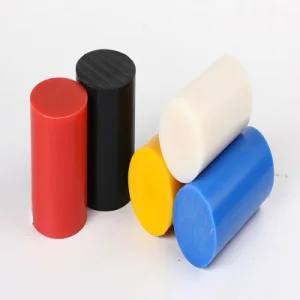
Explore our extended engineering plastics inventory: HDPE, POM, MC Nylon, PP, and PTFE fabricated to ISO 9001 certified tolerances for global industrial distributors and OEMs.