
Precision Engineering Plastics & Stabilizing Components
Direct factory supply of semi-finished polymer stock, high-load jacking pads, and custom machined profiles manufactured under rigorous ISO 9001:2015 process standards.
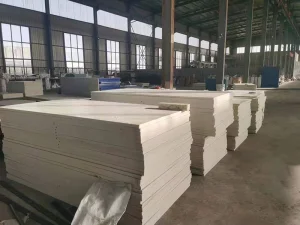
OEM Engineering Plastic PA6 PA66 PP UHMWPE PTFE HDPE ABS Sheet
View Product Details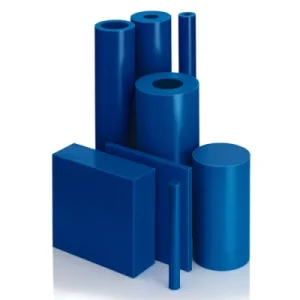
UHMWPE Heavy Duty Jacking Pads Crane Foot Support Stabilizer Plate
View Product Details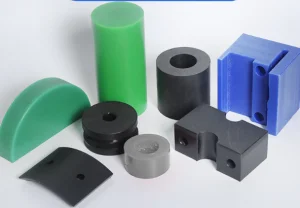
Precision Engineered MC Nylon Machined Parts & Dynamic Bushings
View Product Details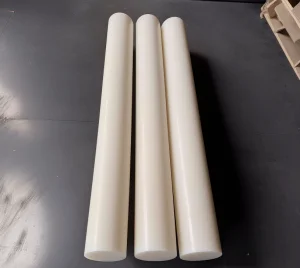
Cast PA6 Polyamide Nylon Plastic Tubes, Solid Rods & Round Bars
View Product Details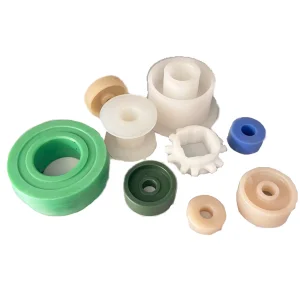
5-Axis CNC Machining Components PEEK PTFE Delrin Nylon POM Pulley
View Product Details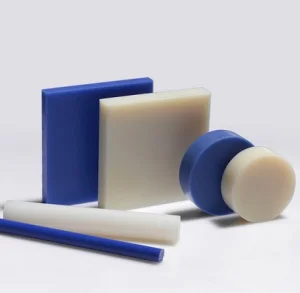
Standard Engineering Plastic PA66 PP UHMWPE PTFE HDPE Sheet & Rod
View Product Details
High-Quality MC Casting Nylon PA6 HDPE UHMWPE Wear Board Sheet
View Product Details
Extruded & Sintered High Density Polyethylene HDPE Sheet Panel Board
View Product DetailsThe Global Commercial & Industrial Landscape of UHMWPE Panels
In modern industrial engineering, the strategic imperative to reduce plant maintenance cycles, eliminate mechanical friction, and handle aggressive bulk raw materials has catalyzed a decisive global shift away from legacy manganese steels, cast basalt, and heavy bronze alloys. Ultra-High Molecular Weight Polyethylene (UHMWPE/PE-UHMW) panels stand at the nexus of this mechanical evolution. Recognized globally as an unparalleled semi-crystalline thermoplastic, UHMWPE possesses an exceptionally long molecular chain—typically exhibiting an average molar mass between 3.5 to over 9.2 million grams per mole (g/mol)—which endows the material with an unmatched synergy of extreme notch impact strength, non-stick surface kinetics, and superlative abrasive wear resistance.
Across Europe, North America, Oceania, and expanding industrial sectors in Southeast Asia and Latin America, the procurement demand for heavy-duty UHMWPE sheets has transitioned from simple component replacement to integrated asset protection. Heavy engineering sectors encounter massive operational bottlenecks due to bulk material flow obstruction (arching, ratholing, and cohesive bridging) inside iron-ore hoppers, bauxite silos, coal bunkers, and dumper truck bodies. Standard carbon steel liners quickly pit, oxidize, and build galvanic resistance, causing chronic production downtime. In contrast, solid sintered UHMWPE panels engineered by SHUNDA Polymer present a nearly impervious, hydrophobic boundary with zero water absorption (<0.01%), ensuring slick, uninhibited throughput of adhesive slurries and moist minerals.
Simultaneously, the marine and harbor civil construction sectors have standardized on heavy-gage UHMWPE facing panels for marine fender systems along major deep-water ports. These environments subject docking infrastructure to monumental shearing forces, cyclical tidal exposure, extreme saline corrosion, and broad thermal swings. Sintered UHMWPE marine pads protect expensive harbor concrete assets and ship hulls alike by delivering reliable kinetic energy attenuation paired with a dynamic coefficient of friction as low as 0.08, completely outperforming wood or elastomeric bumpers in service longevity and total cost of ownership (TCO).
Comprehensive Polymer Performance Specifications
Empirical laboratory data contrasting UHMWPE with alternative industrial polymers across critical wear, mechanical strength, and thermodynamic metrics.
| Polymer Parameter | UHMWPE (Virgin 9.2M) | Cast MC Nylon (PA6) | Polyoxymethylene (POM) | HDPE 500 High-Density |
|---|---|---|---|---|
| Molecular Weight (g/mol) | 7.5 – 9.2 × 10⁶ | ~3.5 – 4.5 × 10⁴ | ~3.0 – 5.0 × 10⁴ | ~0.5 – 1.0 × 10⁶ |
| Relative Abrasion Index (Steel=100) | 15 – 18 (Extremely High) | 35 – 45 | 60 – 70 | 45 – 55 |
| Dynamic Friction Coeff. (Dry vs Steel) | 0.08 – 0.12 | 0.25 – 0.35 | 0.20 – 0.28 | 0.18 – 0.22 |
| Notched Izod Impact (kJ/m² @ -30°C) | No Break (>140) | 4.5 – 6.0 | 5.0 – 7.0 | 12 – 18 |
| Water Absorption Rate (% @ Sat.) | < 0.01% (Hydrophobic) | 6.0 – 7.0% (Hygroscopic) | 0.65 – 0.85% | < 0.01% |
| Continuous Temperature Range (°C) | -250°C to +85°C | -40°C to +110°C | -50°C to +100°C | -50°C to +80°C |
Structural Advantages of High-Molecular Entanglement
The molecular physics governing UHMWPE panels explains their performance anomalies. While standard polyethylenes (such as LDPE or standard HDPE) possess linear or branched chains of a few hundred thousand monomer units, UHMWPE chains contain up to 200,000 ethylene repeat units. Under continuous mechanical shearing or high-velocity micro-particle impingement, these enormous macromolecular coils cannot readily disentangle or yield to ductile fracture. Instead, the microscopic contact zone exhibits localized elastic deformation, absorbing kinetic shock waves and dissipating stress throughout the macroscopic bulk panel.
This entanglement density directly explains why UHMWPE retains exceptional toughness at cryogenic temperatures. Even in Arctic engineering applications operating at -150°C or within liquid nitrogen environments, UHMWPE panels do not suffer from the classic ductile-to-brittle transition common to iron, steels, and unplasticized polyamides. For mining operations running year-round in sub-zero terrains across Canada, Scandinavia, and Northern China, UHMWPE wear plates remain ductile, resisting shatter from cascading granite, taconite, or metallurgical coke.
China Factory Efficiency & Technological Supply Chain Hegemony
How SHUNDA's centralized manufacturing infrastructure combines hyper-efficient feedstock sourcing with ultra-high-pressure hydraulic sinter molding.
Massive Pressurized Sintering Arrays
UHMWPE cannot be melted and injected through standard single-screw extruders due to its zero-shear melt viscosity. SHUNDA deploys multi-daylight hydraulic sintering presses delivering uniform vertical pressures exceeding 10 MPa at precisely monitored thermal soaking ramps up to 210°C.
Stress-Free Controlled Annealing
Residual internal stresses cause severe post-machining warping in low-grade panels. SHUNDA executes multi-stage program-controlled slow annealing cycles over 16-28 hours, ensuring planar balance, microscopic isotropic density, and micro-dimensional stability during subsequent CNC profiling.
Raw Polymer Upstream Integration
Situated in North China's premier petrochemical and industrial corridor, SHUNDA maintains tier-one upstream partnerships with specialized polymerization reactors. This secures uninterrupted access to medical-grade, nuclear-grade, and virgin high-density raw polymers at unmatched economies of scale.
High-Speed Large-Envelope CNC Machining
Operating dedicated 3-axis and 5-axis CNC routing tables up to 6000mm × 2500mm, we execute countersunk drilling, beveled edge profiling, custom interlocking tongue-and-groove joints, and complex curvilinear forms directly from CAD/CAM STEP files within ±0.05mm tolerances.
Certified Virgin Purity vs. Recycled Grades
We provide full lot traceability. While regional job-shops frequently dilute UHMWPE with reclaimed regrinds (causing microscopic voids and brittle drop-offs), SHUNDA provides verifiable Melt Flow Rate (MFR) and intrinsic viscosity test reports confirming 100% virgin polymer pedigree.
High-Stress Application Scenarios for Heavy Industry
Engineered installations where UHMWPE panels outlast conventional alloy steels and industrial elastomers by 300% to 800%.
Bulk Materials Handling & Chute Liners
Lining hoppers, transfer chutes, vibrating feeders, and train discharge cars. The low surface energy prevents sticky lignite coal, wet clay, and bauxite from caking, completely mitigating downtime associated with sledgehammering or pneumatic clearing.
Marine Port Infrastructure & Dock Fenders
Facings for harbor pile systems, lock gates, and tugboat rubbing strakes. Chemically impervious to hypersaline ocean environments, fouling barnacles, and hydrocarbon spillage. UV-stabilized carbon formulations resist 15+ years of intense solar irradiance.
Heavy Mobile Crane Outrigger Jacking Pads
Dispersing massive concentrated point loads from all-terrain mobile cranes, concrete pump trucks, and aerial lifts. Engineered to flex under peak tonnage without snapping, then return to true flatness without permanent mechanical deformation.
Cleanroom, Conveyor & Food-Grade Guide Rails
FDA 21 CFR 177.1520 and EU 10/2011 compliant virgin white UHMWPE sheets for high-speed bottling lines, automated packaging lines, and pharmaceutical meat/poultry processing. Requires zero liquid lubrication, preventing batch contamination.
Nuclear Shielding & High-Energy Physics Panels
Borated UHMWPE composite sheets formulated with 5% to 10% elemental boron by weight. The immense hydrogen atom concentration of the polyethylene matrix thermalizes fast neutrons, while the boron captures slow neutrons without producing secondary gamma radiation.
Global Enterprise Sourcing: Standards, Tolerances & QA Protocols
Procuring heavy-gage polymer panels demands strict verification to ensure material performance in critical industrial operations. When drafting Requests for Quotation (RFQs) and engineering specifications, buyers should evaluate suppliers against core mechanical standards:
1. Molecular Weight Verification (ASTM D4020 vs. ISO 11542-2)
Always mandate Intrinsic Viscosity (IV) testing performed in decahydronaphthalene (decalin) solvent at 135°C to substantiate molecular weight claims. Commercial job shops frequently advertise "9 Million Molecular Weight" while delivering 3.5 Million commercial grade resin blended with 40% reprocessed waste. True high-mass chains ensure notched Charpy impact strengths exceeding 130 kJ/m².
2. Dimensional Tolerances & Planar Uniformity (DIN 7715 Part 2)
Because UHMWPE exhibits a substantial Coefficient of Linear Thermal Expansion (CLTE) (~1.5–2.0 × 10⁻⁴ K⁻¹)—roughly an order of magnitude greater than structural steel—precision-machined sheets must be manufactured with slotted fastening holes when installed inside rigid steel chutes. Failure to engineer thermal clearance slots results in severe buckling ("wavy panels") during elevated operational temperatures.
SHUNDA Export Crating & Environmental Packaging
Every shipment of SHUNDA polymer panels undergoes vacuum edge sealing, protective film interleaving, and heavy-duty ISPM-15 fumigated wooden pallet crating with steel edge reinforcement. This prevents surface scratch damage, warping, and maritime humidity degradation during transatlantic shipping.
3. Specialized Functional Formulations
- Antistatic / Electrostatic Dissipative (ESD): Loaded with conductive carbon black, lowering surface resistivity to 10³–10⁶ Ω/sq for volatile coal dust, chemical atmospheres, and ATEX/hazardous environments.
- Glass-Bead / Ceramic Infused: Impregnated with microscopic silicates to resist sharp quartz, hard aggregate, and high-velocity abrasive slurries.
- Self-Lubricating (Oil-Filled / MoS2): Infused with solid lubricants to lower friction (dynamic µ down to 0.05), reducing stick-slip phenomena on low-speed slide guides.
- Flame Retardant (UL94 V-0): Halogen-free, self-extinguishing panels designed for underground mining shafts, transit tunnels, and electrical enclosures.
Emerging Technologies & Future Material Trajectory (2025–2035)
The engineering polymer sector is developing advanced formulations with enhanced thermal resistance, sustainable lifecycles, and nanostructured enhancements.
Cross-Linked UHMWPE (PEX Matrixes)
By exposing sintered UHMWPE panels to controlled electron-beam radiation or silane chemistry, scientists establish chemical cross-links between long chains. This increases upper service temperatures from 85°C to 130°C while suppressing compressive creep under continuous deadweight loading.
Bio-Based & Circular Monomers
The polymer synthesis industry is actively deploying bio-ethylene derived from renewable sugarcane ethanol and pyrolysis oils from waste polyolefins. Next-generation UHMWPE panels achieve complete lifecycle neutrality while preserving virgin mechanical properties.
Nanoscale Graphene Additives
Doping virgin UHMWPE with multi-layer graphene nanoplatelets creates significant mechanical improvements: 40% higher tensile modulus, enhanced thermal conductivity (to quickly dissipate frictional hot spots), and improved barrier characteristics against aggressive organic solvents.
Engineering Questions & Procurement FAQ
Detailed answers from SHUNDA's polymer research and production engineers to streamline your material selection process.
What primary operational conditions favor UHMWPE panels over MC Cast Nylon or POM?
UHMWPE is the superior choice when your application encounters abrasive raw material sliding (quartz, coal, iron ore), sub-zero operating environments, zero-lubrication sliding needs, or high chemical moisture exposure. MC Cast Nylon possesses higher compressive load-bearing capacity and tensile yield strength, making it ideal for precision load-bearing sheaves, heavy gears, and dynamic rollers; however, Nylon absorbs atmospheric water (up to 7%), causing swelling and dimensional variance. POM provides exceptional tight-tolerance dimensional rigidity for precision valve components and gears, but exhibits higher friction and brittle failure under severe impact. UHMWPE delivers unmatched performance in low friction, impact absorption, and non-stick release.
How should UHMWPE panels be fastened to avoid buckling from thermal expansion?
Because UHMWPE expands and contracts approximately ten times more than structural carbon steel, mechanical fasteners must never be installed as rigid anchor points without expansion clearance. We recommend using specialized elevator bolts or weld studs with countersunk conical washers fitted into slotted or oversized through-holes in the panel. Fastening should progress outward from the centerline of the panel toward the perimeters, leaving an engineered perimeter thermal expansion gap (typically 3mm to 5mm per meter of panel length depending on anticipated delta-T). Countersunk mounting ensures fastener heads remain 1.5mm to 2.0mm below the sliding surface to avoid snagging material.
Can UHMWPE sheets be glued, painted, or welded using industrial adhesives?
Due to its completely non-polar, low surface energy characteristics (similar to PTFE), untreated UHMWPE cannot be reliably bonded using conventional epoxies, polyurethanes, or cyanoacrylate adhesives. Bonding requires prior surface modification via corona discharge, atmospheric plasma treatment, or specialized sodium-naphthalene chemical etching to create polar anchoring sites. For welding, hot-gas nitrogen welding or high-frequency extrusion welding using matched UHMWPE welding rod is possible; however, because UHMWPE does not transition to a liquid melt phase, joint strength typically tops out at 65% to 80% of virgin base polymer tensile strength. Mechanical fastening remains the preferred engineering method.
What are the recommended machining parameters (tooling, speeds, feeds) for UHMWPE?
UHMWPE machines cleanly when high-shear, polished-flute carbide or polycrystalline diamond (PCD) tooling is used. High clearance angles (10°–15°) and positive rake angles (15°–25°) are mandatory to prevent polymer smearing. Because the polymer has low thermal conductivity, high heat buildup causes localized melting, burr formation, and dimensional distortion. Use high feed rates (0.15mm to 0.5mm per tooth) combined with moderate cutting speeds (250 to 450 m/min) and high-volume compressed air blast cooling to evacuate continuous ribbons of swarf. Avoid coolant containing aggressive emulsifiers that could contaminate cleanroom or food-contact materials.
What documentation and inspection protocols accompany SHUNDA overseas shipments?
All SHUNDA export containers leave the factory with comprehensive Mill Test Certificates (MTC) to EN 10204 3.1 standards. Included reports cover: Intrinsic Viscosity (average molecular weight calculation), Density (ISO 1183), Tensile Strength & Elongation (ISO 527), Charpy Impact (ISO 11542), Dimensional CMM Inspection, and Raw Resin Lot Traceability. For specialized orders, we supply FDA/RoHS/REACH declarations and third-party lab verification reports (SGS/TÜV).
What is the standard production lead time for custom CNC machined wear parts?
For standard sintered sheets in thicknesses from 6mm to 150mm and standard dimensions (1000×2000mm, 1220×2440mm, 2000×4000mm), warehouse inventory ships within 3 to 5 business days. Custom CNC profiled panels, countersunk wear plates, or engineered marine facings requiring specialized toolpaths typically ship in 10 to 18 business days depending on volume. Rapid prototype samples can be manufactured and dispatched via air courier within 48 to 72 hours following CAD/CAM file approval.
Engineering Plastics: Cast Rods, Hard Boards & Custom Machined Stock
Explore our comprehensive product lines across heavy-wear polymers, hollow tubes, solid bars, and high-impact structural blocks.
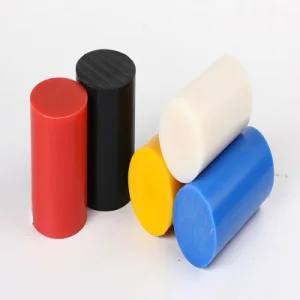
Industrial Grade High Strength Monomer Cast PA6 Nylon Solid Rods
View Product Details
Durable Plastic PA6 PA66 Hard Board Plate & High-Density Nylon Rods
View Product Details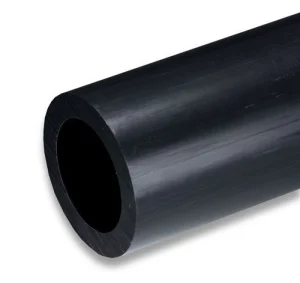
Extruded Black & Natural White POM Acetal Polyoxymethylene Tubes & Pipes
View Product Details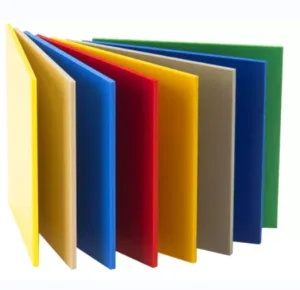
High Density Polyethylene HDPE Sheet Panels for Chemical Tanks & Liners
View Product Details
Centrifugally Cast MC Nylon Solid Bars & Low-Friction Slide Strips
View Product Details
High-Impact Blue Round Nylon Cushion for Hydraulic Piling Machine Hammers
View Product Details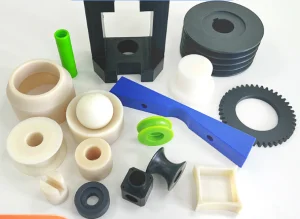
Oil-Filled Self-Lubricating MC Nylon Wear Pads & Slide Blocks
View Product Details