
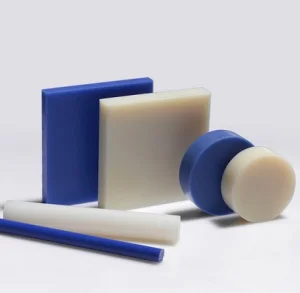
Discount China Engineering Plastic Polyamide PA6 PA66 Nylon PP UHMWPE PTFE HDPE ABS Plastic Sheet And Rod And Bar Suppliers, Company
Explore Specification
Stress-relieved solid and hollow cylindrical semi-finished stocks manufactured to DIN ISO 2768 tolerances for downstream precision CNC turning and fabrication.
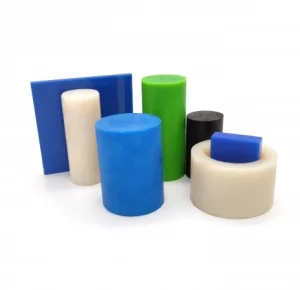
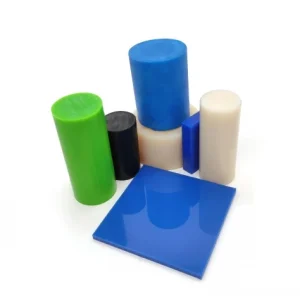
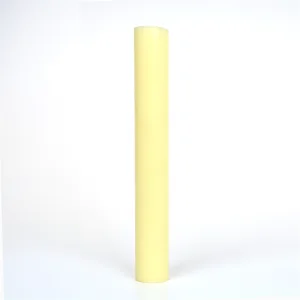
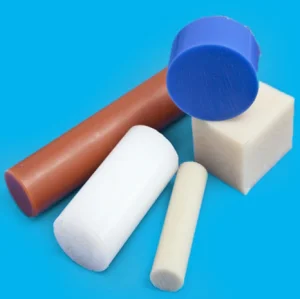
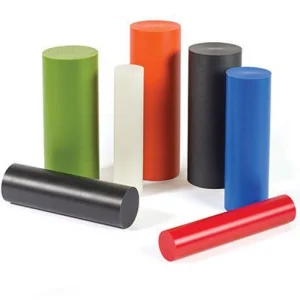
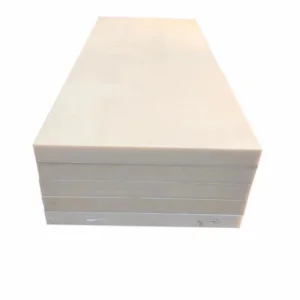
In-depth polymer science, continuous centrifugal casting, and precision extrusion dynamics underpinning world-class hollow plastic stock.
In contemporary structural engineering and fluid power architectures, tube plastics (also classified in mechanical design as engineering plastic hollow bars, cylindrical bushing stock, and heavy-duty polymer sleeves) have transitioned from simple non-metallic replacements to foundational core materials. When systems demand high vibration attenuation, boundary lubrication survival, zero corrosion under severe alkaline or acidic exposure, and substantial weight savings over bronze, cast iron, or stainless steel alloys, specialized engineering polymer tubes deliver verifiable technical superiority.
At our dedicated manufacturing campus in Xinhe County, Hebei, China, SHUNDA integrates over two decades of polymer crystallization chemistry and thermal metallurgy principles into plastic tube fabrication. Whether producing cast polyamide (MC PA6), polyoxymethylene (POM-C Acetal), Ultra-High-Molecular-Weight Polyethylene (UHMWPE), high-density polyethylene (HDPE), polypropylene (PP), or fluoropolymers (PTFE), the critical engineering challenge is consistently maintaining crystallinity gradient uniformity through wall thicknesses ranging from 5mm up to 120mm.
Vertical petrochemical integration, proprietary tooling fabrication, and full-spectrum automated post-extrusion annealing cycles.
Unlike regional machine shops that re-extrude blended regrind, Chinese primary manufacturers utilize direct bulk-polymer supply pipelines. By sourcing virgin caprolactam for MC Nylon and premium trioxane copoly resins directly, our factory controls molecular weight distributions (Mw > 350,000 g/mol for high-performance cast grades), drastically curbing batch-to-batch variation.
Customizing inner diameters (ID) and outer diameters (OD) in Europe or North America requires prohibitive tooling surcharges and 10 to 14 weeks of lead time. China's mature precision tooling ecosystem allows SHUNDA to commission custom CNC mandrels, sizing sleeves, and centrifugal casting molds in as little as 7 to 12 business days, offering unmatched responsiveness.
Uncontrolled cooling induces heavy frozen-in hoop stress, leading to bore collapse, taper ovality, and sudden cracking during finish-boring. Our factory features programmable multi-stage hot-oil and hot-air convection annealing ovens that run 24- to 72-hour temperature relaxation cycles, ensuring dimensionally stable hollow stock ready for high-speed machining.
Evaluate physical, mechanical, thermal, and chemical performance metrics to pair the precise polymer with your industrial operating envelope.
| Polymer Family | Specific Gravity | Tensile Strength (MPa) | Continuous Temp (°C) | Dynamic Coeff. of Friction (μ) | Moisture Saturation (%) | Primary Industrial Use Cases |
|---|---|---|---|---|---|---|
| Cast Nylon PA6 / MC Standard | 1.15 g/cm³ | 75 – 85 | -40 to +110 °C | 0.22 – 0.28 | 6.0 – 7.0% | Crane sheaves, heavy conveyor rollers, high-load bushings, wear sleeves |
| POM-C / Acetal Copolymer Precision | 1.41 g/cm³ | 65 – 72 | -50 to +105 °C | 0.20 – 0.25 | 0.80% | Precision hydraulic guide rings, valve seats, calibrated metering cylinders |
| UHMWPE (Molecular Wt > 5M) High Wear | 0.94 g/cm³ | 28 – 38 | -150 to +80 °C | 0.10 – 0.15 | < 0.01% | Hydrocyclone liners, slurries transport sleeves, mining chute wear pipes |
| PTFE (Polytetrafluoroethylene) Inert | 2.16 g/cm³ | 22 – 32 | -200 to +260 °C | 0.04 – 0.08 | < 0.01% | Cryogenic fluid lines, chemical reactor dip pipes, high-voltage isolators |
| HDPE (PE100 / High Density) Economic | 0.96 g/cm³ | 24 – 30 | -50 to +80 °C | 0.25 – 0.30 | < 0.01% | Subsea aquaculture cages, industrial effluent, municipal drainage conduits |
| PP (Polypropylene-H/B) Corrosion | 0.91 g/cm³ | 30 – 36 | 0 to +100 °C | 0.28 – 0.35 | < 0.03% | Electroplating exhaust ducting, acidic battery acid transfer, etch vessels |
Custom engineered hollow plastic tubular sections resolving complex tribological and corrosive friction challenges across diverse global sectors.
Cast Nylon PA6 tubular blanks machined into rope sheaves, outrigger bushings, and boom wear pads. Delivering 1/7th the weight of steel, eliminating galling against wire cables, dampening acoustic vibration, and extending wire rope life five-fold without requiring continuous greasing.
Heavy-wall UHMWPE and custom extruded composite tubes deployed in hydrocyclone overflows, tailing transport, and centrifugal pumps. High resistance to slurry abrasion avoids scour patterns typical of hardened alloys while resisting scaling in mineral-dense processing circuits.
PVDF, PTFE, and welded PP tubular housings engineered for mixed-acid headers, pickling lines, and chlorine scrubbing towers. Completely inert across the pH 0–14 spectrum, providing zero ionic leaching and non-wetting surfaces that stop bio-fouling and crystallization encrustation.
FDA-compliant natural virgin POM and lubricated blue nylon tubular spacers, neck-guide wheels, and scroll cams. Excellent dimensional stability under high-pressure hot water and caustic washdown cycles ensures zero swelling, zero lubricant contamination, and continuous sanitized operations.
High-purity virgin fluoropolymer and cleanroom-extruded PEEK tubes functioning as chemical dispense wands, quartz-cushioning wafer carrier guides, and carrier rollers. Extremely low trace metal extractables prevent cross-contamination during ultra-pure deionized (UPDI) water rinse steps.
Thick-wall HDPE and cast nylon guide sleeves protecting riser tensioning systems, marine steering pins, and subsea cable crossover clamps. High dielectric breakdown strength isolates galvanic couples between dissimilar metals in deep ocean saline environments.
Ensuring compliance with international engineering benchmarks for Fortune 500 equipment manufacturers and global stocking distributors.
Global supply chain directors and mechanical quality teams evaluate plastic tube suppliers on far more than unit prices. Uncontrolled wall-thickness eccentricities cause rapid imbalance in rotating parts, while lack of polymer lot traceability triggers costly line-down events. At SHUNDA, every master extrusion run and centrifugal mold batch follows strict QA inspection regimes:
Full raw material compliance with EU RoHS 3 Directive (2015/863/EU), REACH SVHC list, and strict bisphenol-free limits. Food contact grades are formulated to FDA 21 CFR 177.1500 (Nylon) and 177.2470 (POM Acetal), accompanied by EN 10204 3.1 Material Test Certificates with every shipment.
Wall thickness variation and outside ovality are inspected using multi-point ultrasonic gauges and coordinate measuring machines (CMM). Extruded profiles adhere to DIN ISO 2768-mK standards, guaranteeing continuous internal boring without thin-wall tool breakout.
Long-distance intermodal container shipment can warp engineering polymers under thermal cycling. Tubes are custom-sleeved in protective polyethylene, capped to prevent grit ingress, and packed into ISPM-15 compliant heat-treated fumigation-free wooden crates.
How cutting-edge material science is redefining mechanical thresholds for the next generation of industrial tube plastics.
By compounding micro-encapsulated liquid lubricants, molybdenum disulfide (MoS2), and ultra-fine graphite flakes into the monomer casting process, our advanced PA6 tube series achieves dynamic coefficients of friction as low as 0.12. This innovation eliminates external grease in remote conveyor lines, substantially trimming maintenance downtime.
Explosion-risk environments (such as coal pulverization, grain silos, and solvent dispensing) demand strict ESD controls. Modern tube formulations incorporate aligned carbon nanotubes, establishing permanent surface resistivities between 106 and 109 Ω/sq without shedding particulate or degrading mechanical ductility.
Global net-zero sustainability mandates are spurring circular feedstocks. Through in-house mechanical granulating systems, clean virgin-machined CNC turnings are re-pelletized for non-critical drainage conduits, lowering carbon intensity per linear meter while guaranteeing 100% prime virgin integrity for structural stock.
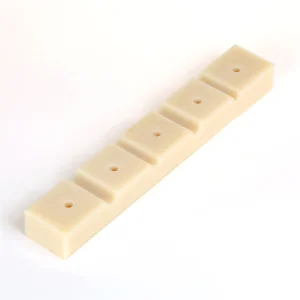
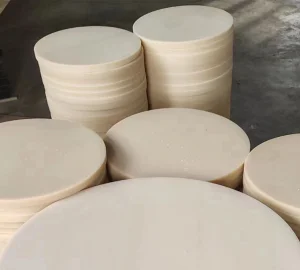
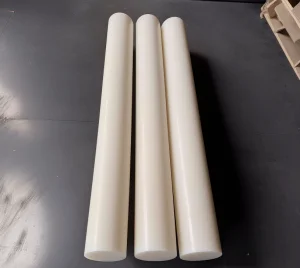
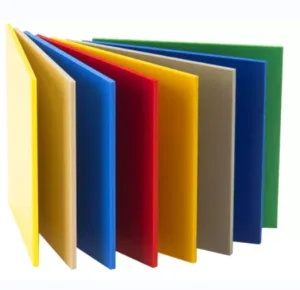
Heavy-duty wear pads, high-impact piling cushions, large-diameter cast tubes, and precision machined assemblies ready for global deployment.
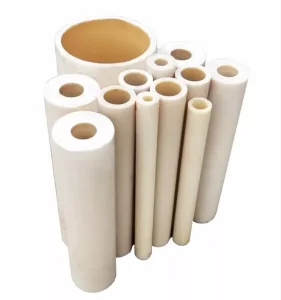
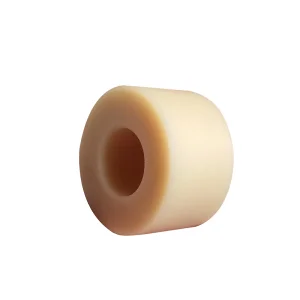
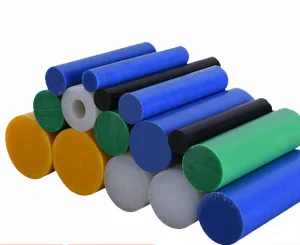
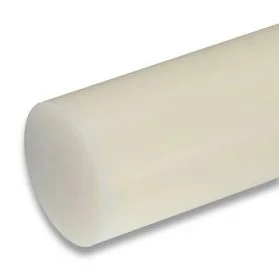
Comprehensive engineering insights addressing design tolerances, machining parameters, moisture compensation, and supply chain logistics.
Monomer Cast (MC) Nylon is synthesized directly within the tool via liquid anionic polymerization of caprolactam at atmospheric pressure. This method produces substantially higher molecular weights, elevated crystallinity percentages, superior compressive strength, and minimal internal stress, allowing outer diameters to reach 1,200mm. Conversely, Extruded PA66 relies on melt pressure screw extrusion, delivering slightly higher tensile yield limits and hardness in thinner walls (under 100mm), but suffers from greater residual hoop stress and heightened risks of center voiding in large profiles.
Polyamides are hygroscopic materials. Standard PA6 absorbs approximately 2.5% moisture at 50% relative humidity, expanding roughly 0.2% to 0.3% per 1% of absorbed water by weight. For precision subsea or underwater applications, mechanical engineers should either factor this bore closure into initial boring dimensions, precondition the parts in warm water to reach equilibrium before final sizing, or switch directly to POM-C Acetal or UHMWPE, which feature moisture absorption rates below 0.01%.
Drilling a 120mm bore inside a 180mm solid rod wastes over 44% of prime resin into low-value chips. Deep-hole drilling also generates significant frictional heat that often unleashes internal stress, causing rod bow or surface micro-cracking. Starting directly with a calibrated tube blank speeds up cycle times by 35% to 60%, extends cutting insert lifespan, and minimizes internal taper distortions across long profiles.
Plastics have low thermal conductivities and low elastic moduli compared to metals. Use razor-sharp positive rake inserts (top rake 15°–30°, relief angle 10°–15°) with polished flutes (such as PCD or uncoated micro-grain carbide). Maintain high feed rates (0.15–0.40 mm/rev) with cutting speeds between 250 and 500 m/min to carry heat away within continuous curled chips, preventing surface gumming. Employ pneumatic air-blast cooling or clean water-soluble coolant mists where possible.
In our centrifugal casting production cells, balanced steel molds are rotated dynamically at controlled G-force velocities, driving heavier polymer chains against the boundary while purging air bubbles to the core. In continuous extrusion, laser micrometers and ultrasonic sensors monitor wall concentricity across 4 quadrants in real time. We strictly limit total radial runout (TIR) to within 1.5% of total outer diameter.
Every commercial consignment includes an EN 10204 3.1 Inspection Certificate containing specific batch test metrics (specific gravity, tensile yield, Charpy impact strength, and heat deflection temperature). On request, we provide third-party SGS/TÜV test summaries for RoHS 3, REACH SVHC, FDA food contact statements, raw virgin resin declarations, and comprehensive coordinate CMM inspection reports.
Send your CAD drawings, required outer/inner dimensions, intended application media, and quantity requirements. Our manufacturing engineers will confirm suitable formulations, custom tooling options, and direct mill FOB/CIF pricing.