Primary Lineup
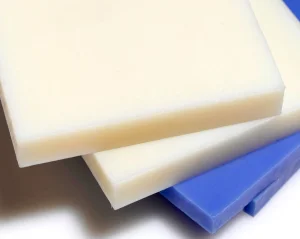
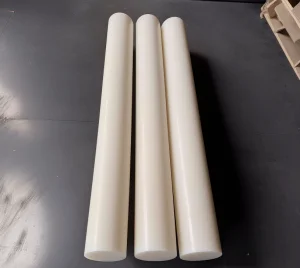
Engineered Solid Bars & Semi-Finished Stock Shapes
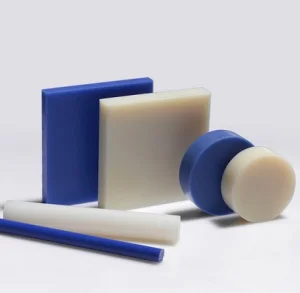
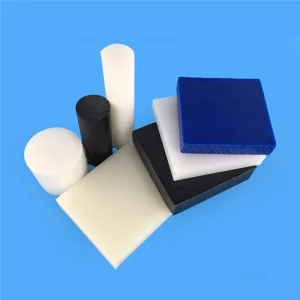
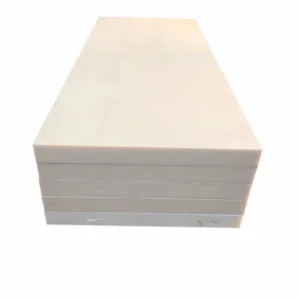
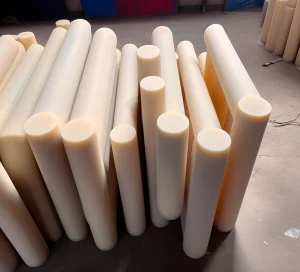
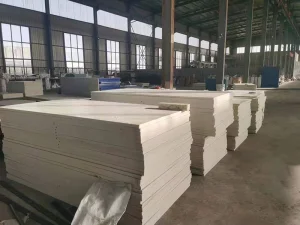
Explore our premium factory-direct solid bars and engineered sheet platforms. Manufactured to tighter tolerances with custom annealing processes to prevent machining deformation.


Industry Technical White Paper
Global Industrial Status: The Evolution of Solid Engineering Polymers
In modern industrial manufacturing, high-density polymer solid bars have emerged as the foundational substrate replacing non-ferrous metals like bronze, brass, cast iron, and aluminum alloys in heavy wear, dynamic load, and aggressive chemical environments.
65%
Weight Reduction
Average structural weight saving compared to conventional bronze and stainless steel bushings.
3.2x
Wear Life Multiplier
Longer operating life cycles realized in abrasive, unlubricated mechanical slide systems.
±0.02mm
Precision Machinability
Consistent CNC turning and milling tolerance achieved via secondary thermal stress annealing.
Across the aerospace, heavy construction, automated conveyor, and subsea fluid handling sectors, industrial engineers are confronting strict operational mandates: minimize parasitic mass, eliminate external grease lubrication, combat galvanic corrosion, and suppress mechanical vibration noise. Standard unreinforced metals frequently fail due to friction-induced galling and accelerated oxidation under saline or chemically hostile conditions. High-performance solid bar stock—specifically Cast Nylon PA6G, extruded POM-C, UHMWPE, and cross-linked PTFE—directly resolves these failure modes.
According to comprehensive material tribology benchmarks, engineering polymers operate with dynamic coefficients of friction as low as 0.08 against case-hardened steel counterfaces. By utilizing advanced liquid monomer casting (MC) and continuous ram extrusion, solid bars feature isotropic molecular structures that eliminate the structural voids, micro-porosity, and localized stresses that typically undermine inferior polymer rods during high-speed CNC milling and turning operations.
Critical Quality Factor: Thermal Stress-Relief Annealing
A primary failure mode reported by precision machine shops sourcing solid bars is center-line cracking or warping during axial deep-hole boring. At SHUNDA, every batch of solid rods undergoes a computer-controlled, multi-phase thermal annealing cycle in circulating hot-air and oil-bath ovens. This gradual thermal equalization dissipates inner molecular shear stresses caused during rapid quenching, guaranteeing straightness, circularity, and complete dimensional stability under CNC cutting tools.
Efficiency Engine
The Chinese Factory Advantage: Integrated Supply Chain & Processing Scale
How SHUNDA's direct manufacturing infrastructure in Hebei Province delivers an unbeatable balance of chemical-grade resin purity, high production velocity, and cost predictability for overseas buyers.
Direct Virgin Resin Formulation
We eliminate supply chain middlemen by sourcing 100% prime-grade virgin caprolactam monomer, polyoxymethylene granules, and ultra-high-density resin pellets directly from tier-one petrochemical producers. No regrind, filler dilution, or recycled impurities are tolerated in our solid bar stock.
Advanced Continuous Tooling
Equipped with 30+ horizontal and vertical automated extrusion lines alongside static vacuum-assisted vertical casting towers. We produce large-format solid round bars ranging from Ø10mm up to Ø800mm with zero inner shrinkage cavities, uniform wall hardness, and surface finish Ra ≤ 1.6 μm.
Vertical CNC Turning Capacity
Beyond supplying raw stock shapes, our in-house modern CNC machining workshop features multi-axis turning centers, CAD/CAM CAM programming, and CMM laser measurement, converting semi-finished solid stock directly into finished gears, rollers, and impact bushings with zero secondary handling markups.
Engineering Versatility
Engineered Solid Bar Applications Across Critical Industries
From deep-foundation civil engineering to hygienic automated pharmaceutical packaging, our solid polymer rods are custom-formulated to perform under specific operational stresses.
Construction & Piling Foundations
Black specialized impact-absorbing MC Cast Nylon round bars are machined into heavy hammer cushions for hydraulic and diesel pile drivers. With high elasticity and energy absorption, they protect steel hammer rams from catastrophic fatigue failure while transmitting maximum driving force.
Conveyor, Food & Packaging Automation
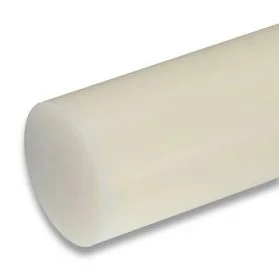
Solid White and Black POM (Acetal) rods are precision turned into ultra-smooth timing sprockets, starve wheels, and linear slide bearings. Certified for low water absorption (<0.2%), POM rods maintain absolute pitch precision under wet washdown and aggressive sanitizing chemical cycles.
Port Machinery & Mobile Cranes
Cast MC Nylon (Blue / Oil-filled) solid rounds are widely turned into large wire rope sheaves, slide guide pads, and outrigger bearing plates. The self-lubricating additives dramatically reduce internal cable friction, tripling steel wire rope operational lifespan.
Material Engineering Index
Solid Bar Polymer Selection Matrix & Mechanical Performance
Engineered reference data to assist senior mechanical designers, procurement managers, and production engineers in selecting the optimal thermoplastic composition.
| Polymer Variant | Tensile Strength (MPa) | Impact Strength (kJ/m²) | Moisture Absorption (24hr %) | Continuous Service Temp (°C) | Machining Rating | Primary Industrial Use |
|---|---|---|---|---|---|---|
| MC Cast Nylon (PA6G) | 80 – 92 | ≥ 6.0 (Charpy) | 0.7% – 1.2% | -40 to +115 °C | Excellent | Cranes, heavy pulleys, pile-driver rings, gearwheels |
| POM-C (Acetal Copolymer) | 65 – 72 | ≥ 7.5 (Notched) | 0.2% | -50 to +105 °C | Superior | Precision gears, valve components, fluid meters, rollers |
| UHMWPE (1000 Grade) | 22 – 35 | No Break | < 0.01% | -150 to +80 °C | Good | Chute wear strips, scrapers, marine dock fenders |
| HDPE (High Density PE) | 24 – 30 | ≥ 9.0 | < 0.01% | -50 to +80 °C | High | Chemical tanks, cryogenic seals, conveyor slide plates |
| PTFE (Virgin Polytetrafluoroethylene) | 20 – 35 | ≥ 16.0 | < 0.01% | -200 to +260 °C | Moderate | High-temp valve seats, chemical gaskets, acid lab ware |
| ABS (High Impact) | 40 – 50 | ≥ 18.0 | 0.3% | -20 to +75 °C | Superior | Rapid tooling prototypes, housings, structural models |
Industry Horizon
Emerging Trends & International Procurement Priorities
Strategic purchasing managers across North America, Europe, Southeast Asia, and the Middle East are re-evaluating supply chain resilience and polymer lifecycle engineering.
Solid Lubricant Infusion
Traditional clean polymer bars are transitioning to internally lubricated variants. Infusing virgin PA6 with liquid mineral oil, molybdenum disulfide (MoS2), or PTFE micro-powders drops friction by up to 50%, enabling maintenance-free operations in closed gear assemblies.
Supply Chain Redundancy & Dual Sourcing
Global original equipment manufacturers (OEMs) demand reliable raw stock supplies with pre-verified certificates of analysis (COA), RoHS, and REACH compliance. Factory direct delivery with full export palletizing guarantees continuity amidst unpredictable local inventory shortages.
Zero-Defect Internal Quality Assurance
Modern machine shops are utilizing high-speed machining centers where an inner casting void results in broken cutters and ruined cycles. SHUNDA implements automated ultrasonic non-destructive testing (NDT) across thick-section cast rods to verify internal solid density before packing.
Technical Clarity
Engineering Questions & Procurement FAQ
Transparent technical guidance addressing polymer machinability, thermal stabilization, chemical tolerances, and international export logistics.
What is the key difference between Extruded PA6 and Cast MC Nylon solid bars?
Extruded Nylon (PA6) is manufactured through continuous screw extrusion of pre-polymerized pellets, yielding higher moisture absorption and slight molecular orientation. Monomer Cast (MC) Nylon is polymerized directly within the mold via liquid caprolactam monomer, achieving a higher molecular weight, superior crystalline uniformity, increased compressive yield strength, and lower internal residual stresses.
How do you eliminate centerline porosity and warping in large diameter solid rods?
Centerline porosity occurs when the exterior skin cools and contracts faster than the thermal core. SHUNDA utilizes vertical oil-heated casting molds with continuous pressure compensation, followed by a secondary annealing process inside temperature-regulated convection ovens. This completely neutralizes inner volumetric shrink cavities and internal stress gradients.
Can you provide custom colors and custom cut-to-length billets?
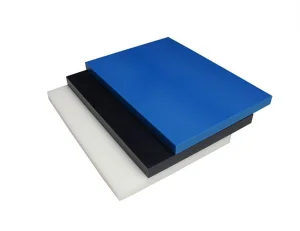
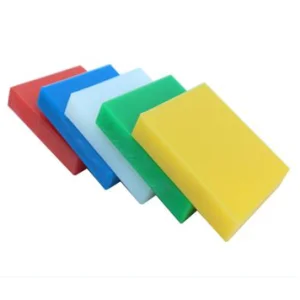
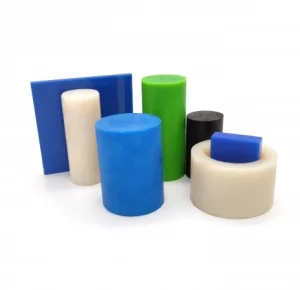
Yes. While natural (ivory/white), black, and engineering blue are our standard production lines, we compound custom masterbatch colors (including high-visibility safety yellow, green, and industrial red) for order quantities matching our minimum extrusion batch. We also provide precision bandsaw pre-cutting to customized lengths to reduce customer handling and scrap waste.
What tooling and feeds are recommended for CNC turning of POM and Nylon bars?
Polymers have low thermal conductivity compared to metals. Use high-speed steel (HSS) or razor-sharp unpolished carbide tools with positive rake angles (15° to 30°) and large clearance angles. Maintain generous feed rates to ensure heat is ejected with the chip rather than accumulating within the workpiece. Compressed air cooling or water-soluble flood coolants are recommended for tight tolerances.
How are solid plastic bars packaged for long-distance container shipping?
Solid bars are bundled with protective multi-layer PE film to shield surfaces from moisture and atmospheric humidity changes. Bundles are braced into heavy-duty fumigated wooden crates or steel-reinforced pallets with end-capping protection to eliminate warping, sagging, or surface abrasion during transoceanic shipping.
What technical quality documentation is provided with our shipment?
Every commercial order is accompanied by a comprehensive Mill Test Certificate (MTC) and Certificate of Analysis (COA) documenting density, hardness (Shore D/Rockwell), tensile strength, and heat deflection temperatures. Material Safety Data Sheets (MSDS), RoHS compliance declarations, and REACH certifications are systematically provided.
Complete Catalog Series
High-Performance Engineering Rods, Sheets & Fabricated Profiles
Broaden your production capability with our full spectrum of specialized polymer products, custom colors, and pre-machined stock bars.