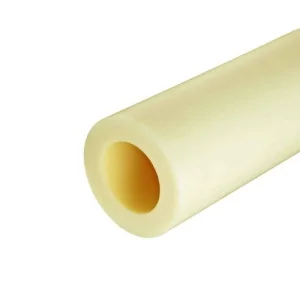
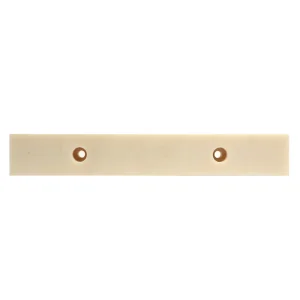
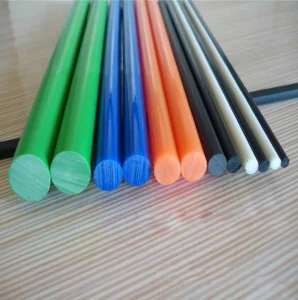
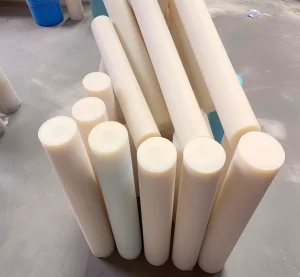
High-Performance Engineering Stock & Machined Components
Explore our foundational polymer forms, cast billets, and precision CNC components certified for critical OEM and industrial assembly operations worldwide.
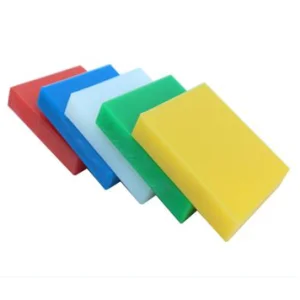
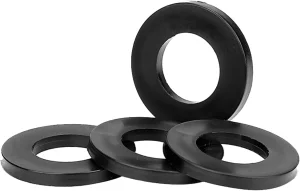
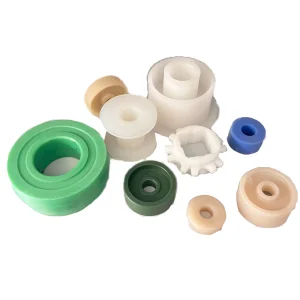
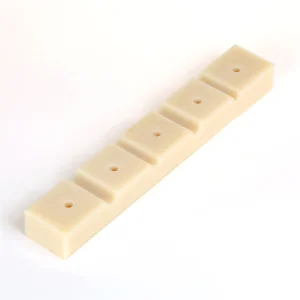
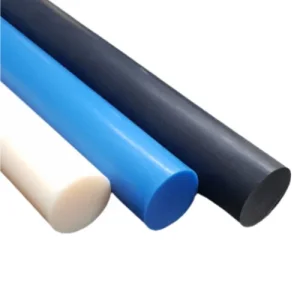
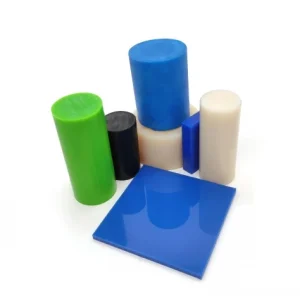
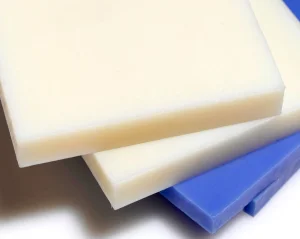
High-Quality PTFE Bar Manufacturing & Export Governance
Polytetrafluoroethylene (PTFE) solid bars represent the zenith of synthetic fluoropolymer engineering. Characterized by unparalleled chemical inertness, high thermal stability, and an exceptionally low coefficient of friction, high-grade PTFE bars serve as non-negotiable raw stock for critical components across demanding global markets.
Technical Distinction in Sintering: As an experienced exporter of fluoropolymer bars, we differentiate between ram-extruded and compression-molded production regimes. Ram extrusion provides exceptional axial uniformity for continuous Swiss-lathe processing, while hydrostatic compression molding accommodates ultra-large billet diameters (up to 500mm+) with minimal residual isotropic stress, ensuring finished components undergo zero dimensional drift during high-temperature cycling.
Global Enterprise Procurement Dynamics for PTFE Bars
Industrial procurement heads face severe volatility when sourcing virgin and filled fluoropolymers. Understanding regional regulatory hurdles, material grade authentication, and total cost of ownership (TCO) defines tier-one supply chains.
Virgin vs. Reprocessed Material Integrity
Global buyers must navigate the margin pressures of reclaimed PTFE. Reprocessed bars exhibit microporosity, reduced dielectric breakdown strength, and shortened fatigue life. Certified exporters implement strict inline resin traceability, guaranteeing 100% virgin dispersion or suspension grades from vetted monomer producers.
- Zero filler contamination in pure grade virgin bars
- Fully traceable batch certificate of analysis (CoA)
- Tensile elongation retention above 280%
PFAS / REACH Compliance & Sustainability
With aggressive PFAS legislation tightening in the European Union (ECHA) and United States (EPA), procurement departments require clear toxicological data sheets. Tier-one PTFE bar exporters furnish documented declarations showing absence of banned PFOA, PFOS, and restricted short-chain surfactant precursors.
- Full REACH SVHC declaration compliance
- RoHS directive 2011/65/EU and 2015/863 conformity
- Low-emissions sintering curing verifications
Total Cost of Ownership & Machining Efficiency
Low-grade extruded rods warp during deep boring, inducing costly tool wear and high scrap rates in automated Swiss turning centers. High-quality PTFE bars undergo uniform thermal annealing to relieve internal casting stresses, delivering tight circularity and predictable chip breaking.
- Annealed stress relief eliminates post-turn distortion
- Tight OD tolerances (h9 to h11 standards)
- Continuous length options to minimize bar-feeder waste
Macro-Industry Technical Solutions: Virgin & Filled Formulations
While virgin PTFE solves fundamental chemical and friction challenges, specialized operational parameters demand filled compounds to reduce cold flow, elevate compressive strength, and alter electrical conductivity.
| PTFE Grade Formulation | Composition Ratio | Tensile Strength (MPa) | Deformation Under Load (14 MPa, 24h) | Primary Industrial Sector | Target CNC Machined Components |
|---|---|---|---|---|---|
| Virgin PTFE Bar | 100% Virgin Fluoropolymer | ≥ 25.0 | 12% - 15% | Semiconductor, Pharma, Food | Wafer carrier rollers, sanitary valve seats, pure diaphragm cores |
| Glass-Filled PTFE Bar | 15% to 25% E-Glass Fiber | ≥ 18.0 | 4% - 6% | Cryogenics, Chemical Valve OEM | Cryogenic ball valve seats, compression gaskets, heavy flange rings |
| Carbon-Filled PTFE Bar | 25% Amorphous Carbon | ≥ 16.5 | 3% - 5% | Automotive, High-Speed Fluid Handling | Piston rings, dynamic shaft seals, fuel pump sliding guides |
| Graphite-Filled PTFE Bar | 15% Carbon + 5% Graphite | ≥ 17.5 | 4% - 5% | Dry-Running Vacuum Systems | Self-lubricating rotary compressor vanes, non-lubricated bushings |
| Bronze-Filled PTFE Bar | 40% to 60% Spherical Bronze | ≥ 15.0 | 2% - 3% | Heavy Hydraulic Cylinders | Hydraulic piston guides, heavy-duty wear bands, excavator bearings |
Semiconductor & Ultra-High-Purity Handling
Virgin PTFE bars extruded with specialized contamination-free ovens provide atomic-level chemical resistance against piranha etch, hydrochloric acid, and ammonium fluoride, eliminating trace metallic ion leeching.
Aerospace & Cryogenic Fuel Infrastructure
Retaining ductile characteristics at -196°C liquid nitrogen and -253°C liquid hydrogen conditions, our stabilized PTFE stock guarantees zero brittle fracturing during high-pressure valve cycling.
Offshore Oil & Gas Dynamic Sealing
Engineered to resist downhole sour gas (H2S), high carbon dioxide concentrations, and abrasive sediment, filled PTFE rods serve as spring-energized seal jackets providing decades of leak-free service life.
Fluoropolymer Technology Roadmap (2025–2030)
The fluoropolymer industry is undergoing paradigm shifts driven by clean energy scaling, molecular weight advancements, and circular economy compliance requirements across global manufacturing hubs.
Nanocomposite Doping & Graphene Blends
Deployment of graphene-doped and carbon-nanotube reinforced PTFE bars. These hybrid compounds achieve a 400% reduction in abrasive wear rates without sacrificing low-friction traits, unlocking maintenance-free components for electric vehicle (EV) e-axle assemblies.
Modified TFM Fluoropolymer Expansion
Scaling second-generation modified PTFE (such as TFM) bar extrusion. Featuring denser molecular packing, TFM stock provides dramatically lower gas permeation rates and smoother turned surface finishes below Ra 0.2µm, optimizing semiconductor valve longevity.
Chemical Pyrolysis & Monomer Upcycling
Closed-loop circular export programs utilizing high-temperature chemical depolymerization to break clean manufacturing turning scraps back down into pure tetrafluoroethylene (TFE) monomer, generating zero-carbon-penalty virgin-grade bars.
Smart Sensor Embedded Extrusion Automation
Full implementation of real-time acoustic emission sensors and inline X-ray tomography on high-speed ram extrusion lines. This eliminates internal voids, micro-fissures, and core density deviations before billets are packaged and prepared for trans-oceanic export shipping.
Commercial Logistics, Quality Frameworks & Global Port Clearness
A successful export partnership extends beyond superior material chemistry to encompass precision packaging, moisture prevention, and flawless export customs clearance protocols.
Material Certifications & Testing Rigor
Each production run undergoes rigorous verification in our internal metrology labs. Full mill certificates accompany shipping manifests, including density verification (ASTM D792), tensile strength/elongation testing (ASTM D4894), and hardness (Shore D via ASTM D2240).
Export Packaging & Dimensional Protection
Because PTFE possesses low surface hardness, unprotected bars incur bending and scratch damage during multi-modal ocean transit. We mandate individual plastic sleeve encasement, heavy-duty honeycomb tubing, desiccated moisture barrier bags, and fumigated solid timber export crates.
Incoterms & Rapid Distribution Hubs
Leveraging major ports in Qingdao, Tianjin, and Shanghai, we support FOB, CIF, DDP, and DAP terms. For recurring OEM accounts across Europe, North America, and Southeast Asia, scheduled container deliveries ensure seamless safety buffer stock at destination ports.
Frequently Asked Questions by Industrial Buyers & CNC Engineers
Direct technical feedback addressing tolerances, machining setups, and chemical viability for high-volume engineering procurement.
What is the primary operational difference between ram-extruded and molded PTFE bars?
Ram extrusion is continuous, producing rods with lengths typically from 1 to 3 meters, perfectly suited for automated lathe feed. Compression molding produces larger-diameter billets (up to 500mm+) with uniform isotropic internal stress distribution, preventing warp during asymmetric CNC milling.
How do thermal expansion properties affect PTFE bar machining tolerances?
PTFE exhibits a significant coefficient of linear thermal expansion (CLTE: 10–15 × 10⁻⁵ /K). Around 19°C–21°C, a phase transition triggers an abrupt 1% volume change. Precision machining requires climate-controlled shops held strictly at 23°C (±1°C) and water-soluble coolants during turning.
Can virgin PTFE bars be deployed in high-wear mechanical gear applications?
Pure virgin PTFE undergoes cold creep and rapid wear under unlubricated frictional contact. For gear, sheave, and heavy wear components, we recommend Cast MC Nylon, POM-C (acetal), or Bronze/Carbon-filled PTFE variants that substantially elevate load-bearing capacity.
What food and pharmaceutical compliance standards do your PTFE bars satisfy?
Our virgin PTFE rods satisfy standard compliance criteria for FDA 21 CFR 177.1550, EU 10/2011, and USP Class VI. We execute comprehensive extraction testing to confirm absence of low-molecular-weight fluorinated oligomers or plasticizer additives.
What standard outer diameter (OD) dimensional tolerances are maintained for export?
Standard ram-extruded bars feature OD tolerances of +0.2mm to +1.5mm oversize to allow finish turning to exact DIN/ISO specifications. For centerless ground bars, we reliably maintain ISO h9 and h10 tolerances directly out of our export packing facility.
High-Durability Polymer Billets, Plates & Heavy Wear Stock
Review additional precision stock forms including MC cast nylon, polyolefin plates, and high-load structural cushions manufactured to international engineering tolerances.