
Direct Mill Inventory Release
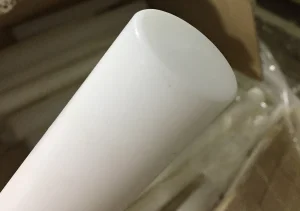
Featured Industrial Polymer Stock & Bins Substrates
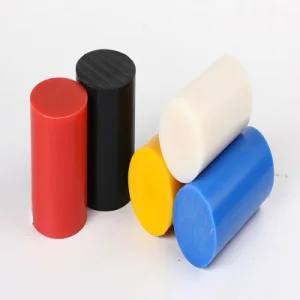
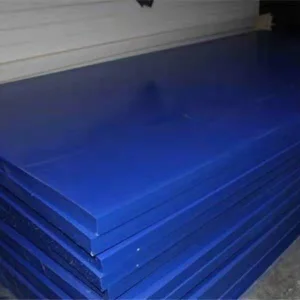
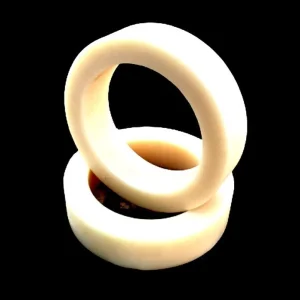
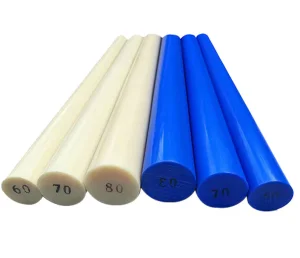
Immediate-dispatch semi-finished billets, engineered cast slabs, and modular logistics structural elements optimized for heavy manufacturing lines.
Enterprise Engineering Whitepaper
Strategic Manufacturing Dominance: The China Production Advantage
High-density polyethylene (HDPE), polypropylene (PP) logistics bins, and custom-machined cast polyamides operate as the backbone of modern global supply chains. Sourcing through advanced China-based factories provides irreplaceable competitive leverage.
Upstream Petrochemical Integration
Direct access to localized monomer refining yields unmatched cost resilience. Our Xingtai manufacturing base controls compound blending, high-molecular weight catalysts, and thermal stabilization batches in-house, completely insulating clients from Western resin spot-market volatility while sustaining strict Melt Flow Index (MFI) control.
Massive Tonnage Injection Capacity
Handling structural plastic bins requires ultra-high tonnage clamp mechanisms. Chinese plants utilize 1,800T to 4,000T servo-hydraulic injection systems paired with multi-cavity hot runner molds, allowing structural wall ribs, RFID recess pockets, and impact-reinforced base collars to form seamlessly without thermal stress warping.
Dual-Stream: Tooling to CNC Machining
Unlike single-process competitors, SHUNDA integrates both high-volume standardized container molding and 5-axis precision CNC machining for custom bin dunnage, UHMWPE slide tracks, PA6 wear shoes, and POM latch assemblies under one single facility roof.
20+
Years Chemical & Polymer Heritage
3,200T
Max Injection Clamp Capability
±0.02mm
CNC Dunnage Milling Precision
<12h
Global Engineering Ticket Turnaround
Future Horizon: Autonomous Robotics & Circular Polymers
The industrial container landscape is pivoting rapidly toward Automated Storage and Retrieval Systems (ASRS) and carbon-mandated circularity.
ASRS High-Toleranced Geometries
High-speed automated micro-fulfillment shuttles require container deflection rates under 0.8% under maximum load. We engineer flexural-modulus enhanced PP compounds, reinforced with micro-glass fibers, ensuring absolute planar flat bases across extreme robotic acceleration corridors.
Smart IoT & In-Mold Sensor Integrations
Embedding dual RFID tags, high-contrast permanent 2D Data Matrix codes, and anti-static ESD-dissipative masterbatches directly into container walls during the injection cycle. This safeguards semiconductor assembly lines and delivers instant track-and-trace auditability.
PCR Circular Closed-Loop Engineering
Meeting EU packaging directives via post-consumer recycled (PCR) resin formulating without sacrificing tensile yield strength. Our compounding labs refine multi-fractional blends guaranteeing equal drop-impact resistance comparable to virgin resin grades.
Engineering Matrix & Specification
Industrial Application Matrix: Selecting the Right Container Polymer
Deploying the incorrect resin chemistry in mission-critical logistics triggers catastrophic fractures, static buildup, or chemical leaching. Review our empirical application benchmark below.
| Application Scenario | Recommended Polymer Formulation | Key Mechanical Metrics | Chemical & Environmental Resilience | Associated SHUNDA Substrates |
|---|---|---|---|---|
| Cold-Chain & Deep-Freeze Storage Automated meats, pharma & cryogenic logistics |
Ultra-High Molecular Weight PE / Virgin HDPE | Charpy Impact: >110 kJ/m² at -40°C; Tensile Strength: 24 MPa | Resistant to sanitizers, zero embrittlement down to -50°C, zero water absorption | HDPE Sheet UHMWPE Pad |
| Automotive Stamping & Powertrain Assembly Heavy metal brackets, engine blocks, transaxles |
Heavy-Duty Cast PA6 / Reinforced PP with Custom Cast Dunnage | Compressive Strength: >90 MPa; Shore D Hardness: 82D | Total resistance to motor oils, gear lubricants, hydraulic fuels, and cutting fluids | Cast Nylon Board PA66 Bar |
| High-Tech Electronics & Cleanroom PCB SMT Static-sensitive subassemblies, robotics feeders |
Carbon-Nanotube Filled Conductive PP / Anti-Static ABS | Surface Resistivity: 10⁴ - 10⁶ Ω/sq; Flexural Modulus: 1,600 MPa | Zero outgassing, static discharge elimination, isopropyl cleanable | ABS Sheet PP Box Core |
| Continuous Chemical Etching & Plating Wash Acid bath dips, anodizing lines, corrosive parts |
Homopolymer Polypropylene (PP-H) / PTFE Liners | Yield Stress: 35 MPa; Thermal Distortion Temp: 110°C | Inert against concentrated H₂SO₄, HCl, NaOH baths; stress crack immune | PP Tube PTFE Stock |
| High-Speed Automated Warehouse Conveyors Roller transfer shoes, low-decibel glide bins |
Polyoxymethylene (POM Acetal) Base Inserts / Cast MC Nylon | Dynamic Coefficient of Friction: 0.19; Rockwell M88 | Self-lubricating, zero dimensional expansion in humid distribution hubs | POM Rod MC Nylon Tube |
Enterprise Procurement Framework
Global Procurement Needs: Overcoming International Supply Bottlenecks
For multinational Tier-1 distributors, logistics conglomerates, and OEM assembly hubs, procurement failure points almost never stem from pure price per unit—they stem from dimensional creep, container fatigue, and ocean freight inefficiency.
Interstacking Ratio & Cubing Optimization
Empty container return logistics can erode profitability. We engineer nested-to-stack ratios up to 75% for collapsible containers and tapered stacking tote bins. In shipping 40ft High Cube (HC) sea containers, our molded footprints precisely align with standard ISO 1200x1000mm and 1200x800mm Euro-pallets, eliminating dead ocean freight volume.
Rigorous Cyclic Drop & Hydrostatic Creep Testing
Global corporate procurement requires guaranteed cycle durability. Every manufacturing batch undergoes ASTM D642 compressive testing (simulating dynamic pallet stacking up to 6-high for 12 months) and ASTM D5276 multi-angle drop tests from 1.8 meters at -20°C ambient temperatures before export documentation clears.
Full Material Traceability & RoHS/REACH Audit
Regulatory non-compliance in European and North American customs poses high risk. SHUNDA certifies every production lot with lot-numbered raw virgin Certificates of Analysis (CoA), verifying complete absence of SVHCs (Substances of Very High Concern), nonylphenols, and heavy-metal pigments across all colored bin batches.
Procurement & Engineering Due Diligence
Frequently Asked Technical Questions (FAQ)
Clear, authoritative technical answers directly from our factory engineering desk regarding tolerances, compounding, tooling lead times, and global shipping logistics.
What polymer compound is best suited for cold storage warehouse bins: HDPE or PP?
For operational temperatures dipping below 0°C (and especially down to -40°C in blast freezing facilities), High-Density Polyethylene (HDPE) is categorically superior. Polypropylene undergoes a glass transition phase between 0°C and -10°C, causing typical PP copolymer chains to turn brittle and shatter under routine fork truck handling or drop impact. HDPE preserves ductile impact performance below -50°C. If high rigidity on overhead automated racking is necessary in cold chambers, we introduce fractional-melt HDPE resins or cold-impact modified PP copolymer masterbatches.
How does SHUNDA prevent base warping and deflection on heavy-load automated bins?
Base deflection in high-speed ASRS operations leads to shuttle jams and sensor misreads. Our engineering design relies on finite element analysis (FEA) to place orthogonal waffle-grid rib patterns across bottom plates. Crucially, during the injection cycle, we regulate conformal mold cooling channels to eliminate uneven thermal contraction across thick rib junctions. For extreme loads exceeding 50 kg per bin, we co-mold or machine internal structural runner plates from UHMWPE or PA6 sheet stock to reinforce high-stress load points.
Can custom interior dunnage, partition slots, or CNC wear liners be integrated directly into container orders?
Yes. This is one of SHUNDA's defining competitive edges. While standard container companies supply empty plastic boxes, our CNC machining workshop processes customized partition dividers, CNC-routed foam/UHMWPE cradles for sensitive automotive engine parts, and machined self-lubricating nylon guide rails that snap or bolt directly into molded container sidewall pockets.
What are the minimum order quantities (MOQ) and production lead times for custom colors and custom-molded bins?
For standardized stock container sizes utilizing stock colors (Industrial Blue, Grey, Red), minimum order quantities start at 300 to 500 units, dispatchable within 7 to 10 days. For custom Pantone/RAL matched colors, the MOQ corresponds to a 2.5-ton resin compounding batch (typically 1,000 to 1,500 medium-sized bins). For newly fabricated custom injection tooling molds, standard steel cutting and trial T1 sample delivery requires 35 to 45 business days.
How does SHUNDA assure export ocean cargo protection against moisture, UV degradation, and warping?
Bulk export shipments crossing equatorial corridors experience extreme thermal cycling inside shipping containers. We formulate our exterior and agricultural bin polymers with Hindered Amine Light Stabilizers (HALS) and UV944 inhibitors. For shipping, bins are stacked under precision tension strapping on export-treated pallets, wrapped with breathable, multi-layered anti-static stretch film, and fitted with heavy-duty corrugated corner protectors to prevent side crush under dynamic vessel roll.
Engineered Stock Catalog
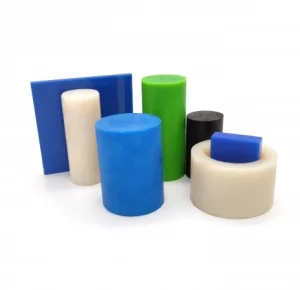
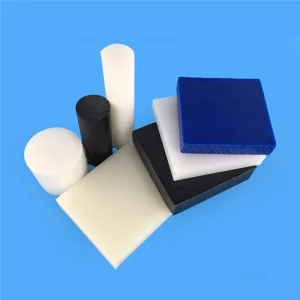
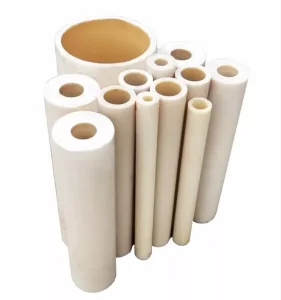
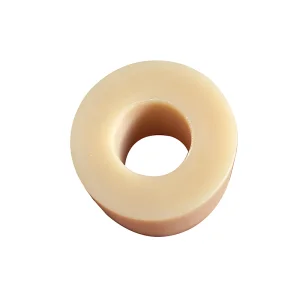
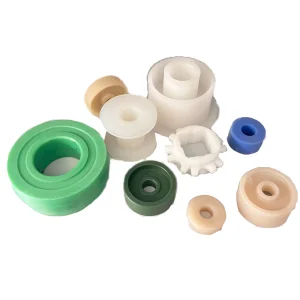
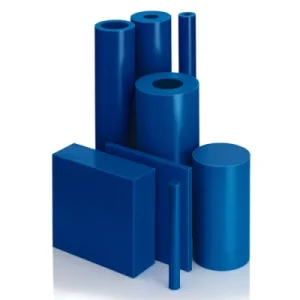
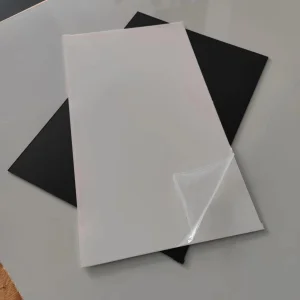
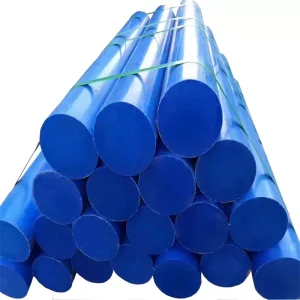
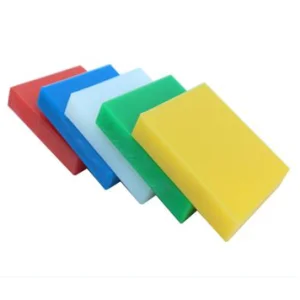
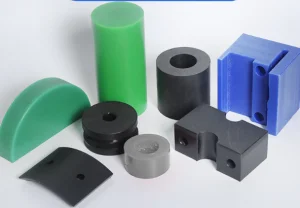
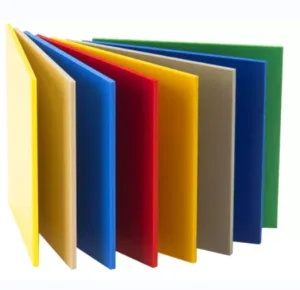
High-Performance Semi-Finished Stock & Machined Elements
Engineered sheets, cast blocks, and precision-machined polymer wear profiles ready for worldwide integration into material handling systems.
Fast-Track Engineering Response
Consult Our Polymer Metallurgists & Tooling Directors
Send 2D/3D part drawings (STEP, DWG, PDF) or tender specifications. We deliver mold flow analysis, material compound recommendations, and complete FOB/CIF volume quotations within 12 business hours.