
Featured Industrial Polymers & PA6/PA66 Semis (Series A)
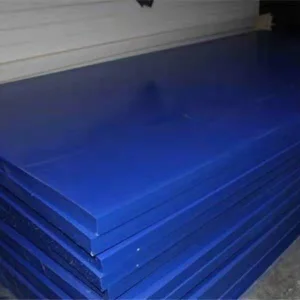
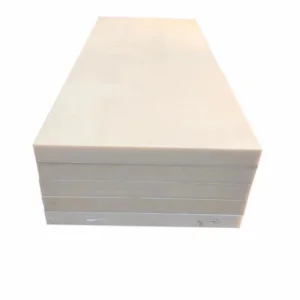
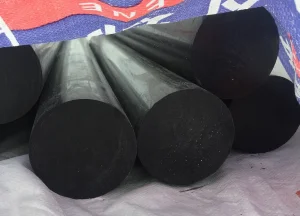
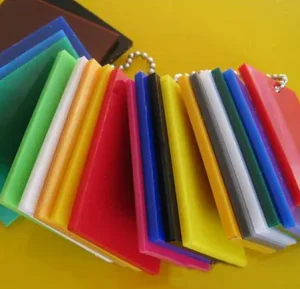
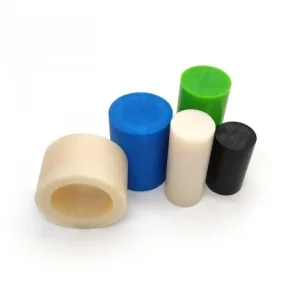
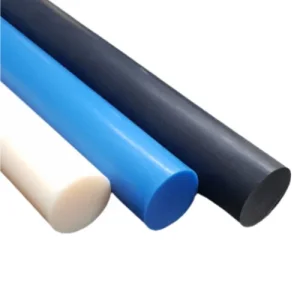
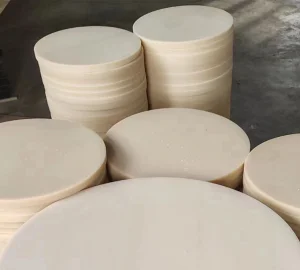
Direct factory production including cast nylon stock shapes, rigid outrigger pads, and extruded polyamides tested for tight-tolerance CNC routing and heavy operational load-bearing.
Engineering Whitepaper: Polymer Morphologies of Heavy PA66 Blocks
Why leading mechanical engineering teams specify extruded and molded Polyamide 66 over standard aliphatic polyamides for mission-critical sliding mechanisms, thermal insulators, and structural housings.
Crystalline Density & Rigidity
Polyhexamethylene adipamide (PA66) possesses a symmetric macromolecular backbone featuring alternating hexamethylenediamine and adipic acid repeating groups. This dense arrangement facilitates an exceptionally high degree of hydrogen bonding between antiparallel amide groups, yielding a higher crystalline melting point (~260°C) compared to PA6 (~220°C). This fundamental molecular structure enables thick PA66 blocks to retain mechanical stiffness and creep resistance under elevated thermal thresholds.
Controlled Annealing Cycles
Internal stress in large solid plastic blocks (ranging from 20 mm to over 150 mm in thickness) is the primary cause of dimensional warping during CNC milling. High-quality PA66 block factories deploy closed-loop, microprocessor-controlled oil or air annealing ovens. By raising the temperature above the polymer's glass transition temperature (Tg) and soaking for up to 48 hours before gradual ramping, internal stresses are systematically relieved, delivering ultra-stable machine stock.
Tribological & Dynamic Performance
PA66 blocks demonstrate an inherent resistance to frictional wear, galling, and cavitation under unlubricated and boundary-lubricated conditions. With dynamic friction coefficients against polished carbon steel ranging from 0.25 to 0.35, the material acts as a dry, self-sacrificial bearing surface. Modifying the block with internal MoS2 (Molybdenum Disulfide) or solid PTFE particulates unlocks superior PV ratings (Pressure-Velocity) for continuous rotary assemblies.
Comparative Polymer Matrix: PA66 vs. PA6, POM, and UHMWPE
Selecting optimal block polymers for mechanical engineering depends strictly on working conditions, operating temperatures, chemical exposure, and allowable dynamic clearances.
| Property Parameter (ISO / ASTM) | PA66 Solid Block | Cast MC PA6 Sheet/Block | Polyacetal (POM-C) | UHMWPE Plate |
|---|---|---|---|---|
| Tensile Strength at Yield (23°C, Dry) | 85 MPa | 75 - 80 MPa | 65 - 70 MPa | 22 - 25 MPa |
| Modulus of Elasticity (Tensile) | 3,400 MPa | 3,000 MPa | 2,800 MPa | 700 MPa |
| Melting Point (DSC Peak) | 260 °C (500 °F) | 220 °C (428 °F) | 165 °C (329 °F) | 135 °C (275 °F) |
| Continuous Service Temperature | -40 to +110 °C | -40 to +105 °C | -50 to +100 °C | -150 to +80 °C |
| Moisture Absorption (Equilibrium, 50% RH) | 2.5 - 2.8% | 3.0 - 3.2% | 0.2% | < 0.01% |
| Machinability & Chip Formation | Clean, continuous ribbon | Excellent, brittle chip | Crisp, burr-free | Fibrous, razor-tooling required |
| Primary Application Envelope | High thermal/stress gear blanks, heavy slide pads | Heavy sheaves, large hollow rollers, crane pads | Precision dimensional valves, food components | Impact chute liners, abrasive conveyor rails |
China Supply Chain Resilience in Engineering Polymer Manufacturing
Global OEMs are restructuring supply lines to balance costs, lead-time velocity, and material consistency. How Hebei's dedicated cluster delivers competitive advantages on high-spec engineering plastics.
Upstream Monomer Feedstock Integration
China's rapid expansion in domestic adiponitrile (ADN) and caprolactam syntheses has decoupled polyamide producers from intermittent global raw-material bottlenecks. Direct upstream access allows top-tier manufacturers like SHUNDA to source prime-virgin PA66 resin flakes directly from centralized chemical bases, shielding international clients from radical price volatility while maintaining continuous batch purity.
Vertically Integrated CNC Transformation
Rather than purchasing extruded stock shapes and outsourcing secondary machining to third parties, SHUNDA integrates sheet, rod, and heavy block casting directly with multi-axis CNC milling, turning, and profiling equipment. This unified production base eliminates secondary handling markups, reduces internal transit lead-time to zero, and ensures full quality control from virgin granulate to finished component.
Rigorous Batch Traceability & Ultrasonic QA
Internal voids and micro-porosity are the bane of machined plastic blocks. High-volume export operations utilize real-time ultrasonic non-destructive testing (NDT) across thick PA66 blocks and billets prior to shipment or machining. Every batch is cataloged with raw resin melt flow index (MFI), differential scanning calorimetry (DSC) reports, and density certifications aligned with ISO 9001:2015 frameworks.
Industrial Application Environments for Heavy-Duty PA66 Blocks
Engineered for extreme operating environments where metals suffer from corrosion and lubricated assemblies introduce contamination hazards.
Heavy Construction & Piling
Used in high-impact cushion blocks for hydraulic and diesel pile hammers. PA66 blocks dissipate acoustic shockwaves while absorbing intense kinetic energy, protecting metal ram bases from rapid cyclic fatigue and micro-cracking.
High-Load Gantry Bearings
In shipyard cranes and automated port terminals, PA66 sliding blocks support heavy static forces without taking permanent set. Their dry self-lubricating characteristics prevent rail seizure under coastal salt-spray exposure.
Food & Beverage Processing
Serving as stars, timing screws, and curve tracks in high-throughput bottling lines. Resisting aggressive clean-in-place (CIP) washdowns, food-grade virgin PA66 prevents contamination while drastically lowering mechanical line decibels.
High-Voltage Switchgear
PA66 provides substantial dielectric strength and arc resistance for busbar standoffs, phase barrier supports, and disconnect actuator linkages in high-voltage industrial substations and distribution facilities.
Technology Roadmap: Next-Gen Modified PA66 Blends
Advancements in polymer physics are bridging the gap between standard engineering plastics and high-cost ultra-polymers (like PEEK and Torlon) through advanced compounding.
Graphene & CNT Reinforcement
Integrating multi-walled carbon nanotubes (MWCNTs) directly into the monomer melt to increase tensile modulus while eliminating electrostatic charge accumulation (ESD-safe) in cleanroom robotic pick-and-place blocks.
Ceramic-Filled Conductive Blends
Incorporating hexagonal boron nitride (h-BN) submicron fillers to achieve isotropic thermal conductivity above 1.5 W/m·K while maintaining high dielectric breakdown isolation for electric vehicle (EV) battery pack spacers.
Bio-Sourced Adipic Acid Derivatives
Developing drop-in PA66-equivalent blocks derived from renewable sebacic and vegetable-oil bio-monomers, reducing corporate Scope 3 emissions without sacrificing dynamic tensile strength or machinability.
Global Standards, Quality Verification, & Logistic Protection
Ensuring full regulatory transparency for shipments bound for North America, the European Union, Southeast Asia, and the Middle East.
RoHS & REACH Compliance
Every batch of natural and black PA66 blocks undergoes strict SGS laboratory testing, ensuring strict non-detectable levels of heavy metals (lead, cadmium, mercury), polybrominated biphenyls, phthalates, and SVHCs (Substances of Very High Concern) under EU Directive 2011/65/EU and Regulation (EC) No 1907/2006.
EN 10204 3.1 Material Test Reports
All commercial purchase orders are delivered alongside comprehensive 3.1 Inspection Certificates outlining verified batch metrics: Specific Gravity (ISO 1183), Tensile Yield (ISO 527), Shore D Hardness (ISO 868), and Charpy Impact Resistance (ISO 179), directly correlating batch numbers on shipping tags to factory quality logs.
Protective Export Packaging
Heavy solid blocks are vacuum-sealed with desiccant film packs to prevent uncontrolled moisture absorption during multi-week oceanic freight. Products are strapped onto fumigated solid ISPM-15 compliant hardwood or composite pallets with edge protectors and impact-resistant shrink wraps to eliminate surface scuffing.
Frequently Asked Technical & Sourcing Questions
Direct answers to the questions plant operators, machining subcontractors, and supply managers ask when specifying heavy industrial polyamides.
What are the exact dimensional stability advantages of PA66 blocks compared to standard cast PA6?
How does SHUNDA prevent core voids and center porosity in thick PA66 blocks?
What tooling geometries and cooling fluids should be specified for CNC machining PA66 blocks?
Can SHUNDA manufacture custom colored or internally lubricated PA66 blocks (e.g., MoS2 or PTFE)?
What is the standard production lead time and minimum order quantity (MOQ) for custom-cut PA66 blocks?
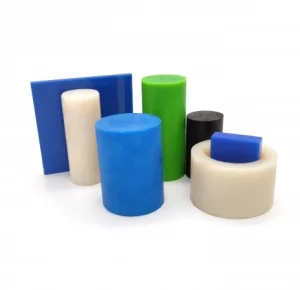
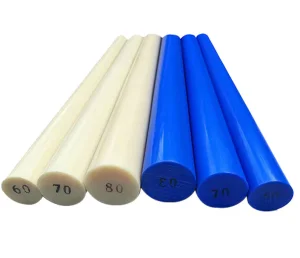
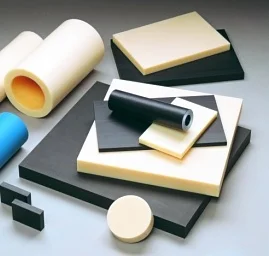
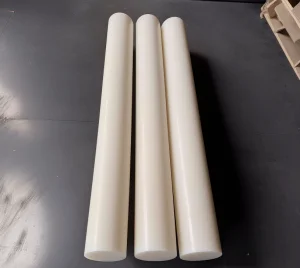
Featured Industrial Polymers & Specialized Parts (Series B)
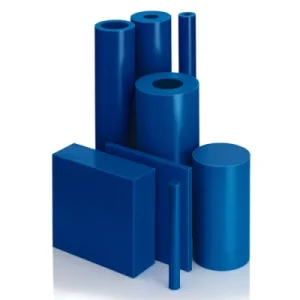
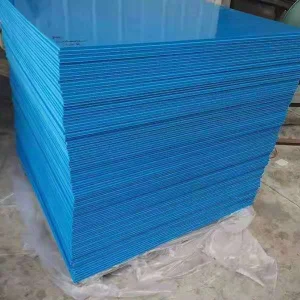
Discover our comprehensive lineup including high-impact piling cushions, wear-resistant UHMWPE outrigger pads, cast blue nylon bars, and CNC precision components.
Request Technical Datasheets, Block Billets, or CNC Quotations
Send your 2D/3D component drawings (STEP, DWG, DXF, PDF) along with operating parameters and projected volume. Our production engineers evaluate dimensional limits, recommend suitable polymer formulations, and deliver full factory-direct quotes within 12 hours.