
Featured Polymer Stock & Machined Components (I)
Explore our top-tier certified polyamide wear strips, extruded round stocks, and custom CNC machined industrial profiles direct from factory floor.
-
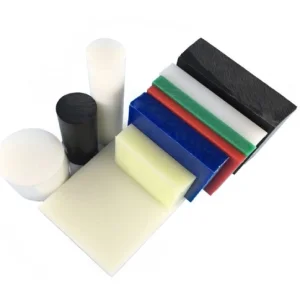
PA66 Polyamide Nylon PP UHMWPE Sheet, Rod & Bar
Product Details -
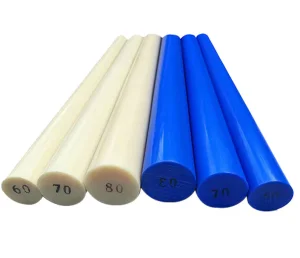
MC Blue Cast Nylon Rod Plastic Round Rod & Bar
Product Details -
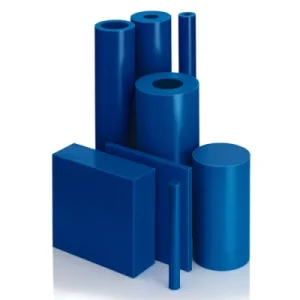
UHMWPE Heavy Duty Jacking Crane Stabilizer Pad
Product Details -
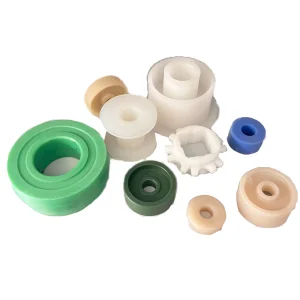
High-Precision OEM/ODM CNC Machined Polymer Parts
Product Details -
Industrial Grade High-Wear UHMWPE Structural Pads
Product Details -
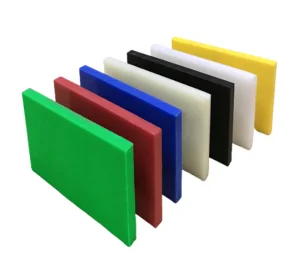
Self-Lubricating Green MC Cast Nylon Wear Sheet
Product Details -
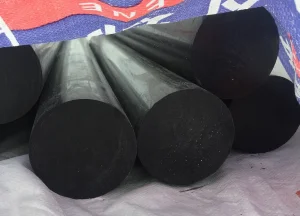
Low-Friction Delrin / POM Round Bar & Rod Stock
Product Details -
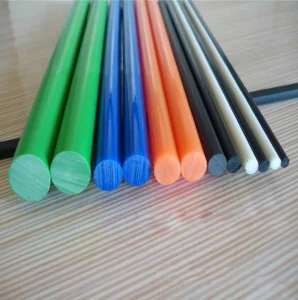
Heavy-Duty Cast MC Monomer Nylon Engineering Bar
Product Details
Nylon Stripe & Wear Strip Evolution: From Polymerization to Kinematic Efficiency
An authoritative engineering assessment of synthetic polyamide extrusion, molecular orientation, and additive-enhanced wear resistance.
In modern mechanical kinematics, material handling automation, and heavy lifting infrastructure, nylon stripes (commonly specified as linear polyamide guide strips, extruded wear tapes, sliding skids, and flat profiles) serve as crucial anti-friction and load-bearing interfaces. The transition from sacrificial metallic shims (such as phosphor bronze and babbitt metals) to semi-crystalline thermoplastics has permanently reshaped industrial design tolerances and lifecycle economics.
As an established engineering plastic manufacturer with over two decades of processing acumen, SHUNDA provides deep technical insight into the underlying material mechanics. Polyamides—specifically cast MC Nylon (PA6G) and extruded PA66—demonstrate exceptional tensile modulus, dynamic damping coefficients, and abrasion resilience under severe point loads. By optimizing the thermodynamic annealing cycles and integrating internal micro-lubricants (e.g., MoS₂, graphite, and specialized silicone oils), modern nylon stripes eliminate catastrophic stick-slip phenomena while extending maintenance intervals by upwards of 300%.
Molecular Weight & Crystallinity Control
Monomer Cast (MC) polymerization achieves an ultra-high molecular weight exceeding 300,000 g/mol, delivering a tighter crystalline matrix than conventional injection-molded nylon. This translates directly to high compressive strength (over 100 MPa) and superior surface shear endurance under continuous mechanical travel.
Tribological Performance Under Dry Friction
Operating conveyor lines, food handling belts, and crane boom guide pads often prohibit liquid petroleum lubricants. Modified nylon stripes containing dispersed molybdenum disulfide micro-platelets achieve dynamic friction coefficients as low as 0.15, avoiding catastrophic thermal galling without fluid maintenance.
Thermodynamic Stress Relief Annealing
Raw extruded nylon stocks harbor severe internal hoop stresses from rapid surface chilling. Our standardized multi-stage liquid oil bath and circulating air annealing protocols neutralize residual tension, guaranteeing zero camber warping or longitudinal twist during downstream CNC slicing and profiling.
Global Enterprise Procurement Demands & Industry Solutions
Analyzing operational requirements across heavy infrastructure, logistics automation, marine defense, and bottling assembly lines.
| Industrial Sector | Core Kinematic Challenge | Target Polymer Specification | Engineered Nylon Solution | Operational ROI Impact |
|---|---|---|---|---|
| Hydraulic Mobile Cranes | Telescopic boom stick-slip, galling, high surface contact loads | MC Blue / MoS₂ Cast Nylon | Custom beveled wear stripes and slide pads machined to ±0.05mm | Eliminates manual grease spray; extends boom overhaul cycles by 2.5x |
| Automated Conveyors & Sorting | High linear velocity (>3 m/s), abrasive particulate, continuous duty | PA66 Natural / UHMWPE Hybrids | Low-friction extruded snap-on wear profiles and chain guide runners | Reduces motor drive wattage draw by 18%; mitigates acoustic noise pollution |
| Food Packaging & Bottling | Chemical washdowns, abrasive glass contact, strict sanitization | FDA-Grade Pure POM / Unfilled PA6 | Hydrolysis-resistant guide stripes and machined neck handling brackets | Zero product scuffing, 100% compliant with food equipment hygiene codes |
| Mining Bulk Material Handling | High impact velocity, severe coal/rock gouging, chute abrasion | Ultra-High Molecular Polyethylene / PA6 | Cross-linked composite liner plates and impact absorbing slide strips | Eliminates hopper bridging and blast erosion on steel structural frames |
| Marine Deck & Offshore Cranes | Brine immersion, UV solar degradation, galvanic corrosion risk | UV-Stabilized Black MC Cast Polyamide | Non-conductive, seawater-inert winch wire guide sheaves and wear tracks | Completely eliminates galvanic rust pairs with marine steel decking |
Supply Chain Consolidation
Procuring raw nylon stripe extrusions, plates, billets, and custom CNC milled components from a single source slashes freight surcharges and inspection bottlenecks.
Direct Tooling Customization
Our in-house foundry and machine tooling shop accommodates custom extrusion cross-sections, dove-tail profiles, and counter-bored bolt patterns without vendor delays.
Volume Buffer Stocking
For recurring global OEM frame programs, we maintain dedicated safety reserves of standard PA6 and POM profiles for instantaneous release and sea-freight dispatch.
Material Traceability
Every master batch receives raw resin batch logging, spectrometer confirmation, and complete mechanical batch test sheets (EN 10204 Type 3.1 certification).
Localized Engineering Support, Quality Verification & Export Compliance
Rigorous international compliance frameworks guaranteeing flawless customs clearance, material purity, and dimensional accuracy across European and American markets.
Global Certification Conformance
All nylon and engineering polymers manufactured by SHUNDA undergo independent laboratory screening verifying strict adherence to EU RoHS Directive 2011/65/EU, REACH (EC 1907/2006) SVHC candidate lists, and FDA 21 CFR 177.1500 food contact standards. Zero hazardous plasticizers or prohibited heavy metal flame retardants are utilized.
Comprehensive Metrology & CMM Inspection
Dimensional drift is the primary cause of automated guide rail binding. SHUNDA’s dedicated inspection laboratory employs coordinate measuring machines (CMM), laser micrometer scanning, and optical profilometry to ensure extruded stripe thickness, camber flatness, and bolt hole centers respect DIN ISO 2768-m tolerances.
Moisture Equilibrium Conditioning
Polyamides are inherently hygroscopic, absorbing ambient atmospheric moisture until equilibrium (typically 2.0% - 3.5% for PA6). SHUNDA engineers account for moisture-induced volumetric swelling during CNC machining by applying calculated offset tolerances, or by pre-conditioning wear parts in heated water baths prior to packaging.
Technical Roadmap: Next-Generation Polyamide & Tribological Composites
Investing in nanotechnology fillers, bio-based monomers, and sensor-integrated smart wear monitoring to empower Industry 4.0 applications.
Solid-State Nano-Lubricant Infusion
Dispersing hexagonal boron nitride (h-BN) and nanoscale fluoropolymer clusters into cast polyamide to slash break-away friction without compromising tensile yield strength.
Continuous Carbon Fiber Reinforcement
Developing co-extruded nylon wear strips featuring continuous unidirectional carbon micro-filaments, elevating flexural modulus past 8,500 MPa for high-span gantry machinery.
Bio-Based PA410 & PA11 Formulations
Formulating engineering thermoplastics derived from castor oil feedstocks, reducing carbon footprint by 45% while decreasing water absorption to less than 1.0% in maritime operations.
Embedded Piezo-Resistive Wear Sensing
Integrating conductive nano-carbon paths directly into wear stripe layers to enable real-time electrical resistance monitoring, transmitting continuous wear-depth alerts to cloud SCADA systems.
Frequently Asked Engineering Questions (FAQ)
Direct technical clarifications on material selection, environmental tolerances, dimensional stability, and machining practices.
How does nylon compare to PTFE and UHMWPE for linear guide stripes?
While UHMWPE provides superior low-friction characteristics and water rejection, its mechanical yield point is substantially lower (approx. 20–25 MPa), causing severe plastic cold-flow deformation under heavy mechanical clamp loads. PTFE offers virtually zero friction and high thermal resistance, but possesses almost no dimensional stiffness or wear durability under point abrasion. Polyamide (Nylon 6/66) delivers the ultimate balance, offering exceptional compressive strength (80–110 MPa), superior damping against dynamic mechanical shocks, and robust resistance against debris embedding.
What is the maximum operating temperature limit for nylon wear profiles?
Standard unfilled PA6 and cast MC nylon are engineered for continuous operational regimes from -40°C up to +105°C (+221°F), tolerating short intermittent thermal excursions up to +160°C. For continuous operating regimes demanding extreme thermal endurance above +130°C, heat-stabilized grades (PA66-HS) or high-performance polymers such as Polyetheretherketone (PEEK) are recommended to maintain dynamic stiffness and eliminate thermal degradation.
How does moisture absorption impact the dimensional accuracy of nylon stripes?
Nylon absorbs atmospheric water through hydrogen bonding with the amide linkages. Under 100% relative humidity, PA6 can absorb up to 8.5% water by weight, causing an expansion of approximately 2.5% to 3.0% in physical dimensions. When machining tight-tolerance guide tracks for humid or fully submerged installations, SHUNDA engineers calculate clearance allowances, pre-saturate stock, or recommend low-absorption alternatives such as POM (0.8% saturation) or UHMWPE (<0.01% saturation).
What tooling parameters are essential when CNC milling custom nylon components?
Polyamides have low thermal conductivity and high thermal expansion rates. Proper machining requires extremely sharp tungsten carbide or polycrystalline diamond (PCD) cutting tools with high rake angles (15° to 30°) and generous chip flutes. Surface cutting speeds should range between 250 and 500 m/min with aggressive feed rates to ensure heat is ejected with the chip rather than accumulating within the parent polymer, which prevents localized melting and surface gumming.
Featured Polymer Stock & Machined Components (II)
Complete your bill of materials with our heavy-duty engineering plates, cast nylon tubes, composite sliding rings, and custom-machined billets.
-
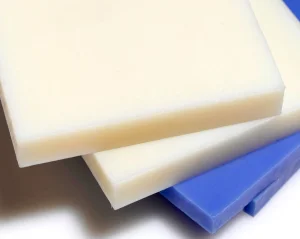
OEM Natural / Blue Cast MC Nylon Heavy Plate & Sheet
Product Details -
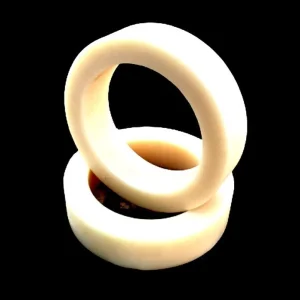
Polyamide Natural MC Cast Nylon Ring & Heavy Tube
Product Details -
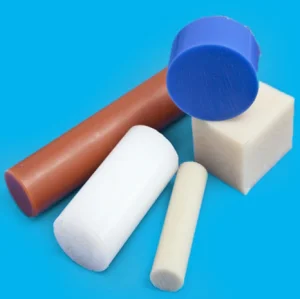
China PA6 / PA66 Engineering Plastic Solid Rod & Bar
Product Details -
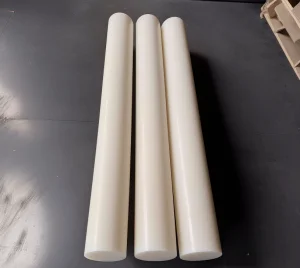
Cast PA6 Polyamide Hollow Bar & Bushing Stock
Product Details -
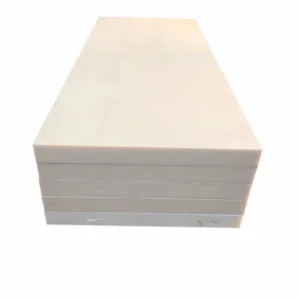
Stress-Relieved Natural White MC Nylon Structural Plate
Product Details -
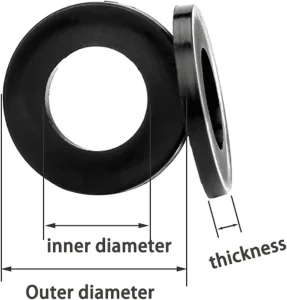
High-Tolerance Precision Cast Polyamide Ring & Bushings
Product Details -
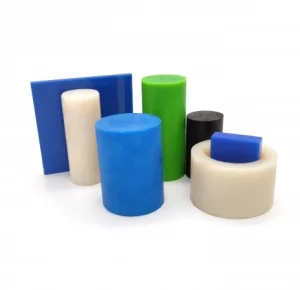
Certified High-Spec PA66 / UHMWPE Engineering Stock
Product Details -
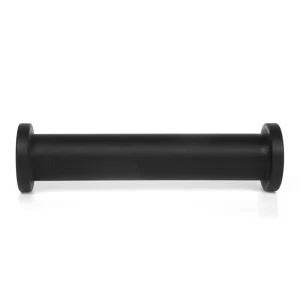
Industrial Nylon ABS PP PTFE Roller Cylinders & Tubes
Product Details
Need Custom Sized Nylon Stripes or CNC Machined Components?
Upload your 2D/3D component drawings (DWG, DXF, STEP, PDF) or operational requirements. Our senior plastics engineers respond with full mechanical feasibility, material grade recommendations, and volume quotations within 12 hours.