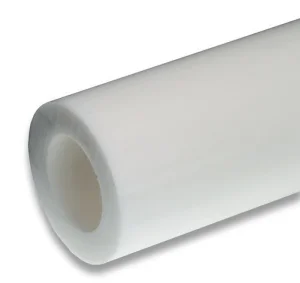
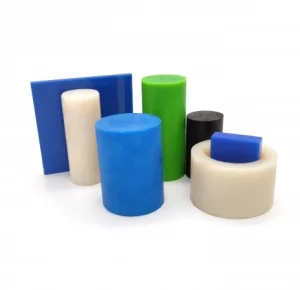
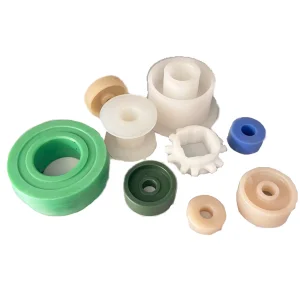
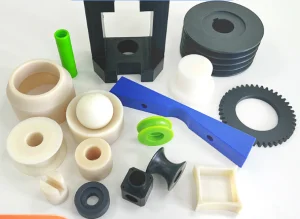
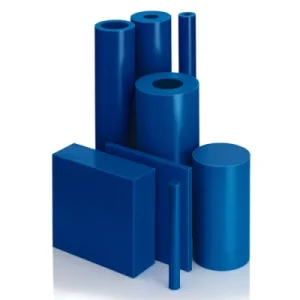
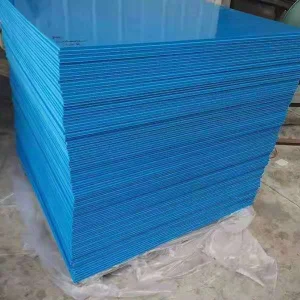
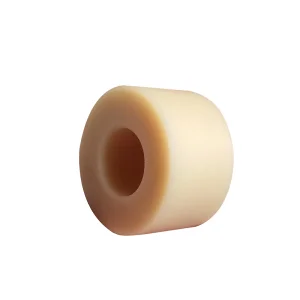
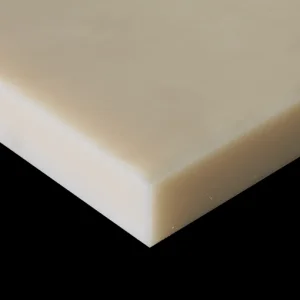
Featured Semi-Finished Engineering Polymer Stock & Bush Components
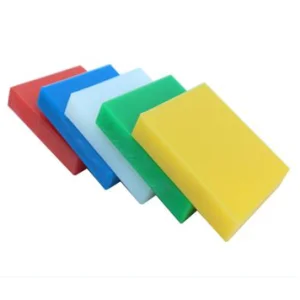
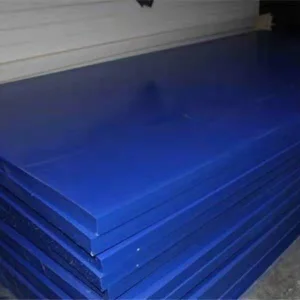
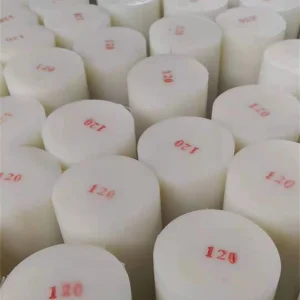
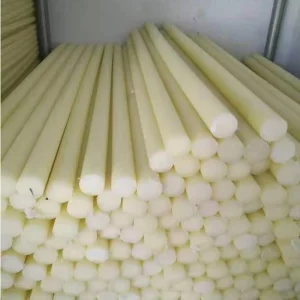
Direct factory production covering PA6, PA66, MC Cast Nylon, POM, and Polyolefin stock shapes configured for high-wear sliding sleeves, guides, and load-bearing bushings.

Global Procurement Dynamics: Sourcing High-Performance Nylon Bushes
Procurement directors and mechanical systems designers face escalating pressure to reduce Total Cost of Ownership (TCO), mitigate dry-friction galling, and comply with strict zero-lubricant ecological directives across heavy machinery and high-speed rotordynamics.
Bronze Replacement & Weight Optimization
Traditional phosphor bronze (SAE 660) and leaded gunmetals incur high mass penalties, steep material costs, and abrasive galling risks when shaft lubrication films collapse. Extruded PA66 and cast monomer (MC) nylon bushings exhibit a density of 1.15–1.16 g/cm³, immediately lowering rotordynamic inertia and unbalancing forces while delivering superior compressive strength up to 110 MPa.
Boundary Friction & Dry-Running Integrity
In intermittent, oscillating, or high-contamination environments, hydrodynamic lubricant films fail. Polyamide molecular structures feature self-healing lubricity, augmented via liquid internal oil dispersants, solid graphite, or molybdenum disulfide (MoS2) fillers. This ensures continuous operation at dynamic friction coefficients as low as 0.12 without shaft grooving or surface welding.
Foreign Particle Embeddability
Hard metallic journal bearings trap abrasive particulates (silica, scale, cement dust) against rotating pins, causing severe scoring. Polyamide bush bearing surfaces exhibit elastic-plastic compliance: abrasive particulates embed harmlessly into the polymer matrix beneath the operating clearance line, safeguarding high-value hardened shafts from catastrophic surface micro-tearing.
Engineering Polymer Selection Matrix: Tribological & Mechanical Parameters
Systematic comparative evaluation of polyamide formulations and competing thermoplastics used in sliding journal bearings, flanged bushes, and thrust washers under high PV (Pressure-Velocity) operational regimes.
| Polymer Grade / Alloy | Tensile Modulus (GPa) | Dynamic Coeff. Friction (μ) | Max PV Limit (MPa·m/s) | Water Absorption (Sat. %) | Continuous Temp (°C) | Primary Industrial Application |
|---|---|---|---|---|---|---|
| Cast PA6 (Natural / Blue) MC Standard | 3.4 – 3.6 | 0.25 – 0.35 | 1.8 | 6.0 – 6.5 | -40 to +105 | Crane sheaves, pivot bushings, railway linkages |
| Oil-Filled Cast PA6 (Green) Self-Lube | 3.0 – 3.2 | 0.12 – 0.18 | 3.2 | 4.5 – 5.0 | -40 to +110 | Maintenance-free sliding guides, bottle packaging stars |
| MoS2-Filled Cast PA6 (Black) High-Rigidity | 3.7 – 4.0 | 0.22 – 0.28 | 2.2 | 5.5 – 6.0 | -40 to +115 | Heavy mining excavator pivot joints, vibrating screens |
| 30% Glass-Filled PA66 High-Load | 8.5 – 9.5 | 0.30 – 0.40 | 2.5 | 4.0 – 4.8 | -30 to +130 | Structural high-static load pivot sleeves, thermal isolators |
| Polyoxymethylene (POM / Acetal) Low Moisture | 2.8 – 3.1 | 0.20 – 0.28 | 1.6 | 0.8 – 1.0 | -50 to +90 | Submerged aquatic bushes, fuel delivery valves, gears |
| UHMWPE (Ultra-High Molecular PE) Extreme Wear | 0.7 – 0.9 | 0.10 – 0.15 | 0.8 | < 0.01 | -150 to +80 | Chute wear strips, chemical scraper bushes, marine fenders |
| Virgin & Carbon PEEK Extreme Temp | 4.2 – 8.0 | 0.15 – 0.25 | 5.5 | 0.45 | -50 to +250 | Downhole oil/gas tools, aerospace actuators, autoclave bearings |
PV Value Calculation Engineering
The operational threshold of any unlubricated or boundary-lubricated nylon sleeve bush is governed by the $P \cdot V$ metric (where $P$ is specific radial load in MPa, and $V$ is sliding velocity in m/s). Exceeding this boundary induces rapid adiabatic flash heating above the crystalline glass transition temperature ($T_g$), triggering progressive bore creep and dimensional collapse.
Moisture Swell Compensation
Polyamides are hygroscopic materials that absorb atmospheric moisture via amide ($-\text{NH}-\text{CO}-$) dipole interactions. Equilibrium moisture absorption yields a volumetric swelling factor of approximately 0.2% to 0.3% per 1% moisture uptake. Precision machining factories must incorporate dynamic clearance allowances into the internal bore diameter ($ID$) to eliminate shaft seizure.
Solid Internal Lubrication Formulations
By blending microscopic liquid paraffinic or synthetic esters uniformly throughout the monomer melt during the anionic polymerization of $\epsilon$-caprolactam, our factories create non-leaching lubrication channels. As wear occurs micro-thin lubricant films are continuously replenished onto the mating shaft, dropping the coefficient of friction by 50% throughout the entire product lifecycle.
Cross-Industry Engineering Solutions: Deploying Polyamide Bush Components
Examining critical operational deployments across harsh environments where traditional bronze, steel, and needle roller bearings experience premature fatigue, abrasive erosion, or environmental non-compliance.
Heavy Construction & Piling Equipment
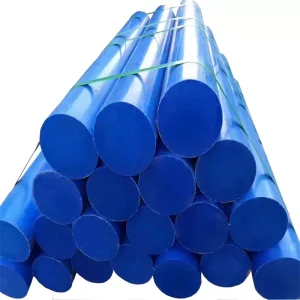
Hydraulic piling hammers, foundation drill rigs, and telescopic mobile cranes generate extreme shock loads ($> 80\text{ MPa}$) and acute multi-axis vibration. Blue MC Nylon cushions and impact bushings attenuate up to 75% of high-frequency rebound energy, isolating hydraulic cylinders and mast guide assemblies from catastrophic fatigue fractures.
Mining, Crushing & Bulk Handling
Iron ore, coal, and aggregate extraction sites operate in severe abrasive dust fields that turn standard grease lubricants into abrasive grinding pastes. Self-lubricating oil-filled MC nylon bushings run completely dry on continuous overland conveyor idlers, feeder pivot pins, and bucket elevator guide wheels, extending planned maintenance overhaul intervals from 6 to 24 months.
Offshore, Marine & Port Infrastructure
Subsea winches, mooring fairleads, stern rollers, and container gantry cranes face saltwater galvanic corrosion. Bronze bearings coupled with steel shafts trigger rapid electrolytic oxidation. Non-metallic polyamide bushings are chemically inert to sea salt, eliminate galvanic couples, and repel marine macro-fouling, delivering reliable performance in submerged applications.
Automated Food & Beverage Packaging
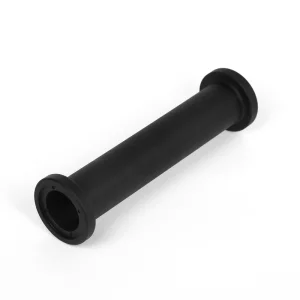
FDA and EU 10/2011 regulations prohibit oil-grease leakage over exposed food lines. Precision turned POM and virgin PA66 flanged sleeve bushings operate completely unlubricated on high-speed bottling capping stars, pick-and-place linkages, and hygienic sorting conveyors, tolerating daily high-pressure caustic CIP washdowns with 2% sodium hydroxide solutions.
Precision Manufacturing Protocols: Monomer Casting & CNC Tolerancing
Achieving high performance in industrial nylon bush manufacturing demands rigorous process controls from pure chemical synthesis through secondary high-speed CNC turning and boring.
Anionic Polymerization Casting
Molten caprolactam monomer is mixed with alkaline catalysts and initiators at 130°C. Centrifugal or vertical gravity casting molds ensure atmospheric casting without external pressurization, generating superior molecular weight ($M_w > 100,000\text{ g/mol}$) and eliminating the shear-induced chain degradation common to extrusion screws.
Multi-Stage Thermal Annealing
Raw cast tubular billets undergo extended heat-soak cycles in white mineral oil or nitrogen convection ovens at 160°C to 170°C for 24 to 48 hours, followed by slow cooling (2°C/hr). This relieves internal casting stresses, eliminates asymmetrical core-skin shrinkage, and locks dimensional geometry before machining.
High-Velocity CNC Turning & Boring
Using diamond-tipped (PCD) or razor-honed micro-grain tungsten carbide cutters with positive rake angles (15°–25°) and clearance angles (10°–15°). High surface cutting speeds (250–500 m/min) with aggressive chip evacuations prevent heat buildup, ensuring outer diameter (OD) and bore tolerances within ISO IT7 to IT8 standards.
Bore Relief & Press-Fit Calculation
Pressing a polymer sleeve into a rigid steel housing shrinks its internal diameter ($ID$). Advanced engineering factories calculate housing interference ($\delta$) based on housing bore diameter ($D$), sleeve wall thickness ($t$), and the polymer Poisson ratio ($\nu = 0.40$), cutting internal bores slightly oversize so post-press operating clearances align precisely with shaft tolerances.
Technical Roadmap: Next-Generation Nano-Composites & Sustainable Polymers
Our materials development trajectory anticipates next-generation industrial demands, focusing on high-thermal-conductivity nano-fillers, bio-circular monomers, and condition-monitoring smart bearing sleeves.
Graphene & Boron Nitride Thermal Dissipation
The primary barrier to higher PV limits in pure polymers is low thermal conductivity ($k \approx 0.24\text{ W/m}\cdot\text{K}$). Incorporating exfoliated multi-layer graphene nanoplatelets or hexagonal boron nitride (h-BN) increases composite thermal conductivity to > 1.2 W/m·K. This dissipates interfacial friction heat rapidly into outer steel housings, boosting continuous load-speed envelopes by 65%.
Bio-Sourced & Chemically Recycled Polyamides
In alignment with Scope 3 corporate decarbonization commitments, our partner synthesis plants are pioneering the depolymerization of post-industrial polyamide waste into virgin-grade caprolactam monomer via closed-loop chemical solvolysis, paired with castor-oil derived bio-polyamide matrices (PA410/PA610), delivering a 45% reduction in cradle-to-gate carbon footprint.
Integrated RFID & Sensorized Smart Sleeves
Future intelligent production programs embed passive UHF RFID sensor tags and conductive silver ink wear-depth tracks directly into the outer non-working wall of the cast nylon bush. Maintenance technicians scan machinery externally to read localized thermal spikes and receive real-time warnings when radial wear approaches the final 0.5 mm replacement threshold.
Global Compliance, Quality Assurance & Full Material Traceability
OEM suppliers operating internationally require rigorous documentation, standardized testing protocols, and complete chain-of-custody verification to satisfy cross-border regulatory systems.
MTC EN 10204 Type 3.1 Certification
Every batch of semi-finished stock shapes and machined nylon bushings is accompanied by an authenticated Material Test Certificate detailing specific polymer density (ISO 1183), Shore D durometer hardness (ISO 868), yield strength (ISO 527), and crystalline melting peak point verified via Differential Scanning Calorimetry (DSC).
RoHS 3 & REACH SVHC Strict Compliance
All virgin monomer resins, dyes, liquid friction modifiers, and solid additives are 100% compliant with EU Directive 2015/863 (RoHS 3) and free of Substances of Very High Concern (SVHC) per EU Regulation (EC) No 1907/2006. Zero lead, cadmium, halogenated flame retardants, or phthalate plasticizers are utilized.
Ultrasonic Void & In-Line CMM Inspection
Cast billet sections above 100 mm wall thickness undergo continuous immersion ultrasonic testing to guarantee freedom from internal centerline shrink voids or trapped gas micropores. Machined bush components are sampled on automated Zeiss Coordinate Measuring Machines (CMM) in climate-controlled QA facilities.
Export Barrier Packing & Climate Preservation
To eliminate pre-installation dimensional drift driven by ocean transit humidity or arid destination warehouses, parts undergo vapor-corrosion-inhibiting (VCI) heat-sealed polyethylene vacuum wrapping, supplemented by desiccant inserts and reinforced export crating, ensuring factory-calibrated dimensions arrive intact.
Engineering & Procurement FAQ: Technical Advisory for Specifiers
Critical engineering answers addressing clearance sizing, lubrication chemistry, machining techniques, and operational life calculation for nylon plain bearings.
How does an engineer calculate running clearance for an unlubricated cast nylon bushing?
Can nylon bushings be lubricated with standard petroleum greases or mineral oils?
What is the fundamental difference between cast MC nylon (PA6G) and extruded nylon (PA66)?
How do you compensate for moisture absorption swelling in humid or submerged environments?
What shaft surface roughness and hardness provide optimum lifecycle pairing with nylon bushes?
What cutting tool geometries and feeds are required when turning nylon bush blanks?
How does an oil-filled MC nylon bush perform boundary lubrication without leaking oil?
What are the recommended internal groove profiles for distributing supplementary grease?
Why is MoS2 (Molybdenum Disulfide) added to cast nylon bushings?
How does an engineer prevent a pressed-in nylon bush from spinning or walking out of its housing?
Precision CNC Machined Polymer Components & Specialized Wear Stock
High-precision turned parts, milled guides, hollow tubes, and custom abrasion-resistant sheets produced from top-grade engineering thermoplastic polymers.