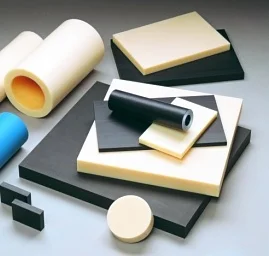
Primary Engineering Stock & Custom Fabrications
Continuous-cast and extruded Polyamide stock verified under rigorous dimensional and hardness controls for heavy industrial assemblies.
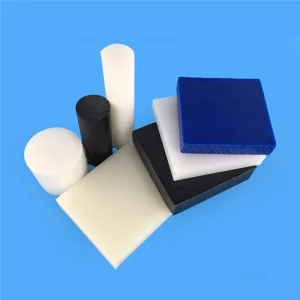
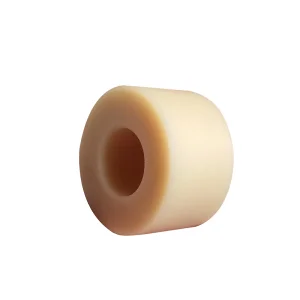
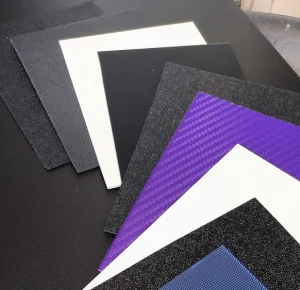
Evolutionary Trends in Heavy-Duty Nylon 6 Panel Engineering
Transitioning from basic thermo-plastics to functional polymer alloys engineered for structural longevity, wear endurance, and reduced system maintenance cycles.
Tribological Formulation Upgrades
Modern applications demand specialized solid lubricants. Nylon 6 panels embedded with MoS2 (Molybdenum Disulfide) and advanced oil-compounds reduce dynamic friction by up to 45%, eliminating continuous grease application in dry-running aggregate and conveying belts.
Continuous Horizontal Polymerization
Traditional compression moulding often generates unvented crystalline voids. Advanced casting utilizes active liquid monomer casting (MC) where molten caprolactam polymerizes under atmospheric pressure, yielding panels with unmatched isotropic density and zero micro-porosity.
Thermal Stability & Moisture Stabilizers
Addressing polyamide's hygroscopic behavior, modern resin chemistry incorporates hydro-stabilizers and glass-sphere reinforcing agents. This mitigates excessive swelling and structural deflection during high-humidity operations across maritime or subterranean extraction environments.
Engineering Evaluation: Polyamide 6 Panel vs. Alternative Thermoplastics
Selecting the optimal stock grade requires balancing mechanical yield strength against environmental humidity, impact vectors, and machining characteristics.
| Property Parameter | Cast Nylon 6 (MC PA6) | Extruded PA66 | POM-C (Polyacetal) | UHMWPE (Ultra-High PE) |
|---|---|---|---|---|
| Tensile Strength (MPa) | 80 – 90 | 80 – 85 | 65 – 70 | 20 – 35 |
| Modulus of Elasticity (MPa) | 3,200 – 3,500 | 3,000 | 2,800 | 700 – 1,000 |
| Impact Toughness (kJ/m²) | Superior (Unnotched No Break) | High | Moderate | Outstanding (No Break) |
| Moisture Absorption (Equilibrium, 50% RH) | 2.2% | 2.6% | 0.2% (Extremely Stable) | <0.01% |
| Max Service Temp (Short / Long °C) | 160 / 105 | 170 / 110 | 140 / 100 | 90 / 80 |
| Primary Application Fit | Heavy sheaves, sliding pads, gear wheels | High-velocity turned pins, structural ribs | Precision dimension bushings, wet valves | High-abrasion chutes, conveyor guide rails |
Strict Stress-Relieving Protocols
Unannealed nylon sheets deform during pocket milling. SHUNDA executes a multi-stage oil or hot-air annealing sequence spanning up to 48 hours to liberate thermal stresses prior to sizing and packaging.
Material Traceability & Certification
Each container is delivered with batch inspection records certifying density, Rockwell hardness, and tensile modulus according to ISO 527 and ASTM D638 specifications.
Consolidated Procurement Containers
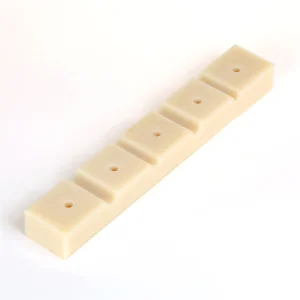
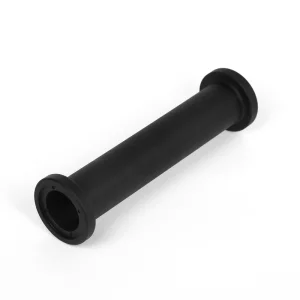
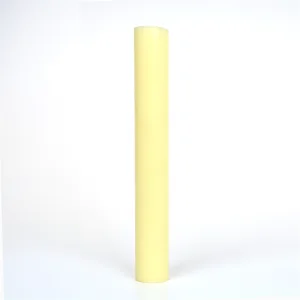
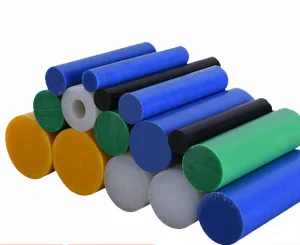
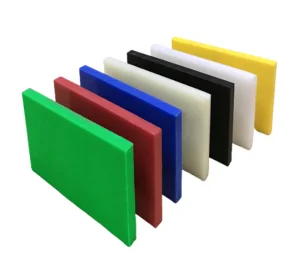
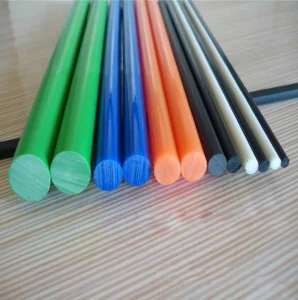
Global buyers optimize freight expenditure by combining custom-cut Nylon 6 boards with matching round stock, hollow pipes, and CNC milled wear pads inside a single LCL/FCL shipment.
China Factory 4.0: Modern Manufacturing & Global Delivery
Operating out of Xingtai, Hebei, SHUNDA couples automated chemical casting lines with digital inspection arrays to sustain cost performance without compromising dimensional margins.
Closed-Loop Temperature Control
Casting large slabs up to 100mm+ in thickness demands precise crystallization management. Our digitally monitored oil molds deliver linear thermal dissipation across the panel core, eliminating internal sink marks and molecular density variance.
Agile CNC Milling & Profiling
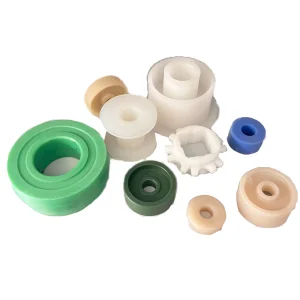
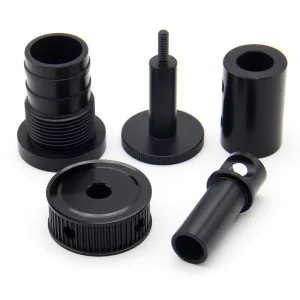
Equipped with expansive vacuum table CNC routers and 4-axis turning stations, we process stock boards directly into customer-specified guide tracks, scraper blades, and star wheels, bypassing third-party machine markups.
Automated Surface Planing
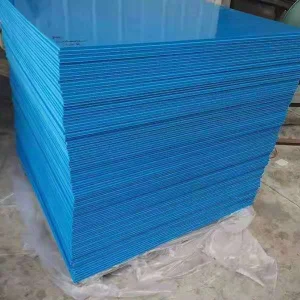
Thickness uniformity is calibrated via precision double-sided sanding and milling equipment. Every sheet exits the production hall with tight planar tolerances (±0.2mm on standard gauge boards), reducing post-machining setup time for OEM customers.
Mission-Critical Engineering Scenarios for Nylon 6 Panels
Field installations where structural Polyamide replaces cast iron, bronze, and ordinary synthetic plates to lower weight and prevent equipment seizing.
Telescopic Boom Slide Pads & Crane Guides
Heavy mobile cranes rely on lubricated MC Nylon panels inside boom sections. The polymer absorbs tremendous compressive point loads while providing smooth extension without galling metal slider tracks.
Packaging & High-Speed Bottling Stars
In high-cycle beverage conveyors, Nylon 6 panels are machined into star wheels, curved rails, and scroll separators. Their dampening capacity attenuates decibel output while cushioning high-speed glass impacts.
Port Marine Fenders & Pier Buffers
Exposed to saline splash and high vessel impacts, thick cast nylon faceplates bolted onto steel piling disperse kinetic energy without rusting or cracking in low ambient temperatures.
Frequently Asked Questions: Sourcing & Machining PA6 Panels
In-depth responses for production managers, tooling buyers, and industrial distribution teams.
What is the structural difference between Cast Nylon 6 (MC) and Extruded Nylon 6?
Cast Nylon (MC) is produced via pressureless ionic polymerization inside heated molds. This process yields substantially higher molecular weight, increased crystalline integrity, greater compressive strength, and lower internal casting stress compared to extruded PA6 sheets, making MC panels easier to machine to fine limits without thermal twisting.
How does moisture absorption impact the dimensional planning of PA6 panels?
Polyamide 6 naturally absorbs ambient atmospheric humidity (up to 2.5–3.0% at equilibrium). While this absorption substantially increases impact toughness and ductility, it generates slight volumetric expansion (approx. 0.2–0.3% per 1% moisture uptake). For tight bearing sleeves or precision slide fits, proper clearance margins or alternative materials like POM-C should be reviewed.
Can SHUNDA furnish customized cut sizes and factory-annealed stock?
Yes. We offer cut-to-size sawing on precision beam saws according to bill-of-materials specifications, minimizing freight bulk and workshop waste. All boards undergo post-mold thermal stabilization cycles to guarantee flat, stress-free delivery ready for direct CNC clamping.
What export packaging prevents moisture distortion during sea transit?
Every shipment is packaged using vacuum plastic encapsulation, multi-layer polyethylene stretch film, corner edge protection profiles, and export-grade fumigated wooden skids or crates. Desiccant packs are inserted to prevent ambient sea-freight humidity from inducing premature moisture absorption prior to customer machining.
Specialized Engineering Thermoplastics & Machined Series
Explore complete industrial stock options across our dedicated polymer production lines.