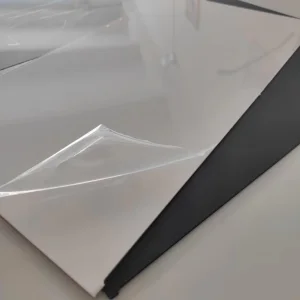
Top Tier Hollow Rod & Machined Stock Assortment
Explore our export-grade hollow rods, tubular stocks, and wear components manufactured with superior molecular density and void-free structural integrity.
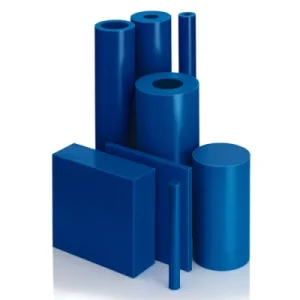
Discount Hot Sale for UHMWPE Heavy Duty Jacking Pads Crane Foot Support Plate Plastic Stabilizer Pad Manufacturer, Companies
View Specifications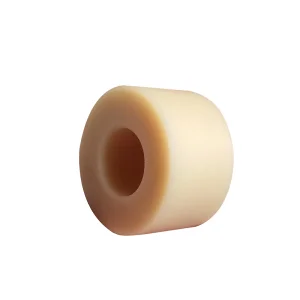
China Good Wholesale Vendors China High Hardness Plastic Products POM /Delrin Nylon/Rods 10mmx1000mm White Rod/Color Plastic Rods Manufacturers, Supplier
View Specifications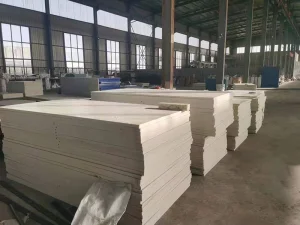
OEM China Engineering Plastic OEM Polyamide PA6 PA66 Nylon PP UHMWPE PTFE HDPE ABS Plastic Sheet Factory Customized Color With Size Suppliers, Exporter
View Specifications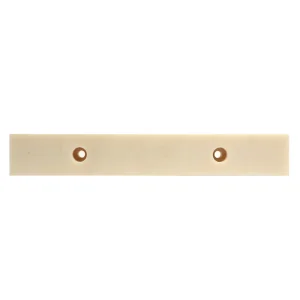
OEM Nylon,ABS,HDPE ,UHMWPE Plastic Sheet Pad With Hole Supplier, Company
View Specifications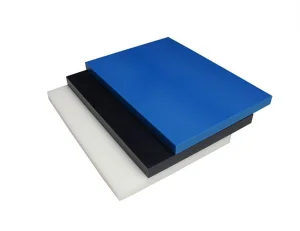
Cheap China Engineering Plastic PA6 Polyamide Nylon UHMWPE PTFE HDPE PP Plastic Sheet Board Plate Tube Rod And Bar Customized Color With Size Manufacturers, Supplier
View Specifications
OEM China Engineering Plastic Polyamide PA6 PA66 Nylon PP UHMWPE PTFE HDPE ABS Plastic Sheet Rod And Bar Customized Color Manufacturer, Suppliers
View Specifications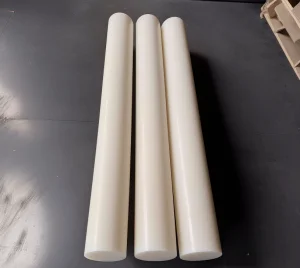
Cheap ODM OEM Engineering Plastic Cast PA6 Polyamide Nylon plastic Tube Rod And Bar Customized Color With Size Companies, Products
View Specifications
Cheap HDPE Sheet Exporters, Company
View SpecificationsEngineering Hollow Rods in the Global Manufacturing Ecosystem
Transitioning from subtractive center-boring of solid round bars to near-net-shape hollow cylinders represents a paradigm shift in manufacturing economics, raw material conservation, and mechanical component reliability.
Material Utilization Yield
Traditional production of circular bushings, sleeves, and annular components from solid engineering plastic bars discards up to 55% to 70% of virgin material as non-reclaimable machine turnings.
Hollow rods eliminate center core drilling entirely. This drastically reduces cutting tool cycle times, minimizes heat build-up during machining, and guarantees uniform wall stress relief across heavy-cross-section polymer configurations.
Total Cost of Acquisition
High-performance polymers including MC Cast Nylon, Acetal (POM-C), PTFE, and PEEK carry premium resin pricing. Subtractive scrap generation directly impairs procurement ROI.
By specifying tight-tolerance extruded and vertically cast hollow rods, international OEMs achieve lower freight-per-piece metrics, accelerated spindle feeds, and extended carbide insert life by avoiding abrasive deep-hole trepanning.
Structural Integrity & Void Elimination
Solid thick-walled rods over 100mm diameter often suffer from vacuum voids, center porosity, and unequal cooling gradients that induce severe warpage during subsequent boring.
SHUNDA utilizes centrifugal mold casting and controlled internal-external mandrel quenching. This achieves an isotropic crystalline matrix that prevents longitudinal splitting and out-of-round deformation during service.
Comprehensive Hollow Rod Engineering Specifications
Material parameter overview comparing mechanical, thermal, and friction characteristics across our principal extruded and cast hollow rod formulations.
| Polymer Formulation | Specific Density (g/cm³) | Tensile Strength (MPa) | Dynamic Friction (µ) | Thermal Deflection (HDT @ 1.8 MPa) | Primary Industrial Utility |
|---|---|---|---|---|---|
| Cast Nylon PA6 / MC Nylon (Natural/Blue) | 1.15 – 1.16 | 78 – 85 | 0.28 – 0.35 | 95 °C – 105 °C | Heavy-duty crane sheaves, rope pulleys, high-load sleeve bushings, excavator pivot wear rings. |
| Polyoxymethylene POM-C (Delrin/Acetal) | 1.41 – 1.43 | 65 – 72 | 0.25 – 0.32 | 100 °C – 110 °C | Precision hydraulic guide rings, water meter housings, valve seats, zero-backlash timing gears. |
| UHMWPE (Ultra-High Molecular Weight PE) | 0.93 – 0.95 | 28 – 35 | 0.10 – 0.15 | 45 °C – 55 °C | Harbor dock fender sleeves, chemical pump impellers, corrosive slurry flow tubes, cryogenic seals. |
| Polytetrafluoroethylene (PTFE Virgin/Filled) | 2.15 – 2.20 | 22 – 32 | 0.04 – 0.08 | 55 °C (Continuous 260 °C) | Aggressive chemical valve linings, semiconductor quartz tube isolators, cryogenic fluid gaskets. |
| High-Density Polyethylene (HDPE 300/500) | 0.95 – 0.96 | 24 – 30 | 0.20 – 0.25 | 45 °C – 50 °C | Drainage column spacers, potable water distribution rings, non-stick industrial conveyor rollers. |
Mission-Critical Heavy Industry Deployments
Engineered hollow rods serve as the functional backbone across industries requiring dry running capabilities, corrosion resistance, weight optimization, and acoustic dampening.
Heavy Construction & Mobile Cranes
Cast Nylon PA6 tubular cylinders are machined into telescopic boom guide pads, hoisting cable sheaves, and articulation sleeve bearings.
Replacing traditional phosphor bronze bushings with oil-filled cast nylon hollow rods reduces rotational component inertia by 85%, prevents wire rope fraying, eliminates dynamic squeal, and performs reliably without external grease lubrication.
Offshore Marine & Port Infrastructure
Seawater environments rapidly degrade metallic journal bearings via galvanic corrosion and pitting. UHMWPE and PA66 hollow rods provide superior biological inertness.
Custom turned tubular stocks are widely utilized as sluice gate trunnions, rudder bearings, mooring winch spacers, and slipway roller guides. They exhibit zero swell issues in saltwater conditions when formulated with hydrophobic stabilizing additives.
Automated Bottling & Food Packaging
Hygiene standards mandate lubricants remain separate from product packaging zones. High-crystallinity POM-C hollow rods offer ideal non-porous lubricity.
Machined into rotary filling valve manifolds, star-wheel spacers, and high-speed scroll guides, our polyacetal hollow bars resist continuous CIP (Clean-in-Place) caustic washdowns, steam sterilization, and hot water cycles without loss of tolerance.
International Regulatory Compliance & Quality Engineering
Full traceability, strict adherence to global chemical and environmental restrictions, and documented physical test procedures ensure risk-free global supply chains.
Resin Purity Standard
Every extrusion run employs 100% prime virgin monomers and pellets. We do not blend unidentified regrinds into structural hollow rods, ensuring zero internal air micro-pockets.
RoHS & REACH Compliance
All cast and extruded polymer hollow bars conform strictly to EU Directives 2011/65/EU (RoHS) and Regulation (EC) No 1907/2006 (REACH), free of banned SVHC plasticizers.
FDA / 3-A Sanitary Tiers
Our virgin natural POM and white ultra-high molecular polyethylene hollow stocks satisfy FDA 21 CFR 177 requirements for direct contact with wet, dry, or fatty food products.
ISPM-15 Export Packaging
Goods are secured within reinforced fumigated wooden crates, vapor-barrier barrier foil, and high-tensile strap bands to ensure zero transit bowing across ocean routes.
Polymer Hollow Rod Technology Roadmap & Future Outlook
Investing in advanced composite formulations, internal nano-lubrication systems, and green bio-sourced engineering resins to satisfy the next generation of industrial requirements.
Solid Nano-Lubricant Infusion
Traditional liquid lubricants can wash away or capture abrasive airborne dust. Our next-gen cast PA6 hollow stock features homogeneously dispersed solid MoS² and graphite nanoparticles.
This delivers a permanently self-renewing low-friction boundary layer that reduces dynamic coefficient of friction down to 0.12, increasing bushing operating life fivefold in dirty mining conveyor and earthmoving installations.
Continuous Centrifugal Casting (C3)
To eliminate internal porosity in extra-heavy wall hollow rods (outer diameter up to 1200mm with wall thickness exceeding 150mm), SHUNDA is deploying advanced continuous vertical centrifugal casting equipment.
High G-force rotation during polymerization forces gaseous micro-bubbles to the inner sacrificial diameter, guaranteeing a completely dense, crystalline polymer matrix within key structural load bearing zones.
Sustainable Engineering Polymers
Aligning with Scope 3 decarbonization commitments, we are formulating cast polyamides using bio-derived sebacic and ricinoleic monomers sourced from non-food castor crops.
These bio-polyamide hollow bars match traditional petroleum-derived PA6/PA66 in tensile toughness and machinability, while offering significantly lower cradle-to-gate carbon footprints for eco-conscious global OEMs.
Hollow Rod Procurement & Machining FAQ
Detailed engineering and procurement insights to help machining facilities, plant engineers, and purchasing managers optimize polymer component production.
Why choose hollow rods over solid rods when machining bushings?
Using hollow rod stock cuts machining cycle time by up to 60% by eliminating center deep-hole boring. It also reduces material purchase weight, extends cutting tool life, minimizes heat-induced thermal warpage, and ensures that the core of the finished part does not contain internal shrinkage voids common in large solid bars.
What outer diameter (OD) and inner diameter (ID) tolerances are maintained?
For standard extruded POM and nylon hollow rods, tolerances are typically maintained within +0.5mm to +2.0mm on the OD, and -0.5mm to -2.0mm on the ID, ensuring adequate clean-up allowance for finish-turning. Precision ground or custom CNC pre-turned tubes can be supplied to ISO h9/H9 tolerances upon request.
How does moisture absorption affect nylon hollow rods?
Standard PA6 nylon hollow rods absorb atmospheric moisture (up to 2.5% to 3.0% at equilibrium), which improves impact resistance but can lead to dimensional growth (approximately 0.2% per 1% moisture). For tight-tolerance submerged applications, we advise using POM-C, UHMWPE, or oil-filled cast nylon grades.
Can you provide custom color matching and additive packages?
Yes. We offer standard natural, black, and industrial blue shades, and can formulate hollow rods with UV stabilizers, MoS² lubrication, glass fiber reinforcement, heat stabilizers, and anti-static/conductive carbon additives matched to specific project requirements.
Engineered Stock Shapes, Sheets & CNC Turned Components
Explore our extensive range of high-durability polymers available in standard stock lengths or custom machined to your technical drawings.
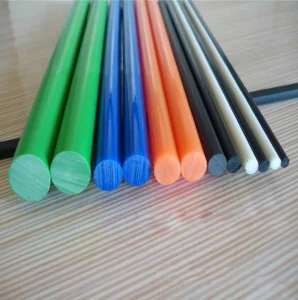
Discount Cast MC Nylon Bar Suppliers, Products
View Specifications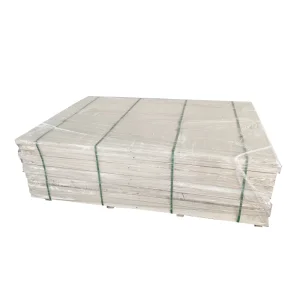
High-Quality China Engineering Plastic Polyamide PA6 PA66 Nylon PP UHMWPE PTFE HDPE ABS Plastic Sheet Tube Rod And Bar Customized Color With Size Suppliers, Factory
View Specifications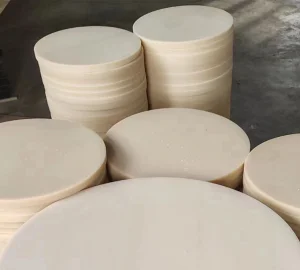
Discount Impact Cushion Use For Impact Hammer For Piling Machine Suppliers, Exporters
View Specifications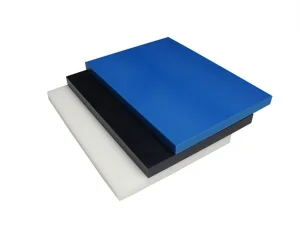
Wholesale Natural Nylon Plate/Sheet, Black Nylon Plate/Sheet, Blue Nylon Plate/Sheet Exporter, Product
View Specifications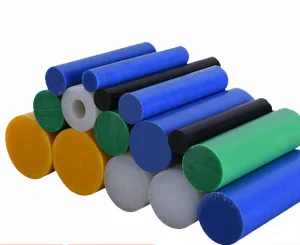
Discount Cast Nylon Tube Rod Cast Nylon Pipe Bar MC Nylon Tube Rod Bar Exporters, Products
View Specifications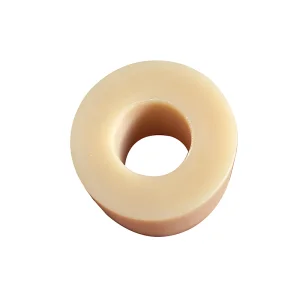
High-Quality China Engineering Plastic PA6 polyamide Nylon POM PTFE HDPE PVC Plastic Tube Rod And Bar Customized Color With Size Manufacturers, Supplier
View Specifications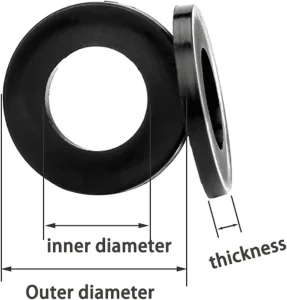
Famous Black Color Nylon Ring Cushion Use For Impact Hammer For Piling Machine Manufacturer, Manufacturers
View Specifications