High-Performance Thermoplastic Hollow Bars & Structural Shapes
Zero-porosity, stress-relieved cylindrical billets and heavy-wall hollow stocks engineered to reduce swarf disposal and machining cycle durations by up to 55% across industrial turning applications.
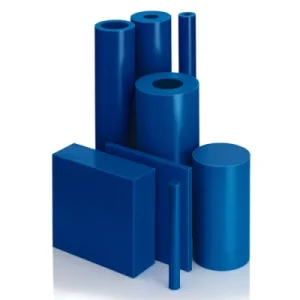
The Global Industrial Evolution of Engineering Plastic Hollow Bars
In modern industrial mechanical design, the transition from conventional solid stock bars to near-net-shape hollow bars represents one of the most substantial efficiency dividends of the twenty-first century. For decades, maintenance, repair, and operations (MRO) facilities and precision original equipment manufacturers (OEMs) relied on drilling or deep-hole boring solid cast round rods to produce annular components such as heavy-duty sleeves, rotary bushings, planetary gears, and hydrodynamic wear rings. This outmoded subtractive paradigm generated extraordinary swarf waste, excessive spindle cycle times, and localized thermal buildup that often compromised core material crystallinity.
Today, as certified hollow bar manufacturers and direct suppliers, SHUNDA Polymer spearheads the international shift toward vertically centrifugal cast and extruded thermoplastic hollow profiles. By casting molten caprolactam monomer directly into precision-spinning heated molds or utilizing specialized cold-mandrel extrusion dies, our hollow bars are formed with an intentional internal hollow diameter. This thermodynamic process promotes homogeneous cooling from both the internal diameter (ID) and outside diameter (OD), virtually eradicating the centerline porosity and internal shrinkage voids that inherently plague thick-section solid plastic rounds.
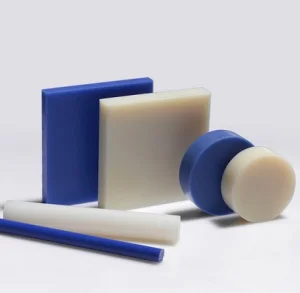
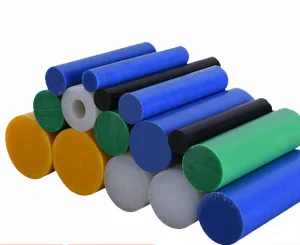
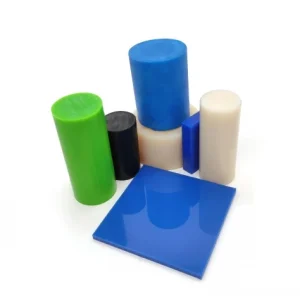
On a macro-industrial scale, international supply chains in heavy equipment, mining slurry transport, civil geotechnical engineering, and marine logistics are demanding non-metallic bearing components. Engineering thermoplastic hollow stock—notably Cast Polyamide (MC Nylon PA6G), Polyoxymethylene (POM-C Acetal), Ultra-High Molecular Weight Polyethylene (UHMWPE), and Polytetrafluoroethylene (PTFE)—delivers an exceptional strength-to-weight ratio, native dry-lubrication properties, superior dampening of cyclic vibrational noise, and imperviousness to galvanic corrosive degradation.
Zero Core Porosity & Stress Relief
Controlled cooling kinetics from dual thermal boundaries eliminate centerline vacuola defects, guaranteeing dimensional integrity even after aggressive multi-axis CNC turning operations.
Superior Swarf & Cycle Optimization
By eliminating initial deep-hole core trepanning, machinists save upwards of 50% in cycle time, minimize tool deflection, and drastically cut energy kilowatt-hours per finished annular part.
Tribological Self-Lubrication
Engineered internally with molecular-level lubrication additives (MoS2, solid oil, or synthetic waxes), our hollow bars drastically reduce dry friction coefficients in submerged or ungreased conditions.
Comparative Engineering Matrix for Hollow Bar Polymers
A comprehensive technical reference designed for mechanical engineers and procurement specialists to align yield strength, dynamic friction, and continuous operating thermal thresholds.
| Polymer Family / Standard Grade | Specific Gravity (g/cm³) | Tensile Strength (MPa) | Flexural Modulus (GPa) | Continuous Temp (°C) | Friction Coeff. (Dry vs Steel) | Primary Industrial Utility |
|---|---|---|---|---|---|---|
| Cast PA6G (Natural MC Nylon) Primary Standard | 1.15 | 82 - 88 | 3.4 | -40 to +105 | 0.25 - 0.35 | Large diameter sheaves, crane outrigger bushings, gear blanks |
| PA6G + MoS2 (Black Moly-Filled) High-Load | 1.16 | 85 - 90 | 3.6 | -40 to +110 | 0.20 - 0.28 | Piling hammer guide rings, earthmoving pivots, mining sprockets |
| PA6G + Oil-Filled (Green Lubricated) Self-Lube | 1.14 | 72 - 76 | 3.0 | -40 to +100 | 0.12 - 0.18 | Maintenance-free conveyor rollers, high-speed rotary sleeves |
| POM-C (Polyacetal Copolymer) Dimensional | 1.41 | 65 - 70 | 2.8 | -50 to +100 | 0.22 - 0.30 | Precision instrument bushings, valve bodies, fluid manifold rings |
| UHMWPE (Ultra-High Molecular Weight) Abrasion Lead | 0.94 | 28 - 35 | 0.8 | -150 to +80 | 0.10 - 0.15 | Slurry pipe liners, dredging collars, chute diverter rings |
| PTFE (Virgin / Carbon-Filled) Chem/Thermal | 2.18 | 22 - 32 | 0.7 | -200 to +260 | 0.04 - 0.08 | Corrosive chemical valve seats, aerospace thermal insulators, rotary seals |
Material Formulation Dynamics: Why PA6G and POM Lead the Hollow Sector
Within the spectrum of structural engineering polymers, Monomer Cast Polyamide (PA6G) constitutes the fundamental backbone of large-aperture hollow bar production. Unlike extruded polyamides that rely on pre-polymerized nylon pellets subjected to mechanical screw shearing, monomer casting utilizes an activated liquid precursor, caprolactam. When catalyzed under strictly regulated atmospheric parameters and poured into a spinning heated centrifuge, the molecular chain length builds uninterrupted. This yields a distinctly higher degree of crystallinity, elevated molecular weight (surpassing 300,000 g/mol), and significantly superior tensile creep resistance under continuous mechanical loads.
Conversely, where tight mechanical tolerances intersect with humid or aquatic environments, POM-C (Polyoxymethylene Copolymer) hollow bars are indispensable. Polyacetal demonstrates negligible moisture absorption (under 0.2% at saturation compared to 6-7% for unmodified cast nylon), completely neutralizing hydrolytic dimensional expansion. Furthermore, POM exhibits exceptional machinability, producing tight, discontinuous chips that cleanly clear the CNC lathe bore without ribbon entanglement or heat galling.
Precision Centrifugal Casting & Stress Annealing Regimes
How SHUNDA achieves consistent wall thickness, tight concentricity tolerances, and predictable crystalline morphology across massive hollow diameters up to 1200 mm OD.
Centrifugal Kinetic Density
Rotational G-forces driving the molten polymer against precision-machined cylindrical molds drive micro-air inclusions and low-density oligomers inward, producing a structurally dense, ultra-sound outer wear layer.
Multi-Stage Thermal Annealing
Every hollow billet is immersed in programmable nitrogen-purged oil or convection thermal chambers for 24 to 72 hours, completely relaxing frozen stresses and locking down post-machining dimensional stability.
Ultrasonic Wall Non-Destructive Testing
100% automated ultrasonic probe scanning identifies hidden sub-surface micro-fractures, density delamination, or wall thickness eccentricity prior to warehouse release, meeting ASTM D4066 and DIN 16980 criteria.
The Engineering Economics of Hollow Bars vs. Solid Rod Trepanning
A frequent error among procurement managers is comparing the initial raw kilogram price of solid plastic rod against hollow stock without factoring in Total Component Cost of Ownership (TCO). When machining a bronze or solid cast nylon rod measuring 200 mm OD into a sleeve bearing with a 150 mm ID bore, more than 56% of the raw material weight is converted directly into non-recoverable swarf shavings.
By specifying an optimized near-net-shape hollow bar (e.g., 205 mm OD × 145 mm ID), the machine shop conserves valuable cutting-tool edge life, bypasses the dangerous thermal gradients caused by deep drilling, and reduces operator cycle times from hours to minutes. In serial OEM production, this directly manifests as a 30% to 45% aggregate cost reduction per completed annular unit.
High-Stress Application Environments for Hollow Profiles
From offshore marine subsea assemblies to high-frequency impact geotechnical construction, explore how our hollow bars withstand extreme tribological demands.
Foundation Piling & Civil Hammer Cushions
Specialized heavy-cross-section black PA6G hollow rings serve as sacrificial shock-absorbing cushions between diesel piling rams and steel pile heads, absorbing up to 120 kJ of kinetic shock while preventing structural steel-on-steel mushrooming.
Marine Stern Tubes & Rudder Bearings
Subsea cast nylon hollow bars formulated with synthetic oil additives operate directly submerged in abrasive seawater environments. They resist marine bio-fouling, eliminate electrolytic galvanic battery cells, and survive sand slurry intrusion without scoring the shaft.
Heavy Mining & Bulk Material Handling
UHMWPE and cast nylon hollow bar stocks are custom CNC-turned into high-wear conveyor rollers, bucket-wheel excavator pivot bushings, and flotation tank guide rings, providing extraordinary dampening against rock-fracturing impact loads.
Technological Roadmap & Next-Generation Polymer Frontiers
Anticipating the converging demands of artificial intelligence-driven machining, automated composite casting, and aggressive decarbonization mandates across global infrastructure.
Real-Time Ultrasonic Core Scanning
Integration of multi-channel laser ultrasonics within the horizontal centrifugal casting line, detecting crystalline density gradient deviations in sub-second intervals.
Graphene & Nano-Reinforced Matrices
Dispersing functionalized graphene nanoplatelets within the caprolactam blend to double dynamic load-bearing thresholds (PV limits) while dropping thermal expansion coefficients by 35%.
Closed-Loop Monomer Depolymerization
Implementing chemical thermal recovery protocols that break down industrial swarf shavings back into pristine caprolactam monomer, achieving 100% virgin-equivalent material performance.
Algorithmic Annealing Thermocouples
AI neural networks continuously adjusting nitrogen-jacket temperatures based on atmospheric barometric readings, guaranteeing true zero ovality across extreme diameter thin-wall hollow stocks.
Frequently Asked Questions on Hollow Bar Engineering & Sourcing
Direct technical guidance compiled by our senior polymer processing engineers for global design and procurement teams.
Why are centrifugal cast hollow bars technically superior to bored solid rods?
How do I calculate the machining allowance when ordering custom hollow bars?
What is the maximum operating PV limit for self-lubricating nylon hollow bar bushings?
How does moisture absorption affect the dimensional clearances of nylon hollow bars?
Can SHUNDA furnish custom-pigmented hollow bars for corporate brand compliance?
Standard Stock Shapes, Cushion Rings & Tubular Profiles
Complete your supply chain requirements with our heavy-load piling cushions, continuous cast tubes, impact pads, and custom-extruded precision structural bars.