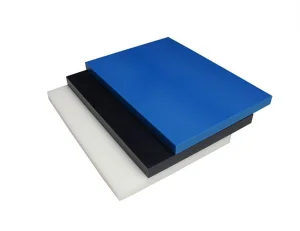
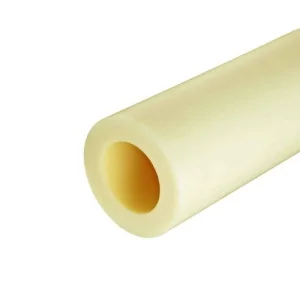
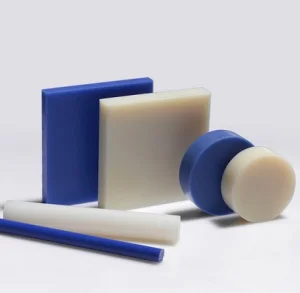
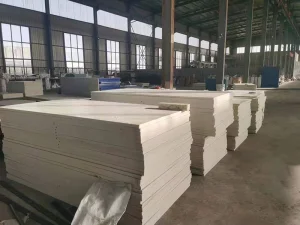
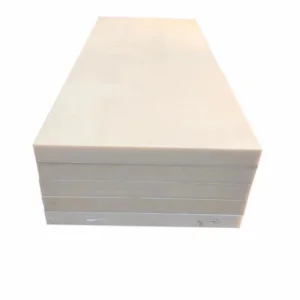
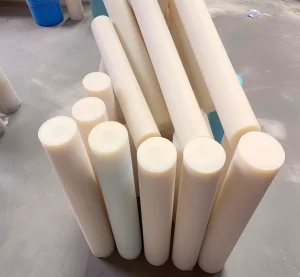
Precision Cast Polymer Stock Shapes
Ultra-dense semi-finished casting rods, hollow profiles, and custom formulations direct from our state-of-the-art polymerization reactor lines.
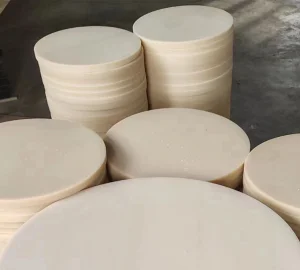
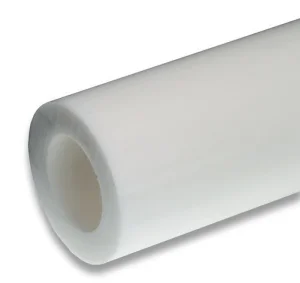
Engineering Monomer Casting: Molecular Superiority Over Extrusion
Understanding the thermodynamic crystallization mechanisms of cast nylon (PA6G) versus continuous melt-extruded resins under extreme industrial loads.
Anionic Ring-Opening Polymerization
Monomer Casting (MC) nylon synthesizes caprolactam monomer directly in pre-heated molds using basic catalysts and activator chemistries. This bypasses thermal degradation from mechanical screw melting, creating molecular weights surpassing 300,000 g/mol—nearly triple standard extruded PA66.
Thermodynamic Stress Annealing
Extrusion processes introduce intense shear stresses and frozen-in residual skins. Shunda polymer cast rods undergo liquid oil isothermal soaking and slow multi-day gradient thermal ramp-downs, completely eradicating internal stress fields and preventing distortion during CNC gear tooth hobbing.
Additive Nucleation & Lubrication
Our autonomous reaction cells integrate organo-modified molybdenum disulfide (MoS2), cross-linked oil esters, and micronized glass flakes directly during liquid batch dispersion, ensuring uniform friction coefficients and heat dissipation across the cross section without surface segregation.
Mechanical & Tribological Baseline Matrix
Quantitative property metrics directly derived from standard laboratory inspections (ISO / ASTM standard testing parameters).
| Material Designation | Tensile Strength (MPa) | Tensile Modulus (GPa) | Izod Impact (kJ/m²) | Heat Deflection (0.45 MPa) | Optimal Wear Application |
|---|---|---|---|---|---|
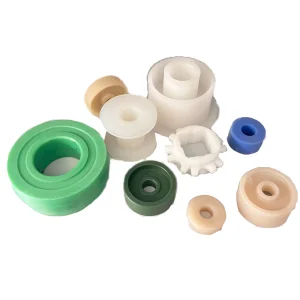
| Natural MC Cast Nylon (PA6G) | 85 - 92 | 3.4 | ≥ 6.5 | 170 °C | High-load guide wheels, rope sheaves, sprockets |
| MoS2 Filled Cast Nylon (Grey-Black) | 80 - 88 | 3.6 | ≥ 5.0 | 175 °C | High-pressure sleeve bearings, external unlubricated bushings |
| Polyoxymethylene (POM Acetal-C) | 65 - 72 | 2.9 | ≥ 6.0 | 160 °C | Submerged components, tight-tolerance timing gears |
| Cast Oil-Impregnated Nylon (Green) | 75 - 82 | 3.1 | ≥ 7.0 | 165 °C | High-speed dynamic slide pads, conveyor guide rings |
| UHMW-PE Virgin Polymer | 28 - 35 | 0.7 | No Break | 85 °C | Slurry chutes, cryogenic scrapers, heavy hopper wear strips |
Localized Engineering Applications & Case Studies
Where polymer casting rods replace bronze, brass, and stainless steel in extreme, high-maintenance operating environments.
Port Machinery & Mobile Cranes
Replaces heavy cast steel wire rope sheaves. Cast nylon rods eliminate rope galling, absorb harmonic shocks, and reduce boom-tip weight by 85%, significantly expanding crane load moment limits while eliminating external greasing in salt-mist marine harbors.
Hydraulic Piling & Construction Hammers
Forged from ultra-tough elastic nylon stocks, our specialized high-energy impact cushion blocks damp the steel-on-steel rebound vibration between hydraulic rams and steel sheet piles, insulating machinery powerheads and multiplying pile life cycles.
High-Speed Bottling & Food Conveyors
Food-grade natural cast polyamides provide high chemical resistance to caustic cleaning washdown agents (CIP/SIP systems). Low-friction cast bushings prevent line contamination and maintain low acoustic noise below OSHA workplace standards.
China Factory Supply Chain Resiliency & Vertical Integration
How our vertically integrated casting and precision CNC machine park in Hebei secures steady procurement timelines, pricing stability, and zero-defect consistency.
Upstream Chemical Integration
Direct bulk caprolactam monomer pipeline coupling and raw monomer storage buffers prevent spot-price shocks, guaranteeing consistent long-term contract pricing for major global OEM parts.
Autonomous Robotic Annealing
Continuous closed-loop, PLC-monitored heat-treating ovens prevent human variation during crystallization cycles, achieving zero internal micro-voids across massive billet diameters up to 1000mm.
In-House 5-Axis CNC Milling
By producing our own stock blanks, secondary machining eliminates middleman markups and allows custom rapid profiling, deep bore honing, gear hobbing, and CMM laser verification under one roof.
Maritime & Multimodal Logistics
Proximity to Tianjin Port and major railway routes ensures fast multi-modal container despatches, custom timber crate vapor barriers, and automated customs compliance verification.
Global Compliance, Quality Control & Traceability
From batch-level molecular spectrometry to RoHS/REACH substance compliance, we implement systematic quality management for demanding industrial markets.
Ultrasonic Void & Porosity Scanning
Every cast polymer rod exceeding 80mm in diameter undergoes high-frequency pulse-echo ultrasonic testing (UT). This non-destructive test ensures absolute zero centerline piping, porosity, or internal fissures before shipment.
EN 10204 3.1 Material Certification
We supply full EN 10204 Type 3.1 inspection documentation with every export container. Certificates include tensile yield, density, Shore hardness, thermal deflection temperatures, and specific monomer conversion percentages.
Global Environmental Compliance
Materials comply with European Union REACH (EC 1907/2006) SVHC candidate lists, RoHS hazardous substance restrictions, and select FDA formulations for unlubricated direct food contact machinery installations.
Frequently Asked Technical & Sourcing Questions
Insights from our senior polymer production and metallurgical engineering teams.
What makes Cast Nylon (PA6G) better than Extruded Nylon (PA66) for large rods?
Monomer casting does not use mechanical pressure or intense screw shear. This produces high molecular weights, higher crystallinity (up to 50%), greater wear endurance, better dimensional stability, and allows large-diameter solid casting (up to 1000mm) without centerline piping defects.
How do you manage moisture absorption in cast nylon parts?
Polyamides absorb environmental equilibrium moisture (typically 2-3% in air). We account for hygroscopic dimensional growth during CAD drawing reviews by increasing dynamic bearing clearances, pre-conditioning stocks, or recommending low-absorption polyacetal (POM) when tolerances demand ±0.01mm in submerged environments.
What cutting parameters are recommended when machining cast polymer rods?
Use high-speed steel (HSS) or sharp polished carbide tooling ground with generous positive rake (15-20°) and large clearance angles. Maintain rapid feed rates with continuous air cooling or water-soluble coolants to prevent localized thermal expansion and continuous chip re-welding.
What export packaging standards are used to protect rods from moisture during ocean freight?
Rods and hollow bars are bundled in vapor-barrier poly wraps, lined with silica gel desiccant packs, and secured inside heat-treated export crates (ISPM 15 certified). This prevents warping and oxidation during cross-equator ocean transit.
High-Performance Rod & Component Series
Explore heavy-duty impact profiles, fluoropolymers, polypropylenes, and high-performance engineering plastics direct from the source.