
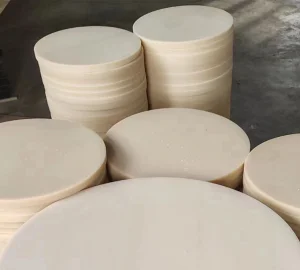
Impact Nylon Cushion for Piling Machinery
View SpecificationsExplore our primary factory-direct polymers, including cast and extruded acrylic tubes, heavy-duty polyamides, POM rods, and custom-profiled technical polymers manufactured to ISO 9001 standards.
Impact Nylon Cushion for Piling Machinery
View Specifications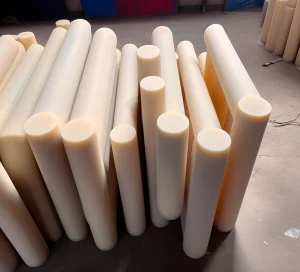
High-Quality Monomer Cast (MC) Nylon Rod
View Specifications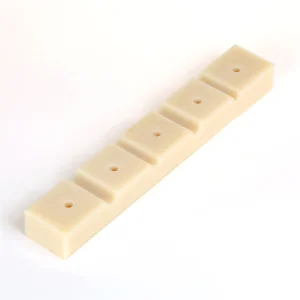
Industrial Conveyor Nylon Chain & Heavy Wear Pad
View Specifications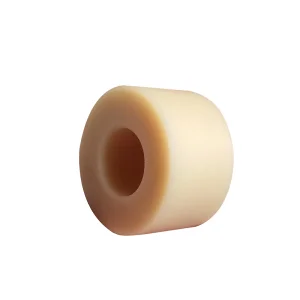
Custom Engineering Plastic Hollow Tubes & Rods
View Specifications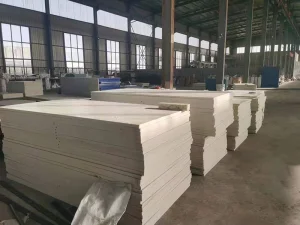
OEM Calibrated Polyamide PA6 / PA66 Plastic Sheet
View Specifications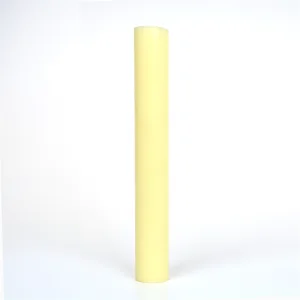
Chemical-Resistant Polypropylene (PP) Extruded Rod
View Specifications
Fluoropolymer PTFE & Wear Resistant Bar Stock
View Specifications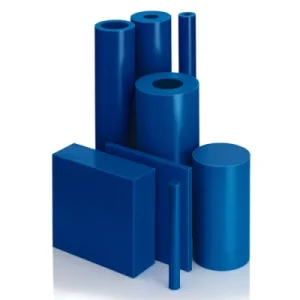
Ultra-High Molecular UHMWPE Low-Friction Pad
View SpecificationsDemystifying polymer crosslinking, light transmission properties, and thermal boundary conditions for precision PMMA applications in harsh industrial, architectural, and laboratory environments.
Fabricated by polymerizing liquid methyl methacrylate in precision rotating cylindrical molds. Cast acrylic tubing exhibits superior molecular weight, exceptional thermal stability, and stress-free machinability. It is completely free of extrusion lines, making it indispensable for hyperbaric chambers, precision sight glasses, and high-vacuum bioreactor vessels where optical clarity without birefringence is critical.
Continuous extrusion of PMMA pellets enables tight wall-thickness tolerances, high production speeds, and competitive cost-efficiency in high-volume production. Extruded tubes are ideally matched for architectural linear illumination, point-of-sale displays, liquid level gauges, and consumer goods where continuous structural lengths up to 4,000 mm without longitudinal seams are mandatory.
Standard PMMA compounds intrinsically filter UV-B radiation while remaining non-yellowing and degradation-resistant over 10-year outdoor exposures. For extreme environments, SHUNDA integrates UV-stabilizers and surface anti-scratch fluoropolymer barriers that mitigate micro-crazing under persistent exposure to hydrocarbon vapours, chlorine, and solar degradation.
| Physical & Mechanical Metric | Cast Acrylic (PMMA GS) | Extruded Acrylic (PMMA XT) | Test Standard |
|---|---|---|---|
| Tensile Strength (MPa) | 75 - 82 | 70 - 74 | ISO 527-2 |
| Flexural Modulus (GPa) | 3.2 - 3.4 | 3.0 - 3.2 | ISO 178 |
| Luminous Transmittance (380-780nm) | 92.8% | 92.2% | DIN 5036-3 |
| Refractive Index (nD20) | 1.491 | 1.490 | ISO 489 |
| Continuous Service Temperature | -40°C to +85°C | -40°C to +70°C | Internal Test |
| Dielectric Strength (kV/mm) | 30 | 28 | IEC 60243-1 |
From German automation cells to Middle Eastern desalination manifolds, discover how our custom acrylic tubing fulfills stringent technical prerequisites across multiple continents.
Medical OEMs in the EU and North America leverage our optically pure cast PMMA tubes for blood transfusion conduits, centrifuge chambers, and lab-scale photochemical reactors. With zero plasticizer leaching and biocompatibility compliance according to ISO 10993, our tubes facilitate cell observation with zero distortion under confocal laser scanning microscopy.
In high-irradiance regions like California, Southern Europe, and Australia, massive tubular photobioreactor loops demand acrylic tubes that can withstand high hydrostatic pressures and intense solar UV radiation without clouding. Our UV-transmitting and UV-blocking PMMA tubes provide superior biomass productivity over borosilicate glass at a fraction of maintenance costs.
Electric vehicle charging towers and regional smart grids use dielectric acrylic tubes as insulating casings and oil-monitoring observation columns. Boasting dielectric strengths up to 30 kV/mm, PMMA prevents internal flashovers while withstanding vibrations and dynamic pressure pulses caused by sudden load shifts.
Used by municipal infrastructure firms for bridge illumination, dynamic water features, and high-end retail flagships. Our frosted, diffuse, and colored acrylic tubes yield seamless homogeneous light distribution when coupled with high-output RGBW LED arrays, eliminating diode hotspots while preserving structural stiffness in winds exceeding 120 km/h.
Thick-walled cast tubes (up to 100mm wall thickness) are calibrated for hyperbaric enclosures, robotic ROV hulls, and oceanarium viewing tunnels. Our stress-relief thermal annealing cycles ensure that no micro-fractures compromise the housing under multi-megapascal hydrostatic pressures.
Modern automated smart hospitals and semiconductor cleanrooms employ precision-bore PMMA hollow cylinders for high-speed pneumatic sample transmission. Low frictional drag and crack resistance maintain operational safety across billions of continuous pneumatic launch cycles.
How SHUNDA's state-of-the-art facility in Xinhe County, Hebei, integrates virgin polymer distillation, intelligent extrusion matrices, and direct intermodal logistics to de-risk overseas procurement.
Unlike secondary converters who procure spot-market scrap monomer, SHUNDA controls polymer purity directly through strategic partnerships with top-tier MMA synthesis refineries. This enables consistent molecular weight distribution (Mw > 1,000,000 g/mol for cast lines) and ensures zero lot-to-lot turbidity fluctuations.
Internal material stress is the primary cause of stress corrosion cracking (crazing) during downstream CNC machining. Our digital annealing ovens run algorithmic 48-hour ramp-up and cool-down cycles that purge residual stresses, guaranteeing tight threading, diamond polishing, and laser engraving tolerances down to ±0.05 mm.
Situated within rapid logistics proximity to Tianjin Port and Qingdao Port, SHUNDA utilizes automated vacuum shrink-wrapping, anti-scratch PE film lamination, and heavy-duty ISPM-15 compliant shock-absorbing plywood crating. This guarantees zero surface abrasion over multi-week ocean transit cycles to Rotterdam, Long Beach, or Jebel Ali.
Addressing supply constraints, circular economy mandates, nano-composite functionalization, and the replacement of hazardous polycarbonate in critical thermal operations.
In response to the EU Green Deal and global zero-landfill mandates, our research roadmap focuses on thermal depolymerization of PMMA scrap back into regenerated virgin-equivalent methyl methacrylate monomer (rMMA). This delivers 100% optical clarity while slashing raw carbon emissions by up to 70%.
PMMA's historical limitation has been its surface vulnerability to scratches (pencil hardness ~3H). SHUNDA is actively pilot-testing in-line siloxane and graphene-oxide nanocomposite coatings that boost surface hardness to 6H-7H, matching mineral glass while maintaining acrylic's structural shatterproof ductility.
For medical devices and clean-in-place (CIP) food-contact systems, our R&D team incorporates silver-ion matrices during casting. This imparts permanent antimicrobial efficacy (99.9% reduction against E. coli and S. aureus under ISO 22196) without leaching, clouding, or degrading optical transmission.
Every order undergoes three-stage QA clearance, supported by material test reports (MTR), full traceability dossiers, and direct engineering guidance.
Certified free from hazardous heavy metals, phthalates, BPA, and all chemical substances flagged on the European Chemicals Agency candidate list.
Food and beverage safe formulations certified for aqueous, acid, and alcohol contact media, compatible with food processing observation pipes.
Tested for slow, safe combustion characteristics with low smoke toxicity indices, ideal for commercial transit installations and public kiosks.
Direct liaison with production engineers. We review 2D/3D STEP and DWG files, assessing toolpaths, thermal expansion tolerances, and solvent bonding suitability before cutting.
Engineered insights for sourcing managers, chemical apparatus builders, and mechanical design teams considering industrial acrylic tubing.
Full-spectrum factory direct supply: high-density polymers, outrigger safety pads, fluoropolymers, and CNC-profiled semi-finished stock ready for sea export.
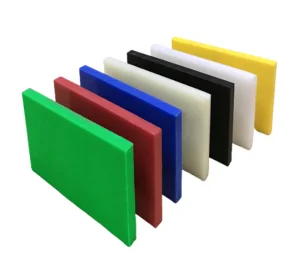
Polyamide PA6 / PA66 & UHMWPE Precision Rods
View Specifications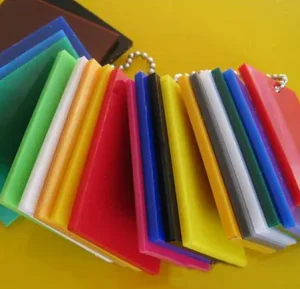
Bigfoot Solid HDPE Safety Crane Outrigger Pads
View Specifications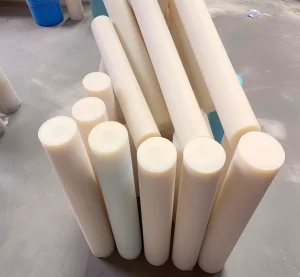
Wholesale Virgin Natural MC Nylon Cast Rod
View Specifications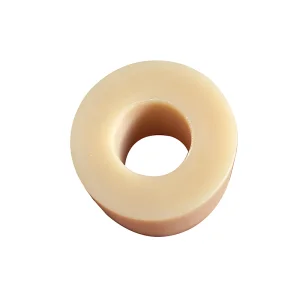
PA6 Nylon, POM & PTFE Hollow Tubes & Bars
View Specifications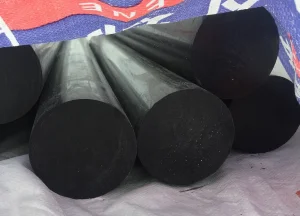
Delrin POM-C Acetal Copolymer Round Rods
View Specifications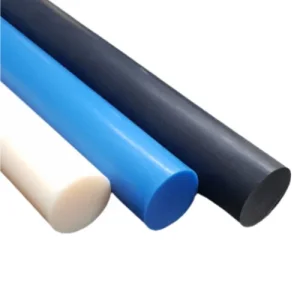
Virgin PTFE Fluoropolymer Low-Friction Rods
View Specifications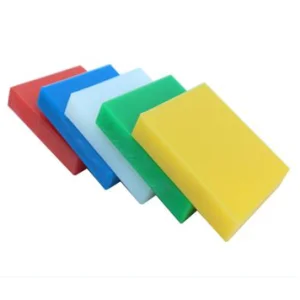
PA66 Nylon & High-Density HDPE Polymer Sheet
View Specifications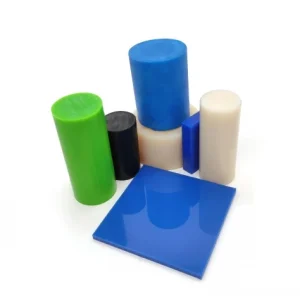
Custom Tinted ABS, PP & Nylon Rods & Sheets
View SpecificationsPartner directly with SHUNDA’s technical production team in Xingtai, Hebei. Send your 2D drawings, 3D models (STEP/IGES), or bulk material specs. Our application engineers deliver full DFM feedback, tolerance reviews, and competitive FOB/CIF quotation breakdowns within 12 hours.