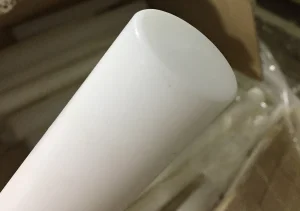
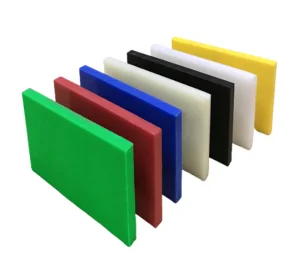
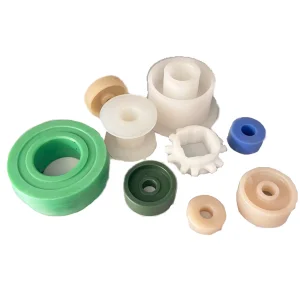
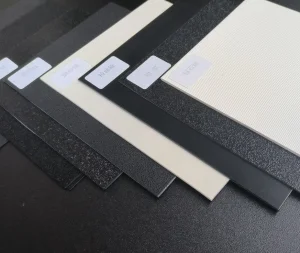
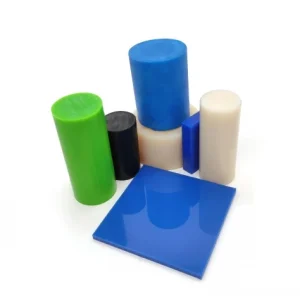
Featured Semi-Finished Engineering Polymer Stocks
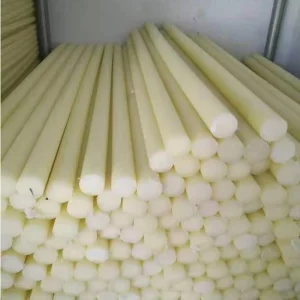
High-integrity polyamides, acetal rods, fluoropolymer sheets, and heavy-duty structural wear elements engineered for harsh chemical dosing, liquid containment, and industrial mechanical operations.
Industrial Evolution of the 1m³ (1,000-Liter) Liquid Containment Unit
A granular examination into the structural mechanics, polymer chemistry, and global engineering specifications that position the 1m³ tank as the international volumetric benchmark for chemical processing, potable water logistics, and precision dosing architectures.
Across the landscape of global fluid handling, intermediate chemical transport, and municipal utilities, the 1m³ (one cubic meter, equivalent to 1,000 Liters, 264.17 US Gallons, or 35.31 cubic feet) vessel represents the cornerstone volumetric unit. Whether specified as a heavy-duty Intermediate Bulk Container (IBC), a rotational-molded high-density polyethylene (HDPE) vertical acid storage vessel, a welded polypropylene (PP) electroplating cell, or a precision Sheet Molding Compound (SMC/GRP) sectional pressed panel reservoir, the 1m³ baseline dictates shipping container optimization, pump dosing curves, and static structural load limits internationally.
Engineering Core Insight: A 1m³ fluid vessel bearing water exerts exactly 1,000 kg (1 metric ton) of static mass, plus tank tare weight, over a footprint typically calibrated to the standard ISO pallet dimension (1,200 mm × 1,000 mm). Achieving long-term hydrostatic equilibrium without wall belly deformation requires polymer formulations with zero creep fatigue, precision wall gauge distribution, and chemical environmental stress crack resistance (ESCR) exceeding 1,000 hours under ASTM D1693 condition B.
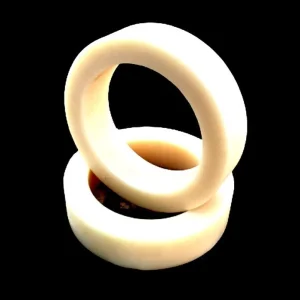
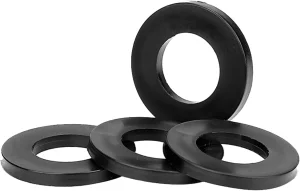
For more than two decades, SHUNDA has operated at the nexus of high-polymer synthesis, casting, extrusion, and vessel fabrication. Producing both the massive structural matrices—such as 1m × 1m modular GRP/FRP hot-pressed panels—and the microscopic wear components (such as CNC machined POM valves, MC cast nylon internal flange spacers, PTFE chemical seating washers, and UHMWPE guide bushings), China's premier manufacturing clusters have resolved the historic pain points of container bulging, localized embrittlement, gasket hydrolytic decay, and freight volumetric waste.
Why Global Procurement Heads Prioritize Chinese 1m³ Tank Suppliers
Analyzing the vertical manufacturing integration, raw material synthesis advantages, ultra-tonnage hydraulic compression infrastructure, and comprehensive export compliance operating out of Hebei and regional production bases.
Vertical Chemical & Polymer Integration
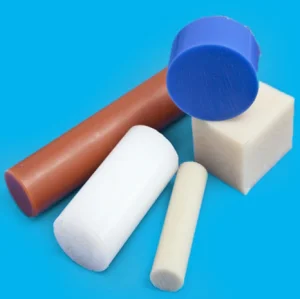
Unlike assemblers reliant on third-party stock, Chinese leaders synthesize virgin HDPE, pure caprolactam monomer for PA6 casting, POM copolymers, and glass fiber roving within short domestic logistics chains, eradicating volatile commodity markups and certifying uninterrupted material pedigree.
Heavy-Tonnage SMC Hydraulic Pressing
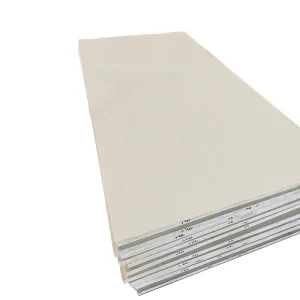
Modular 1m³ GRP/FRP sectional tanks require precise 1,000 mm × 1,000 mm and 1,000 mm × 500 mm panels stamped under 2,500-ton hydraulic heated molds. China's tooling infrastructure maintains micron-level mold precision, minimizing micro-porosity and maximizing glass-to-resin ratios above 35%.
In-House CNC Machining for Tank Ports
Rather than utilizing fragile generic bulkheads, Chinese integrated plants machine connection ports, camlock adapters, blind flanges, and sight-glass housings directly out of cast nylon, virgin POM, or solid PTFE billet, guaranteeing leak-free operational resilience under cycling pressure.
Compact Flat-Pack Knock-Down (KD) Logistics
Shipping assembled 1m³ hollow containers overseas incurs punishing ocean freight rates due to dead volume. Chinese manufacturers engineered sectional bolt-together panel schemes where up to 40 complete modular 1m³ tanks can be nested into a single 40ft High-Cube container.
Rigorous QA & International Certification
Tier-1 facilities align operations with ISO 9001:2015, WRAS (Water Regulations Advisory Scheme) for potable contact, CE machinery directives, and UN 31HA1/Y packaging groups for dangerous goods transportation across the EU, the Americas, and APAC.
Unrivaled Total Cost of Ownership (TCO)
By optimizing cycle times, consolidating tooling in-house, and leveraging high-speed robotic continuous extrusion and winding lines, Chinese suppliers deliver a 30% to 45% capital expenditure reduction while exceeding Western endurance benchmarks.
Comparative Polymer & Composite Engineering Matrix for 1m³ Tanks
Selecting the appropriate containment substrate requires balancing chemical compatibility, hydrostatic hoop stress, operating temperature spectrums, and ultraviolet degradation resistance.
| Material Class | Tensile Strength (MPa) | Operating Temp (°C) | Chemical Resistance Profile | Ideal 1m³ Tank Implementation |
|---|---|---|---|---|
| HDPE (High-Density Polyethylene) | 26 - 32 | -40 to +70 | High resistance to inorganic acids, alkalis, and brine; vulnerable to strong oxidizing aromatic solvents. | IBC inner liners, agricultural chemical storage, rainwater harvesting vessels, brine dosing. |
| PP (Polypropylene Homopolymer/Copolymer) | 30 - 38 | 0 to +100 | Exceptional resistance to aggressive hot acids (sulfuric, hydrochloric) and caustic plating baths. | Electroplating rinse tanks, pickling baths, high-temperature chemical mixing vessels. |
| SMC / GRP (Sheet Molding Compound) | 70 - 110 | -30 to +90 | Completely impervious to potable water, chlorine trace, high saline, and biological algal growth. | Modular 1m × 1m panel fire reservoirs, domestic drinking storage, high-rise water distribution. |
| UHMWPE (Ultra-High Molecular Weight) | 38 - 48 | -150 to +80 | Extreme abrasive resistance, zero moisture absorption, self-lubricating surface preventing slurry build-up. | Slurry buffer vessels, abrasive media blending tanks, low-temperature polar liquid vessels. |
| PTFE (Polytetrafluoroethylene) Lining | 20 - 30 | -200 to +260 | Universal chemical inertness; unattacked by fuming nitric acid, aqua regia, and halogenated compounds. | Semiconductor ultra-pure acid buffer tanks, pharmaceutical intermediate synthesis containers. |
| MC Cast Nylon (PA6) Reinforcement | 75 - 90 | -40 to +110 | High mechanical load bearing; vulnerable to concentrated inorganic acids, ideal for dry structural fittings. | External panel stiffener cleats, valve mounting flanges, structural lifting lugs, outrigger feet. |
Macro-Industrial Implementation Scenarios for 1m³ Fluid Modules
From municipal clean water access to offshore marine ballasts, explore how modern engineering installations deploy standardized 1,000-liter containment architectures.
The versatility of a 1m³ tank architecture lies in its modularity. In municipal potable water infrastructures, modular 1m × 1m GRP pressed panels act as building blocks to construct municipal buffer reservoirs scaling from 1m³ up to 5,000m³. These panels are hot-press molded using food-grade unsaturated polyester resins and E-glass reinforcements. Inside the tank, hydrostatic water pressure is countered by internal stainless steel (SS304/SS316) tie rods, or an external structure supported by cast nylon load-bearing brackets and POM isolation rings that stop galvanic corrosion between dissimilar metallic fasteners and panels.
In chemical manufacturing and microelectronics fabrication, 1m³ rotational-molded linear low-density or cross-linked high-density polyethylene (XLPE) tanks function as continuous dosing units. These tanks are paired with precision CNC-machined PTFE or POM manifold valves, providing consistent flow control under harsh chemical conditions. The seamless, one-piece construction eliminates welded seams, preventing pinhole leaks that often compromise traditional welded tanks under cyclical pressure loads.
In the agricultural fertigation and environmental remediation sectors, 1m³ tanks frequently serve as portable dosing stations mounted directly onto trailers or skid-steer frames. In these configurations, high-density polyethylene shells are stabilized against ultraviolet light (UV8 to UV20 stabilization ratings), preventing material degradation and color fading during extended exposure to sunlight. Smooth interior surfaces minimize biological biofilm adhesion, enabling quick steam cleanings between chemical batch transfers.
Procurement Verification Protocols for International Buyers
A technical verification roadmap designed for global engineering procurement teams to validate mechanical strength, hydrostatic resilience, and material safety before shipping.
1. Hydrostatic Pressure Testing
Vessels must undergo continuous hydrostatic testing at 1.5 times the rated working pressure for a minimum of 24 hours. Sensors verify zero hydrostatic head loss, weld seam sweating, or bottom corner radius deformation.
2. Ultrasonic Wall Thickness Gauging
Multi-point ultrasonic thickness testing along the bottom knuckle radius and side walls verifies uniform polymer distribution. Thickness variations must remain within ±0.5 mm of approved technical specifications.
3. Environmental Stress Cracking (ESCR)
Polyethylene test specimens undergo rigorous ASTM D1693 testing in 10% Igepal CO-630 solutions at 50°C. Zero micro-cracking over 1,000 continuous hours guarantees resistance against volatile surfactants.
4. Chemical & Food-Grade Compliance
Independent laboratory validation ensures overall chemical migration remains well below 10 mg/dm² under FDA 21 CFR 177.1520 and EU No 10/2011, certifying complete taste, odor, and toxicological neutrality.
5. Dynamic Drop & Impact Testing
In accordance with UN Packaging standards, full containers conditioned down to -18°C are subjected to free-fall drop tests onto unyielding concrete surfaces from heights up to 1.9 meters to prove structural containment integrity.
6. Static Stacking Compression Analysis
Vessels must sustain superimposed static loads simulating 3-high stacking of 1.9 SG liquid containers at 40°C for 28 days, confirming overall column stiffness and zero structural deformation.
Emerging Trends in 1m³ Industrial Tank Manufacturing
Anticipating shifts in smart container technologies, sustainable bio-polymers, and advanced automation within modern industrial fabrication plants.
The manufacturing landscape for 1m³ containers is experiencing rapid modernization driven by Industry 4.0 paradigms. Key innovations transforming factory floors include:
1. Embedded Smart IoT Telemetry: Next-generation 1m³ tanks integrate molded-in pockets designed for non-invasive ultrasonic level transmitters, GPS track-and-trace units, and pH/temperature logging probes. These sensors communicate via low-power LoRaWAN or NB-IoT networks, transmitting real-time liquid inventory data to cloud dashboards.
2. Circular Polymer Economics & Advanced Multi-Layer Extrusion: Driven by tightening global sustainability directives, tier-one manufacturers deploy 3-layer and 6-layer co-extrusion blow molding technologies. The central layer incorporates up to 40% certified post-industrial recycled polymer resin, fully encapsulated between virgin polymer contact layers to maintain mechanical integrity while reducing net carbon footprint.
3. Automated Robotic CNC Machining & Extrusion Welding: Manual manufacturing processes are being replaced by automated 6-axis robotic welding and CNC profiling centers. Robotic hot-gas extrusion welding creates clean, homogeneous joint beads on PP and HDPE tank fittings, eliminating porosity and micro-fissures common to manual welding techniques.
Technical & Commercial FAQ: 1m³ Tanks & Engineering Polymers
Authoritative answers to common technical queries raised by global procurement officers, project engineers, and quality inspection teams.
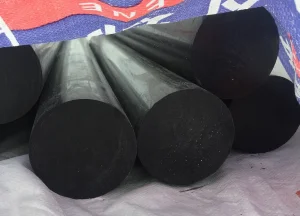
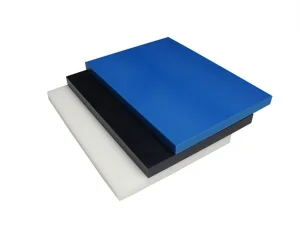
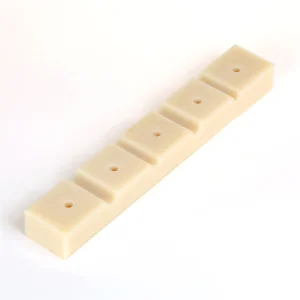
Engineered Stock Shapes, Wear Plates & CNC Components
Premium polyoxymethylene bars, cast polyamides, UHMWPE wear plates, and custom-turned components designed for heavy industrial and chemical equipment integration.