
S925 MC Ring Semi-Finished Shapes & Custom Blanks
Explore our foundational monomer cast and extruded polyamides, engineered sheets, and impact rings manufactured under strict thermal control for zero internal porosity.
Engineering Depth: The S925 MC Ring Polymer Metallurgy
A rigorous examination of anionic polymerization, crystalline boundary development, and tribological mechanics that make the S925 MC Ring the superior choice over non-ferrous bronze and polyacetal.
Anionic ε-Caprolactam Polymerization
Unlike standard extruded PA6 or injection-molded nylon resins, S925 Monomer Cast (MC) Nylon utilizes an alkaline catalyst-activated anionic ring-opening polymerization of pure molten caprolactam directly inside the vertical rotating mold. This pressureless, high-temperature synthesis achieves ultra-high molecular weights exceeding 200,000 to 350,000 g/mol, resulting in exceptional structural integrity, higher degree of crystallinity (up to 48%), and total absence of residual injection molding gate shears.
Hertzian Stress & Damping Elasticity
When heavy structural machinery subjects bearing rings, wear rings, and impact hammer pads to repetitive shock cycles, metals like bronze or steel fail through micro-spalling, cyclic fatigue, and permanent plastic deformative grooving. S925 MC rings dissipate mechanical kinetic impact via viscoelastic molecular hysteresis. The elastic modulus (3,200 MPa) absorbs dynamic transient peak energies while attenuating noise levels by up to 15 dB compared to metallic rings.
Self-Lubrication & Low Wear Factor
Incorporating homogeneous micro-dispersed lubricants and solid boundary modifiers within the liquid lactam mix, the S925 proprietary formula exhibits a dry dynamic coefficient of friction as low as 0.14 against hardened steel shafts. This eliminates stick-slip vibration in high-load, low-speed hydraulic rotations, significantly cuts grease consumption, and protects mating steel counter-surfaces from galling or abrasive gouging under high particulate exposure.
Material Property Verification Matrix (S925 MC Ring vs Standard Polymers)
Data derived from standard testing conditions (23°C, 50% RH) in compliance with ASTM and ISO international polymer testing protocols.
| Property Parameter | Test Protocol | S925 Cast MC Nylon Ring | Standard Extruded PA6 | POM Acetal Copolymer | Phosphor Bronze (C93200) |
|---|---|---|---|---|---|
| Specific Density (g/cm³) | ASTM D792 / ISO 1183 | 1.15 - 1.16 | 1.13 - 1.14 | 1.41 - 1.42 | 8.90 |
| Tensile Strength at Yield (MPa) | ASTM D638 / ISO 527 | 82 - 88 MPa | 65 - 75 MPa | 68 - 72 MPa | 240 MPa |
| Compressive Yield Strength (10% Def) | ASTM D695 / ISO 604 | 105 - 115 MPa | 80 - 90 MPa | 90 - 95 MPa | 310 MPa |
| Modulus of Elasticity (MPa) | ASTM D638 | 3,200 - 3,450 | 2,600 - 2,800 | 2,900 - 3,100 | 100,000 |
| Izod Impact Strength, Notched (kJ/m²) | ASTM D256 / ISO 180 | 6.0 - 7.5 | 4.5 - 5.5 | 5.5 - 6.5 | Ductile fracture |
| Dynamic Coeff. of Friction (Dry) | Tribometer / vs Hardened Steel | 0.14 - 0.18 | 0.28 - 0.35 | 0.20 - 0.25 | 0.35 - 0.40 (Greased: 0.12) |
| Heat Deflection Temp (1.8 MPa) | ASTM D648 / ISO 75 | 105°C (Annealed: 115°C) | 65°C - 75°C | 95°C - 100°C | > 300°C |
| Continuous Service Temp Limit | UL 746B Thermal Index | -40°C to +110°C | -30°C to +90°C | -40°C to +100°C | Up to 260°C |
*Note: The S925 designation denotes specialized liquid-casting formulation, optimized for heavy compressive resilience, low micro-porosity, and extended fatigue life under multi-directional shear conditions.
Global Industrial Landscape for Cast Nylon & S925 MC Rings
How international infrastructure modernization, deep-foundation civil engineering, maritime logistics, and heavy industrial plant conversions are shifting from non-ferrous alloys to high-performance cast nylon rings.
Infrastructure Megaprojects & Geotechnical Foundation Driving
Across North America, Western Europe, and Southeast Asia, civil engineering contractors face strict environmental regulations governing noise emissions and kinetic shock damage during deep foundation pile driving. Traditional bronze, oakwood, or steel hammer caps rapidly splinter, work-harden, or generate deafening airborne acoustic reverberations. As a result, hydraulic piling hammers (such as Junttan, IHC, and Bauer rigs) standardly specify S925 MC blue and yellow round nylon impact rings. These polymer cushions efficiently transmit 85% to 92% of hammer impact force into the steel casing while damping destructive secondary high-frequency shockwaves that shatter piston heads and hydraulic valving.
Marine, Offshore Energy & Port Cranes
The offshore wind power surge in the North Sea, East Asia, and the Gulf of Mexico has placed extraordinary demands on cable-laying sheaves, mooring winch fairlead rings, and rotary slew guidance assemblies. Metallic rings and bushings in saltwater environments suffer relentless galvanic corrosion and stress corrosion cracking (SCC), necessitating frequent lubrication that contaminates marine sanctuaries. The S925 MC ring material provides near-zero galvanic reaction, chemical immunity to salt spray, aliphatic hydrocarbons, and lubricating esters, while remaining lightweight enough to ease installation on towering turbine nacelles.
Mining, Mineral Beneficiation & Slurry Agitators
In high-abrasion environments such as South American copper mines and Australian iron ore handling terminals, conveyor systems and slurry separation trommels run 24/7 under clouds of quartz and silicate dust. Traditional lubricated bronze sleeve rings act as abrasive magnets: hard dust embeds directly into the copper matrix, turning the bushing into an internal cutting tool that ruins steel shafts. S925 cast nylon rings feature high molecular elasticity, allowing abrasive particles to momentarily depress the polymer surface and roll out of the contact zone without galling the mating shaft.
Factory Automation & High-Speed Material Handling
Global logistics distribution centers, bottling plants, and automotive stamping presses demand components that run without grease contamination and at higher line speeds. S925 rings used as guide rings, thrust washers, and roller sleeves provide rapid cycle damping, negligible heat accumulation under continuous cyclic rotation, and food/clean-room compatibility when operating in washdown zones using mild detergents or alkaline cleaning chemicals.
Advanced Manufacturing Protocols: Inside the SHUNDA Factory Base
From chemical monomer dosing to 5-axis CNC dimensional turning, explore the step-by-step technological journey behind our famous S925 MC Rings.
Monomer Pre-Treatment & Catalysis
High-purity solid caprolactam is vacuum-melted at 135°C–140°C in stainless-steel reactor vessels to eliminate all moisture down to < 20 ppm. Specific sodium lactamate catalysts and bis-acylactivators are metered in under inert nitrogen blanket conditions.
Vertical Centrifugal Casting
For tubular and ring blanks, molten lactam is injected into preheated cylindrical molds spinning at high radial velocities. Centrifugal G-forces eliminate gas voids and force non-polymeric impurities inward to the machining core, creating an ultra-dense, homogeneous outer wear layer.
Controlled Annealing Baths
Raw cast rings undergo multi-stage thermal stress-relieving cycles in isothermal mineral oil chambers or circulating hot-air furnaces. Gradual cooling over 48 to 72 hours relieves micro-stresses, guaranteeing that finished machined rings experience zero dimensional warping over years of service.
High-Precision CNC Machining
Annealed ring blanks are transferred to state-of-the-art CNC lathes equipped with diamond-tipped (PCD) tooling and high-rake geometric cutters. Inner and outer diameters, snap-ring grooves, oil distribution pathways, and bevel chamfers are machined to ISO tolerance classes DIN 7168 / ISO 2768-m.
Real-World Engineering Application Scenarios
Where failure is not an option: how procurement engineers integrate S925 MC rings into heavy mechanical architectures around the world.
Piling Machine Impact Hammer Ring Cushions
In hydraulic and diesel piling hammers driving steel H-piles and concrete caissons, S925 round impact cushions sit directly inside the hammer anvil cap. Operating under crushing kinetic blows of 50 to 250 kJ per strike at 40 blows per minute, S925 rings prevent metal-to-metal spalling, sustain uniform energy transfer, and withstand high temperatures without delaminating or embrittling in winter environments (-30°C).
Heavy Rotary Turret & Slew Bearing Rings
Used as low-friction radial guide rings and axial thrust rings in heavy crane slewing assemblies, excavator swivels, and offshore drilling turntables. S925 MC rings support enormous eccentric loads while permitting smooth, unassisted rotation without micro-welding or high starting torque spikes.
Hydraulic Cylinder Piston Wear & Guide Rings
In high-pressure mining hydraulic rams and heavy industrial forging presses, S925 machined wear rings act as sacrificial guide bearings between the chrome-plated piston rod and cylinder barrel. They absorb high lateral side loads, prevent scoring of expensive steel barrels, and wipe contaminants away from primary elastomeric seals.
Technology Roadmap: The Evolution of High-Performance MC Nylon
How SHUNDA's research engineers are pushing boundary lubrication, nanomaterial integration, and smart sensor diagnostic monitoring into our next-generation S925 MC rings.
Phase 1: Graphene & Nano-MoS2 Infusion
Synthesizing molecularly bonded molybdenum disulfide and monolayer graphene platelets directly into liquid caprolactam to slash the dynamic friction coefficient below 0.10 while doubling thermal conductivity for faster heat dissipation under continuous heavy rotation.
Phase 2: Bio-Based Lactam Monomers
Pioneering carbon-neutral polymer synthesis utilizing chemically identical, circular caprolactam derived from renewable bio-feedstocks. Achieving 100% mechanical equivalency to petrochemical S925 rings while reducing cradle-to-gate carbon emissions by 45%.
Phase 3: Sensor-Embedded "Smart" Wear Rings
Integrating micro-dielectric passive RFID and printed temperature/wear depth sensor films inside cast ring walls. This allows maintenance engineers to perform wireless, non-destructive wear measurements without disassembling critical equipment housings.
Phase 4: Cryogenic Dynamic Toughness
Formulating specialized elastomer-toughened monomer cast blends engineered to maintain ductile impact resistance and high Izod fracture toughness in Arctic and sub-zero offshore drilling environments down to -60°C without brittle shock fragmentation.
Engineering Design Handbook: Moisture & Thermal Expansion Calculations
Essential formulas and engineering design practices required when specifying S925 MC cast nylon rings for high-precision clearances in dry vs submerged environments.
Managing Moisture Swelling in Polyamide 6 Rings
Polyamides naturally absorb ambient moisture due to the polar amide groups along the polymer chain. S925 MC cast nylon has a maximum saturation absorption of approximately 6.0% in full water submersion (or 2.0% at 50% relative humidity). For each 1% increase in absorbed moisture weight, the linear dimensional growth of the ring averages approximately 0.2% to 0.25%.
Calculation Rule of Thumb:
ΔD = D0 × (α_thermal × ΔT + β_moisture × ΔM)
Where D0 is the nominal ring diameter, α_thermal is 80 × 10⁻⁶ K⁻¹, and β_moisture is ~0.0022 per percent moisture. Our sales engineers pre-calculate these dimensional offsets to ensure your rings maintain correct running tolerances whether submerged in seawater or running in arid conditions.
Shaft Hardness & Surface Roughness Recommendations
To maximize the service life of an S925 MC ring and minimize mating metal wear, consider the following mechanical design rules:
- Mating Shaft Hardness: Standard carbon steels should be surface-hardened to a minimum of 45 to 55 HRC (induction hardened or hard chrome plated) to prevent abrasive scoring.
- Shaft Surface Finish: An optimal roughness of Ra = 0.2 to 0.4 µm (8 to 16 µin) is strongly advised. A surface that is too smooth (< 0.1 µm) prevents the formation of an initial transfer film; a rough surface (> 0.8 µm) acts as a microscopic file, rapidly abrading the nylon ring.
- Wall Thickness Sizing: Minimum radial wall thickness should be at least 1/12th of the outside diameter to maintain structural hoop stability under heavy radial press-fits.
Frequently Asked Questions: S925 MC Rings & Polymer Engineering
Detailed technical, chemical, and commercial answers for international procurement managers, equipment designers, and maintenance directors.
What is an S925 MC Ring, and why is it preferred over extruded PA66 rings?
An S925 MC Ring is a precision ring component manufactured via monomer casting (anionic caprolactam polymerization) rather than thermal extrusion. This casting process produces significantly higher molecular weights (up to 350,000 g/mol), lower internal stresses, superior creep resistance, and higher crystallinity. Extruded PA66 is limited in maximum ring diameters and susceptible to stress cracking and anisotropic properties, whereas S925 cast nylon delivers isotropic mechanical performance and can be cast in outer diameters up to 2.5 meters.
How does the S925 MC Ring perform in piling hammer impact cushion roles?
Under repeated extreme impact (ranging from 40 to 300 blows per minute at high ton-meter impact forces), S925 MC rings utilize their high resilience and energy absorption to prevent anvil and pile-head damage. Compared to wooden, laminated canvas, or composite cushions that burn, shatter, or mushroom after a few hundred meters of driving, S925 cast nylon rings provide 3 to 5 times longer service life, steady kinetic transfer efficiency, and clean operation without fire hazards.
Can you manufacture custom dimensional rings from 2D or 3D engineering CAD drawings?
Yes. Our in-house modern CNC machining workshop processes all standard file formats including STEP, IGES, DXF, DWG, and PDF. We handle complex internal ring geometries, radial lubrication grooves, split-ring designs, scarf-cut seals, and tight step-joint cuts with machining tolerances down to ±0.03 mm depending on component dimensions.
What color options and additive fillers are available for S925 MC rings?
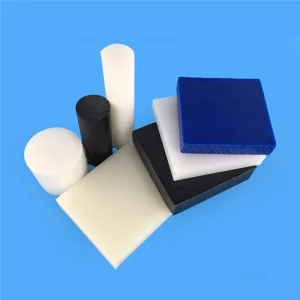
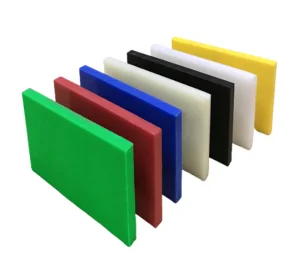
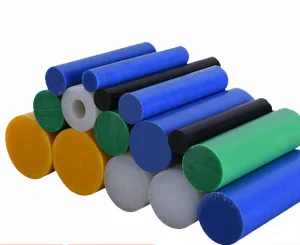
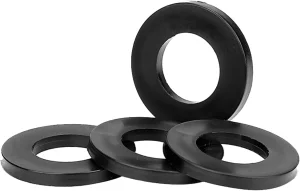
Standard colors include Natural (Ivory/White), Royal Blue, and High-Performance Black. We also compound and cast custom formulations including MoS2-filled (Moly, grey-black for high friction reduction), Oil-Filled (Green/Yellow for self-lubricating zero-maintenance bushings), and Glass-Fiber reinforced grades for heightened continuous compressive loads.
How does SHUNDA prevent voids, gas bubbles, and internal cracks during casting?
Every casting run uses continuous vacuum degassing during lactam melting, precision multi-zone preheated metal molds, and strictly controlled centrifugal rotational speeds. Post-molding, parts pass through a 72-hour thermal stress-relief annealing process in temperature-regulated oil baths, followed by 100% ultrasonic non-destructive testing (NDT) to verify complete internal solid density.
What is the standard turnaround time for sample prototypes and full container orders?
Standard CNC-machined samples from stock cast tubes or rods can be completed within 3 to 5 business days. Production runs for custom cast molds take 10 to 14 days, with full container-load (FCL) orders typically ready for dispatch within 20 to 25 business days. Our sales engineering team replies to technical requests within 12 hours.
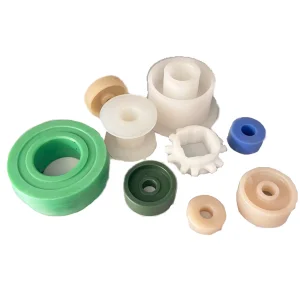
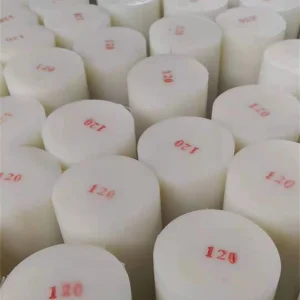
Associated Heavy-Duty Polymers & CNC Machined Assemblies
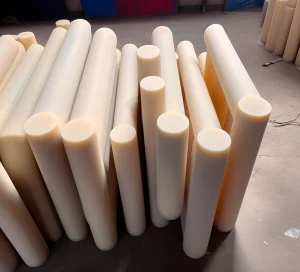
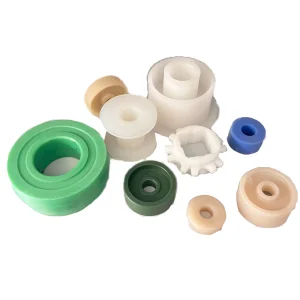
Complementary engineering plastic product lines manufactured in our ISO-certified facilities for international distributors, OEMs, and project contractors.
Initiate Your Engineering Quote with SHUNDA Today
Send your dimensional drawings (PDF, STEP, DWG) or project specifications to our polymer engineering specialists. We analyze mechanical tolerances, advise on optimal compounding fillers, and deliver clear factory-direct pricing within 12 hours.